



After a Barber Haircut: Aftercare, Irritation, and What to Watch For
Key Takeaways
- Rinse Away Loose Clippings: A gentle rinse after a haircut can remove prickly hair clippings and unwanted product residue. Use lukewarm water and avoid scrubbing irritated skin.
- Bumps Do Not Automatically Mean Dirty Tools: Ingrown hairs cause pseudofolliculitis barbae, while bacterial folliculitis involves infection. These conditions can look similar and sometimes occur together.
- Keep Aftercare Gentle: A fragrance-free moisturizer can soothe dry, freshly shaved skin. Salicylic acid may help some people prevent ingrown hairs, but it should not be applied to broken or irritated skin.
- Technique Matters: Shaving with the grain, avoiding skin stretching, and limiting repeated passes can reduce irritation and ingrown hairs.
- Professional Training Includes Safety: Georgia-approved barbering curricula include cleansing and disinfection, hygiene, shaving techniques, and hair and scalp assessment.
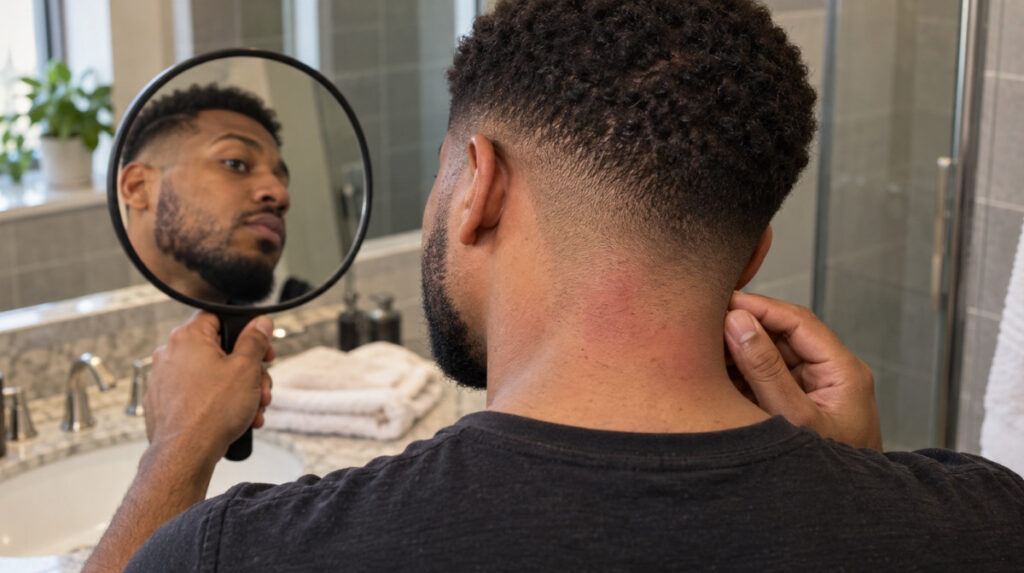
Walking out of the shop with a crisp fade feels incredible, but that fresh boost of confidence can fade when your neck starts itching, burning, or breaking out in bumps. You may wonder whether your skin is simply irritated or whether an infection could be developing. Understanding the difference helps you choose sensible aftercare, recognize symptoms that need attention, and have a more useful conversation with your barber.
Should You Shower After a Haircut?
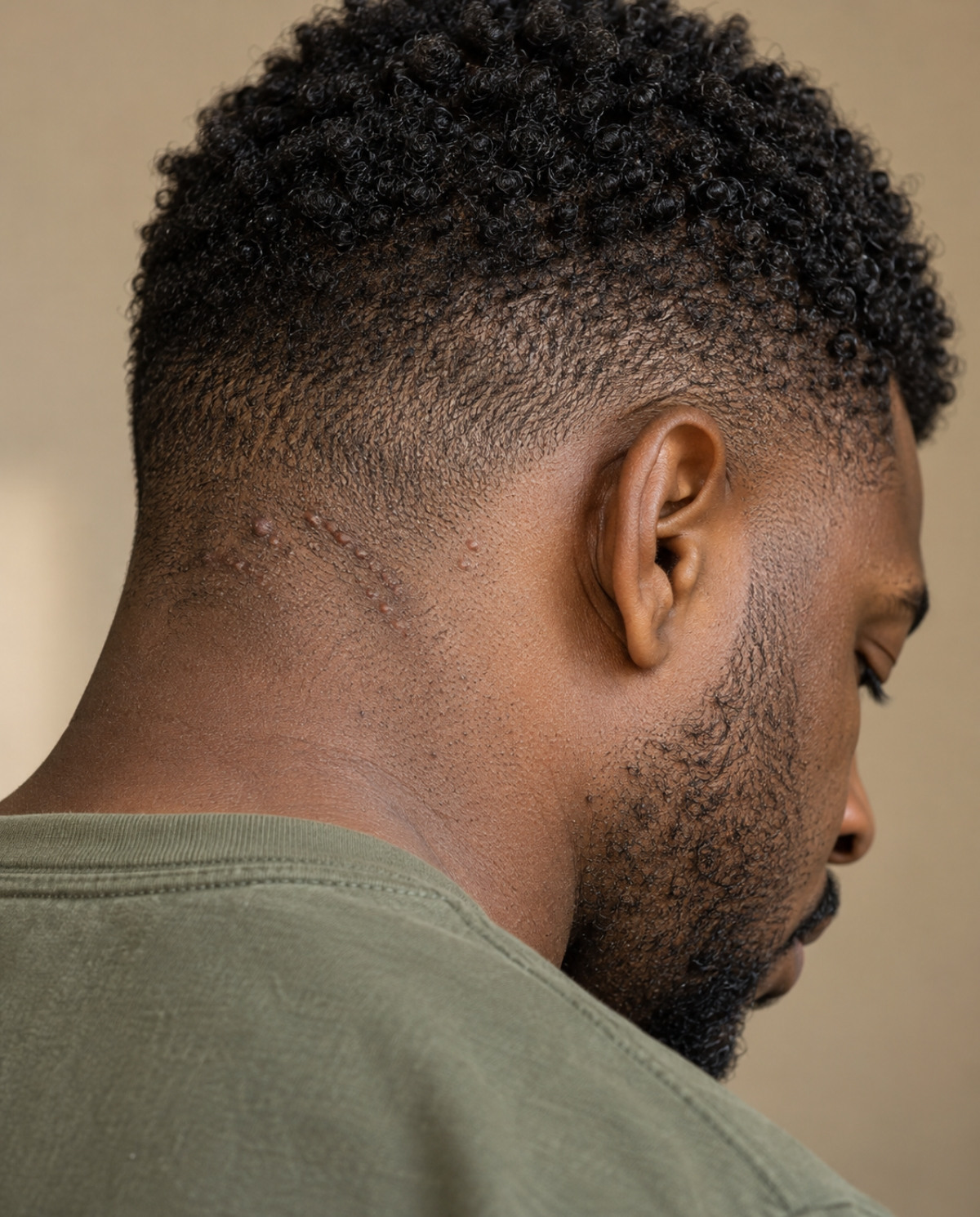
One of the most common questions clients hesitate to ask is whether they should shower after a barber visit. You may want to preserve the styling products or avoid disturbing a freshly sculpted look. A full shower is not essential after every haircut, but gently washing away loose clippings can make your skin more comfortable.
Short hair clippings can feel prickly when they collect around the neckline, behind the ears, or beneath a shirt collar. Friction from clothing can make that sensation more noticeable. A gentle rinse removes loose hairs without the need to scrub your skin.
Use lukewarm water and a mild cleanser where needed. If you want to keep your hairstyle intact, you can wash your neck and hairline instead of shampooing your entire head. If styling products leave your scalp uncomfortable or coated with unwanted residue, a gentle shampoo can help remove them.
The goal is to remove surface debris without creating additional irritation. There is no need to describe loose clippings as microscopic needles that routinely embed deep inside open pores, and showering immediately does not guarantee that you will avoid razor bumps or folliculitis.
According to Harvard Health Publishing, gentle cleansing, reducing friction from tight clothing, and careful shaving can help prevent folliculitis. Its guidance also recommends washing gently after sweating.
If a close shave leaves your skin hot or uncomfortable, try a cool, damp washcloth. The Canadian Dermatology Association recommends cool compresses to help calm freshly shaved skin and limit swelling. Cooling can soothe irritation, but it does not seal pores against bacteria or debris.
Understanding Itching, Redness, and Bumps After a Haircut
Post-cut discomfort can have several causes, including shaving irritation, ingrown hairs, reactions to products, and folliculitis. These problems can overlap, so the location or appearance of a bump does not always reveal its cause.
Burning or blotchy redness that appears shortly after close shaving may be razor burn. Repeated passes, excessive pressure, dry shaving, and irritating products can disrupt the skin barrier. Cleveland Clinic explains that shaving can cause tiny cracks in the outer skin layer, moisture loss, and inflammation.
This does not mean every haircut damages your skin. Guarded clipping and a close razor shave affect the skin differently, and your response depends partly on technique, products, and individual sensitivity.
Product reactions are another possibility. If irritation repeatedly follows a particular shaving cream, fragrance, or finishing product, tell your barber and stop using the suspected product while you seek advice if needed. Symptoms that persist or worsen deserve assessment rather than repeated experimentation with aftercare.
Razor Bumps and Bacterial Folliculitis Are Different
Many clients associate every post-cut bump with dirty tools. Contaminated equipment is a real concern, but bumps alone do not prove that a shop used unclean clippers.
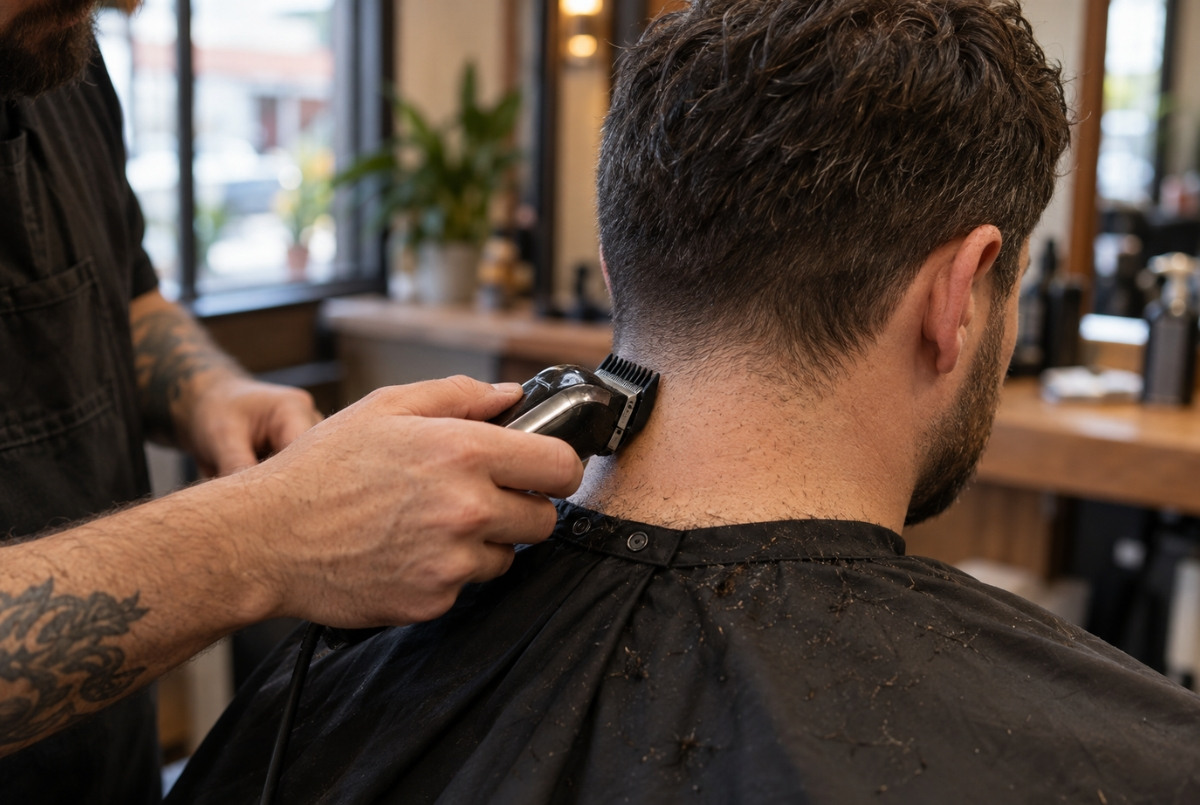
Pseudofolliculitis barbae, commonly called razor bumps, develops when cut hairs penetrate the surrounding skin and trigger inflammation. A hair may grow out and curve back into the skin, or retract beneath the surface after a very close shave. Coarse, curly hair is particularly prone to this problem.
Bacterial folliculitis involves infection of the hair follicle, commonly with Staphylococcus aureus. Shaving-related irritation can make follicles more vulnerable, but the presence of an infection does not, by itself, identify where the bacteria came from.
As explained by DermNet, razor bumps and infectious folliculitis can coexist. PFB is not primarily caused by infection, but affected follicles can become secondarily infected.
This distinction matters because the same product will not solve every problem. Changing close-shaving habits is central to managing razor bumps. Persistent or recurrent folliculitis may require a clinician to identify the cause and select treatment.
Persistent Neckline Bumps Deserve Attention
Bumps at the back of the neck are not always ordinary ingrown hairs. A condition called acne keloidalis nuchae can cause acne-like bumps, raised scars, and scarring hair loss on the back of the scalp and neck.
The American Academy of Dermatology explains that close haircuts, rubbing collars, and scratching can aggravate this condition. Early assessment is useful because treatment becomes more difficult once significant scarring develops.
If the same area repeatedly breaks out, develops firm raised bumps, or starts losing hair, avoid repeatedly shaving over it and arrange a dermatology appointment.
Gentle Aftercare That Supports Your Skin
Effective aftercare starts with matching your routine to the problem. Skin that is burning and irritated needs a different approach from comfortable skin that is simply prone to ingrown hairs.
If your skin feels tight or dry, apply a fragrance-free moisturizer suited to your skin type. Ceramide-containing products can support the skin barrier, while ingredients such as hyaluronic acid help retain moisture.
There is no need to avoid every rich cream or petroleum-based product. The American Academy of Dermatology recognizes petroleum jelly as useful for dry skin and minor injuries. However, the best choice depends on the area being treated and your tendency to develop breakouts. For breakout-prone skin, look for a moisturizer labeled noncomedogenic.
Traditional aftershaves can also be a problem if they contain ingredients that sting or irritate your skin. Cleveland Clinic recommends avoiding fragrances, alcohol, and other irritants when caring for razor burn. A burning sensation is not evidence that an aftershave is improving your skin.
For immediate irritation, keep the routine simple with gentle cleansing, a cool compress, and a moisturizer you already tolerate. Avoid shaving the irritated area again until it has recovered.
When Salicylic Acid May Help
Exfoliating products may help some people who repeatedly develop ingrown hairs, but they are not essential after every haircut and do not replace moisturizer.
The Canadian Dermatology Association suggests considering a lotion or gel containing 1–2% salicylic acid or 5% glycolic acid the day after shaving. These ingredients help keep the skin around growing hairs smooth, reducing the chance of hairs becoming trapped.
However, the condition of your skin matters more than the clock. Reaching the next day does not automatically mean an exfoliant is suitable.
MedlinePlus advises against applying topical salicylic acid to skin that is broken, red, swollen, irritated, or infected. Follow the product directions, and stop using it if irritation develops. If you are already using other acne treatments or exfoliating products, ask a pharmacist or dermatologist before adding another active ingredient.
Preventing Irritation During and After Your Next Cut
Prevention begins with how closely the hair is cut and how much friction the skin experiences. Aftercare can improve comfort, but it cannot fully compensate for a shaving technique that repeatedly irritates your skin.
The American Academy of Dermatology recommends shaving in the direction of hair growth and preparing the hair so it is soft before shaving. Moisturizing shaving cream can help reduce friction.
For people prone to razor bumps, avoiding skin stretching and repeated passes over the same area can also help. Shaving against the grain may produce a closer finish, but it can increase irritation and the likelihood of ingrown hairs. It does not inevitably cause a bump after every shave.
If you repeatedly develop beard-area razor bumps, discuss leaving a little stubble rather than shaving completely smooth. DermNet recommends leaving approximately 1 mm of stubble as one preventive measure. A guarded clipper finish may be a more comfortable option than repeatedly shaving the same sensitive area to skin level.
These principles also apply to home grooming. Learning how to safely cut your own hair at home includes preparing your tools, controlling pressure, and recognizing when a closer result is causing irritation.
After your haircut, avoid rubbing or picking at irritated areas. Choose comfortable collars that do not repeatedly scrape your neckline, and use clean towels and pillowcases as part of your normal hygiene routine.
Sweat and friction can make irritated skin uncomfortable. If exercise aggravates a freshly shaved area, adjust your activity until it settles, then gently cleanse after sweating. These habits support comfort and cleanliness, but they do not create a guaranteed barrier against infection.
Protecting Newly Exposed Skin From the Sun
A shorter haircut may leave more of your scalp visible, making sun protection an easy aftercare step to overlook. Remember the hairline, ears, neck, and any exposed scalp when preparing to spend time outdoors.
The American Academy of Dermatology recommends a broad-spectrum, water-resistant sunscreen with SPF 30 or higher. Reapply every two hours outdoors and after swimming or sweating.
A suitable hat can also help protect the scalp. If your neckline is irritated, choose one that does not rub the affected area.
How Barbering Schools Teach Skin and Scalp Safety
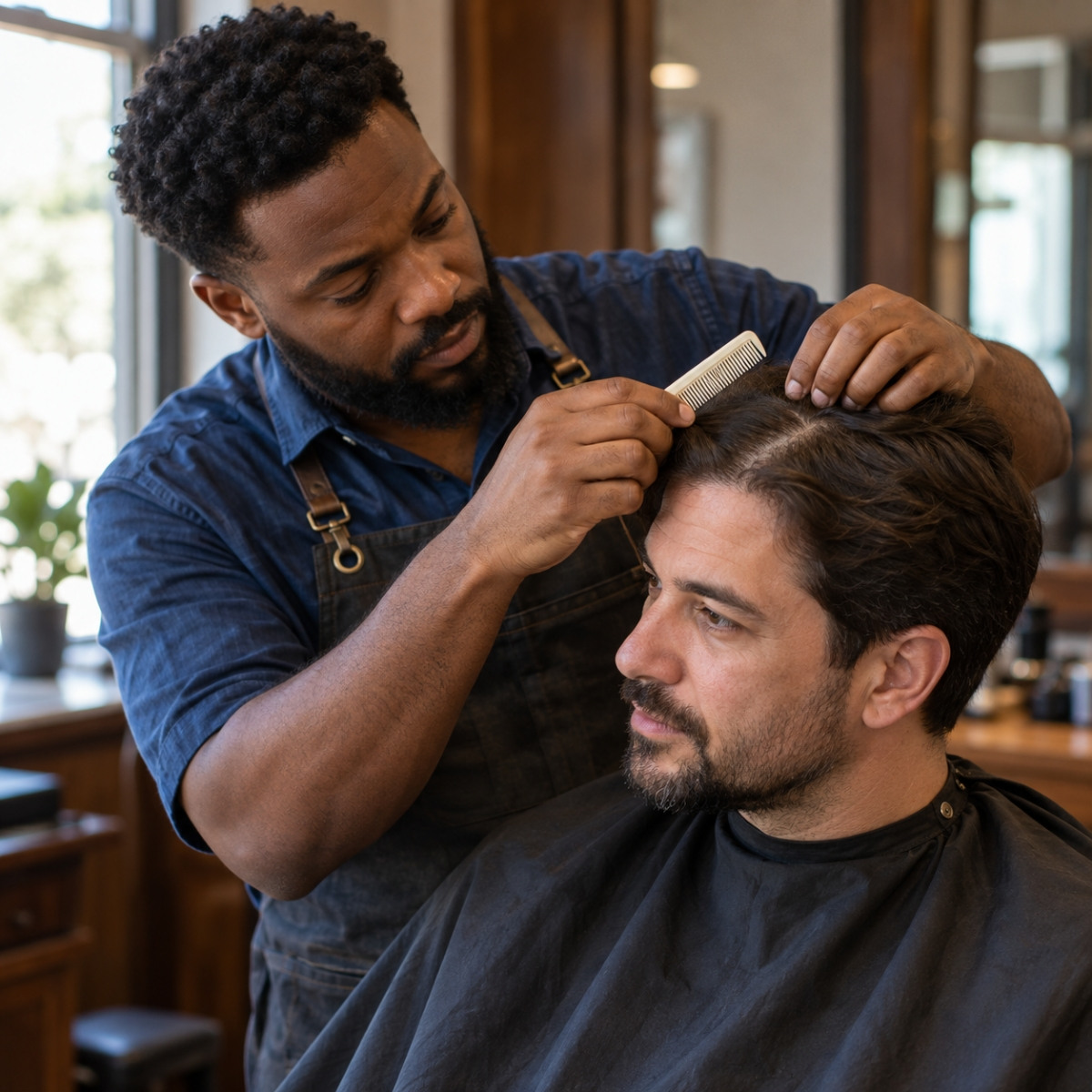
Professional barbering involves more than producing a clean outline. Students also need to learn safe tool handling, hygiene, hair and scalp assessment, and when a visible skin problem calls for caution or referral.
Georgia provides a concrete example. Under Rule 240-14-.02, the Master Barber school curriculum requires 1,500 training hours over at least nine months. Students must complete 280 initial theory hours before progressing to clinical services on live subjects.
That initial curriculum includes cleansing and disinfection, hygiene, scalp condition assessment, shaving, and the proper handling of cutting tools. Requirements differ by credential, so prospective students should check the rules for the specific program they plan to enter.
Professional consultation is another practical safety skill. Before cutting, a barber can ask about previous irritation, products that caused reactions, and areas where bumps repeatedly develop. Knowing how to clearly explain the haircut you want helps you discuss length and finish while also mentioning that a previous skin fade or razor lineup caused discomfort.
A barber can recognize a concern and recommend medical assessment without diagnosing or treating a skin disease. Georgia’s facility requirements include signage stating that cosmetology services should be performed only on intact, healthy scalp, skin, and nails.
Cleaning and Disinfection Are Essential Skills
Cleaning, disinfection, and sterilization are different processes. For routine reusable barbering equipment, the relevant Georgia rules emphasize proper cleaning and disinfection rather than describing every tool as sterile.
Georgia’s published sanitary guidance also explains that UV cabinets are for storing already cleaned and disinfected implements. UV light does not replace the required cleaning and disinfection process.
Understanding this difference gives students a more useful foundation than simply learning that tools should look clean.
Scalp Care Adds to the Client Conversation
Interest in scalp-focused services also gives professionals a reason to strengthen their knowledge. In its 2026 beauty trends article, America’s Beauty Show highlights scalp treatments and scalp-focused products.
This is an industry trend observation, not proof that every scalp serum works or that advanced scalp treatments are required services. For a barber, the practical foundation remains careful observation, appropriate product selection, safe technique, and referral when a concern falls outside professional training.
A comprehensive education can help future professionals build those habits and communicate more clearly with clients. Career results still depend on factors such as skill development, experience, location, and business practices.
Frequently Asked Questions
How long does irritation usually last after a haircut?
Mild razor burn can last from a few hours to a few days. Avoid shaving the irritated area again while it recovers.
If suspected folliculitis worsens or does not resolve within three days, the Canadian Dermatology Association recommends seeing a doctor. Persistent bumps do not automatically mean bacterial infection, and treatment should depend on the cause.
Can you put moisturizer on a fresh fade right away?
Yes. If the skin feels dry or tight, gently apply a fragrance-free moisturizer you already tolerate. For breakout-prone areas, consider a noncomedogenic formula. Stop using any product that causes burning or worsening irritation.
Why does my neck break out even when my barber uses clean tools?
Very close shaving can trigger ingrown hairs, particularly when hair is coarse or curly. Friction and irritating products can also contribute to discomfort. Clean equipment remains essential, but it cannot prevent every noninfectious skin reaction.
Persistent bumps at the back of the neck, especially with scarring or hair loss, deserve medical assessment.
Should everyone use salicylic acid after a haircut?
No. It may help some people prone to ingrown hairs, but it is not necessary after an ordinary haircut. Do not apply it to broken, red, swollen, irritated, or infected skin, and follow the product directions.
How do prospective barbers learn to protect clients’ skin?
State-approved barbering programs include training in hygiene, cleaning and disinfection, safe tool handling, and hair and scalp assessment. Students also practice techniques under instruction before progressing through the requirements for professional licensing.
Build Your Skills Through Professional Training
Turn your interest in barbering and hair design into practical professional skills. At Atlanta Beauty Academy, students can explore hands-on education, licensing preparation, and salon business and client-retention skills.
Atlanta Beauty & Barber Academy has provided practical beauty education for more than two decades.
Fill out the contact form below to arrange a campus tour, meet the team, and discuss the program that fits your goals.