



The Professional Nail Tech Blueprint: 2026 Essential Skills, Procedures, and Your Professional Starter Kit
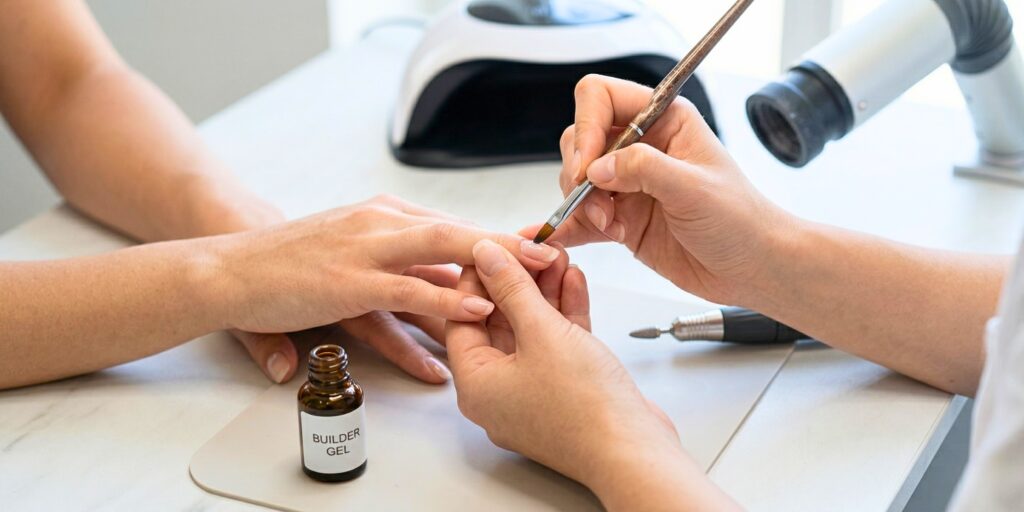
Transitioning from a beauty enthusiast to a licensed professional is less about mastering "nail art" and more about mastering nail technology procedures - the invisible science of structural integrity and chemical safety. If you’ve felt a pang of "imposter syndrome" while watching a pro effortlessly sculpt a set of extensions, it's usually because you’re seeing the result of specialized motor skills, not just talent.
In 2026, the industry has shifted toward what we call "Medical-Grade Manicuring." If you are still weighing the differences between basic salon services and advanced artistry, our beginner’s guide to launching a nail technology career can help you define your professional path before you dive into the technical details. According to the latest market forecasts from Business Research Insights, over 32% of clients now report sensitivities to traditional chemicals, making this the perfect time to establish yourself as a health-conscious specialist.
Key Takeaways
- Market Evolution: The nail industry is projected to reach $122.7 billion by 2035, driven by a 2026 shift toward "Skin-First" and "Medical-Grade" services.
- Regulatory Compliance: Under MoCRA, technicians must understand the chemistry of their products to navigate new FDA mandatory recall powers and safety standards.
- Structural Mastery: Success in 2026 centers on Builder-in-a-Bottle (BIAB) and precision e-filing rather than traditional heavy acrylics.
- Clinical Care: New bioactive ingredients like calcium silicate are clinically proven to increase nail thickness by 39%, transitioning the tech's role from artist to health consultant.
The 2026 Starter Kit Checklist
One of the biggest fears for prospective students is the startup cost and the time commitment involved in entering a new industry. To help you plan your journey, we’ve broken down the licensing requirements and costs for nail technicians so you can move forward with a clear financial and academic roadmap. Once you are ready to assemble your kit, categorize your purchases into these four pillars:
- Equipment: Permanent assets like your UV/LED lamps and high-torque E-files.
- Implements: Multi-use steel tools like nippers and pushers.
- Materials: Consumables such as files, buffers, and lint-free wipes.
- Professional Products: The chemistry-dehydrators, primers, and structured gels.
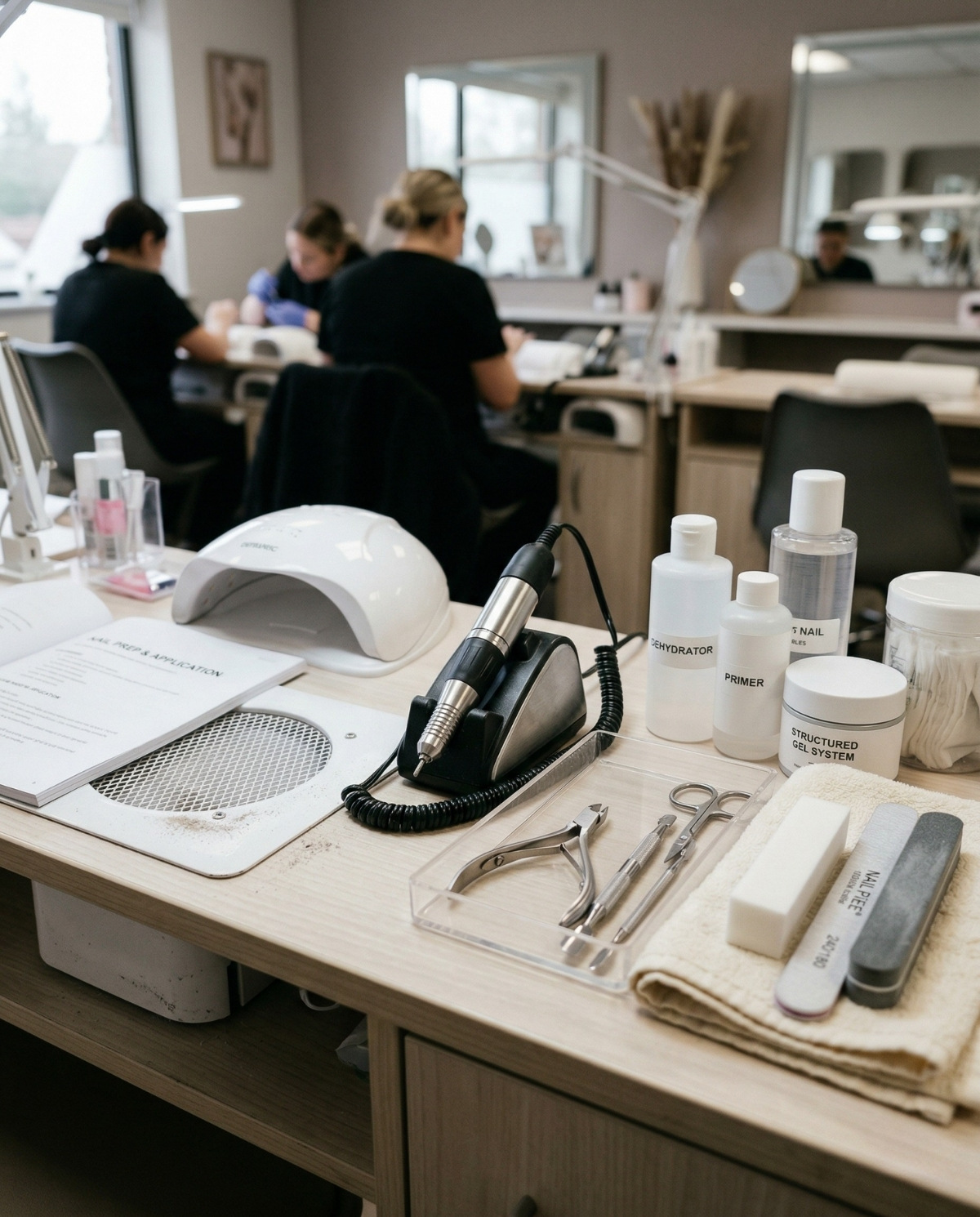
When considering what beginner nail techs need, your list of things for nail techs should prioritize the health of the technician as much as the client. Ensure your nail technology tools include a HEPA-filtered dust extraction system. In 2026, this is no longer "optional" - it is a critical requirement for a long, healthy career.
The Core Architecture - Understanding Professional Tools
A common mistake beginners make is overspending on trendy polish colors while neglecting the "workhorse" tools that actually generate revenue. When we look at what nail technicians use, we must distinguish between your operating costs (files, buffers, acetone) and your capital investments.
Defining "Permanent Items" in the Salon
In a professional curriculum, you will frequently encounter the question: What are permanent items utilized in nail technology known as? Short answer, these are officially categorized as Equipment and Multi-use Implements.
Unlike "disposables," these items represent your long-term overhead. High-quality stainless steel nippers, ergonomic armrests, and 48W+ UV/LED lamps are the infrastructure of your business. Investing in "autoclave-ready" steel ensures you meet the strict 2026 clinical standards for sanitation.
Specialized Hygiene and the Clinical Standard
Modern sanitation has moved beyond a simple soak in blue liquid. High-performance nail technology tools, such as the salmon hygiene technology nail brush, are now staples because their bristles are designed to resist bacterial load while providing deep debridement. Using technology-backed hygiene tools is the fastest way to signal to a client that they are in safe, professional hands.
The Regulatory Shift (MoCRA 2026)
As reported by the FDA's Modernization of Cosmetics Regulation Act (MoCRA) updates, "brand knowledge" is now a legal safety requirement. In 2026, the FDA has full Mandatory Recall Authority. This means if the products used in nail technology are linked to adverse reactions, they can be pulled from your station immediately. Your education in product chemistry is no longer optional-it is a legal necessity for professional practice.
Structural Mastery - The Geometry of Extension
Advanced Procedures: The "Architecture" of the Nail
The hallmark of a premium technician in 2026 is the ability to create "Quiet Luxury" extensions - extensions that are structurally sound but look virtually indistinguishable from natural nails. This requires mastering the "C-curve" and the "Apex," the two pillars of professional nail technology procedures.
- The C-curve is the horizontal arch of the nail when viewed from the front (the "tip"). A perfect C-curve provides the structural "vault" needed to prevent the nail from being too flat and weak, much like the arch of a bridge.
- The Apex is the highest point of the nail enhancement when viewed from the side. It serves as the "stress point" or reinforcement zone - by placing the bulk of your product here, you ensure the nail can absorb daily impacts without cracking at the natural free edge.
The Architect’s Secret: Nail Forms
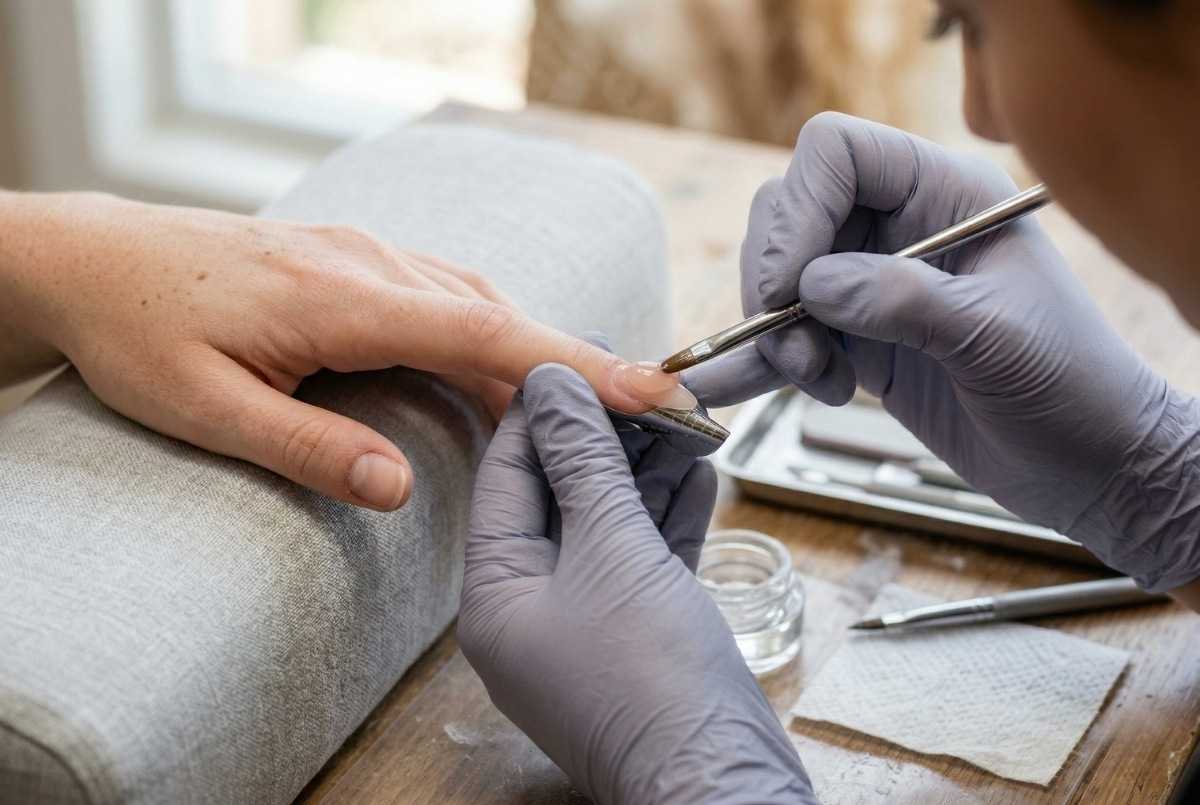
Understanding how to put on a nail form is the "make or break" skill for any student. Unlike plastic tips, which can create weak points at the glue line, a form allows you to sculpt a custom extension based on the specific geometry of the client’s finger. Learning how to put nail form templates correctly - ensuring a "flush" fit against the hyponychium-prevents the structural failure that leads to painful "breaks."
Structural Integrity with Builder Gels
Once the form is set, the choice of material is critical. Professionals are increasingly favoring specialized products like Builder Gel or "Builder-in-a-Bottle" (BIAB) systems. As noted by salon trend reports, these "structured manicures" are driving 20-30% higher service prices because they maintain the nail’s "lipid barrier" while providing extreme durability.
Precision Tech-E-Files and Bioactive Science
Precision Tech: Mastery of the E-File
The e-file is perhaps the most misunderstood tool in a nail technology kit. When you learn how to use an e-nail (electric file), you aren't "drilling" the nail; you are performing "micro-exfoliation." Using diamond-bit technology at low RPMs allows you to clean the lateral folds and remove non-living tissue with surgical precision, a technique that significantly increases the longevity of your gel application.
The Science of Strengthening
We are currently in a "Skin-First" era of nail care - a professional philosophy that prioritizes the biological health of the nail plate and surrounding living tissue over just the aesthetic color. Systems like OPI Nail Envy with Tri-Flex Technology utilize a triple-layer reinforcement that mimics the nail's natural keratin structure (the fibrous, structural protein that gives your nails their physical hardness).
By understanding how Triflex technology - which creates a flexible "liquid shield" to prevent snaps - and nail matrix technology (treatments designed to support the matrix, or the "growth center" located beneath the cuticle where new cells are born) interact with the nail bed, you can offer restorative services. This expertise is vital for helping clients recover from "over-filing" (a common injury where the nail's protective layers are thinned by improper e-file use), allowing you to rebuild their nail health from the root up.
The Professional Evolution of Press-Ons
If you think press-ons are "cheap," think again. In 2026, pro nail press-ons are "Custom Gel Mandates." Using press-on nail technology to create bespoke, hand-painted sets for high-end clients allows you to generate income even when you aren't physically behind the desk.

Expert Insight Box: Clinical Efficacy
A 2025 clinical evaluation published by MDPI proved that new bioactive formulations containing calcium silicate can increase nail thickness by 39% and strength by 64% in just 28 days. As a student, your value increases when you can explain the reason behind the nail technology products you use-transitioning from a "service provider" to a "nail health consultant."
The Expert Hand-Off-Aftercare and Career Growth
Professional Aftercare: Managing Mechanical Stress
The service doesn't end at the top coat. The most successful technicians provide aftercare advice that focuses on "mechanical stress" management. Educating your client on why they should avoid using their nails as tools ensures your work stays pristine, leading to the five-star reviews that drive your career growth.
The Professional Pathway
The global nail salon market is on an aggressive upward trajectory, set to hit $122.7 billion by 2035. However, the market is bifurcating: "discount" salons are struggling, while "specialist" boutiques are thriving. By choosing a comprehensive cosmetology licensure pathway that emphasizes these advanced nail tools and uses, you are positioning yourself in the high-value tier of the market from day one.
Ready to Master Your Craft? Your Future in Beauty Starts Here.
The shift toward "Medical-Grade" services and bioactive nail health isn't just a trend - it is a massive opportunity for the next generation of specialists. At Atlanta Beauty Academy, we don’t just teach you how to pass an exam; we prepare you to lead the industry. Our "Salon Ready" philosophy means that from the moment you step onto our clinic floor, you are working with the high-caliber nail technology tools and professional-grade products used in nail technology that high-end boutiques demand.
Our Programs: Tailored for Professional Excellence
- Nail Technician Program: Our flagship course for future specialists. You will master the exact nail technology procedures discussed in this guide.
- Master Cosmetologist Program: A comprehensive journey through hair, skin, and nails for those who want a versatile, limitless career.
- Master Barber Program: Master the art of hair cutting, coloring, shaving, and styling in an environment that celebrates creativity and precision.
- Esthetician Program: Focusing on advanced skin treatments and the science of the lipid barrier.
- Instructor Training: For the seasoned pro ready to lead the next generation of artists.
Join a 20-Year Legacy of Excellence
For over 20 years, Atlanta Beauty Academy has been the heartbeat of the local beauty scene. Don't just choose a school-join a legacy. We invite you to see our experience in action. Walk our floors, meet our instructors, and feel the energy of a campus dedicated to your success.
Are you ready to see your future in person?
Simply head over to our Contact Us section or fill out the form at the end of this article to schedule a tour or speak with our admissions team. Your seat in our next program is waiting-let’s build something beautiful together.
FAQ: Navigating the Industry
What tools do you need to do nails at home vs. at beauty school?
Home nail-care equipment often lacks the power and precision of professional gear. In school, you learn to use "high-torque" e-files that don't "stall" and LED lamps with specific nanometer wavelengths. These are essential for preventing the "uncured gel" allergies often caused by weak, consumer-grade lamps.
How do I choose the best products used in nail technology for my kit?
Focus on "System Consistency." Use the base, color, and topcoat from the same manufacturer to ensure the chemical bonds are compatible. This reduces "lifting" and "peeling," which are the most common complaints from dissatisfied clients.
What tools do you need to be a nail technician in a medical-grade salon?
You’ll need specialized nail technology tools including an autoclave for sterilization, medical-grade E-file bits (like carbides and ceramics), and a nail technology kit that features hypoallergenic, HEMA-free products to mitigate the risk of contact dermatitis.