



How To Become A Barber: A Step-By-Step Career Guide
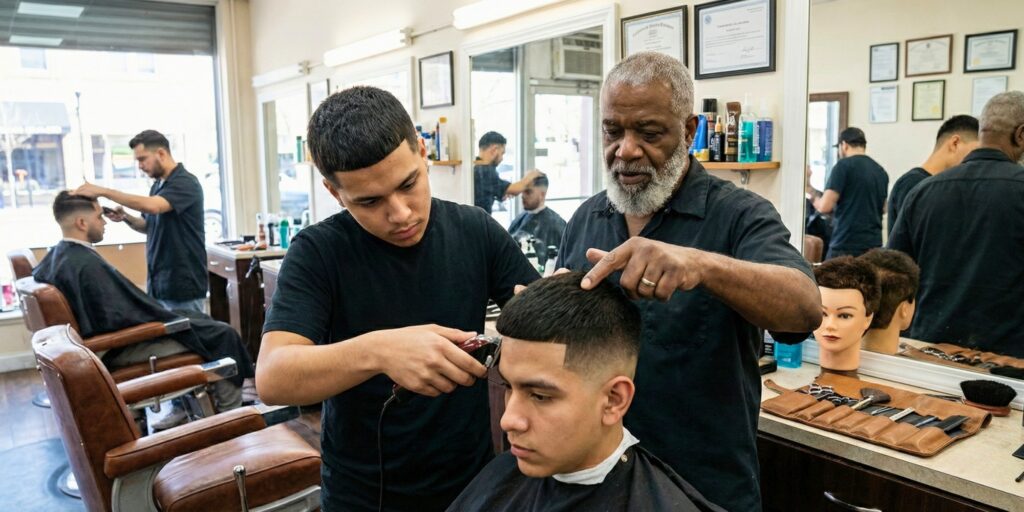
If you’re thinking about becoming a barber, you’re usually juggling two things at once: the practical steps and the emotional risk. You want a clear path, but you also want to know you won’t waste time, money, or confidence.
I’ll walk you through what barbering is really like, how licensing typically works in the U.S., how to choose a training path, and what the learning curve (and income reality) usually looks like.
Introduction To Barbering: What This Career Really Looks Like
Barbering is a skilled service profession. You’re not only “cutting hair.” You’re delivering a result that has to look good in the mirror and feel good to the client - every time.
In real life, the job includes:
- Technical craft: fades, tapers, scissor work, clipper control, lineups, finishing
- Hygiene and safety: sanitation rules, disinfection, clean setups (this is taken seriously and tested)
- Client experience: consultation, managing expectations, building loyalty
- Stamina: standing, repeating precise movements, staying focused all day
On the career side, the U.S. Bureau of Labor Statistics (BLS) includes barbers in its Occupational Outlook Handbook and gives a reliable national snapshot of pay and demand. It’s not a promise of what you will earn, but it’s a trustworthy baseline.
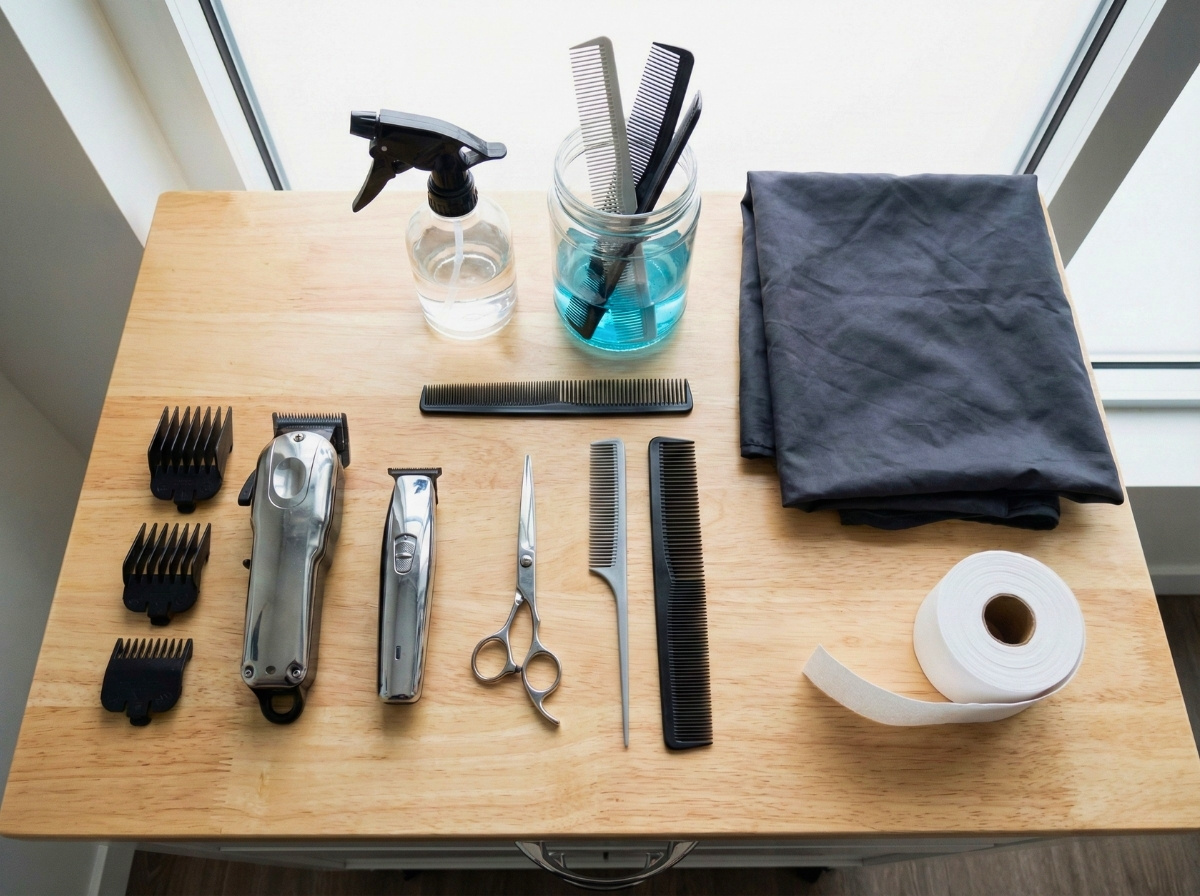
Should You Get Into Barbering? A Realistic Fit Check
Barbering is a trade in the best sense: you learn a hands-on skill, you improve through practice, and you’re usually required to meet licensing standards.
I’d seriously consider barbering if you relate to these:
- You like getting better through repetition (same skills, cleaner every time)
- You’re okay being a beginner for a while
- You can handle people time (even if you’re naturally quiet)
- You want a career where effort turns into visible improvement
You may want to rethink it (or at least plan carefully) if:
- You need quick “expert” results
- You strongly dislike customer-facing work
- You get frustrated when improvement is slow and uneven
Small example that shows the real job:
A client says, “Give me a low fade.” A newer barber may jump in. A professional pauses and asks two quick questions:
- “Do you want skin at the bottom or keep it darker?”
- “How high should the fading go around the temples?”That short conversation prevents most beginner mistakes - and builds trust fast.

Is Barbering Worth It? Pay, Demand, And The Ramp-Up Reality
Let’s talk numbers, because this is where people feel anxious.
What The BLS Pay & Outlook Data Actually Say
According to BLS, the median hourly wage for barbers was $18.73 in May 2024.
If you translate that into a simple full-time estimate (40 hours/week), that’s roughly $38,958 per year - but that math is just a conversion and doesn’t capture tips, pricing, commission/booth rental models, or self-employment swings.
BLS projects overall employment for barbers, hairstylists, and cosmetologists to grow 5% from 2024 to 2034, and it estimates about 84,200 openings per year on average across the combined group.
The Part Statistics Can’t Tell You
Your personal “worth it” depends on:
- Your location and local pricing
- Your speed and consistency
- Your ability to retain clients (rebooking is everything)
- Your work model (employee vs commission vs booth rent vs self-employed)
So yes - barbering can be worth it, but it’s usually not instant. Most people build momentum in stages.
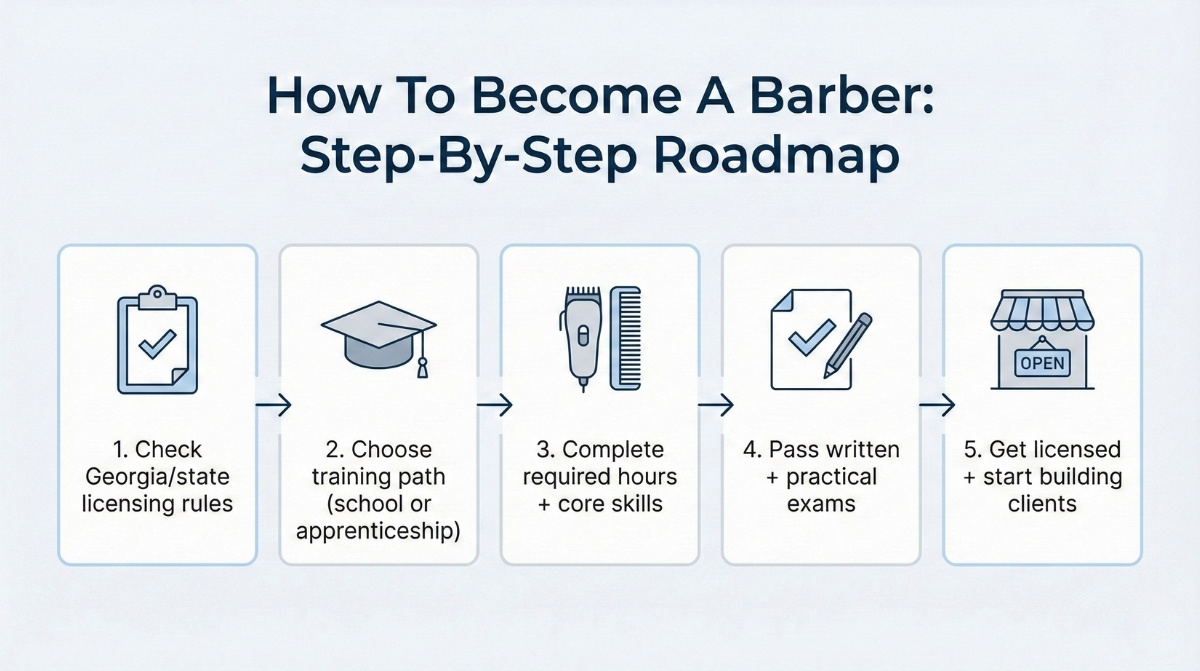
Steps To Becoming A Barber: The Simple Roadmap That Works In Any State
Here’s the clean truth: the exact requirements vary by state. But the structure is similar almost everywhere.
Step 1: Check Your State Licensing Rules First (This Prevents Expensive Mistakes)
Before you choose a school or shop, go straight to your state’s barber/cosmetology board site and confirm:
- Approved training options (school and/or apprenticeship)
- Required hours (if listed)
- Exam requirements (theory, practical, or both)
- Application steps
- Rules if you move states later
Why I’m firm about this: licensing is not a vibe - it’s regulated.
If you plan to move later, it’s smart to learn how reciprocity/endorsement works. Pennsylvania, for example, explains that if you’re licensed in a state without a reciprocity agreement, you may need an endorsement examination (theory-only) and a certification letter from your current state board; otherwise, you may need to complete both theory and practical exams.
Step 2: Choose Your Training Route (School Vs Apprenticeship)
Most people enter one of two ways:
Barber School
- Structured curriculum and tracked progress
- Usually strong on sanitation/theory and exam prep
- Often a smoother path if you want a clear routine
Apprenticeship (Where Allowed)
- Real shop repetition (you learn with real pace and real clients)
- Mentorship can be powerful if the trainer is excellent
- Some states explicitly allow earning while training under an approved program
For example, California’s Board of Barbering and Cosmetology describes an apprenticeship program that allows an apprentice to earn a wage while studying under the guidance and supervision of a board-licensed trainer in a licensed establishment.
A practical way to decide:
- If you learn best with structure → school often fits better.
- If you learn best by doing all day, and you can get into a legitimate approved program → apprenticeship can be a strong option.
Step 3: Build The Core Skill Stack (This Is How You Become “Qualified” In Real Life)
Being a qualified barber isn’t only “I finished training.” It’s “I can consistently deliver.”
Focus on:
- Sanitation and safe habits (this is where many beginners get sloppy)
- Clipper fundamentals (angles, guard control, blending)
- Basic scissor control (shape, balance, clean finish)
- Lineups/detailing (precision without pushing too hard)
- Consultation skills (so you cut what they mean, not what they said)
Step 4: Pass Your Exams (And Treat Sanitation As A Major Topic)
Exams vary by state, but most include theory and/or practical testing. Your state board (or its approved testing provider) will outline what’s required and how to register.
Step 5: Get Licensed And Start Working (The Real Learning Starts Here)
Once you’re licensed, your early goal is simple:
- Be consistent
- Get faster without getting sloppy
- Build repeat clients
Is Barbering Easy To Learn Or Hard To Learn?
Both statements can be true.
It’s easy to start, because the basic tools and concepts are learnable.
It’s hard to master, because every head is different, and clients bring pressure.
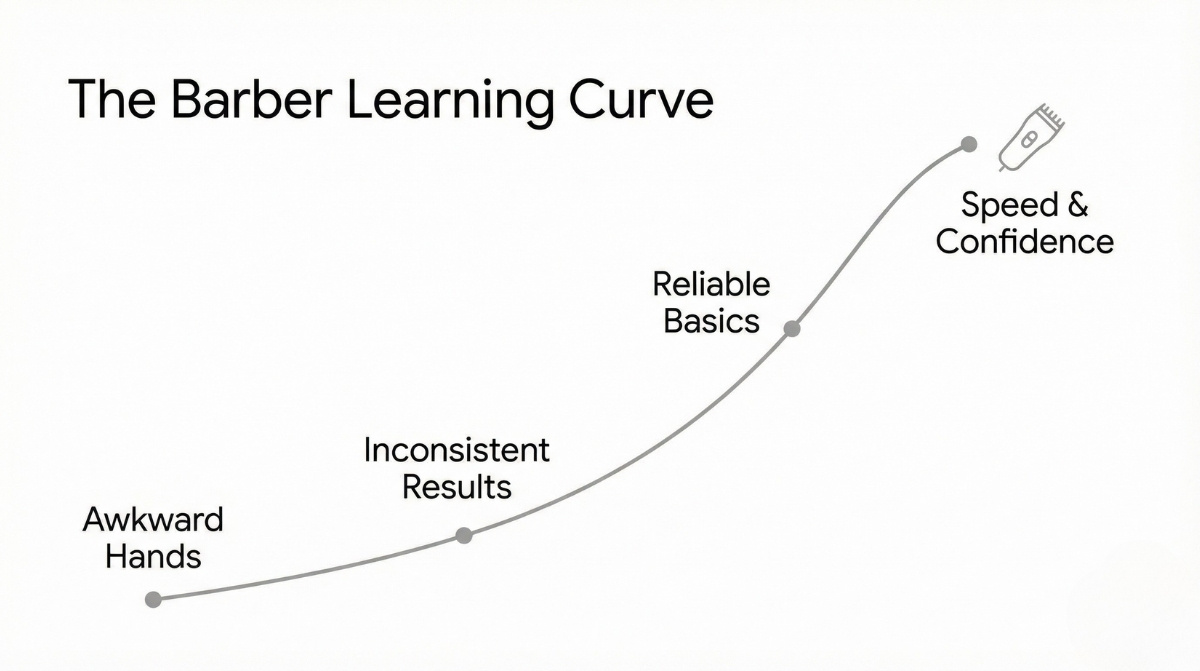
A realistic learning curve often looks like:
- Tools feel awkward
- Results are inconsistent
- You get reliably “clean”
- You get clean and fast
If you’re worried you’re “not talented,” here’s the good news: barbering rewards discipline more than talent.
How To Learn Barbering Faster Without Cutting Corners
When people want to learn fast, what they usually want is a plan that feels controlled.
What actually speeds you up:
- Repeating fundamentals (same patterns until your hands don’t panic)
- Getting feedback (mentor, instructor, senior barber)
- Practicing consultation (because mistakes often start before the first clipper touch)
Simple weekly structure (example):
- 2 practice sessions: blending drills
- 1 session: scissor basics (shape + balance)
- 1 session: lineups and finishing work
- 1 session: consultation practice using photos and clear questions
Consistency beats intensity.
Learning At Home Or Online: What Helps, And What To Watch Out For
Home and online learning can be a strong head start - especially for tool comfort and fundamentals.
Great at-home focus areas:
- Mannequin drills for blending and control
- Tool handling and guard transitions
- Studying sanitation theory and your state rules
- Practicing consultations with haircut reference photos
The important caution: licensing rules still apply, and most states require approved training and exams. So think of home/online learning as “prep + support,” not the whole path.
Your Next Step: Train With Us At Atlanta Beauty & Barber Academy
If you’re reading this and thinking, “Okay… I’m serious. I just need a clear path,” that’s exactly what we help with at Atlanta Beauty & Barber Academy.
Our Master Barber Program Is Built For Georgia Licensure
In Georgia, barbering requires 1,500 hours for licensure - and our Master Barber program is designed around that requirement.
Inside the program, we don’t only teach you “how to cut.” We train you like a working professional, combining theory and hands-on practice across the skills that matter most for the license exam and real shop life - cutting, styling, shaving, chemical services, sanitation, professionalism, and salon management.
What that means for you (in real outcomes):
- You build a strong foundation in core barbering services (not random trends)
- You learn sanitation and safety the right way (this is a major part of testing and professional standards)
- You practice the client experience side of barbering - consultations, communication, and consistency - so you’re not shocked when you start taking real clients
You’re Not Locked Into One Career Path After Barber School
One thing many future barbers don’t realize: barbering can open multiple doors over time.
With the right training and license, you can build toward paths like:
- Shop barber (employee, commission, or booth rental - depending on the shop model)
- High-retention, appointment-based barber with a loyal clientele
- Specialty services (like straight-razor shaving where allowed, or hair enhancement work as you advance)
- Long-term growth into instructor training when you’re ready to teach (we offer Instructor Training as well)
And if you love the wider beauty industry, we also train students in Master Cosmetology, Esthetics, Nail Technology, and Instructor training, which can support a more flexible career strategy over time.
What We Can Help You Do After You Enroll
When people feel stuck, it’s usually because they don’t know how to turn “interest” into action. Our admissions team guides you through the enrollment process and required documents, so you can focus on your goal instead of guessing your next move.
If you have questions - about start dates, schedule fit, program details, or what barbering looks like in Georgia - reach out.
If you’re interested, just leave your info in the contact form right below this article and we will get you in touch. After that, you can tell us:
- Whether you’re starting from scratch or switching careers
- Your weekly availability
- Your goal (barber shop job, building clientele, long-term shop ownership, etc.)
We’ll help you map out a plan that feels realistic - and gets you moving!