



Nail Tech Program vs Cosmetology Program: What’s the Difference & Which Should You Choose?
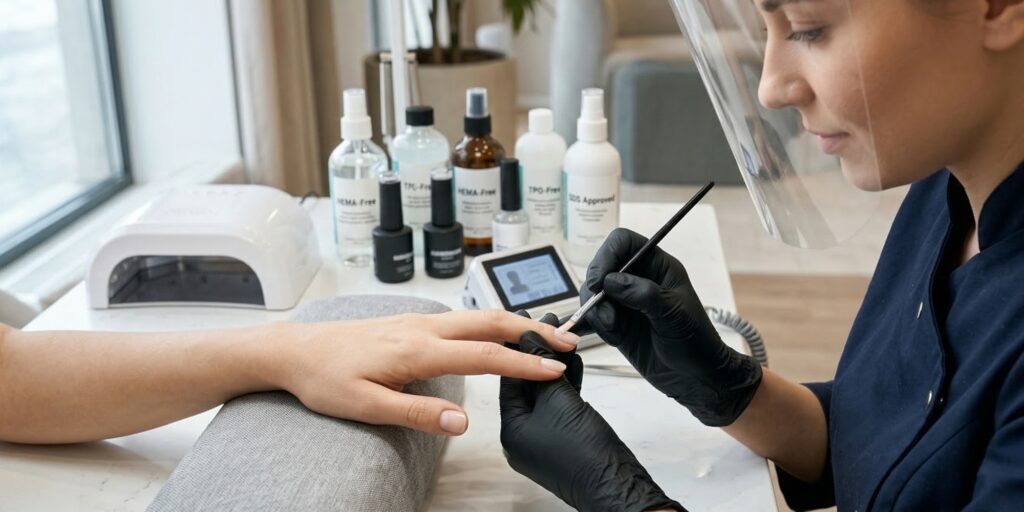
Choosing a career in beauty isn't just about a love for aesthetics; it's a strategic move into a specialized workforce. If you’re at the starting line, you’re likely weighing a cosmetology or nail technician program to see which fits your long-term lifestyle. You aren't just choosing a school; you’re deciding whether you want to be a "Beauty Polymath" or a "Technical Specialist."
Beauty work increasingly rewards technical skill, sanitation knowledge, and specialization. Your choice of education can affect how quickly you qualify for licensure, the services you can legally perform, and how prepared you are to work safely with professional products.
Key Takeaways for Your Career
- Speed to Market: A Nail Technology Program (300–600 hours) is the fastest bridge to licensure and entrepreneurship.
- Market Resilience: The Nail Salon Market is growing at a 10.7% CAGR, outperforming many general beauty sectors (Technavio, 2025).
- Safety First: Professional training helps students build strong habits around sanitation, chemical safety, and state-law compliance. MoCRA adds federal oversight for cosmetic products, while OSHA workplace-safety rules still matter in salon environments.
- Earning Potential: Specialization may support premium pricing, especially when paired with strong technique, client retention, and a distinctive service menu.
Defining Your Scope: Generalist vs. Specialist
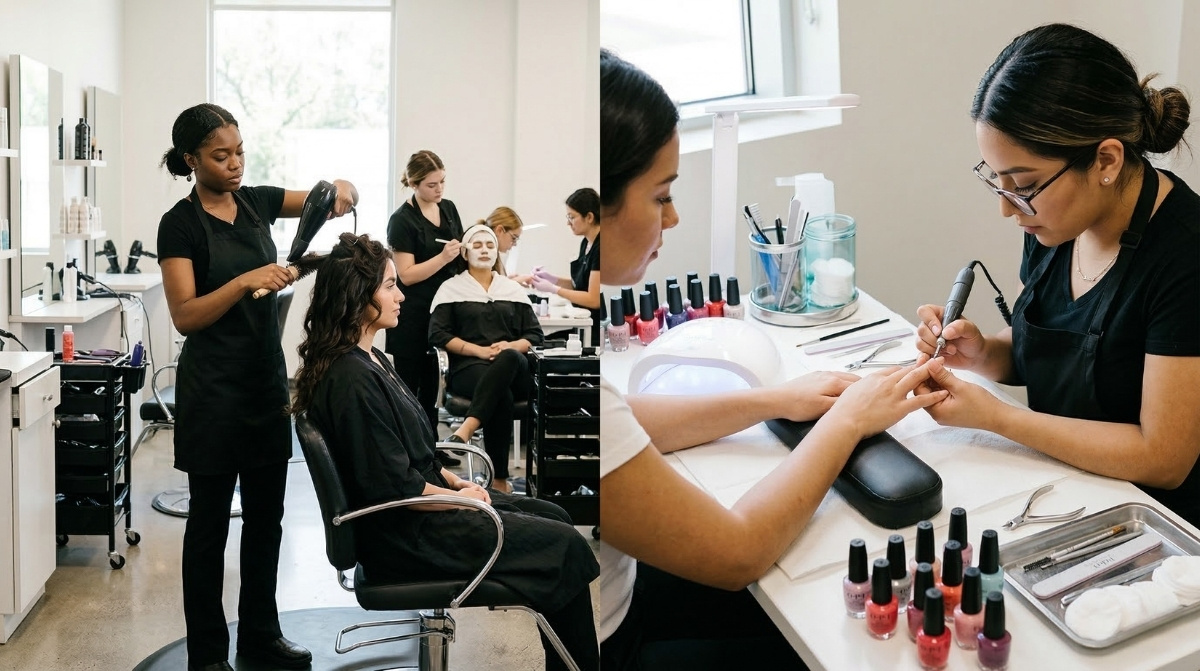
When evaluating the difference between cosmetology and nail technology, the conversation usually starts with "what you can do," but it should start with "how you want to work."
“Cosmetology is the broader licensure pathway. In Georgia, it requires 1,500 hours and prepares students in hair, skin, and nail services, creating a wider service menu than a nail-only license. You are trained in the chemical mechanics of hair, the physiology of the skin, and the structural integrity of the nails. This path is for the professional who wants "Chair Sovereignty" - the ability to pivot their menu based on whatever trend is currently dominating the market.
Conversely, a nail technology program is an intensive deep-dive into a single extremity. By focusing on 300 to 600 hours (depending on your state) of specialized training, you move quickly into nail-focused training such as chemistry, product safety, nail structure, disorders and diseases, infection control, and client services. To help you visualize the curriculum and the specific skills you'll master in the classroom, we’ve put together a beginner's guide to launching your nail technology career, which breaks down the foundational steps of the craft.
Expert Insight: The 2026 Regulatory Shield
Beauty products are facing more federal oversight under MoCRA. The law requires the responsible person for a cosmetic product - typically the manufacturer, packer, or distributor named on the label - to report serious adverse events to FDA. Separately, OSHA requires salons to maintain access to Safety Data Sheets for hazardous products. Strong beauty programs may help students understand product safety, sanitation, and chemical-risk awareness, but MoCRA does not itself create a general federal curriculum requirement for beauty schools.
The "Artist" Identity: Credential vs. Career Branding
There is often a psychological gap between being a nail technician or nail artist. While the license is your legal "floor," your branding is your "ceiling."
In a professional nail tech program, you learn the technical "Why" behind the "How." You’ll study nail structure, product chemistry, sanitation, and techniques that help reduce over-filing and other avoidable damage. A "technician" provides a service; a "nail artist" provides a transformation. In 2026, the most successful graduates are those who use their technical school foundation to launch specialized "Niche Studios."
For those who choose the broader cosmetology path, the opportunities expand beyond the manicurist's desk. It is worth exploring the diverse careers you can pursue with a cosmetology license, as this credential allows you to transition into editorial styling, film sets, or even high-level brand education.
The ROI of Time: Launching Your Business Faster
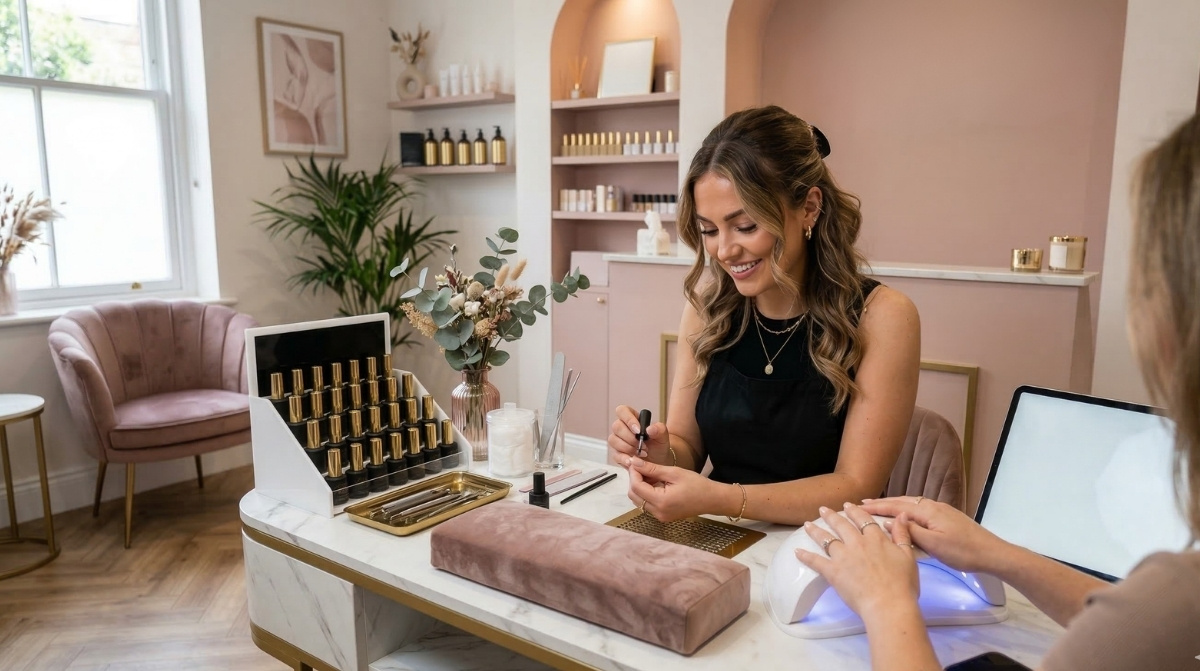
If you are looking for the most efficient "Time-to-Income" ratio, the nail technology program wins on speed. You can often complete your boards and be behind a desk in under six months. This lower "Opportunity Cost" is ideal for the entrepreneur who wants to start their own brand or salon suite without the debt of a year-long program.
However, the "Career Safety Net" of cosmetology shouldn't be ignored. While it takes longer to finish, you are rarely affected by niche-specific downturns. If you love the variety of the beauty world but find yourself specifically interested in the technical differences between grooming styles, you might also want to look at how barbering vs. cosmetology licenses compare in terms of earning potential and daily scope.
Expert Insight: The $9.48 Billion Growth Paradox
The nail sector is currently experiencing a "Premiumization" trend. While general beauty growth is steady, research from Technavio's 2025-2029 Nail Salon Market Report shows the specialized nail market expanding at a 10.7% CAGR. Consumers are increasingly seeking out "Specialty Boutiques" over all-in-one salons.
The Rise of "Niche Mastery" and Clinical Care
One factor that sets a professional education apart in 2026 is the focus on the biological integrity of the nail. While DIY tools are more accessible than ever, they lack the technical foundation required to manage the physiological risks of the nail unit.
Recent literature highlights a growing push for "Wellness-First" protocols in licensed environments. For instance, a 2020 study in Skin Appendage Disorders found that a specific water-soluble nail-strengthening formulation improved nail hardness scores by 26.7% after 84 days in participants with brittle nails. While this was a specific study on a targeted intervention, it underscores a broader trend: the integration of evidence-backed products into professional care.
Furthermore, some recent literature, such as a 2025 review on Advanced Dry Manicure Techniques, suggests that dry manicure protocols may reduce certain risks associated with water soaking, such as excessive nail plate expansion. While stronger comparative clinical evidence is still developing, this literature reflects a growing professional interest in techniques that prioritize nail preservation, sanitation, and predictable product performance.
So Which Path is Yours?
Choosing between a cosmetology or nail technician program is ultimately a choice of focus.
- Choose Cosmetology if you want the "Grand Tour" of beauty and the freedom to work in hair, skin, or nails depending on where the market demand shifts.
- Choose Nail Technology if you have a "Macro Eye" for detail, a love for chemical science, and a desire to own your own specialized studio in record time.
Your future isn't about the license you hold - it's about the mastery you claim.
Ready to Master Your Craft and Launch Your Legacy?
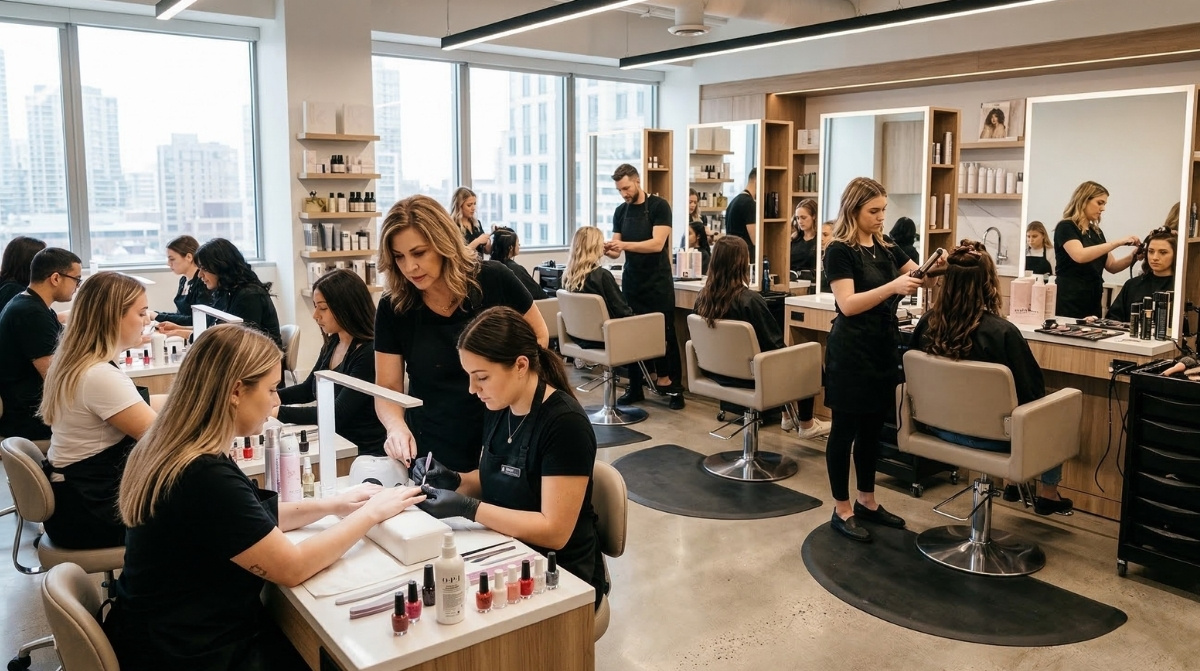
The beauty industry in 2026 doesn't just need more workers; it needs more visionaries. At Atlanta Beauty Academy, we don't just teach you how to pass a state board exam - we prepare you to lead the market. Our "Salon Ready" approach is designed to bridge the gap between the classroom and the high-end professional world. From day one, you are immersed in an environment that mimics the pace, professionalism, and clinical standards of the nation’s top boutiques.
When you join our academy, you aren't just a student; you’re an apprentice in a 20-year legacy of excellence. We provide the mentorship you need to turn your "secret ambitions" into a sustainable, high-growth career.
Programs Built for Your Future
Whether you are ready to become a specialized authority or a versatile beauty polymath, we have a curated pathway for you:
- Nail Technician Program: Our flagship specialist course. Master advanced chemical science, medical-grade sanitation, and high-end nail artistry in a program designed for the modern entrepreneur.
- Master Cosmetologist Program: The ultimate licensure pathway. Gain a comprehensive education in hair, skin, and nails, giving you the "Chair Sovereignty" to work in any corner of the industry.
- Broadening Your Horizons: We also offer specialized tracks in Esthetician, Master Barber, and Instructor Training for those looking to round out their skill set or find a different niche in the beauty landscape.
Take the First Step Toward Your Dream
Choosing a school is the most important career decision you will make. Why not see the difference for yourself? We invite you to step inside our modern facilities, meet our seasoned instructors, and feel the energy of a campus that has been shaping beauty leaders for over two decades.
Don’t leave your future to chance. Schedule a personal tour or chat with our Admissions Team today by filling the form below this article. Let’s build your legacy together.
FAQ: The Professional Reality Check
What happens if I get a Nail Tech license but decide I want to do hair later?
You will need to re-enroll in a full cosmetology program. While some hours might transfer depending on your state board, you usually have to complete the hair-specific modules from scratch. This is why we recommend the "Specialist" path only if you are certain that hair isn't your primary passion.
Is the "Nail Tech" market oversaturated in 2026?
Demand for nail services remains strong, but local competition varies by area, pricing, and specialty. Nationally, the U.S. Bureau of Labor Statistics projects 7% employment growth for manicurists and pedicurists from 2024 to 2034, and Technavio forecasts strong expansion in the nail salon market. In practice, specialization, service quality, and client retention matter more than generic ‘oversaturation’ claims.
Does a cosmetology license allow me to work in a medical spa?
A cosmetology license can be a strong foundation for beauty services in a spa setting, but med-spa work is service-specific and may require additional esthetics training, device-specific training, medical supervision, or separate licensure. For example, in Georgia, cosmetic laser practitioners are licensed through the Georgia Composite Medical Board.