



Can You Open or Own a Salon Without a Cosmetology License?

The global salon market is expanding at a remarkable rate, reaching an estimated 249 billion dollars in 2026, according to a market analysis by Custom Market Insights. If you are an entrepreneur looking to invest or a passionate stylist wanting to scale a brand, your mind is likely spinning with big ideas. You want to be your own boss, build a beautiful community space, and tap into high-margin revenue.
But then, reality hits. You start wondering about the legalities. Do you need to spend months in school just to handle the business side? It is easy to feel overwhelmed by the fear of state board fines or administrative red tape. Let's break down the rules directly so you can build your dream safely, legally, and profitably.
Key Takeaways
- Ownership is Legal: In many states, you can own the business entity, lease, or real estate of a salon without holding a personal cosmetology license.
- Hands-Off Restrictions: Unlicensed owners can manage the business side, but they cannot perform regulated beauty services. In California, unlicensed activity and employing unlicensed individuals can trigger fines of up to $1,000.
- Separate Permits Needed: Opening the doors usually requires a salon, shop, establishment, or similar facility license from your state board or licensing agency. This is separate from a personal beauty license and may also be separate from your city or county business license.
- The Education Edge: Earning a personal license protects your investment, helps you understand staff performance, and prevents you from being completely dependent on hired managers for technical decisions.
Can You Own a Salon Business Without Holding a Personal License?
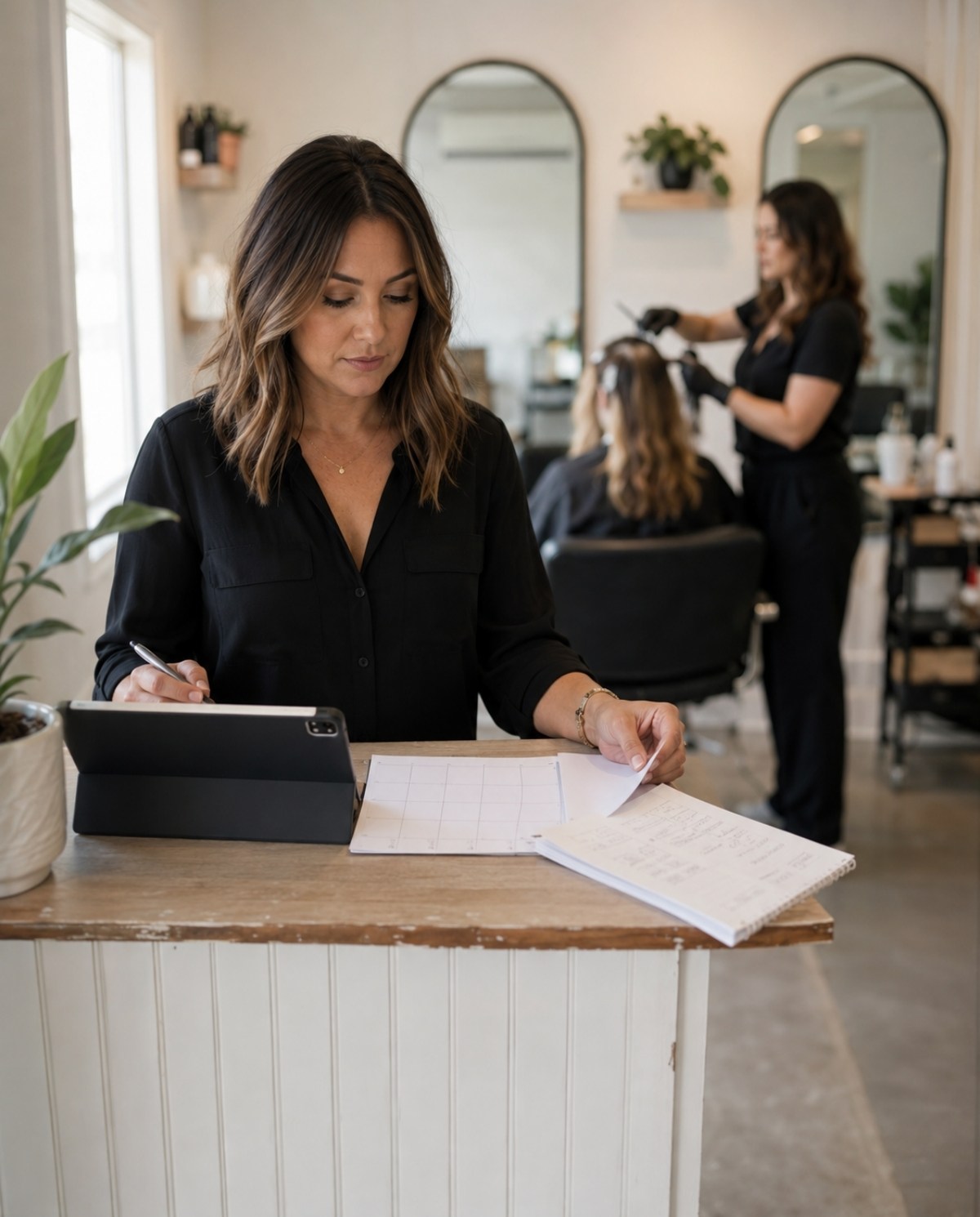
The short answer is yes. You can usually own a beauty business without a cosmetology license. State boards often separate the business entity from the hands-on professional. If your primary goal is to act as a financial investor, manage marketing, handle payroll, sign the lease, and build the brand, you generally do not need to attend beauty school just to own the salon business.
However, there is a massive legal boundary here known as your scope of practice, which is the legally defined limit of what your professional credentials allow you to do. While you can handle the business, you cannot practice cosmetology yourself without a valid individual license. You cannot step in to wash a client's hair, trim a bang, apply color, perform nail services, or offer skin care treatments during a busy weekend rush. If you want to explore what tasks are actually permitted for uncredentialed staff members, you can read our detailed breakdown on the jobs you can do in cosmetology without a license.
According to the official California Board of Barbering and Cosmetology Act and Regulations, working as an unlicensed individual can carry a $1,000 administrative fine, and an establishment license holder can also face a $1,000 fine for employing unlicensed persons. The legal risk is not ordinary business ownership. The risk begins when an unlicensed owner crosses into hands-on services, regulated sanitation duties, or service-area work that the state expects a licensed professional to control.
This means that if you choose the unlicensed investor path, you are heavily reliant on your licensed staff. If a stylist calls out sick, you cannot legally step behind the chair to save the appointment. That can lead to lost revenue, unhappy clients, and scheduling problems that a licensed owner may be better equipped to handle.
Navigating the Legal Paperwork: Establishment Licenses and State Boards
To keep your doors open, you must understand the distinction between personal credentials and commercial permits. Most states require a salon, shop, establishment, or similar facility license before you can legally serve the public. The exact title changes by state, but the idea is the same: your individual license authorizes a person to perform services, while the establishment license authorizes a location to operate as a regulated beauty business.

What is an Establishment License?
An establishment license is the state-level approval that permits a physical salon location to operate. Depending on the state, the application may require owner identification, business-structure information, a lease or bill of sale, facility details, equipment requirements, sanitation setup, restroom access, plumbing, ventilation, posted licenses, required signs, and inspection readiness.
A practical way to think about it is this: your business license lets you operate as a business in a city or county, but your salon or shop license lets you operate as a regulated beauty establishment. Those are not always the same thing. For example, the Georgia State Board of Cosmetology and Barbers explains that a salon/shop license is not the same as a business license, and owners must obtain a business license from the city or county where the establishment is located.
State-by-State Variations
Cosmetology regulations differ heavily by state, meaning a business model that works in one area might face roadblocks in another. You must look up the specific cosmetology rules and regulations for your location to avoid opening delays. To make this easier, we have compiled a guide to cosmetology license requirements by state that outlines required hours, exam structures, and out-of-state transfer rules.
If you plan to rent out individual private suites to independent beauty professionals, guidelines from the Texas Department of Licensing and Regulation state that an establishment renting space to mini-establishments is called a gallery establishment. Texas also says establishments that lease space must include an Independent Contractor List with application materials and are responsible for maintaining all common areas. This makes suite rental more complicated than simply collecting rent from independent workers.
Texas also has required public-safety postings. Under Texas law, licensed schools and establishments must display an approved human-trafficking information sign in English, Spanish, Vietnamese, and any other language required by commission rule. The TDLR human trafficking notice explains that the sign must be placed in a prominent location where the public can see it.
Other states put a heavy focus on owner documentation during the application process. For instance, the Georgia State Board of Cosmetology and Barbers salon/shop application requires a lease or bill of sale, a notarized application and affidavit, secure and verifiable identification documents, and a separate owner affidavit for each owner. Georgia also states that the business name must include the word "salon" or "shop" and must not mislead the public about the operation of the establishment.
In Arkansas, the regulatory framework is integrated directly into public health infrastructure. The Arkansas Department of Health Rules for Cosmetology and Body Art require cosmetology establishments and mobile salons to obtain a current establishment license before operating. Arkansas rules also address practical facility requirements such as continuous hot and cold running water, approved sewage disposal, toilet facilities, plumbing, garbage control, cleanliness, ventilation, and general repair.
Understanding these cosmetology state board expectations early prevents you from signing a commercial lease on a building that cannot legally be brought up to code.
The Risk of Skipping the Rules: Violations and Fines
It can be tempting to look for shortcuts or let unlicensed friends work out of your space to save money. However, state boards employ active inspectors who conduct visits to check for compliance, and many boards allow complaints from clients, workers, or competitors.
The financial and reputational fallout of a violation can destroy a young business. Fines for cosmetology infractions add up quickly, ranging from minor penalties for improper tool storage to serious penalties for allowing unlicensed individuals to perform regulated services. The California Board of Barbering and Cosmetology enforcement page, for example, lists complaints involving unlicensed practice, unsanitary conditions, gross negligence, incompetence, and misrepresentation of services.
When an unlicensed salon operates, it also puts public safety at risk. Beauty services are not just cosmetic in the casual sense. Hair color, chemical texture services, skin care treatments, waxing, nail services, disinfection, and product handling all involve health and sanitation rules. California's official rules define skin care services as including facials, exfoliating, cleansing, and beautifying the skin, but only when they do not result in the ablation or destruction of live tissue. That is why out-of-scope services can create serious liability for both the worker and the owner.
Protecting your initial capital investment and your reputation means prioritizing compliance from day one. A safer setup includes verifying every worker's license, keeping copies of licenses on file, posting required documents, checking sanitation procedures, confirming insurance coverage, and reviewing your state board's inspection checklist before opening.
Why Going to Beauty School Makes You a Smarter Salon Owner
Even if your state allows you to operate purely as an investor, holding a personal cosmetology license is a major business advantage. Relying entirely on hired managers or staff leaves you vulnerable to blind spots.
Mastering Salon Operations
According to data compiled by SalonIQ, high-performing salons in 2026 are focusing on client retention, client frequency, operational efficiency, and data-led decision making. In other words, being busy is not enough. A salon owner has to understand why clients return, why they disappear, which services create healthy margins, and how the team turns consultations into long-term relationships.
This is where technical training becomes a business tool. A licensed owner can better judge consultation quality, color formulation decisions, service timing, sanitation habits, rebooking conversations, retail recommendations, and whether a stylist is wasting product or creating liability risk. If you lack formal training, it is much harder to evaluate staff performance, spot weak retail strategies, or protect your business from expensive product waste.
When you understand the chemistry of the products and the techniques your team uses, you build immense professional credibility. Your staff respects you because you speak their language, and you can accurately project your inventory needs. Earning your credentials opens doors to high-level networking, corporate education, and various other lucrative careers you can pursue with a cosmetology license.
Becoming a Faster, More Flexible Owner
If you think beauty school requires too much time away from your business goals, the educational landscape is shifting in some states. However, these changes are not the same everywhere, so it is important to check your current state board rules before making a plan.
For example, in recent legislative sessions, the North Carolina General Assembly introduced Senate Bill 808, which proposed reducing required cosmetology school hours from 1,500 to 1,200 and changing apprentice-licensure rules. That kind of proposal shows how some states are reconsidering education requirements, but proposed bills can change before becoming final law. Always confirm current requirements directly with the state board where you plan to study or open your salon.
Choosing a modern cosmetology licensure pathway does not just give you a piece of paper. It equips you with the foundational skills to run your business with confidence. Once you finish school, you can immediately begin mapping out your next steps, such as hiring staff, finding a commercial lease, preparing for board inspection, and navigating your first job steps after graduation. By choosing a high-quality beauty school that focuses on both technical execution and business management, you ensure your long-term success as an industry leader.
Ready to Master Your Craft?
Running a profitable beauty business requires more than just an investment. It takes real industry insight. At Atlanta Beauty Academy, we bridge the gap between business ambition and technical excellence. Our Salon Ready approach helps students build the practical skills, product chemistry knowledge, sanitation awareness, and operational confidence needed to lead a team or manage a beauty space with clarity.
Choosing a school is your first major step toward building a lasting brand. Fill out the contact form below to tour our Georgia campus, meet our instructors, and start preparing for a future in the beauty industry with stronger technical and business confidence.
FAQ: Common Beauty Industry Legal Questions
Can a licensed esthetician open a full-service hair salon?
Yes, an esthetician can own the entire business in many states. However, their personal license only permits them to perform services within their legal scope, usually skin care-related services. To offer hair services in the space, they must hire licensed cosmetologists, barbers, hair designers, or other properly licensed professionals, depending on the state and the service being offered.
What insurance do I need if I am an unlicensed salon owner?
You will usually need general commercial liability insurance to protect the business, property coverage if you own equipment or buildout, and professional liability coverage for client-service risks. As an unlicensed owner, you should also ask your insurance agent how the policy handles independent contractors, booth renters, employees, and claims involving unlicensed or out-of-scope services. Most importantly, keep proof that every person performing regulated services holds an active license for those services.
Can I sell professional-grade hair color or chemical products in my retail section without a license?
It depends on the product, supplier, and state rules. Many professional-only product lines are restricted by distributors and require a licensed professional account. However, general retail hair color and cosmetic products may be sold if they are legally sourced, properly labeled, and allowed by applicable law. The FDA explains that most hair dyes are regulated as cosmetics, and cosmetic products generally do not need FDA premarket approval, although color additives and labeling rules still matter.
The safer answer is this: selling a product is not the same as applying a chemical service to a client. Even if a product can be sold at retail, you still cannot allow an unlicensed person to apply hair color, chemical texture services, lash or brow dye, skin treatments, or any other regulated service on a client.