

How to Become a Cosmetology Instructor: Requirements, License Steps, and Teaching Careers
Key Takeaways for Future Educators
- Career Transition: Shifting from salon work to education protects your physical health while providing predictable paychecks, health benefits, and fixed schedules.
- Licensing Core: You need an active cosmetology license, 1 to 2 years of salon experience, and between 500 to 1,000 instructor clock hours depending on state rules (such as 600 hours in Arkansas or 750 in Georgia).
- Hybrid Flexibility: Over 70% of schools offer online theory coursework, but state boards still require hands-on teaching practice in person.
- State Board Reality: Exam retakes usually result from sanitation and timing mistakes rather than technical styling errors.
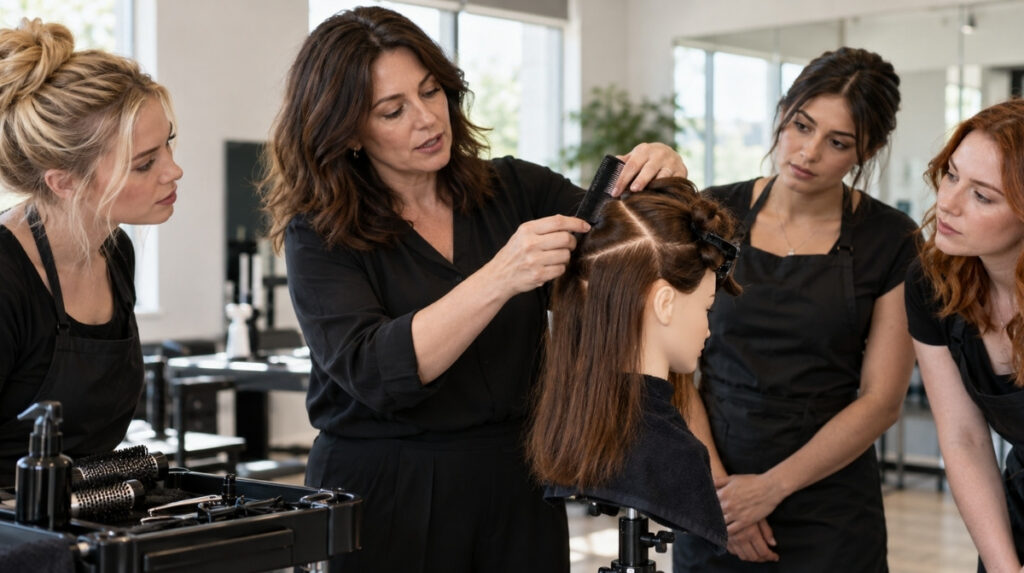
If standing behind the salon chair for ten hours a day is taking a heavy toll on your body, stepping into education allows you to preserve your passion for beauty while building a career with steady income and regular hours. You are not starting over from scratch, but rather leveraging years of hard-won salon experience to mentor the next generation of stylists. This guide breaks down exact licensing requirements, flexible training pathways, compensation expectations, and state board test preparation so you can step into the classroom with total confidence.
Step 1: Meet the Basic Licensing and Training Requirements
Before enrolling in a teacher training program, you must establish a solid foundation. State boards of cosmetology set strict baseline requirements to ensure every educator possesses both technical skill and practical salon experience.
Baseline Prerequisites
In almost every state, you must hold an active, unencumbered cosmetology license. Beyond your license, most state boards require a minimum period of behind-the-chair experience, usually ranging between 1 and 2 years of full-time salon work. This active experience guarantees you understand real-world client management, sanitation safety, and modern styling techniques before attempting to teach others.
Understanding Clock Hours
Teaching requires a completely different skill set than cutting hair or applying color. To bridge this gap, states require prospective educators to complete specialized training.
Most state boards mandate between 500 and 1,000 instructor-specific clock hours. For instance, Arkansas Department of Health guidelines require 600 teacher training hours over a minimum of four months, while the Georgia State Board of Cosmetology and Barbers mandates 750 training hours. If you are planning to relocate or practice in another state, take time to review our comprehensive guide on cosmetology license requirements by state to see how your hours, renewal cycles, and transfer rules apply across borders. These hours focus on adult educational psychology, curriculum building, lesson planning, public speaking, classroom management, and fair student evaluation.
An important concept during this process is your scope of practice. This legal term defines the precise procedures, treatments, and services you are legally permitted to perform or teach under your state license. An educator must teach strictly within their designated scope of practice to protect public health and safety.
When researching how long it takes to become a cosmetology instructor, your personal schedule plays a massive role. Full-time students often finish their training in 4 to 6 months, while part-time students balancing salon work usually complete their hours in 9 to 12 months. Understanding what it takes to become a certified cosmetology teacher helps you plan a realistic timeline without burning out.
Flexible Learning Options: Can You Complete Instructor Training Online?
One of the biggest concerns for working cosmetologists is losing salon income while attending school. You cannot simply drop all your clients to go back to school full-time. Fortunately, modern beauty education offers adaptable learning models designed specifically for working beauty professionals.
The Hybrid Education Model
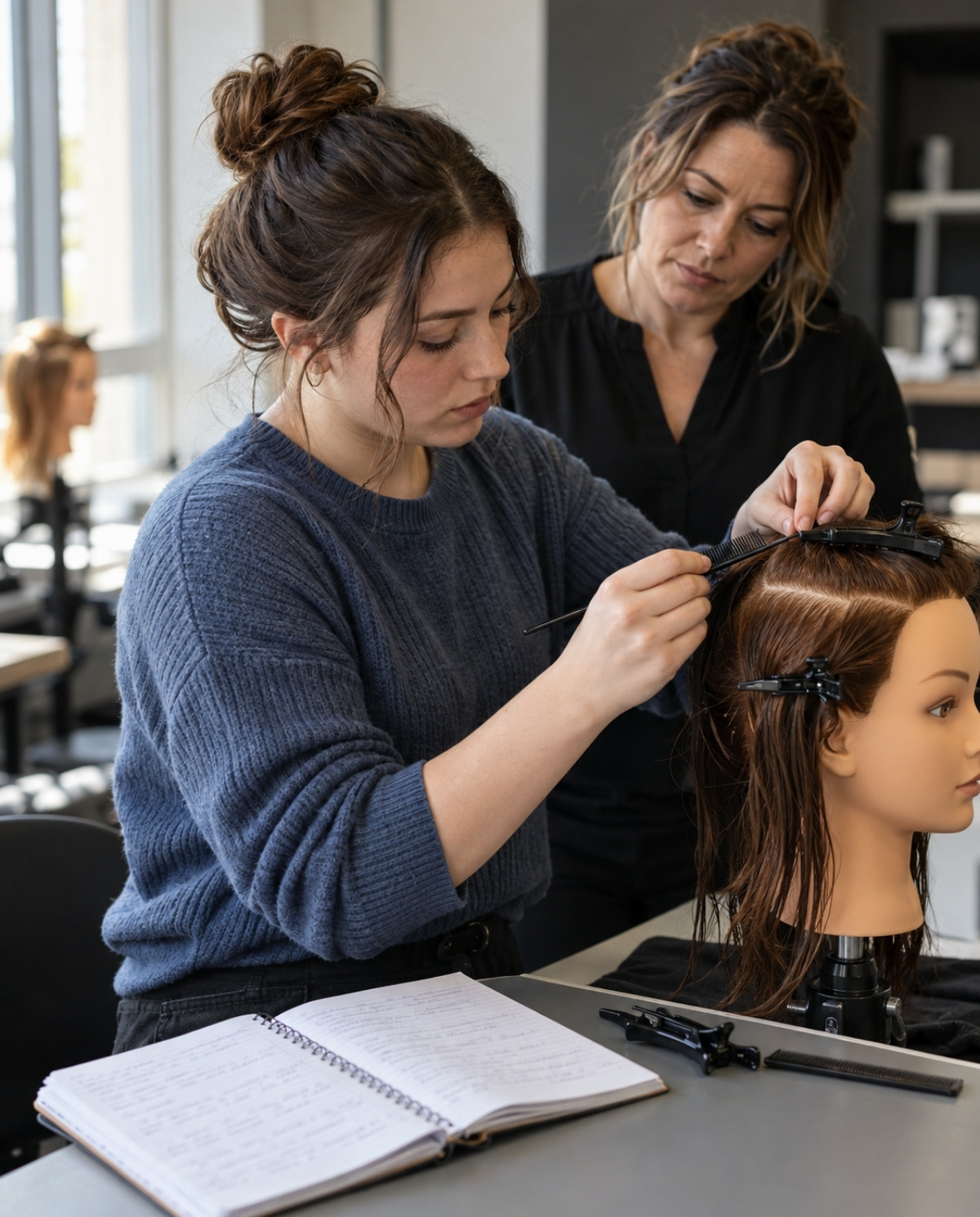
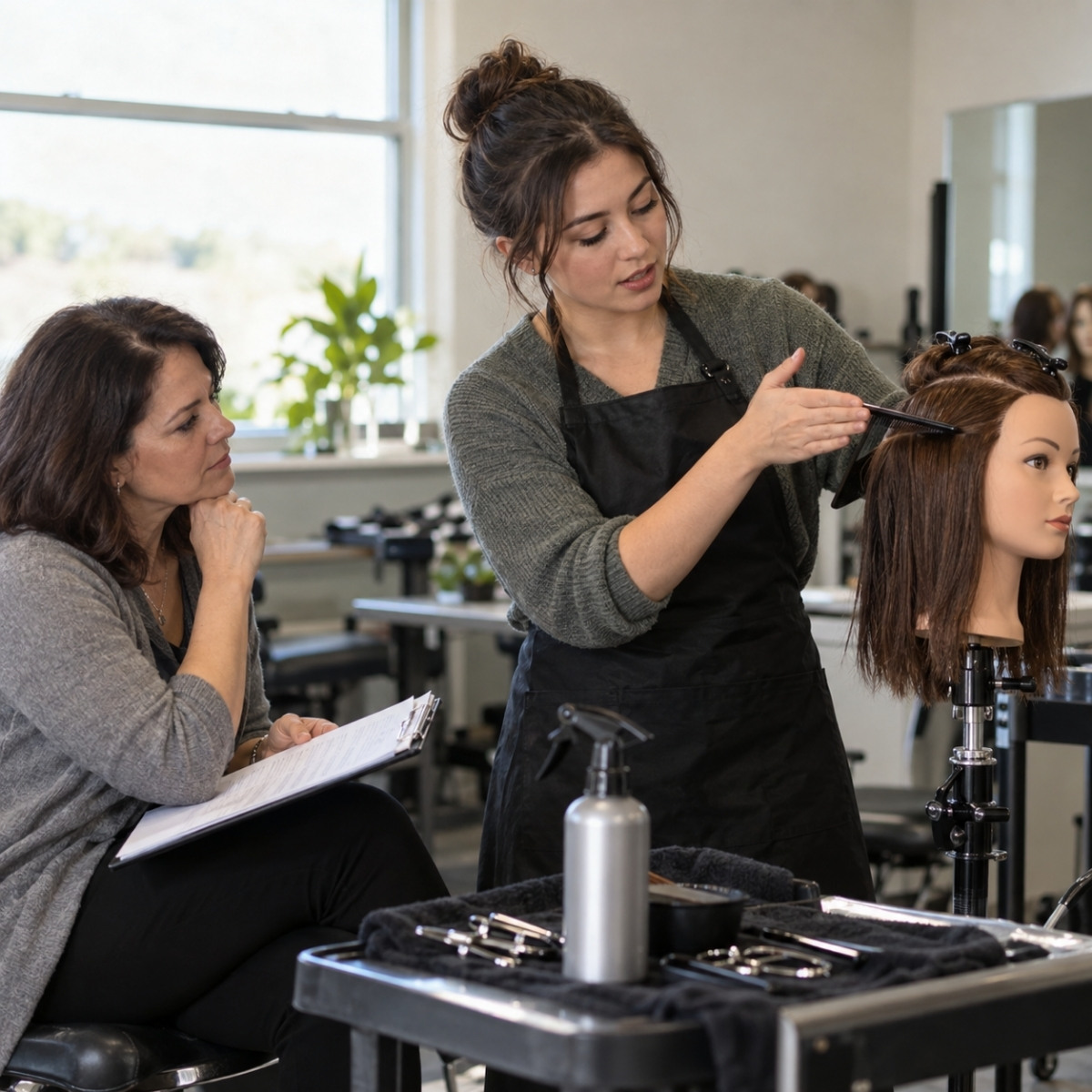
Many accredited beauty schools now offer hybrid options. Under this model, theoretical coursework is delivered through digital platforms, allowing you to study educational theory, lesson planning, and state regulations from home on your own schedule. Theoretical reading assignments, lecture modules, educational philosophy studies, and written lesson plan creation happen online. Meanwhile, student teaching, live technical demonstrations, clinic floor supervision, and physical classroom management happen on campus.
Completing Cosmetology Instructor training online through accredited modules allows you to maintain your salon income while completing required theory hours. By spreading out your workload, you avoid financial strain during your transition.
According to research from the American Association of Cosmetology Schools, over 70% of beauty schools leverage digital theory platforms. However, state boards strictly mandate that practical student-teaching hours must be completed in person on the school clinic floor.
Income Expectations and Long-Term Teaching Careers
Switching careers always brings financial questions. Moving from commission or chair-rental income to a steady educational salary changes how you manage your finances, bringing stability that salon work rarely offers.
Salary Breakdown and Financial Security
Salon income often fluctuates wildly depending on the season, client tips, and sudden cancellations. In contrast, an educational role provides consistent, predictable paychecks.
Entry-level educators at private beauty academies typically start between $37,000 and $45,000 per year. Mid-career instructors with strong student retention rates earn between $48,000 and $65,000. Top-tier faculty and vocational directors at public community colleges can earn over $75,000 to $101,000 annually.
Evaluating the average Cosmetology Instructor salary across private vocational schools and community colleges highlights the long-term financial security education offers. Furthermore, applying for active Cosmetology Instructor jobs opens up valuable employee benefits like group health insurance, paid vacation, retirement plans, and predictable weekday schedules.
Beyond the Classroom: Career Growth
Teaching is just one example of the many rewarding career paths available with a cosmetology license, opening doors far beyond traditional salon work. Experienced beauty educators frequently advance into roles such as School Director or Campus Dean, managing overall school operations, regulatory compliance, and staff. Others become Curriculum Developers, writing educational materials and training textbooks for major beauty brands. You could even work as a Corporate Brand Ambassador, traveling globally to train salon teams on new color lines, clinical-grade exfoliation techniques, or specialized equipment. Clinical-grade exfoliation refers to advanced chemical or mechanical skin peeling procedures performed under professional protocols.
Choosing an established beauty school with strong accreditation ensures your educational credential carries weight across the industry, supporting your career progression for years to come.
Official industry data from the Bureau of Labor Statistics and salary figures tracked by the Association for Career and Technical Education reveal that while entry-level instructor pay starts near $37,000, top earners in the 90th percentile make over $91,000 annually. This growth is supported by strong hiring demand, as beauty schools across the nation report ongoing teacher shortages, as detailed in the Cliove Organics 2025 Beauty School Landscape Review.
Passing the Licensing Exam with Confidence
After completing your required clock hours, the final hurdle is passing your state board licensing exam. If you haven't taken a formal test in years, feeling nervous is completely normal. Understanding how the test works helps eliminate test anxiety.

Exam Structure Explained
The instructor exam is divided into two comprehensive portions:
The Written Theory Exam tests your knowledge of learning styles, classroom safety, adult education psychology, state laws, and lesson plan structure.
The Practical Teaching Exam requires you to present a live teaching demonstration in front of state board examiners. You will be assigned a specific topic, such as demonstrating a virgin bleach application or explaining the skin's lipid barrier, which is the protective outer layer of fats and cells that keeps skin hydrated and guards against irritants.
Overcoming Test Anxiety
Most candidates assume they will fail over minor technical errors in hair cutting or styling. In reality, state board examiners focus heavily on sanitation protocols, physical safety, professional demeanor, and clear instructional delivery.
Preparing thoroughly for the Cosmetology Instructor exam involves building detailed lesson plans, practicing public speaking, and strictly following state board sanitation rules. Preparing with structured mock exams at an accredited institution ensures you pass your evaluation on your very first try. If you are guiding students who have just finished their initial beauty training, sharing our breakdown on what to do after cosmetology school gives them a clear roadmap for stepping directly from graduation into their first licensed job.
Testing guidelines published by the National Interstate Council of State Boards of Cosmetology indicate that 20% to 40% of first-time test failures stem from sanitation, safety, or time management infractions rather than technical beauty errors.
Frequently Asked Questions
Can I teach cosmetology if I only have an esthetics or nail technician license?
Yes. Most states offer specialized educator licenses for esthetics or nail technology. You will teach strictly within your licensed scope of practice and complete fewer instructor training hours than a full cosmetology educator.
Do I need a college degree to teach at a beauty school?
No. Private beauty schools generally require an active state cosmetology license, an instructor license, and documented salon experience. However, public community colleges or vocational high schools may require an associate degree or adult education teaching credentials.
What is the difference between a salon manager and a cosmetology instructor?
A salon manager oversees business operations, inventory, client scheduling, and staff supervision inside a salon business. A cosmetology instructor focuses on teaching theory, guiding hands-on student practice on the clinic floor, preparing students for state licensing exams, and grading student work.
How much does instructor training cost?
Tuition generally ranges from $3,000 to $10,000 depending on state clock-hour requirements and school type. Many accredited beauty schools offer financial aid, flexible payment plans, or tuition reimbursement if you commit to teaching at their campus after graduation.
Ready to Step into Your Legacy?
Transitioning from the salon chair to the classroom is how you build long-term career longevity. At Atlanta Beauty Academy, our hands-on "Salon-Ready" curriculum leverages over 20 years of educational excellence to help you bridge the gap between technical artistry and effective classroom leadership. Whether you want stable benefits, flexible schedules, or the reward of mentoring the next generation, we provide the mentorship and accredited training you need to succeed.
Take the first step toward your future in beauty education. Fill out the contact form below to tour our campus and discover how your legacy begins today.