

Jobs You Can Do in Cosmetology Without a License (Legally Explained)
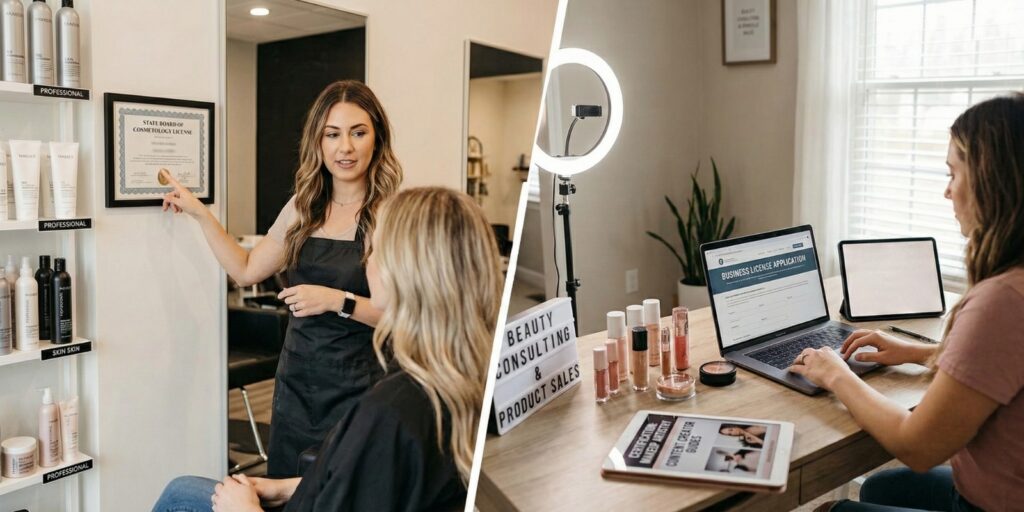
If you’ve been searching for ways to work in beauty without a license, you’re probably not trying to be reckless. You’re trying to be realistic.
Maybe you want to start earning sooner. Maybe school feels expensive or slow. Or maybe you’re simply tired of hearing five different answers online and wondering which one could get you in trouble.
Let’s make this simple. I’ll explain what “license” really means in beauty, where the legal line usually sits, and what you can do right now while staying on the safe side.
License vs Certification vs Business License: What You Actually Need
This is where most confusion starts, so let’s clear it up in plain language.
A Professional License
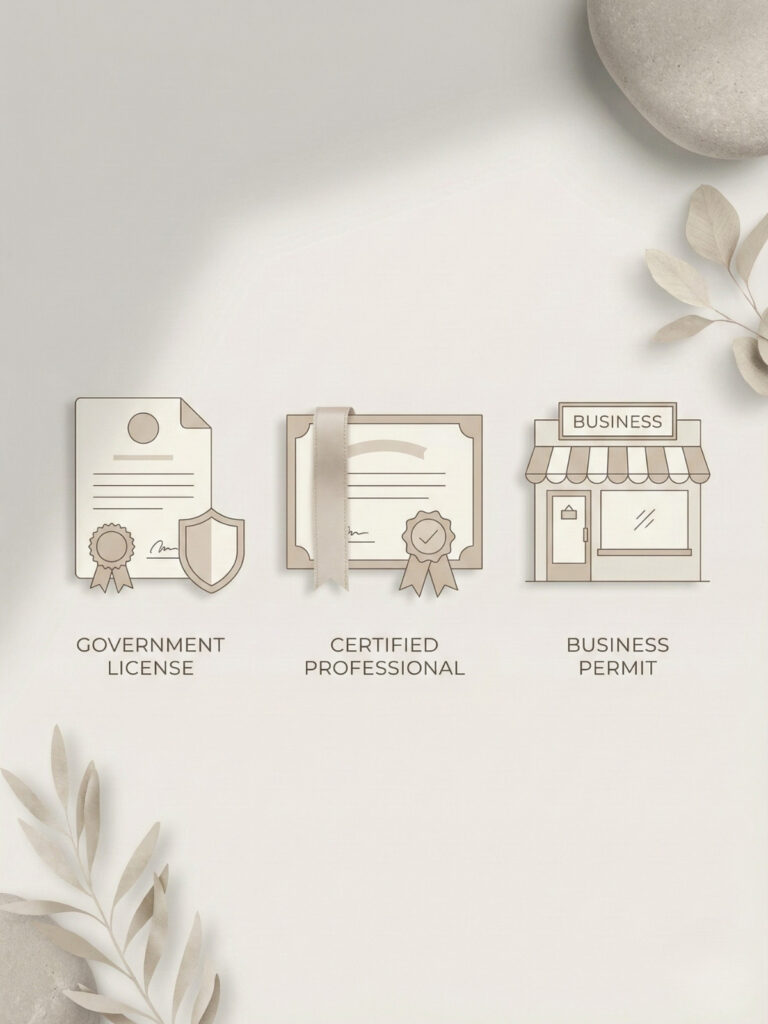
This is your legal permission to perform certain services on other people. States require licenses because some beauty work involves sanitation risks, chemicals, or tools that can cause injury.
A Certification
A certification usually shows training in a specific skill. It can help you build credibility, and sometimes it helps with insurance, but it does not automatically give you legal permission to perform a service.
A Business License
This is about operating a business legally – local permits, taxes, zoning, and sometimes a permit to sell products. Even if you don’t need a personal license for a job, you may still need business registration to charge money or sell items.
A simple way to remember it:
license = permission to perform, certification = proof of skill, business license = permission to operate.
How States Decide What Needs a License
Most states regulate beauty services based on risk, not creativity or talent.
A service is more likely to require a license if it involves:
- Cutting hair
- Strong chemicals (color, relaxers, deeper peels)
- Sanitation-heavy tools
- Anything that can break skin or cause infection
- Procedures that can cause burns, irritation, or long-term damage
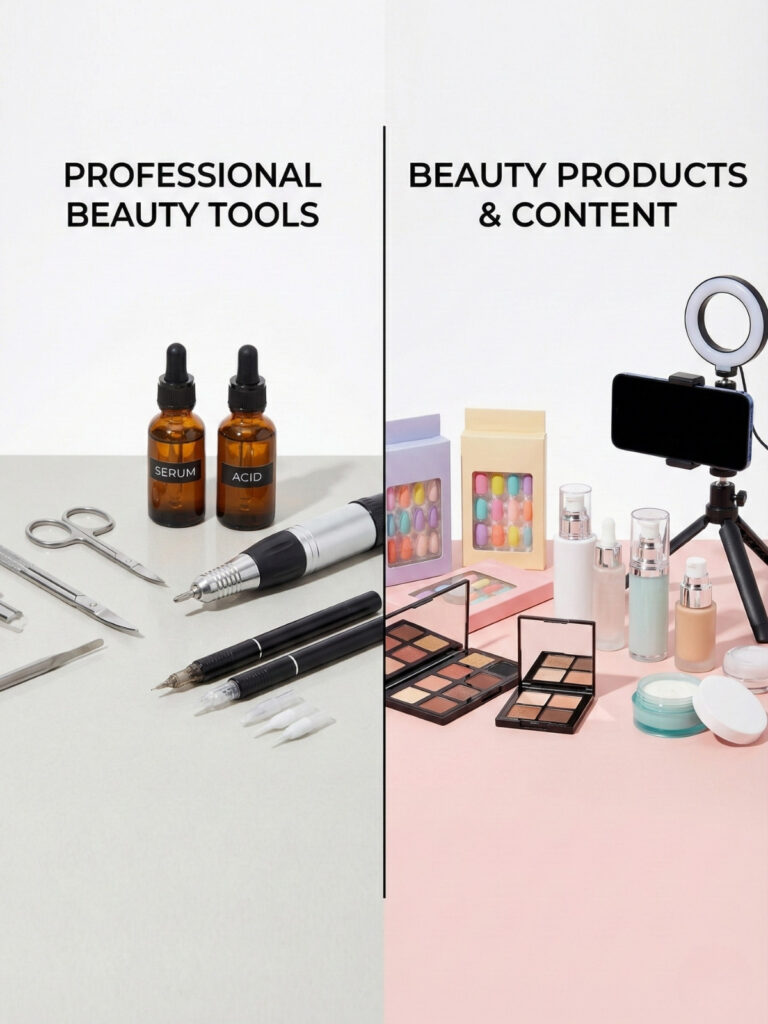
Services that stay “surface-level” are often less restricted – but rules can still vary by location, and some services sit in a gray area.
That’s why online advice is messy. Two people can swear opposite things and still both be correct – just in different states.
Beauty Careers You Can Often Start Without a License
If your goal is to get into the industry and start building income, you have options that don’t require performing regulated services.

Non-Service Beauty Jobs
These are underrated but powerful. They build your network and your brand without putting you in legal risk.
- Beauty retail and product sales
- Brand rep work and event support
- Salon front desk, booking coordinator, or client concierge
- Social media content creation (reviews, tutorials, education)
- Beauty photography or videography
- Beauty writing (blogs, product pages, newsletters)
- Product consulting (helping with routines and product choices without doing treatments)
Product-Based Beauty Businesses
If you want independence without hands-on services, product income can be a smart path:
- Press-on nail brands
- Beauty tools or accessories stores
- Reselling beauty products (with the right permits)
- Digital products like planners, checklists, or mini-guides
This lane usually requires a strong business setup, not a personal cosmetology license.
Salon Ownership: You Can Often Own Without Being Licensed
This surprises a lot of people, but in many states, you can own a salon without holding a personal cosmetology license.
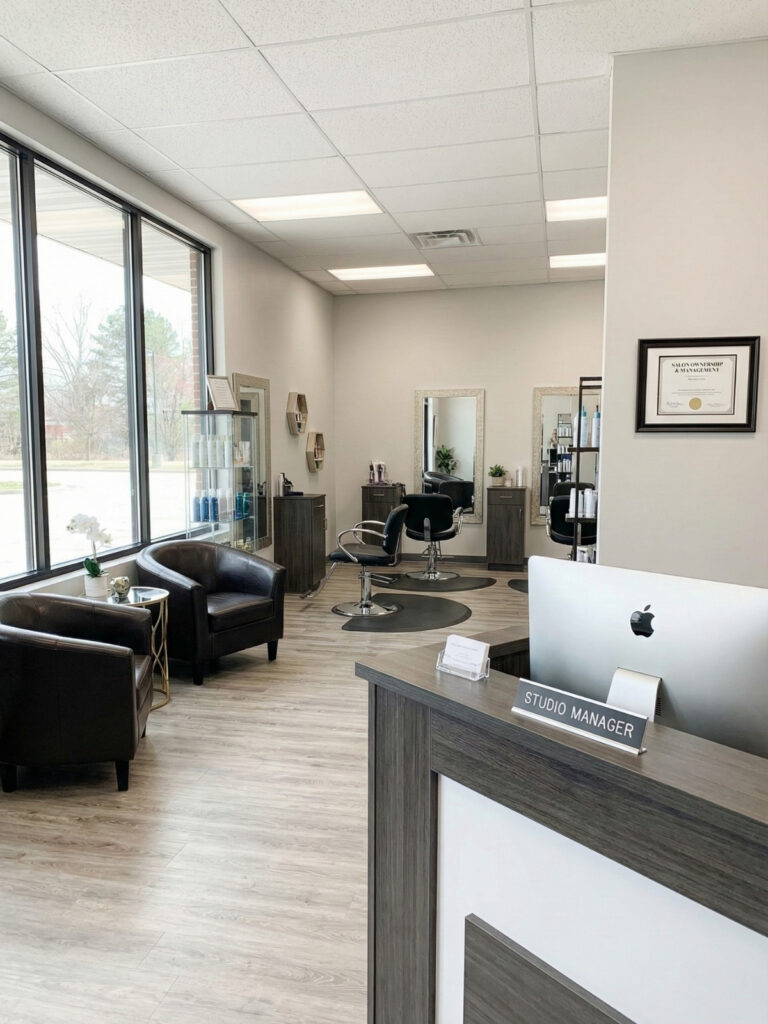
The key is how you structure it:
- Licensed professionals must perform regulated services
- The facility may need an establishment or salon license
- Local permits (business, zoning, health/safety requirements) still apply
- You must keep the business compliant, even if you aren’t the one doing services
So yes, ownership can be a real path – just not a “do whatever you want” path.
Lashes, Nails, Hair, Makeup, and Microblading: What’s Usually Regulated (And What You Can Do Instead)
Most people aren’t really asking “How do I avoid the rules?”
They’re asking: “Where’s the legal line, and how do I stay on the right side of it?”
Here’s the pattern that shows up again and again:
Where the Risk Tends to Rise
These categories get regulated more often because the potential harm is higher.
- Lashes: Close to the eyes, adhesives, strong hygiene requirements.
- Nails: Paid nail services involving tools, cuticle work, gels, or sanitation-heavy steps are often regulated.
- Hair: The split is alteration vs enhancement. Cutting and chemicals are usually licensed.
- Makeup: Often lower risk until it crosses into skin treatment territory.
- Microblading: Commonly treated as permanent cosmetics or body art.
Even if someone online says, “You’re fine,” there’s a practical reality.
If a client has a reaction, irritation, or infection, you want protection. Without the right credentials, insurance coverage can be difficult.
Safer Ways to Build Income While You’re Not Licensed
You can still build a beauty career without touching regulated services:
- Product income: lash products, nail products, press-ons, tools
- Content and education: reviews, tutorials, mannequin demos
- Non-service salon roles: front desk, assistant, inventory
- Beauty consulting: routines and product guidance only
A simple safety rule:
If it involves cutting, strong chemicals, skin penetration, or sanitation-heavy tools on a client, assume it may be regulated until confirmed locally.
How to Check the Rules Without Overwhelm
If you want a clean plan, do this:
1) Name the exact service
Details matter. “Lashes” and “makeup” can mean very different things.
2) Check the right authority
- State cosmetology or barbering boards
- Health departments or body art programs for permanent makeup
3) Confirm three requirements
- Personal license
- Establishment license
- Local business permits
4) Choose a legal lane while you train
Build income through products, content, admin roles, or consulting until licensed.
Ready to Turn This Into a Real Career in Georgia? Here’s the Upgrade Path We Offer
If you want to get into beauty fast, we get it. But the biggest opportunities open up when you’re properly trained and licensed.
That’s what we help students do at Atlanta Beauty & Barber Academy (Doraville/Atlanta area).
- Master Cosmetologist (1500 hours)
- Master Barber (1500 hours)
- Esthetician (1000 hours)
- Nail Technician (600 hours)
We also offer hybrid learning options and live-client experience once required hours are met.
Want to specialize sooner?
Short, skill-focused options include:
- Eyelash Extensions
- Waxing & Threading
- Makeup
- Permanent Make-Up
The easiest next step
Start with a 30-minute campus tour. An admissions representative will follow up to confirm details.
We also offer Instructor Training for graduates who want long-term stability in the industry.