



What Do You Actually Learn in Barber School? Skills, Services, and Hands-On Training
Key Takeaways
- Start with the basics. You can enter a beginner barbering program without prior haircutting experience. Training moves from tool handling and mannequin practice to supervised work with real clients.
- Build a service menu beyond fades. Beard shaping and straight-razor shaves give clients more ways to book with you. Georgia’s Master Barber training also covers services such as coloring, permanent waving, and relaxing.
- Give written theory its own study time. In Texas’s fiscal year 2025 Class A Barber results, 37.25% of completed written exam attempts passed, compared with 89.80% of completed practical attempts. Georgia applicants should prepare for both parts using the materials for their own license.
- Keep client notes you can use on the next visit. Recording guard settings, neckline preferences, and past product reactions helps you pick up where the last service ended.
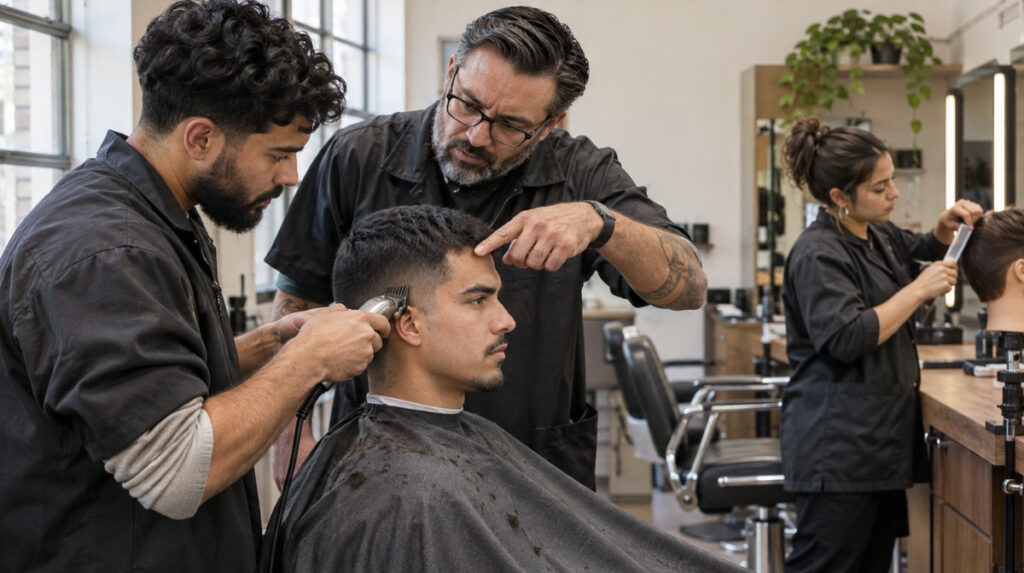
Standing in front of your first styling chair with a pair of shears can bring a mix of excitement and nerves. Barbering school gives you time to learn how your tools feel, how hair responds to different techniques, and what to check before you start a service. If you’re deciding between Master Barber training and Master Cosmetology training, start by thinking about which services you want to perform most often. There’s overlap in haircutting, styling, and color, but the programs give you different kinds of practice.
What You Learn First in Barbering School
Your early training connects what you see in the chair with what you do with your tools. A crown that grows in a swirl, for instance, can affect how short you go and which direction you cut. On a mannequin, you can repeat a section and see what changes when you adjust the angle of your shears or the way you move your clippers.
In Georgia’s barber school curriculum, early training brings several skills together:
- Hair and scalp analysis. Look at hair density, texture, growth direction, and the condition of the scalp.
- Tool handling and body position. Practice using shears, clippers, and trimmers while adjusting the chair height and your stance.
- Mannequin practice. Repeat sectioning, cutting, and blending so you can see which movements produce a consistent result.
- Supervised clinic work. After completing the required initial training and receiving instructor sign-off, apply those skills during consultations and services on real clients.
Getting Comfortable with Clippers, Shears, and Razors
Your early lessons give you time to work on tool control before speed matters. Pay attention to how you stand as you move around the chair. Raising or turning the chair can keep you from repeatedly reaching across a client or bending to see the neckline.
- Clipper control. Practice how guard changes and lever adjustments affect the blend between two lengths.
- Shear control. Keep your hand steady and use your thumb to open and close the moving blade.
- Straight-razor handling. Practice blade positioning, light pressure, and controlled strokes under instructor guidance.
Reading Hair Texture and Growth Patterns
Before cutting, look at how the hair falls on its own. Check the crown and neckline for changes in growth direction, then see how the hair responds when you lift it and let it settle. Those observations can help you decide how much length to leave around a cowlick, where to start a fade, or how to keep a curl pattern looking even after the hair dries.
Moving from Mannequins to the Clinic Floor
Georgia’s Master Barber curriculum includes 35 hours of mannequin training in the initial haircutting and styling block. Master Barber students complete 280 hours of initial training before performing clinical services, and Barber II students complete 190 hours. A licensed instructor signs off on readiness for the clinic floor. There, you start applying the same skills while talking through a client’s preferences and adjusting to the way their hair actually grows. See the Georgia curriculum rules for both pathways.
Barbering Services You Can Offer Beyond the Fade
Fades, tapers, scissor cuts, and line-ups give you a starting menu. Beard shaping, hot-towel shaves, and, within your license scope, services such as gray blending give clients more options. As you build that menu, consider how much time each service takes, what supplies it uses, and whether clients in your shop are likely to book it regularly.
Beard Design and Hot-Towel Shaves
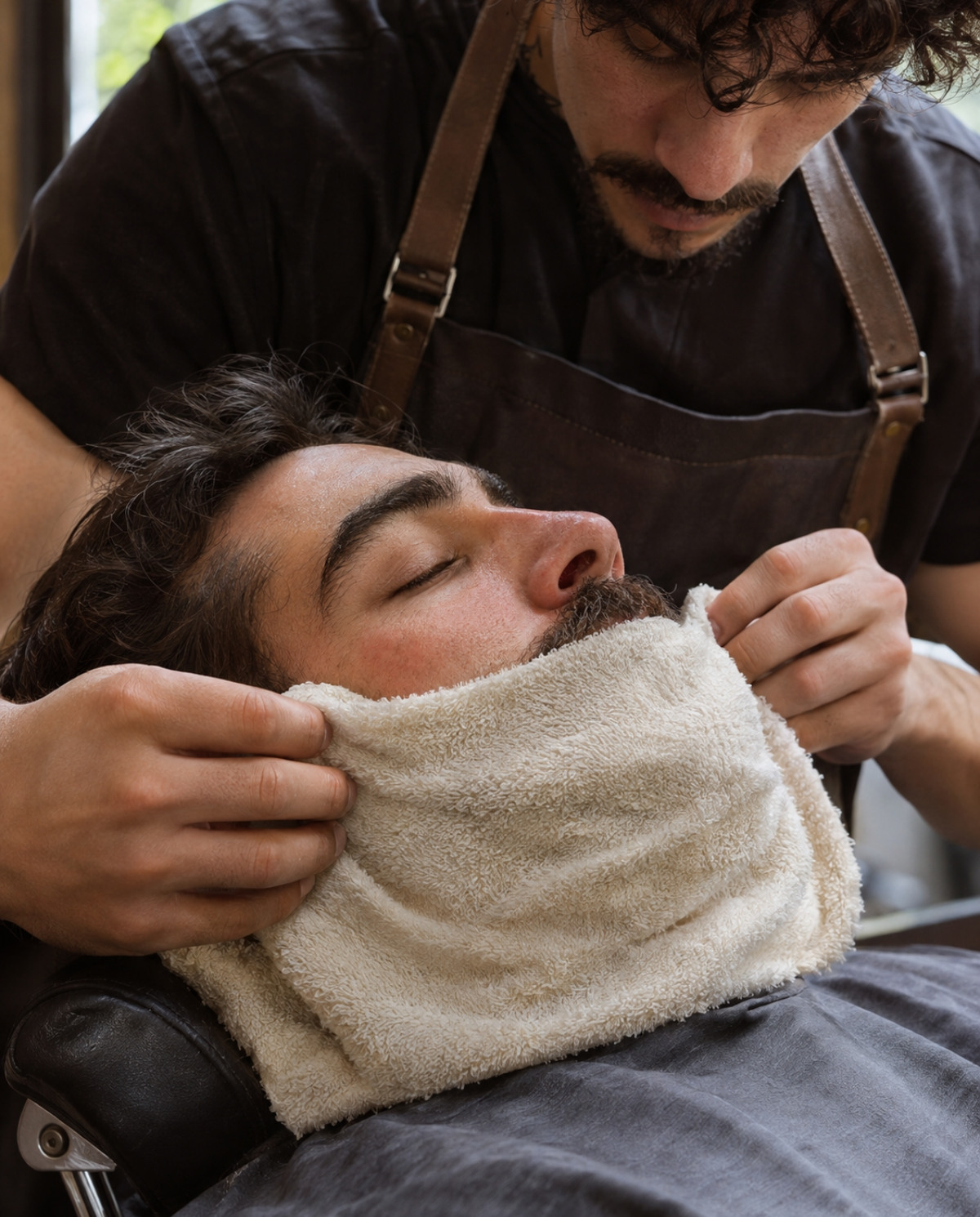
A shave starts with a quick look at the skin and beard. Ask about irritation or razor bumps, then check which way the hair grows. The grain can change under the jaw and across the neck, even on the same client. A basic hot-towel shave follows this sequence:
- Use a warm, damp towel to soften the beard hair.
- Apply shaving cream or gel to lubricate the skin and help the blade glide.
- Shave with the grain using short, controlled strokes. Limit repeated passes over the same area, especially for someone prone to razor bumps.
- Finish with a cool rinse or towel for comfort and, if suitable for the client’s skin, a gentle moisturizer.
For someone who regularly gets ingrown hairs, discuss whether a trim that leaves a little stubble would be more comfortable than a very close shave. The DermNet guide to razor bumps explains why shaving direction and closeness matter. The same consultation helps you plan beard sculpting, neckline cleanups, and mustache shaping around the client’s preferences.
Chemical Services and What Your Georgia License Covers
In Georgia, Barber II scope includes hair cutting and dressing, beard trimming and shaving, facial or scalp massage, and certain facial or scalp treatments. Master Barber scope also includes hair coloring, permanent waving, relaxing, and straightening. If you want to offer services such as gray blending, ask how much supervised color practice you’ll get in the Master Barber program. See Georgia Code § 43-10-1 and the state’s barber school curriculum for the full scope and training requirements.
How to Tell Whether an Add-On Pays Off
A higher-priced service can bring in more per visit while leaving less per hour in the chair. Say a $40 haircut takes 30 minutes and uses $2 in supplies. That leaves $38 before overhead, or $76 per booked hour if the time is fully booked. A $55 haircut-and-beard service that takes 45 minutes and uses $4 in supplies leaves $51 per visit, or $68 per booked hour. Those are example prices. Run the same calculation with your own service times and costs, then account for fixed expenses such as booth rent. The U.S. Small Business Administration’s break-even guide shows how to factor in both fixed and variable costs.
For a national wage benchmark, the U.S. Bureau of Labor Statistics reported a median barber wage of $18.37 per hour in May 2025, including tips. That wage figure excludes self-employed workers. In a separate employment estimate, BLS classified 80% of U.S. barber jobs in 2025 as self-employed. If you plan to rent a chair or run a shop, keep track of what you collect from clients and what it costs you to provide those services.
How to Keep Barbering Services Safe and Hygienic
Safety starts with deciding whether a service is appropriate for the client in front of you. It continues through draping, tool handling, and cleanup. Practicing the same routine with every client makes it easier to follow on a busy day.
What to Check Before Starting a Service
- Scalp and skin condition. Look for broken skin, irritation, or an unusual patch in the area you’ll work on. If you see a scaly patch with broken hairs and suspect a contagious condition, pause the service and suggest the client have it checked. The CDC’s ringworm guidance explains how scalp ringworm can spread through contact and shared items.
- Hair condition and service history. For a cut, look at density, texture, and growth patterns. Before a chemical service, also ask about prior coloring, bleaching, or relaxing and check for signs of damage or breakage.
- Sensitivities and past reactions. Ask about products that have caused irritation before. For hair color, follow the product directions and the FDA’s hair-dye safety guidance on patch testing and gloves.
What to Do During and Between Services
- Wash your hands and use clean draping. Georgia requires handwashing before and between client services. Use a fresh neck strip and clean draping for each client.
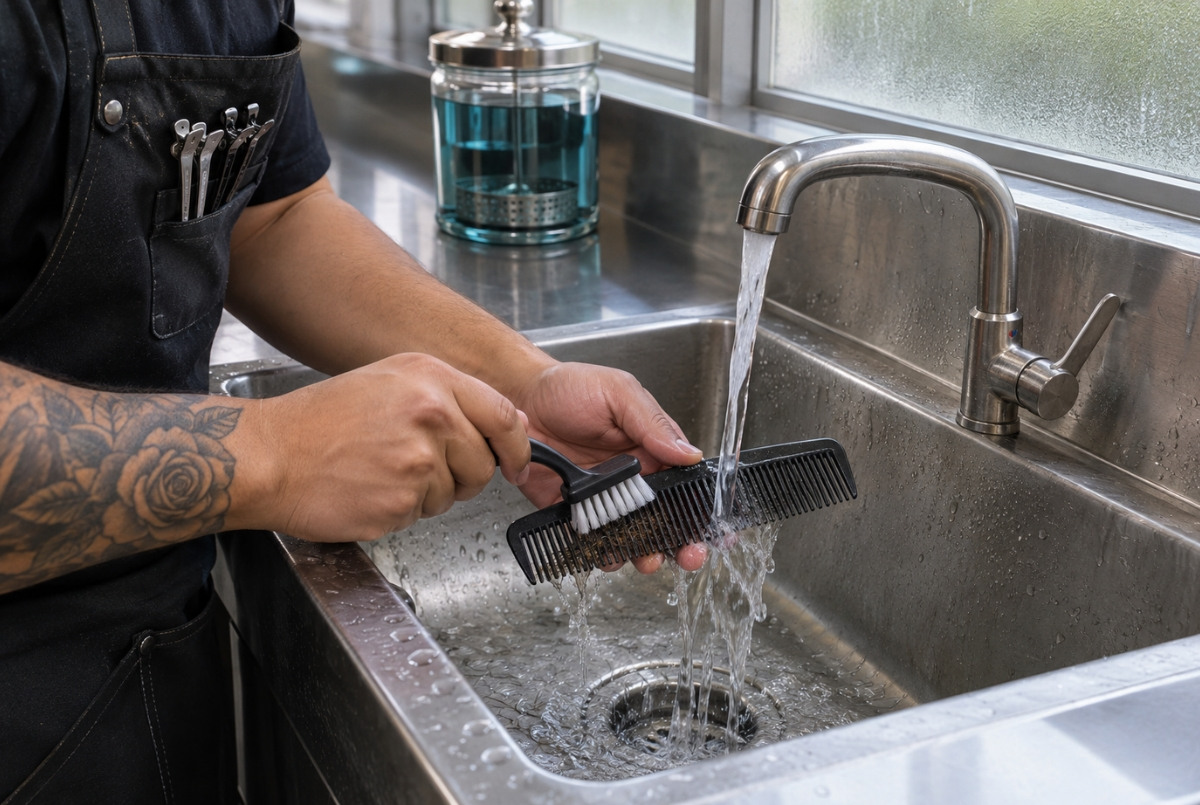
- Clean before disinfecting. Remove hair and visible debris from reusable implements, then use an appropriate EPA-registered disinfectant. Follow Georgia’s facility rules and the product label for the method and contact time. The EPA’s disinfectant guidance explains how long a surface must stay wet for a product to work.
- Dispose of blades safely. Use a fresh disposable blade for each client when working with a replaceable-blade razor. Place the used blade in a designated sharps container.
Protecting Your Hands and Body at Work
A full day behind the chair can mean long periods on your feet and repeated movements with your wrists and shoulders. Set the chair height before you start, move around the chair as you work, and pay attention to how tightly you grip your tools.
Frequent contact with water, shampoo, and hair products can also irritate the skin on your hands. A 2022 review of studies on hairdressers estimated that 38.2% had experienced hand eczema at some point in their lives. DermNet’s guidance for hairdressers and barbers covers practical steps such as wearing suitable gloves for wet or chemical work, drying your hands thoroughly, and moisturizing regularly.
How Client Records Help You Run Your Chair
A good client record answers the question you’ll hear sooner or later: “Can you do what you did last time?” A short note about where you started the fade or how you finished the neckline gives you something specific to confirm before reaching for your clippers.
What to Put on a Client Record Card
A useful record can be as simple as “low fade, #0.5 to #2, leave weight at the crown, keep the neckline natural.” For a color service, note the product, formula, date, and any patch-test result or reaction. Keep each entry short enough to scan before the appointment.
- Service details. Record guard sizes, lever settings, where the blend starts, and any areas where you left extra length.
- Safety notes. Save relevant sensitivities or reactions so you can review them with the client before repeating a service.
- Client preferences. Note details such as a natural neckline, how the client styles their hair at home, and which products they want to use again.
Using Booking Records to Understand Repeat Visits
A paper card can handle service notes. A digital booking system can also help you see who returned, which services fill your schedule, and whether people keep the follow-up appointments they book. If you want to track first-time client retention, choose a window such as 60 days. Count the clients who completed a second visit and divide by the number of first-time clients who had the full 60 days to return. That gives you a baseline for your own chair and a way to see whether changes to your follow-up routine are helping.
How to Prepare for Georgia Barber Licensing Exams
If you’re applying for a Georgia Master Barber or Barber II license by examination, you must pass both the written and practical exams and apply for your license. Georgia’s rules require a minimum score of 70% on each section. If you fail one, you can retake that section by itself. Start with the Georgia board’s exam guidance and licensure-by-examination rules.
How Classroom and Clinic Hours Fit Together
Georgia’s school pathway requires 1,140 hours over at least seven months for Barber II or 1,500 hours over at least nine months for Master Barber. Classroom topics include laws and rules, disinfection, and basic chemistry. Hands-on training lets you apply those lessons while you practice cutting, shaving, and other services within your pathway. Georgia also offers a supervised apprenticeship route with separate requirements. See the school curriculum rules and the Georgia barber licensing guide.
When comparing school schedules, ask how many hours you’ll attend each week and what happens if you miss clinic time. For a breakdown of tuition, books, the kit, and other charges at Atlanta Beauty & Barber Academy, check the academy’s student catalog and confirm the current schedule and charges with admissions.
How to Study for the Written and Practical Exams
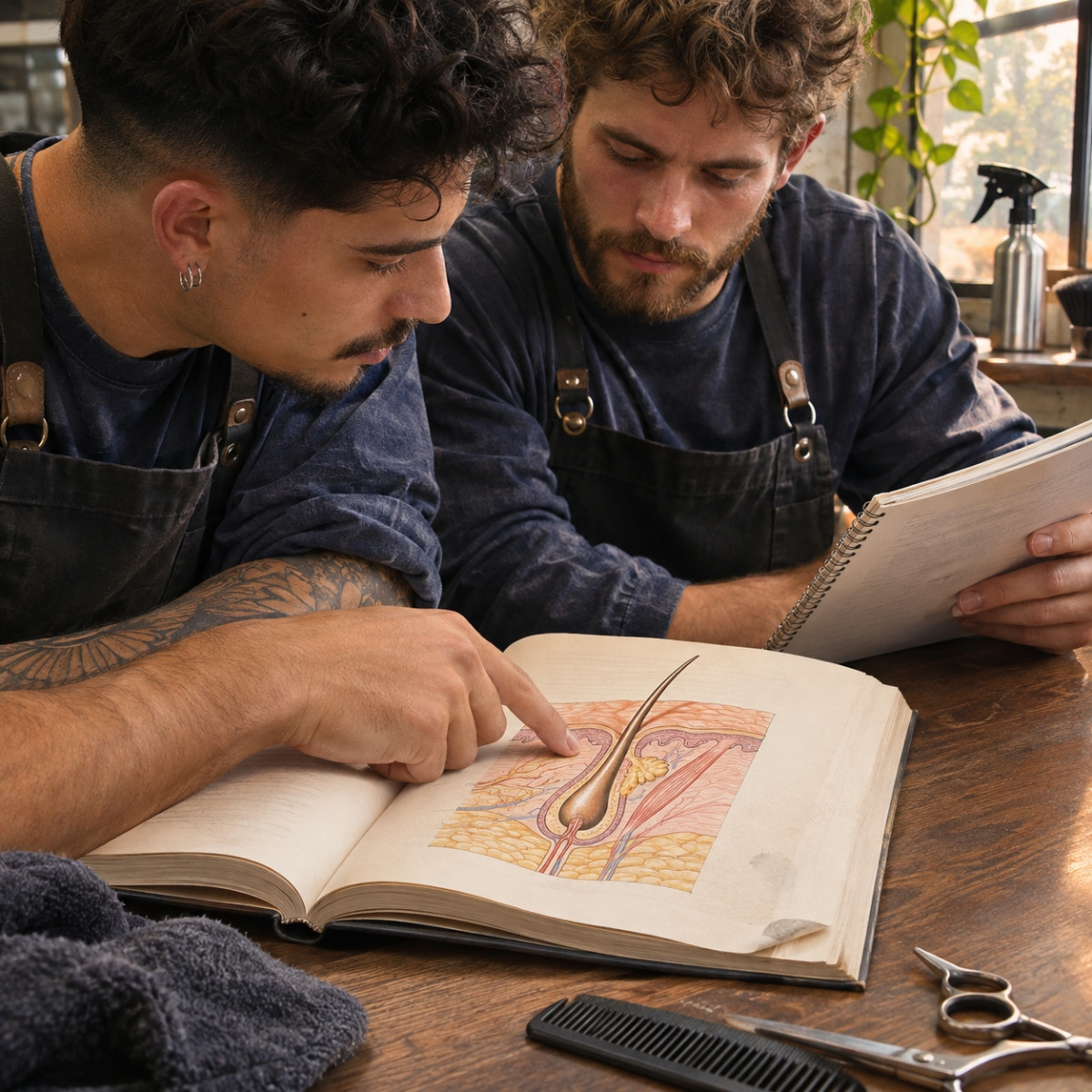
For the practical exam, use the candidate bulletin for your license to build a checklist of tasks, supplies, and time limits. Rehearse the whole sequence, including setup, client protection, and cleanup. For written theory, practice explaining why each safety step matters. The NIC barber styling theory outline covers topics such as infection control, blood-exposure procedures, hair and scalp anatomy, and barbering services. Use the current Georgia PSI bulletin to confirm the content for your specific exam.
There’s a reason to make time for written practice even if you feel comfortable on the clinic floor. The Texas Department of Licensing and Regulation reported a 37.25% written pass rate and an 89.80% practical pass rate for Class A Barber exam attempts in fiscal year 2025. Those figures describe completed attempts in Texas. If you’re comparing schools in Georgia, ask whether they can share recent results for their own graduates, broken out by exam section and first-time attempts if available.
Our barber licensing and exam prep guide offers general study advice. If you’re looking for published pass rates, this video shows how to look up exam pass rates for a school or state.
Train as a Master Barber at Atlanta Beauty & Barber Academy
Founded in 2005, Atlanta Beauty & Barber Academy uses a Salon Ready approach to connect technical training with the habits you’ll need behind the chair. In our Master Barber program, you practice cutting, shaving, and coloring and learn about salon business and client retention. Those skills can support different career goals, from building your own clientele to eventually managing or opening a shop.
Fill out our contact form to schedule a campus tour. Ask to see where students practice, how instructors prepare them for the clinic floor, and what the Master Barber schedule would look like for you.
Frequently Asked Questions
Do I need haircutting experience to apply for barbering school?
You can apply to Atlanta Beauty & Barber Academy’s beginner Master Barber program without prior haircutting experience. The academy’s published admissions requirements list a minimum age of 18 and a high school diploma or GED among the requirements for beginning students.
How long does barber school take in Georgia?
Georgia’s school pathway requires at least seven months and 1,140 hours for Barber II or nine months and 1,500 hours for Master Barber. Your actual completion date depends on your class schedule and attendance. See the Georgia barber school curriculum rules for both programs.
How does a barber license differ from a cosmetology license?
In Georgia, Master Barber and Master Cosmetology both cover hair cutting, styling, and chemical hair services. Barber training includes beard grooming and straight-razor shaving. Master Cosmetology also includes skin and nail services. Start with the services you want to provide, then check the license definitions in Georgia Code § 43-10-1.
Does barber school provide tools or do I need to buy a kit?
Georgia’s basic barber student kit includes clippers, guards, trimmers, shears, a straight razor, and combs. The state lists mannequins separately as school equipment. Atlanta Beauty & Barber Academy’s 2025 student catalog lists a $650 kit charge within the total Master Barber course cost. Ask admissions for the current itemized price and kit list before buying tools separately. See the Georgia barber school equipment rule for the required kit contents.