



What Is a Beauty Instructor? Meaning, Duties, and Career Path Explained
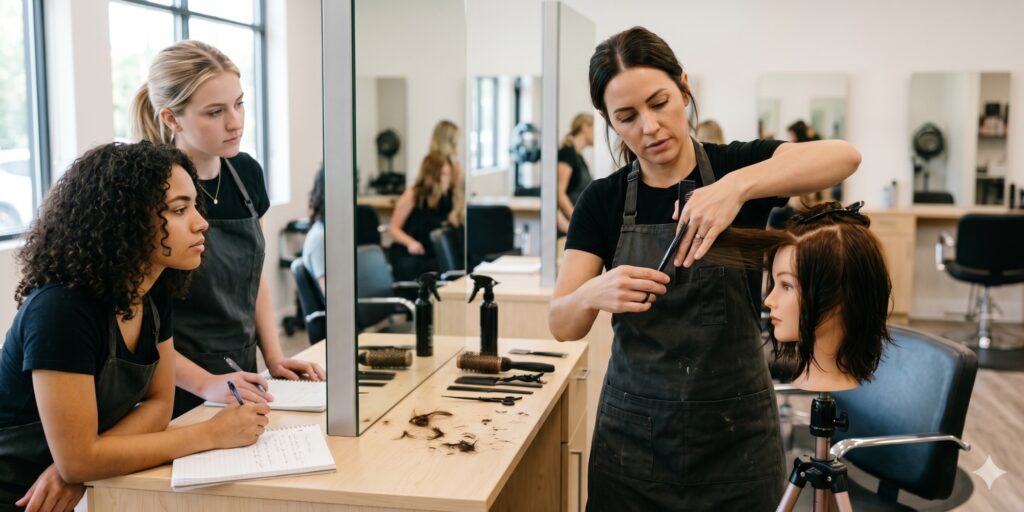
That specific exhaustion at 6:00 PM on a Saturday is a feeling most professionals know all too well. Your back is tight from hours of precision cutting, and your social battery is completely drained. While you love the industry, you might be realizing that standing behind a chair for another twenty years isn't physically sustainable.
This is a crossroads many talented professionals reach. You have the skills, but you want a career that offers more stability and professional prestige. Transitioning into education is the most natural "level up" for your career. We are going to explore what a beauty culture instructor actually does and how you can move from being a service provider to a recognized authority.
Key Takeaways
- Market Growth: The global cosmetology and beauty schools market is projected to reach $9.61 billion by 2026, showing continued demand for beauty education programs.
- Income Stability: A strong public benchmark for postsecondary career and technical education teachers - a category that includes cosmetology instructors - is a median salary of about $61,490, according to the U.S. Bureau of Labor Statistics.
- New Standards: Modern teaching increasingly requires product knowledge, client-care education, and pedagogy, the science of teaching, shifting the role from stylist to academic mentor.
- Career Longevity: Transitioning to education can reduce the physical strain of full-time salon work while establishing you as an industry authority.
Defining the Modern Beauty Instructor: Meaning & Identity
The core meaning of a beauty educator goes far beyond just teaching someone how to roll a perming rod or apply a basic facial technique. You are the architect of a student's future. To define a beauty culture instructor today, we look at a licensed professional who has mastered their craft and moved into a pedagogical role - which is simply the "science of teaching."
The industry uses several titles that share a similar goal. Whether you identify as a cosmetology instructor, a hair and beauty educator, or a beauty school instructor, your job is to translate complex physical movements into easy-to-learn steps.
According to trend coverage from HOTT Beauty Lounge, the beauty industry is seeing more attention around "Clean-ical" beauty, meaning clean principles combined with clinical-style results. For instructors, that means students may need stronger education around ingredients, product claims, skin barrier basics, and client communication. For example, you may teach students about the lipid barrier - the protective layer of fats on the skin's surface - and how certain products can either support or disrupt it. You aren't just a teacher; you are a mentor helping the next generation navigate a more educated, wellness-focused market.
The Human Touch Revolution
Even as AI grows, Mintel’s 2026 global beauty and personal care predictions highlight a "Human Touch Revolution," where consumers are expected to value beauty that feels human, expressive, emotionally real, and authentic. Modern beauty schools need instructors who can teach the "human" element that algorithms can't replicate - like the intuition behind a custom color correction, the empathy needed during a client consultation, and the ability to guide a nervous student through hands-on work.
Daily Duties and Responsibilities
When you start your training as a beauty school instructor, you quickly realize the job is very different from a day at the salon. Your duties as a cosmetology instructor are a mix of classroom theory, student coaching, recordkeeping, and "floor" supervision.
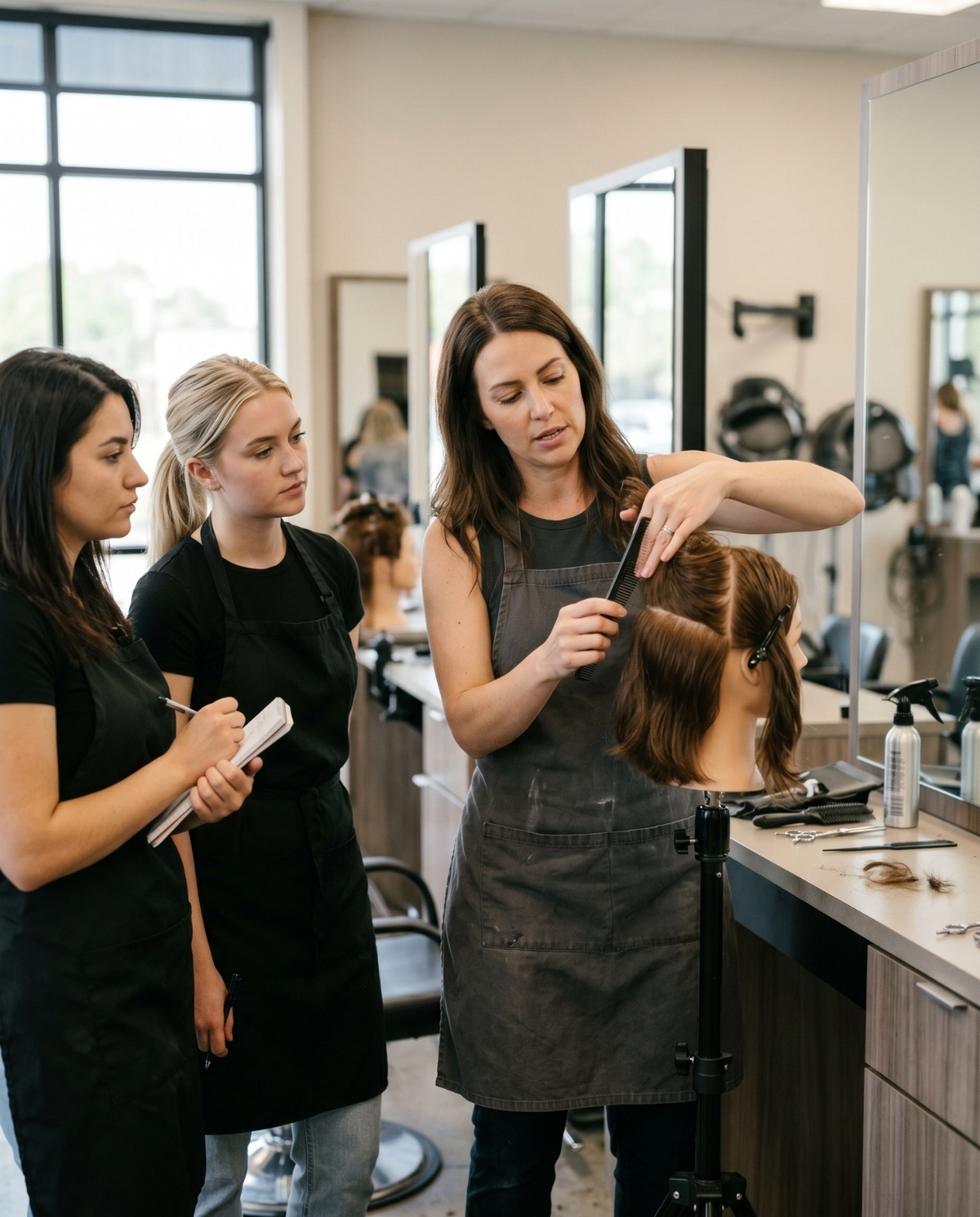
In the classroom, you might lead a training program on the chemistry of hair color. On the student salon floor, your responsibilities involve watching students work on real clients. You aren't doing the work for them; you are guiding their hands and ensuring they stay within their scope of practice. This term refers to the legal limits of what a licensed professional is allowed to do. For example, under Georgia law, esthetics can include services such as cleansing, beautifying, waxing, threading, or stimulating the face and body, but it does not include diagnosing or treating dermatological conditions, medical aesthetics, or the use of lasers.
A typical day for a beauty educator includes:
- Developing lesson plans that meet state standards.
- Demonstrating techniques in a way students can repeat safely.
- Grading practical exams and written tests.
- Tracking instructional hours to ensure students meet licensing requirements.
- Supervising sanitation, tools, equipment, and student-client interactions.
- Maintaining attendance, grades, and progress records.
- Mentoring students on "soft skills," like client consultation, professionalism, and how to build a book of business.
Salary and Income Potential
One of the biggest pain points for stylists is the "feast or famine" nature of commission. This is why the average pay for a cosmetology instructor can be attractive. It may provide a steadier, more predictable paycheck, and school-based positions may include benefits like health insurance or retirement plans, depending on the employer.
If you are wondering how much a beauty school instructor can expect to make, it is important to use the right benchmark. O*NET lists "Cosmetology Instructor" as a sample job title under Career/Technical Education Teachers, Postsecondary. For that broader postsecondary career and technical education category, the U.S. Bureau of Labor Statistics reports a median salary of about $61,490.
Some private salary sources report higher figures. For example, Franklin University reports a median salary of approximately $83,637 using Lightcast data. That number can still be useful as a market reference, but the BLS/O*NET category is the safer public benchmark because it clearly includes cosmetology instructors within postsecondary career and technical education.
The salary for a beauty teacher varies depending on whether you work for a private beauty school, a technical college, a community college, or a major product brand. High-level roles for a beauty educator can pay more, especially when they involve curriculum leadership, brand education, travel, or management. The broader BLS data also shows that the top 10% of career and technical education teachers earn more than $101,510, but your actual income will depend on location, employer, experience, and role type.
The broader education market also matters. According to Business Research Insights, the global cosmetology and beauty schools market is projected to reach $9.61 billion in 2026. That does not guarantee instructor demand in every city, but it does show that beauty education remains a sizable market. Qualified instructors who understand both technical skills and teaching methods are valuable to schools that want strong student outcomes.
How to Become a Licensed Beauty Instructor In a Nutshell
If you're ready to start, you'll need to follow a specific beauty instructor licensure pathway. You cannot simply walk into a classroom because you are a great stylist, esthetician, nail technician, or hair designer; you must also learn how to teach.
The exact path depends on the specialty you want to teach. A future cosmetology instructor, esthetician instructor, nail care instructor, or hair design instructor usually needs to hold the matching professional license first. In other words, your instructor license is normally built on top of the beauty license you already have.
The steps to become a beauty instructor usually look like this:
- Hold an Active License: You must have a current license in the field you want to teach, such as cosmetology, esthetics, nail technology, hair design, or another approved beauty specialty.
- Gain Experience: Requirements vary by state. In Georgia, for example, instructor applicants generally need one year of work experience at the relevant professional level.
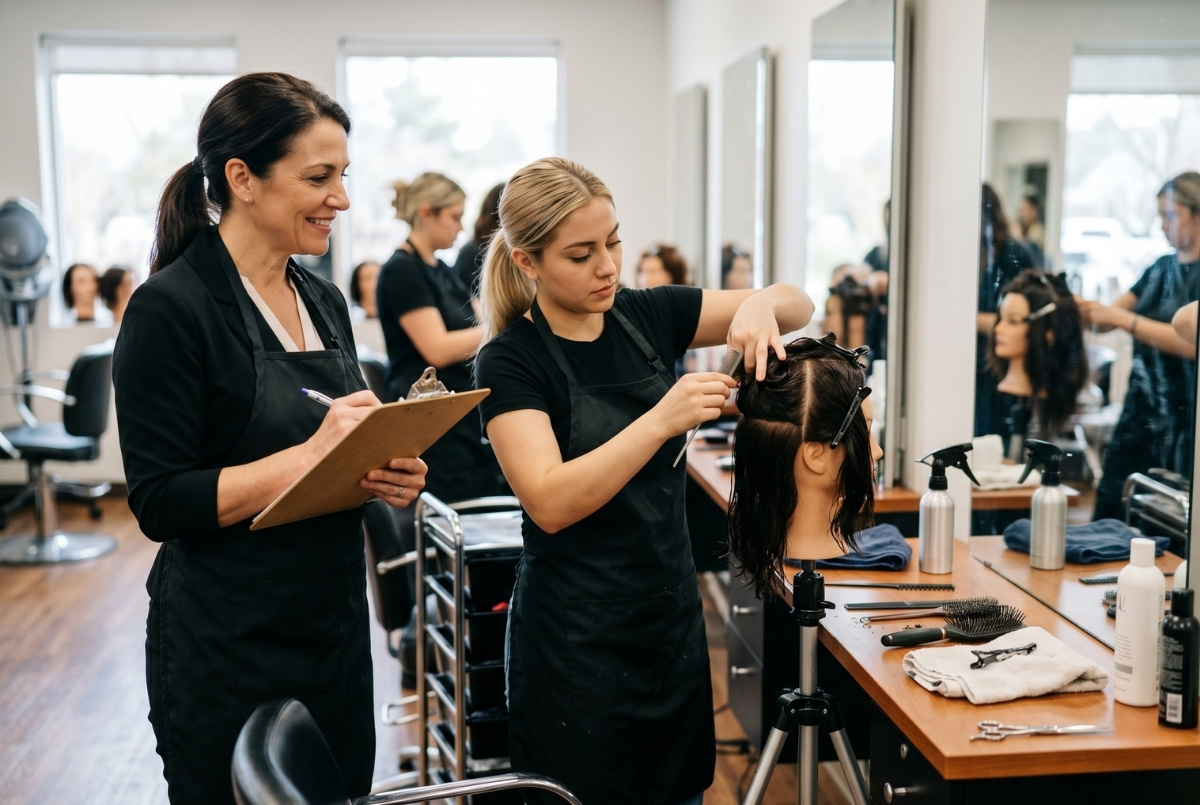
- Complete an Instructor Training Program: You will enroll in a state-approved beauty instructor training program for your specialty. This program focuses on classroom management, lesson planning, teaching methods, student evaluation, and supervised practice teaching.
- Earn Your Required Hours: The required education hours depend on the specialty. Under Georgia curriculum rules, cosmetology instructor training is 750 hours, esthetician instructor training is 500 hours, and nail care instructor training is 250 hours. Hair design instructor requirements may follow a separate approved pathway, so students should always confirm the current rule with the state board or school admissions team.
- Pass the Required Exams: You must pass the required state board exams that test your technical knowledge, safety knowledge, state-law understanding, and ability to teach.
The "Method of Teaching" Standard
Instructor licensing is not just about knowing how to perform a service. It is also about knowing how to explain, demonstrate, supervise, and evaluate that service. In Georgia, instructor curriculum includes teaching principles, curriculum development, lesson planning, classroom management, demonstrations, lectures, evaluation methods, and supervised practice teaching. Proposed legislation in other states, such as South Carolina Bill 4752, also includes a dedicated "method of teaching" course requirement for barber instructor applicants. The larger point is clear: the instructor role requires teaching skill, not just technical skill.
Flexibility and Innovation: Training in the Digital Age
A common question we hear is: "Can I get my cosmetology instructor license online?"
The answer is a "hybrid" one. Some programs may allow certain theory-based coursework to be completed online, especially topics like lesson planning, classroom management, or teaching methods. However, instructor licensing is still state-specific, and supervised practice teaching is usually a required part of training. In Georgia, for example, instructor trainees must complete supervised practice teaching hours as part of the state curriculum.
When looking for a beauty instructor school, look for programs that offer flexibility without cutting corners. Some schools may offer schedules that allow working professionals to continue earning income while completing their instructor training hours. Choosing the right school is vital; proper training ensures you don't just pass the test, but actually feel confident leading a classroom on your first day.

Your Legacy Begins at Atlanta Beauty Academy
Becoming an educator in the beauty industry is more than just a job change; it is an investment in your longevity. You are taking your years of hard-earned experience and turning them into a legacy. However, knowing where you train is just as important as the training itself.
At Atlanta Beauty Academy, we don’t just prepare you for a state board exam; we prepare you to lead. Our instructor training program is designed for experienced professionals who want to share their knowledge in cosmetology, barbering, nails, and esthetics. The curriculum includes lesson planning, teaching methodologies, classroom management, curriculum creation, and instruction delivery methods, giving future educators the foundation they need to step into a teaching role with confidence.
When you join us, you aren't just another student; you are joining a school with over 22 years of experience and 80+ years of combined expertise in Georgia beauty education. We have spent years refining how we teach, so you can spend your career inspiring others. We provide the mentorship, the community, and the professional credibility you need to step away from the chair and into your true potential as a leader.
Ready to Master Your Craft?
Take the first step toward the stable, respected career you deserve. Fill out the contact form below to learn more about our upcoming instructor programs and see our years of experience in action. Your future students are waiting for the mentor you are about to become.
FAQ: What Prospective Educators Really Want to Know
How long does it take to become a cosmetology instructor? Most people complete their training program in 6 to 12 months. This depends on whether you attend full-time or part-time, and it also depends on your state and specialty. In Georgia, cosmetology instructor training is 750 hours, esthetician instructor training is 500 hours, and nail care instructor training is 250 hours.
What is the difference between a beauty instructor and a beauty educator? In many cases, the terms are used interchangeably. However, an "instructor" often refers to someone working in a licensed school setting, while an "educator" might work for a specific product brand, travel to different salons, or train professionals outside a school environment.
Can I become an educator in beauty online for free? You can find free introductory workshops, but to become a licensed cosmetology instructor, you must complete the state-required training and exams. Some theory coursework may be available online, but supervised practice teaching and licensing requirements still depend on your state.
What can I do with a beauty instructor license? Beyond teaching at a beauty instructor school, you may be able to become a school director, curriculum trainer, admissions or student success leader, state board examiner, or corporate educator for beauty brands. Exact opportunities depend on your license type, experience, employer, and state requirements.