



What Is a Medical Nail Technician? Training, Certification, and Career Path

Step away from the high-turnover salon hustle for a moment. Imagine walking into a workplace every morning where your advanced skills are truly respected, your environment is meticulously clean, and your clients view you as an important partner in maintaining their comfort and personal care.
Many talented beauty professionals eventually reach a point where they feel stuck in a stressful cycle. Dealing with back-to-back client rushes, chemical fumes, and unpredictable tip-dependent wages can leave you feeling burned out. At the same time, the United States has a rapidly aging population, and the Centers for Disease Control and Prevention estimates that 40.1 million Americans had diabetes in 2023. Many older adults and people living with chronic health conditions need cautious nail and foot care that accounts for fragile skin, reduced sensation, circulation problems, and a greater risk of infection.
This intersection of specialized beauty care and health-conscious personal care is creating an emerging professional path. Let's look at what is a medical nail technician and explore how advanced safety education may strengthen your professional credibility, expand your referral network, and support a more specialized career.
Key Takeaways
- A Safety-Focused Specialization: A Medical Nail Technician, commonly called an MNT, is generally a licensed nail technician or cosmetologist who has completed private advanced education in infection control, chronic-condition awareness, risk screening, and appropriate medical referral.
- A Private Certificate, Not a Medical License: MNT certification is not a separate government-issued healthcare license. It does not authorize diagnosis, wound care, medical treatment, or services prohibited under your original state beauty license.
- Potential for a More Specialized Business: Advanced safety training may help technicians build trust, develop professional referral relationships, and offer more carefully structured services. However, there is no reliable national salary figure specifically for MNTs.
- State-by-State Rules Still Control: Your permitted services, tools, sanitation procedures, and licensing requirements are determined by the state where you practice, regardless of any advanced certificate you earn.
What Is a Medical Nail Technician?

When you work as a specialized nail technician, your daily approach may look very different from a standard cosmetic salon routine. Stepping into the health-conscious side of the industry means prioritizing client screening, infection prevention, documentation, and anatomical knowledge alongside appearance and comfort.
The term Medical Nail Technician is most commonly used for a licensed beauty professional who has completed additional private training related to elderly clients, people with diabetes, and individuals living with chronic health conditions. Despite the word “medical” in the title, an MNT remains a cosmetic nail professional unless that person separately holds a recognized healthcare license.
In this role, your care centers around several highly specialized concepts:
- Aseptic practices: According to the Centers for Disease Control and Prevention, asepsis means preventing contact with microorganisms. For a nail professional, this can include hand hygiene, careful workspace preparation, single-use supplies where appropriate, and properly cleaning and disinfecting reusable tools according to state rules and product instructions. Asepsis should not be confused with sterilization, which is a separate process intended to destroy all forms of microbial life.
- Advanced Waterless Care: Some specialized providers use dry or waterless techniques to eliminate footbath-related cross-contamination and avoid prolonged soaking. As noted in guidance from Balance Health, waterless care is a common feature of medical-pedicure services. The National Institute of Diabetes and Digestive and Kidney Diseases also advises people with diabetes not to soak their feet because soaking may dry the skin. Waterless care is not a universal legal requirement, but it can be a practical risk-reduction method for suitable clients.
- Conservative, Comfort-Focused Care: An MNT may perform careful cosmetic nail and skin maintenance that stays within the technician's state scope of practice. The exact services and tools allowed vary by jurisdiction. Thick, discolored, painful, infected, ingrown, or otherwise abnormal nails may require evaluation and care from a podiatrist rather than a nail technician.
- Risk Screening and Referral: Advanced training helps technicians recognize when a service should be modified, postponed, or refused. Open sores, bleeding, swelling, unusual warmth or redness, blisters, suspected infection, and nails growing into the skin are examples of warning signs that may require medical referral. The technician observes and documents what is visible but does not diagnose the condition.
- Careful Product Selection: Strong exfoliating products and chemical callus removers are not automatically appropriate for medically vulnerable clients. NIDDK warns people with diabetes against liquid corn and callus removers because these products can damage the skin and lead to infection. Product choices must match the client's condition, the manufacturer's instructions, and state scope-of-practice rules.
A common fear for newcomers is the pressure of working around medically vulnerable clients. It helps to understand exactly what this job is not. You are never expected to act like a doctor, podiatrist, or nurse. You do not diagnose nail disease, treat infections, provide wound care, perform surgery, or cut into living tissue.
Instead, you use advanced training to reduce avoidable risks, maintain a clean environment, and recognize when a client needs a licensed healthcare provider. If you want to understand how strict safety standards translate to everyday practice, reading up on essential nail salon hygiene and infection prevention strategies offers a practical look at protecting clients and technicians from cross-contamination.
The broader need for safe foot care is substantial. According to Mordor Intelligence, the global podiatry services market is estimated at $4.87 billion in 2026, and routine foot care accounted for 46.87% of the market in 2025. These figures describe the broader podiatry industry rather than the employment market for MNTs, but they help show how important routine foot maintenance is within overall foot health services.
Some podiatrists may employ or refer appropriate clients to safety-trained nail professionals. However, these arrangements depend on state law, the doctor's policies, the technician's experience, insurance requirements, and the services the technician is legally permitted to perform. An advanced certificate may support professional collaboration, but it does not guarantee employment, referrals, or a particular income level.
How to Become a Certified Medical Nail Technician
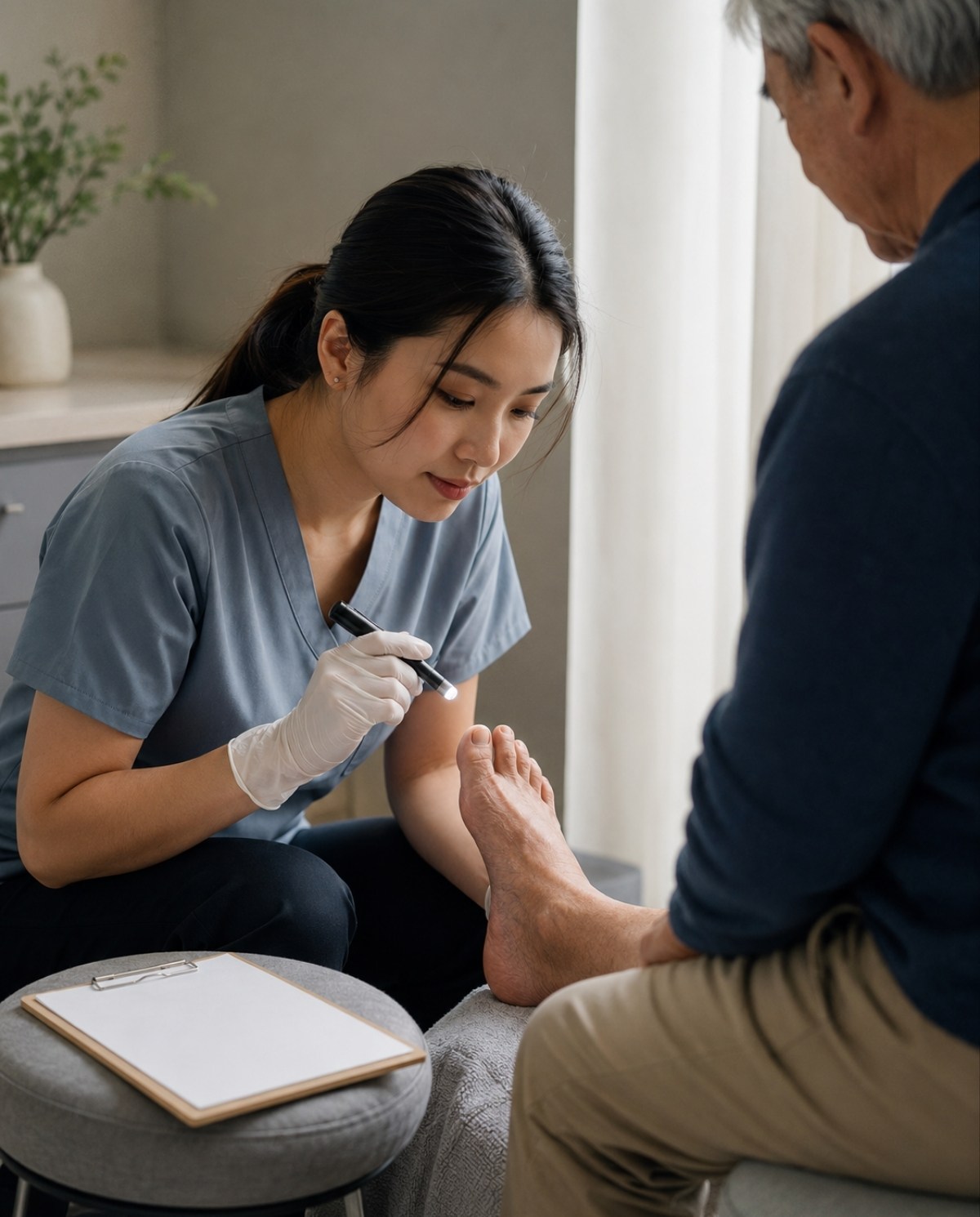
Learning how to become a specialist in this field takes dedicated focus, but the journey can be structured to build your knowledge step by step. The first stage is establishing a strong foundation in nail anatomy, infection control, client consultation, product chemistry, and safe practical techniques.
You must generally begin by completing a state-approved beauty program and earning the nail technician or cosmetology license required where you intend to practice. To get a complete breakdown of this baseline path, you can explore our comprehensive guide on nail technician certification requirements, costs, and licensing timelines to map out your initial steps.
State regulations regarding foundational school hours differ significantly across the country. For example, the Georgia State Board of Cosmetology and Barbers requires a 525-hour nail-care curriculum divided between theory and practical service applications. Atlanta Beauty Academy's own Nail Technician program contains 600 hours of theory and practical training, exceeding the state minimum. Meanwhile, the Arkansas Department of Health requires 600 hours of manicure training.
Choosing a high-quality beauty school for this step is essential because a strong understanding of nail anatomy, product chemistry, infection control, and service safety prepares you for later specialization. However, graduating from a nail program and receiving a state license does not automatically make someone an MNT.
Medical Nail Technician is a private certificate rather than a nationally standardized license, so there is no single training sequence required throughout the United States. One widely referenced pathway is offered by Nailcare Academy. Its full MNT track includes:
- Advanced Nail Technician, or ANT, education
- Wellness Nail Technician, or WNT, education
- A Medical Nail Technician internship preparation program
- A documented 40-hour internship with a foot-care medical provider
The ANT and WNT programs are prerequisites for the internship in this specific training system. Other private schools or certificate providers may use different course names, prerequisites, clinical requirements, or credentialing standards.
Before paying for advanced training, compare the provider's curriculum, instructor qualifications, hands-on requirements, internship support, assessment process, graduate policies, and eligibility rules. You should also verify whether your state permits the techniques, tools, and services taught in the course.
Can You Complete Your Advanced Training Online?
Many busy working professionals wonder how to become a certified specialist while maintaining a full work schedule. Some theory-based programs allow you to study topics such as anatomy, chronic-condition awareness, infection prevention, and client screening from home.
For example, Nailcare Academy provides its ANT and WNT coursework online. Its complete medical nail technician online pathway also includes a separate 40-hour internship with a foot-care medical provider before the student completes the MNT process.
This does not mean that every advanced nail program has the same clinical requirement. Because MNT is not a nationally regulated credential, online and hands-on requirements vary by provider. A useful program should clearly explain what is taught online, how practical competency is evaluated, what internship assistance is available, and whether applicants must already hold an active nail or cosmetology license.
During supervised clinical exposure, students may learn how a medical office operates, how to communicate professionally with healthcare providers, how to document services, and how to recognize visible warning signs that require referral. They must still avoid diagnosing neuropathy, vascular disease, fungal infection, or any other medical condition.
What to Expect from Requirements and Regulations
Clear boundaries are what keep both you and your clients safe. If you ever experience imposter syndrome, remember that your scope of practice defines what your professional license legally allows you to do. An additional private certificate may increase your knowledge, but it does not change that legal boundary.
Because MNT is not a separate government license, there is no single nationwide list of requirements. In the Nailcare Academy pathway cited above, advanced programs are intended for licensed nail technicians and cosmetologists, and students complete ANT and WNT training before beginning the MNT internship. Another provider may structure its certificate differently.
The most important rule is that you must always follow the law of the state where the service is physically performed. An industry explanation published by Nailcare Academy confirms that an ANT, WNT, or MNT certificate does not expand or alter the technician's original state scope of practice. A technician has the same legal boundaries in a podiatry office that they would have in a salon.
This distinction is especially important in Georgia. Under Georgia's facility and sanitation rules, cosmetology services may be performed only on intact, healthy skin and nails. A private advanced certificate does not allow a Georgia nail technician to treat an infected nail, work on an open wound, remove living tissue, diagnose disease, or perform a service that belongs within the practice of podiatry or medicine.
Advanced education gives you something highly valuable: better judgment about when a client's condition may be unsafe for a cosmetic service. Knowing when to stop, modify, postpone, or refer a service is one of the most important skills an advanced technician can develop.
Warning signs that may require medical evaluation include:
- Open cuts, sores, ulcers, or active bleeding
- Blisters, drainage, or suspected infection
- Unusual redness, warmth, swelling, or inflammation
- Severe pain or a sudden change in the foot or nail
- An ingrown nail that has entered or broken the skin
- Thick, yellowed, curved, or severely distorted nails in a client with diabetes or reduced sensation
- A client who cannot adequately see, feel, or reach their feet
The National Institute of Diabetes and Digestive and Kidney Diseases advises people with diabetes to seek professional foot care when nails are thick, yellowed, curved, or growing into the skin, particularly when the person cannot safely trim them independently.
A certificate may help demonstrate that you have pursued additional safety education, but it does not automatically shield you from liability. Technicians must still follow state regulations, maintain proper sanitation, document services appropriately, carry suitable professional insurance, obtain informed client information, and stay within their legal scope at all times.
Career Outlook and Financial Freedom: The Specialist Advantage
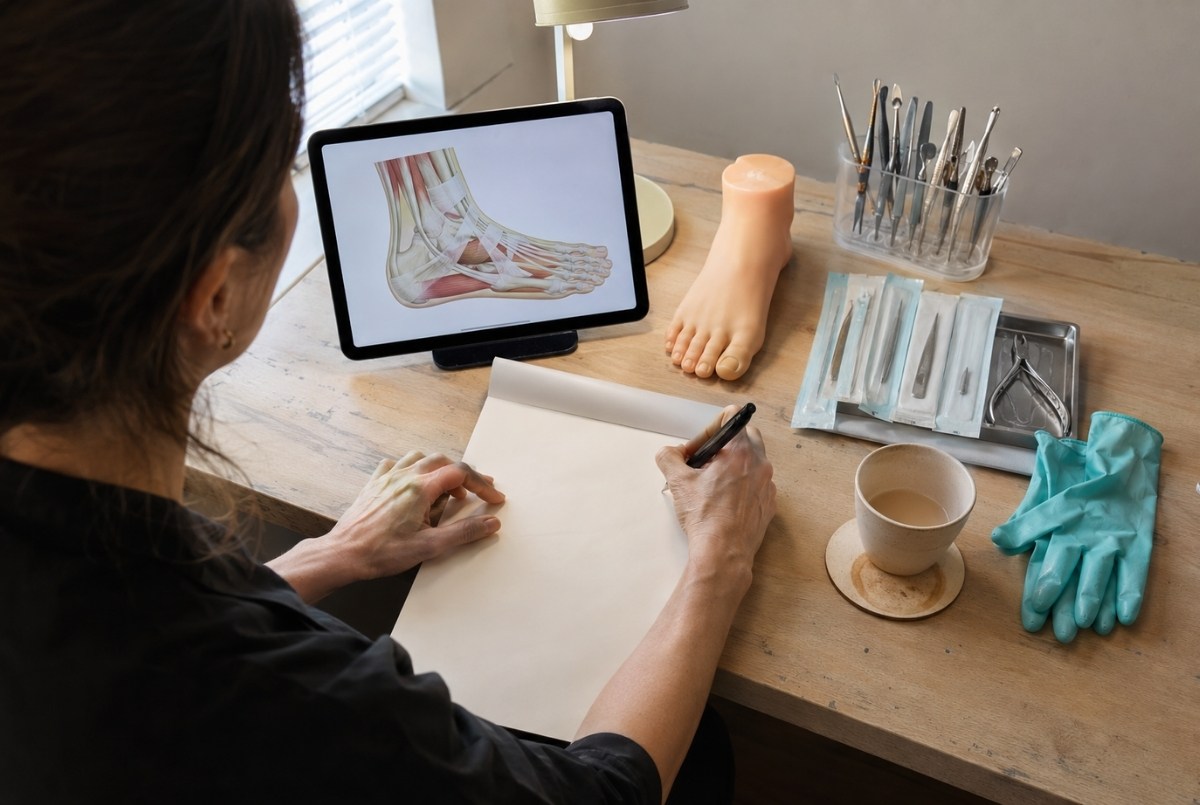
Specialization can help you step away from competing only on speed and low prices. When you develop stronger consultation, sanitation, documentation, and referral skills, you may be able to create a more focused service experience for clients who value safety and careful attention.
However, there is currently no authoritative national salary database specifically for Medical Nail Technicians. MNTs are generally included within the broader manicurist and pedicurist occupation rather than tracked as a separate healthcare career.
According to the U.S. Bureau of Labor Statistics, manicurists and pedicurists earned a median wage of $16.66 per hour in May 2024. Employment in the broader occupation is projected to grow 7% from 2024 to 2034, with approximately 24,800 openings projected each year.
These federal wage figures do not include self-employed workers, which is an important limitation for anyone considering an independent suite or mobile business. A specialist's results may differ significantly depending on:
- Local demand and competition
- State scope-of-practice restrictions
- Employee, booth-rental, or business-owner status
- Appointment length and service pricing
- Client retention and referral relationships
- Rent, supplies, insurance, taxes, and payment-processing expenses
- The technician's experience, reputation, and weekly booking volume
Advanced training may allow a technician to position services around careful consultation, lower client volume, longer appointments, and a more personalized environment. In some markets, that may support higher service prices than a basic walk-in pedicure. It does not guarantee an annual income of $80,000 or $90,000, and gross service revenue should never be confused with personal take-home pay.
For example, a business may collect substantial annual revenue while still paying for rent, products, equipment, continuing education, insurance, licensing, marketing, taxes, and unpaid administrative time. A realistic career plan should calculate all of these costs before estimating income.
The strongest financial advantage of specialization is not a guaranteed salary figure. It is the opportunity to build a business around expertise, trust, client retention, and a clearly defined service experience rather than competing only through low prices and rapid turnover.
Ready to Master Your Craft?
The path from a high-volume salon environment to an advanced nail-care specialization begins with a strong foundational education. At the Atlanta Beauty Academy, our Salon-Ready approach prepares students through nail anatomy, infection control, product knowledge, client consultation, and extensive practical training.
Our 600-hour Nail Technician program exceeds Georgia's 525-hour minimum and helps students prepare for the licensing process and entry into the professional nail industry. After becoming properly licensed, graduates interested in medical-adjacent nail care may research reputable advanced private certificates and supervised learning opportunities.
Advanced MNT education must be completed separately through an appropriate provider unless it is specifically included and documented within a school's approved curriculum. No private certificate replaces a state nail license or gives a technician permission to provide medical treatment.
We don't just teach you how to prepare for the state board process. We help you build the foundational judgment, technical discipline, and professional habits needed to explore future opportunities responsibly.
Fill out the contact form below to join a 20-year legacy of beauty education. Let us help you turn your passion into a skilled, respected, and safety-focused career.
Frequently Asked Questions
Is a Medical Nail Technician a licensed medical professional?
No. An MNT is generally a licensed nail technician or cosmetologist who has completed additional private education. The certificate does not make the holder a doctor, nurse, podiatrist, or other licensed healthcare provider. An MNT cannot diagnose disease, prescribe treatment, provide wound care, or exceed the scope of the underlying state beauty license.
Do medical nail technicians accept health insurance?
Private cosmetic MNT services are normally paid out-of-pocket and are not independently billed to insurance by a nail technician. However, it would be incorrect to say that insurance never covers foot or nail care. According to Medicare, routine foot care is usually not covered, but medically necessary treatment and limited routine foot-care services may be covered in certain circumstances when Medicare's requirements are met and the service is furnished by an eligible healthcare provider or practice. Clients should confirm coverage directly with the clinic and their insurance company.
What is the difference between an Advanced Nail Technician and a Medical Nail Technician?
The definitions depend on the private certificate provider. In Nailcare Academy's system, an Advanced Nail Technician completes advanced education focused on salon safety, infection control, and professional practices. The ANT program is followed by Wellness Nail Technician education. Students then complete the Medical Nail Technician internship preparation program and a documented 40-hour internship with a foot-care medical provider. Therefore, in this particular system, an MNT is not simply an ANT who completes an internship; the WNT program is also part of the pathway.
Can a medical nail technician treat fungus, ingrown nails, or diabetic foot problems?
An MNT may recognize visible warning signs and refer the client to an appropriate healthcare provider, but the certificate does not authorize medical diagnosis or treatment. Whether a cosmetic service can be performed depends on the client's condition and the technician's state scope of practice. In Georgia, cosmetology services are limited to intact, healthy skin and nails.
Can I move to a different state easily once I am licensed?
Not automatically. Your advanced certificate may remain evidence that you completed additional education, but it does not authorize you to practice in another state. You must meet the destination state's endorsement, reciprocity, examination, education, and licensing requirements before providing services there.
The Cosmetology Licensure Compact is intended to make interstate practice easier for eligible professionals in participating states. However, the official Compact website states that multistate licenses are not yet available. Eligibility will also depend on the professional's exact license type and home-state status. Until the system begins accepting applications, technicians must continue using each state's existing licensing or endorsement process.