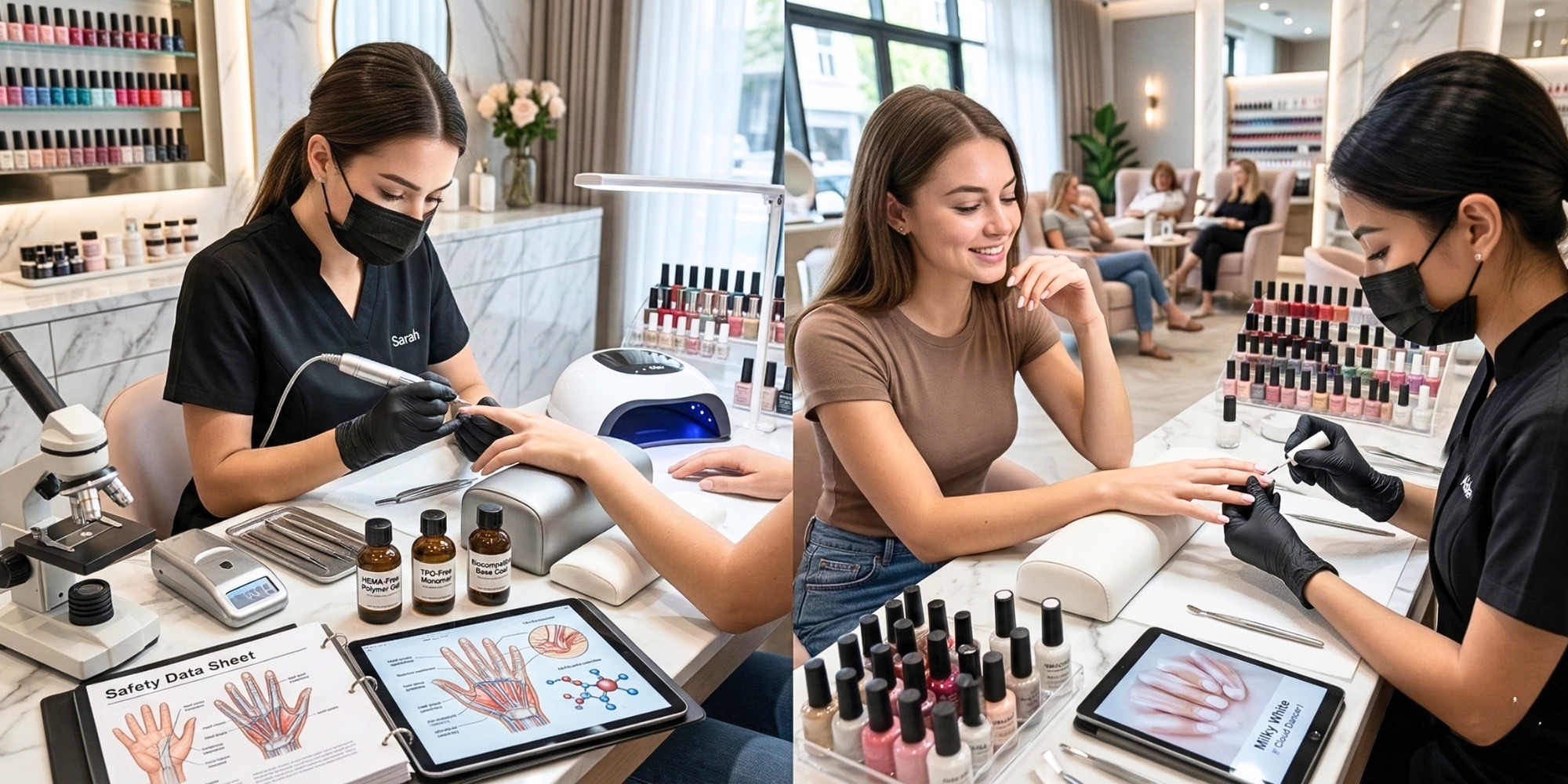
You’ve likely spent hours perfecting a set of "milky bath" nails at your kitchen table, wondering if your passion is a sustainable career or just a creative outlet. In 2026, the industry has undergone a radical shift. It is no longer a "trade" in the traditional sense; it is a specialized discipline of cosmetic chemistry and hand health.
When we ask, "What is nail technology in the modern era?" we aren't talking about simple aesthetics. We are describing a high-touch, high-tech career that requires a mastery of polymers and human anatomy. This guide serves as your professional
introduction to nail technology, bridging the gap between being a talented enthusiast and a licensed, high-earning specialist.
Key Takeaways for Future Professionals
- Market Growth: The industry is projected to grow 7% through 2034, with a "Bright Outlook" designation due to its resistance to AI automation.
- Salary Potential: Specialized technicians in luxury hubs are commanding rates between $34 and $94 per hour.
- Safety Standards: 2026 regulations have shifted the industry toward TPO-free and HEMA-free chemistry, making formal education on toxicology essential.

The Technical Evolution of the Craft: Chemistry Meets Care
To truly grasp the nail technology meaning today, you must look past the color bottle. Modern techs are "surface chemists." Every service involves managing a delicate chemical reaction - polymerization - on a living substrate (the nail plate). Understanding how UV light interacts with photoinitiators to create a durable bond without damaging the lipid barrier is the hallmark of a true professional.
Professional Scope: What Are Nail Techs in 2026?
If you are wondering "what are nail techs exactly?" think of them as the primary care providers for the hands. Beyond the art, your role involves identifying "silent" nail pathologies. A professional can distinguish between a simple bruise and
subungual melanoma, or recognize when a client’s "dry skin" is actually a fungal infection requiring a medical referral. You are the first line of defense in hand health, making your cosmetology licensure pathway a vital credential for public safety.
Expert Insight: The Toxicology Shift
According to recent industry updates on the
New Rules of Nail Care from StyleSpeak, the global ban on TPO (Trimethylbenzoyl diphenylphosphine oxide) has separated the amateurs from the pros. A 2026 education doesn't just teach you to apply products; it teaches you to read a
Safety Data Sheet (SDS) to ensure you are using biocompatible, HEMA-free formulas that protect both your and your client's health.
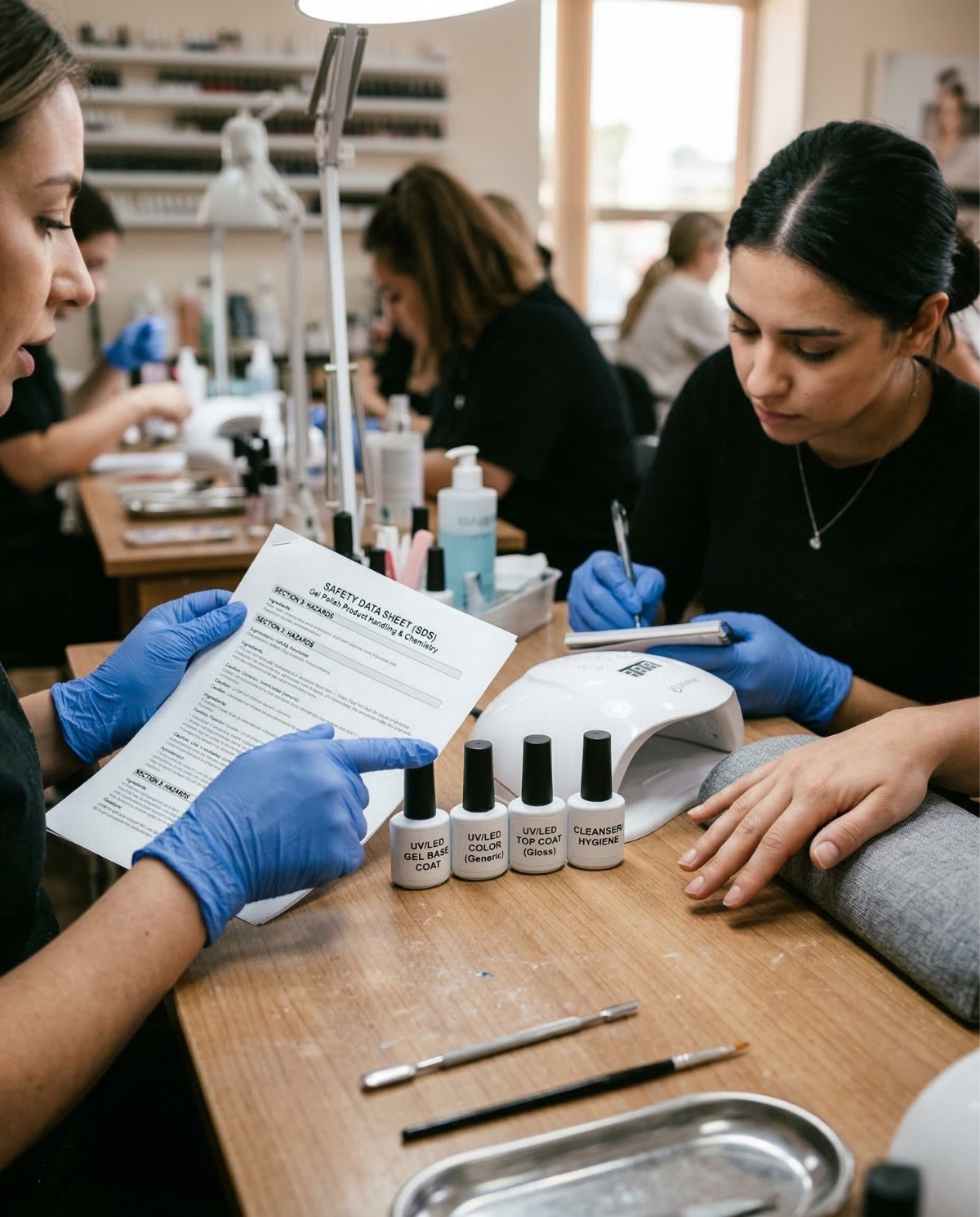
For a deeper dive into these technical documents, professional guides like
HONA’s Knowledge Hub can help you master the 16 essential sections of product chemistry before your first day in the salon.
Navigation & Economic Reality: Choosing Your Path
The distinction in
Manicuring vs. Nail Technology is often misunderstood. In most US jurisdictions, your "Manicuring License" is your legal permission to touch a client for pay. However, your "Nail Technology" training is your competitive edge. While a manicurist performs basic maintenance, a nail technologist engineers structures - balancing the apex of an extension to prevent natural nail trauma.
Practical Success: Nail Technology for Beginners
For those looking at
nail technology for beginners, the focus should be on "ergonomic longevity." Many self-taught artists exit the industry within three years due to carpal tunnel or neck strain. A professional program teaches you the biomechanics of your own body - how to hold an e-file and position your chair - to ensure a 30-year career rather than a 3-year burn-out.
Income Tiers: Manicuring and Nail Technology Salary
Data provided by the
U.S. Bureau of Labor Statistics Occupational Outlook indicates that this field is a "Bright Outlook" career with approximately
24,800 job openings projected annually. This job security stems from the fact that "High Manual Dexterity" roles are currently impossible for AI to replicate.
When researching the manicuring and nail technology salary, recent
trends from Indeed show that entry-level "averages" are often misleading. Technicians focusing on "Medical Manicuring" or "Architectural Enhancements" are commanding six-figure potentials in high-demand hubs like Cinco Ranch, TX, with specialized rates reaching between
$34 and $94 per hour.
The 2026 Visionary Landscape: The "Quiet Luxury" Revolution
The dominant aesthetic of 2026 has moved away from flamboyant art toward Soft Minimalism. As highlighted in
Vogue Scandinavia’s report on non-negotiable nail trends, the Pantone-inspired "Cloud Dancer" milky white is the color of the year. This trend prioritizes clinical-grade exfoliation and natural nail health.
Integration of AR and Digital Consultation
Technology is now your silent partner. According to
SNS Chairs’ analysis of 2026 market trends, the nail printing and AR device market is forecast to reach
$1.18 billion. High-end salons now utilize Augmented Reality (AR) to simulate the final look before the first file is used, reducing "service regret" and increasing client satisfaction.

Ready to Master Your Craft? Your Future at Atlanta Beauty Academy
You’ve seen the data and understood the high-tech future of the industry. Now, the only thing missing is the proper foundation. At
Atlanta Beauty Academy, we don’t just teach you how to pass a state board exam; we prepare you to lead the market.
Our
"Salon Ready" approach is designed to bridge the gap between student and professional from day one. By training in a real-world salon environment, you’ll master the architectural techniques that 2026 clients demand. You won't just graduate with a license - you'll graduate with a portfolio and the business acumen to navigate the most lucrative tiers of the industry.
Specialized Training for the Modern Professional
While our legacy is built on comprehensive beauty education, we offer specific pathways tailored to your unique ambitions:
- Nail Technology (Manicuring) Program: This 525-hour program is our flagship course for future artists, covering everything from the foundational science of the nail plate to advanced 3D extensions and e-filing.
- Cosmetology Program: A broad-spectrum course for mastering hair, skin, and nails.
- Esthetics & Skin Care: Focusing on clinical skin health and advanced spa treatments.
- Instructor Training: For the seasoned pro ready to shape the next generation.
Join a 20-Year Legacy of Excellence
Choosing a beauty school is about joining a community. With over
20 years of experience in the Atlanta area, we have a proven track record of turning passionate beginners into industry-leading professionals. When you walk through our doors, you aren't just a student - you are joining a legacy of success.
Don't let your talent stay at the kitchen table. Feel your contact info below to Schedule a Tour of our modern facilities or Chat with Admissions today. Your chair is waiting.
Frequently Asked Questions
Can I practice "Medical Manicuring" with a standard license?
Your license allows for cosmetic services. To work in a medical capacity, you must pursue "Advanced Nail Technician" (ANT) certification, which focuses on aseptic techniques for high-risk clients.
How long does a typical manicuring program take to complete in Georgia?
In Georgia, the Board of Cosmetology requires
525 hours of school training. At Atlanta Beauty Academy, this typically takes between 4 and 6 months depending on your schedule.
Is the 2026 market too saturated?
The low-end market is crowded, but there is a massive shortage of "Clean Beauty" specialists who understand toxicology. High-end clients are actively seeking pros who prioritize nail health over speed.
What is the "Soft Minimalism" trend?
It’s a shift toward architectural shaping - focusing on the perfect "C-curve" and negative space. It’s less about painting a picture and more about sculpting the hand.