How to Become an Esthetician: School, License, Cost, and Career Path

Selecting the right career path is a major life decision that involves balancing your passion for skincare with the reality of the job market. Moving from a beauty enthusiast to a skin health professional requires a clear understanding of the biological and chemical foundations of the trade. If you want to know how to become an esthetician, the process involves more than just a love for products. This guide offers a mentor-led walkthrough of the education for an esthetician, the requirements for an esthetician license, and the true esthetician school cost.

Key Takeaways

  • Speed to Career: Most students finish training in 4 to 12 months, rather than the years required for a university degree.
  • Job Growth: The Bureau of Labor Statistics projects a 7% growth rate through 2034, which is faster than the national average.
  • Income Potential: While the average salary is around $45,374, Master Estheticians can earn over $66,900.
  • New Standards: As of early 2026, the Modernization of Cosmetics Regulation Act (MoCRA) has raised the bar for professional accountability.
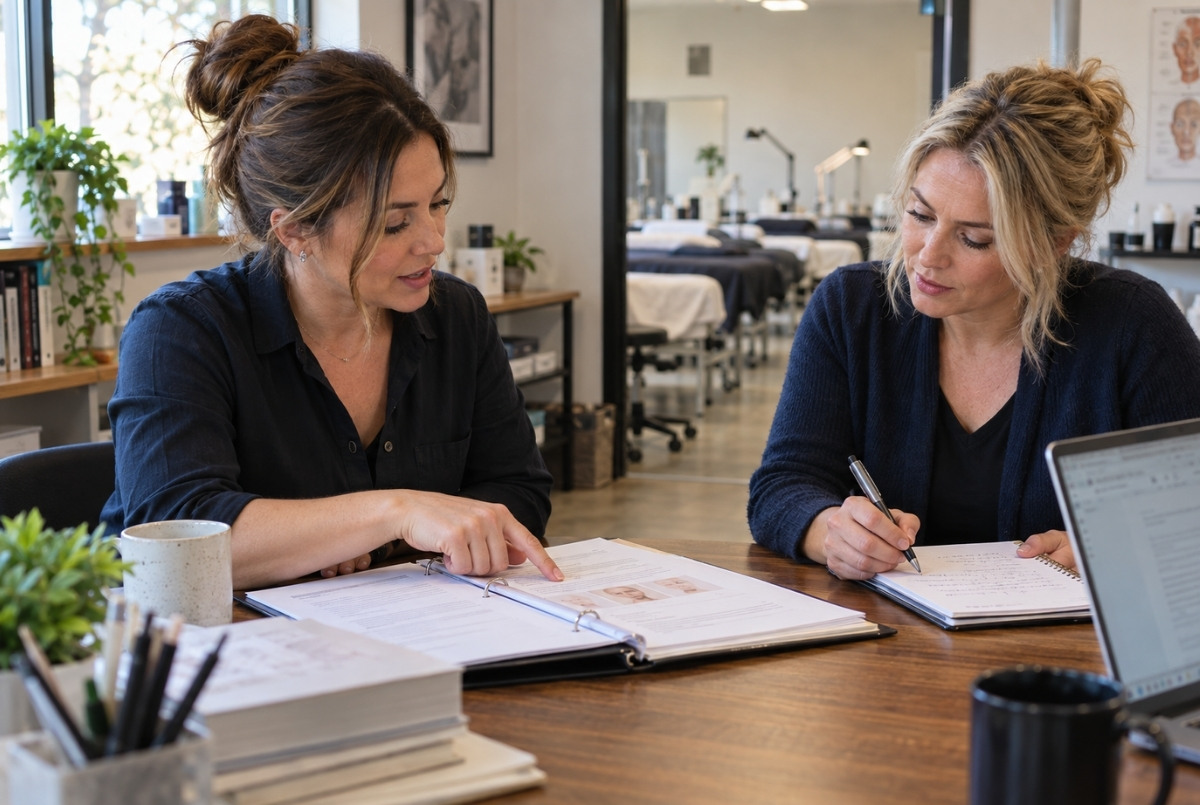
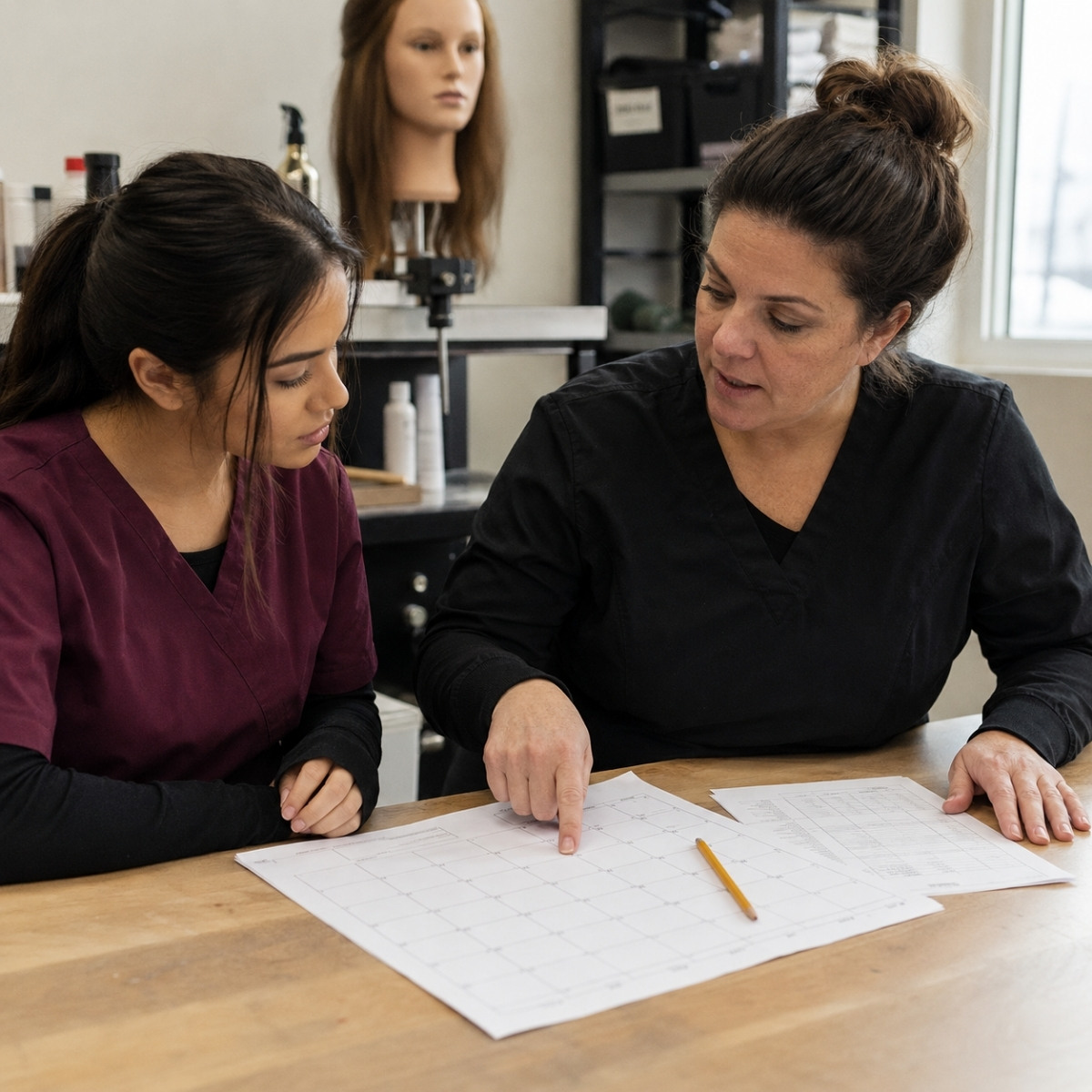
A student esthetician holds a workbook while an instructor points to a facial anatomy chart in a bright clinic.

Defining the Modern Professional: Scope of Practice

In 2026, the beauty industry has shifted toward what Mintel analysts call "Metabolic Beauty." This means clients expect you to understand how their internal health reflects on their skin. As a professional, your scope of practice - the legal boundary of your work - focuses on the lipid barrier. This is the skin's natural shield made of oils and fats that keep moisture in and bacteria out. You will use clinical-grade exfoliation (powerful professional peels) and advanced technology to support cellular repair. Understanding this chemistry is what separates a hobbyist from a professional. Modern clients are moving away from traditional "clean beauty" and toward "Bio-intelligent actives." These are ingredients that react to the skin’s metabolic state in real-time. Choosing a program that emphasizes skin biotechnology will put you ahead of the curve.

The Academic Path to be an Esthetician

Before you enroll, you need to check off a few boxes. Most states require you to be at least 16 or 17 years old. You also need a high school diploma. If you have wondered, "Can you be an esthetician with a GED?" you will be glad to know that almost all state boards accept it. The path for how to become an esthetician after high school is straightforward:
  1. Research schools with esthetician programs.
  2. Complete your required training for an esthetician.
  3. Pass the state board exams.
  4. Apply for the license.

The Reality of Esthetician School: Online vs. In-Person

When you search for the quickest way to become an esthetician, you might see ads for an online esthetician course. It is important to be realistic here. While you can take online classes for an esthetician to learn anatomy or chemistry, you cannot learn how to safely perform a chemical peel through a screen. Most states require hundreds of hands-on hours in a supervised student clinic. If a program claims you can do esthetician school online without any in-person training, they are likely not accredited. This would prevent you from getting a license for an esthetician, making the "quick" route a dead end.

How Long to Become an Esthetician?

If you are wondering how many years of school for an esthetician are required, the answer is usually measured in months rather than years. While the Bureau of Labor Statistics highlights that you must complete a state-approved program, the specific hour requirements are set by your local state board. Most states fall into a range of 600 to 1,000 hours of documented training. Here is how that usually looks in practice:
  • Full-time students: Most finish in 4 to 6 months.
  • Part-time students: These programs often take 9 to 12 months.
  • State variations: Some states like Florida require as few as 260 hours for a facial specialty, while others like Georgia or Alabama require a full 1,000 hours.
This fast-paced schedule allows for a rapid transition into a new career. You spend less time in a classroom and more time in a student clinic, which helps you build the hands-on confidence you need to be "Salon Ready" upon graduation.

Price for Esthetician School and Financial Planning

The esthetician school cost is an investment in your professional future. You should expect to see tuition range from $3,000 at a community college with an esthetician program to over $15,000 at specialized private institutions (some schools do have financial aid to cover all your fee however). Many students worry about the upfront cost. There are several ways to manage this:
  • FAFSA for esthetician school: You can apply for federal student aid through FAFSA if your school participates in Title IV federal student aid programs.
  • Grants for esthetician school: Few schools even provide money that does not need to be paid back.
  • VA Benefits: If you or a family member served in the military, the VA pays for esthetician school at many qualifying locations.
When calculating the cost to become an esthetician, remember to include "kit fees." These are the professional tools and products you will use during your training and often take with you into your first job.

How to Get Your Esthetician License

Once you finish your esthetician program, you enter the final phase before starting your career. This is the official recognition of your skills by the state board. Licensing exams vary by state. Many states require a written exam, and some also require a practical exam. In states that still utilize the two-part system, the process looks like this:
  • Theory Exam: A written test that covers skin biology, sanitation protocols, and state laws.
  • Practical Exam: A hands-on demonstration where you perform services on a model or mannequin to prove your technique is safe and effective.
While states like California have recently moved away from the practical portion to simplify the process, Georgia still maintains rigorous testing standards to ensure every licensed esthetician is prepared for the field. How much does it cost to get an esthetician license? You will need to pay for the application and the testing fees, which usually total between $100 and $250 depending on your state.

Careers After Esthetician School: Where Can You Work?

The question "What can you do with an esthetician license?" has many answers today. Common workplaces include:
  • Medical Spas: Performing advanced treatments like micro-needling alongside doctors.
  • Resort Spas: Working in high-end luxury environments.
  • Freelance/Self-Employment: Managing your own books and specializing in niche services like lash extensions or bridal skin prep.
Data from ZipRecruiter in early 2026 shows the average salary for an esthetician is currently around $45,374. However, focusing on a specialty can increase your earning potential. For example, a Master Esthetician - someone who has completed advanced training in energy-based devices like lasers - averages over $66,900 annually. Your esthetician yearly salary will grow as you build a loyal client base and master high-ticket services. A professional esthetician in grey scrubs prepares a relaxed client for a facial on a cream treatment bed inside a sunlit, modern spa room with textured linens and a small diffuser.

Ready to Master Your Craft?

Choosing where you learn is just as important as what you learn. At Atlanta Beauty Academy, we provide more than just a classroom experience; we offer a gateway into a professional legacy. Our instructors have spent over 20 years guiding students through the complexities of skin health and helping them launch successful careers across Georgia. We take a "Salon Ready" approach to every lesson. This means you aren't just memorizing facts to pass a state exam. You are practicing the high-level skills - like advanced skin analysis and the latest energy-based device theory - that top-tier spas actually look for in 2026. Our goal is to ensure your first day on the job feels like your hundredth.

Why Students Choose Atlanta Beauty Academy:

  • Industry Legacy: Benefit from over two decades of experience and deep-rooted connections in the Georgia beauty industry.
  • Career Support: Gain access to a network of local medical spas, luxury resorts, and boutique salons looking for "Salon Ready" graduates.
  • Path to Advanced Earnings: We prepare you for the highest-earning roles, whether you want to become a Master Esthetician or open your own business.
  • Real-World Preparation: Our curriculum stays ahead of modern regulations like MoCRA, ensuring you graduate as a safe, credible, and legally literate professional.
Our history is built on the success of students who turned their passion into a paycheck. Your future in skin health is waiting, and we are here to help you navigate every step of the journey. Fill out the contact form below this article to learn more about our upcoming programs and see our 20+ years of experience in action. We invite you to join our legacy and start building your own.

FAQ: What You Need to Know Before Starting

Is it hard to get a job as an esthetician? The demand for skin health experts is high. Employers are looking for graduates who understand modern safety regulations and have strong hands-on skills. Choosing a reputable school makes the job hunt much easier. Can you be an esthetician without going to school? No. Every state requires a specific number of educational hours from an approved school before you can sit for the licensing exam. Do you need a degree to be an esthetician? You do not need a college degree. You need a diploma or GED and the completion of a state-approved esthetician course.

Nail Salon Hygiene & Aftercare: Preventing Infections and Protecting Clients

The nail industry is currently undergoing a quiet but significant transformation. While artistry still draws clients through the door, it is the invisible standard of safety that keeps them coming back. In 2026, a "luxury" service is no longer defined merely by the brand of polish used, but by a technician’s ability to navigate the complex intersection of microbiology and aesthetics. To move from a beginner to an industry leader, you must transition your mindset from "beautifying" to "protecting." If you are just starting out, I recommend reviewing our beginner’s guide to launching your 2026 nail tech career to get a firm handle on the fundamentals of the trade. Providing high-level aftercare advice within the nail technology field is your most powerful tool for building professional credibility. It transforms you from a service provider into a trusted consultant who understands the biological stakes of the nail plate.

Key Takeaways for Future Professionals

  • Microbiology is Mandatory: Success begins with identifying the four pertinent organisms (bacteria, fungi, viruses, parasites) to prevent the "Safety Paradox" where luxury salons still see rising infection rates.
  • Technology vs. Treatment: Standard salon UV lamps and cosmetic lasers are "adjunct" tools, not medical cures. Understanding their limits is vital for managing client expectations.
  • The Credential Advantage: Transitioning from "technician" to "specialist" via a Medical Nail Technician Certificate allows you to work safely with high-risk clients.
  • Functional Aftercare: The next $26 billion market shift is toward products that treat the "nail matrix" and use "hydrogel technology" for sustained healing.
A professional nail technician workstation featuring a metal tool tray, a magnifying task lamp, and a client’s hand resting on a clean armrest in a modern salon.

The Biology of the Bench: Identifying Your Invisible Adversaries

In any high-standard nail technology program, the first lesson isn't about the brush - it’s about the "bio-burden." This refers to the number of microorganisms living on a surface or tool. To effectively manage this risk, a professional must be able to list the four types of organisms that are pertinent to nail technology: bacteria, fungi, viruses, and parasites. Understanding these four categories is about more than passing a state board exam; it’s about recognizing how they behave in a moisture-rich salon environment. Bacteria like Staphylococcus can colonize a microscopic skin tear in seconds. Fungi, particularly those causing onychomycosis (nail fungus), thrive in the dark, damp spaces created by "lifting" - that’s when enhancements pull away from the natural nail, creating a pocket for moisture. Effective infection control requires "mechanical debridement" - the physical removal of biofilm (a sticky layer of bacteria) before chemical disinfection even begins. If you don't break that film first, your disinfectant cannot reach the pathogens beneath it. As noted in the 2026 Sunset Review Report by the California Board of Barbering and Cosmetology, improper disinfection remains a primary driver of common infections like ringworm in professional settings even in upscale environments. According to above data from the California Board of Barbering and Cosmetology, as salons offer more invasive "wellness" services, the rate of consumer injury has risen. This proves that high-end décor is no substitute for clinical-grade protocols. In the modern market, safety is the ultimate competitive advantage.

The Scientific Reality of High-Tech Anti-Fungal Treatments

As clients become more health-conscious, they often arrive with questions about the latest "medical" gadgets. One of the most common inquiries is: "Does UV technology kill nail fungus?"

The Limitations of UV Light

To answer this accurately, you must distinguish between "sanitization" and "curing." While specialized UV technology that fights nail fungus exists in clinical medicine, it requires specific UVC wavelengths and high intensities that standard salon lamps do not possess. In fact, if a client has an active infection, the heat and "occlusive" (sealing) nature of gel polish can actually accelerate fungal growth by creating an occlusive, moisture-rich environment - one that lacks oxygen. According to CT.gov's Infection Control Guidelines, UV light boxes are strictly for dry storage and are not acceptable devices for sterilization.

The Role of Lasers in Nail Health

Similarly, you will likely be asked about the efficacy of laser technology for nail fungus in general, according to the updated Medical Policy SURG.00138 from Healthy Blue Louisiana, lasers are most effective as an "adjunct" therapy. This means they assist other treatments by using photothermal heat to slow fungal replication, but they rarely achieve a "complete cure" on their own at the 52-week mark. By understanding the limits of laser technology for nail fungus, you can manage client expectations and provide better guidance on when they should seek medical intervention. A nail technician points to a digital diagram of nail anatomy on a tablet screen while consulting with a client in a clean, modern treatment room with soft natural lighting.

Advanced Client Aftercare: Protecting the Investment

The most critical window for nail health occurs in the weeks between salon visits. If a client isn’t maintaining their "lipid barrier" - the natural fatty acids that protect the skin and nail - the work you do in the chair will suffer.

Next-Generation Post-Service Solutions

Standard topical liquids often fail to provide lasting results because they cannot easily penetrate the dense, water-resistant keratin of the nail plate. To solve this, we now use specialized delivery systems. For clients with compromised nails, I often recommend fungal nail patches. By leveraging hydrogel technology, these patches hydrate the nail plate, causing the keratin fibers to swell and become more porous. This "moist healing" environment allows protective ingredients to reach the nail bed far more effectively than traditional drops that simply evaporate. We also have to focus on the "engine" of the nail - the matrix. To support healthy growth, we suggest using a nail care pen designed for daily application. These are engineered with Nail Matrix Technology to deliver concentrated nutrients directly to the proximal nail fold. By nourishing the tissue where new cells are actually formed, you ensure your client is growing a resilient foundation for their next set of enhancements.

The Professional Hygiene Kit

Even the tools your clients use at home matter. While advanced hygiene is the focus today, you should also familiarize yourself with the essential skills and professional starter kit items that every technician needs for daily success, for example, implementing a Salmon hygiene technology nail brush is far superior to traditional wooden or porous brushes. These specialized tools are designed with resin-set filaments that resist bacterial colonization, ensuring that the client isn't re-introducing pathogens while they clean under the "free edge" at home. Reports from Research Nester (2026) show the global shift toward "proven" wellness products has pushed the functional aftercare market toward a $26.1 billion valuation. Clients are moving away from simple "clean beauty" labels and toward products backed by clinical data.

From Technician to Clinical Specialist

Standard cosmetology licensure provides the "pathway," but specialized training provides the "destination." For those looking to command higher rates and work with high-risk demographics, such as diabetic clients, obtaining a medical nail technician certificate is the gold standard. This advanced certification allows you to move beyond basic aesthetics and into the realm of "medical pedicuring." It also qualifies your business to participate in a Healthy Nail Salon Recognition Program. Earning a spot in that program signals to your community that you prioritize respiratory health and chemical safety. This is especially critical given the FDA’s 2026 General Wellness Framework, which draws a firm line between "wellness" claims and "medical" claims. Having legitimate institutional backing is the only way to safely - and legally - claim superior hygiene standards in your marketing. A person's hand with a ring and olive green sleeve selects a white beauty pen from a clean travertine countertop. The surrounding set includes a daily aftercare card, hydrogel patches packaging, a glass jar with a wooden lid, a ceramic brush, a potted plant, and a professional certificate.

Ready to Master Your Craft? Join the Legacy at Atlanta Beauty Academy

Choosing where to start your career is the most important decision you’ll make. At Atlanta Beauty Academy, we don’t just teach you how to paint nails - we prepare you to lead the industry. Our unique Salon Ready approach ensures that every student graduates with a deep mastery of the clinical-grade hygiene and advanced aftercare techniques we’ve discussed today. The future of nail technology belongs to the specialists. Whether your goal is to launch a boutique medical-grade nail salon, work as a consultant for high-tech wellness brands, or become a high-demand artist in the "bio-aesthetic" market, our curriculum is designed to get you there. We bridge the gap between beauty and science, giving you the professional edge and scientific authority that top-tier employers are looking for in 2026. When you join Atlanta Beauty Academy, you aren’t just enrolling in a school; you are joining a 20-year legacy of excellence. We have spent over two decades refining our training to meet the highest industry standards, ensuring our graduates are among the most sought-after professionals in the region. Your journey from student to specialist starts here. Don’t settle for a basic education when you can build a career on a foundation of safety, technology, and art. Fill out the contact form right below this article to take the first step toward your professional future and see our 20+ years of experience in action. We can’t wait to help you join our legacy.

FAQ: More Safety & Technology Questions

Is it safe to use a standard LED lamp to "treat" a client's infection? No. While there is UV technology for nail fungus in medical settings, salon curing lamps operate at different wavelengths and are designed only to polymerize (harden) gel products. They do not have the germicidal intensity required to kill fungal spores. What makes "Nail Matrix Technology" different from regular cuticle oil? Standard oils often just sit on the surface of the skin. A nail care pen with Nail Matrix Technology is formulated with smaller molecular structures designed to penetrate the proximal nail fold and reach the actual growth center of the nail, supporting the formation of healthy new nail cells. Why should a salon join a Healthy Nail Salon Program? Participating in a Healthy Nail Salon Recognition Program provides third-party verification of your safety standards. This is a massive trust signal for clients who are skeptical of salon hygiene and look for official certifications when choosing a service provider.

The Professional Nail Tech Blueprint: 2026 Essential Skills, Procedures, and Your Professional Starter Kit

Transitioning from a beauty enthusiast to a licensed professional is less about mastering "nail art" and more about mastering nail technology procedures - the invisible science of structural integrity and chemical safety. If you’ve felt a pang of "imposter syndrome" while watching a pro effortlessly sculpt a set of extensions, it's usually because you’re seeing the result of specialized motor skills, not just talent. In 2026, the industry has shifted toward what we call "Medical-Grade Manicuring." If you are still weighing the differences between basic salon services and advanced artistry, our beginner’s guide to launching a nail technology career can help you define your professional path before you dive into the technical details. According to the latest market forecasts from Business Research Insights, over 32% of clients now report sensitivities to traditional chemicals, making this the perfect time to establish yourself as a health-conscious specialist.

Key Takeaways

  • Market Evolution: The nail industry is projected to reach $122.7 billion by 2035, driven by a 2026 shift toward "Skin-First" and "Medical-Grade" services.
  • Regulatory Compliance: Under MoCRA, technicians must understand the chemistry of their products to navigate new FDA mandatory recall powers and safety standards.
  • Structural Mastery: Success in 2026 centers on Builder-in-a-Bottle (BIAB) and precision e-filing rather than traditional heavy acrylics.
  • Clinical Care: New bioactive ingredients like calcium silicate are clinically proven to increase nail thickness by 39%, transitioning the tech's role from artist to health consultant.

The 2026 Starter Kit Checklist

One of the biggest fears for prospective students is the startup cost and the time commitment involved in entering a new industry. To help you plan your journey, we’ve broken down the licensing requirements and costs for nail technicians so you can move forward with a clear financial and academic roadmap. Once you are ready to assemble your kit, categorize your purchases into these four pillars:
  1. Equipment: Permanent assets like your UV/LED lamps and high-torque E-files.
  2. Implements: Multi-use steel tools like nippers and pushers.
  3. Materials: Consumables such as files, buffers, and lint-free wipes.
  4. Professional Products: The chemistry-dehydrators, primers, and structured gels.
A realistic nail technology workstation featuring an e-file, UV lamp, stainless steel tools, and a training manual in a bright classroom setting. When considering what beginner nail techs need, your list of things for nail techs should prioritize the health of the technician as much as the client. Ensure your nail technology tools include a HEPA-filtered dust extraction system. In 2026, this is no longer "optional" - it is a critical requirement for a long, healthy career.

The Core Architecture - Understanding Professional Tools

A common mistake beginners make is overspending on trendy polish colors while neglecting the "workhorse" tools that actually generate revenue. When we look at what nail technicians use, we must distinguish between your operating costs (files, buffers, acetone) and your capital investments.

Defining "Permanent Items" in the Salon

In a professional curriculum, you will frequently encounter the question: What are permanent items utilized in nail technology known as? Short answer, these are officially categorized as Equipment and Multi-use Implements. Unlike "disposables," these items represent your long-term overhead. High-quality stainless steel nippers, ergonomic armrests, and 48W+ UV/LED lamps are the infrastructure of your business. Investing in "autoclave-ready" steel ensures you meet the strict 2026 clinical standards for sanitation.

Specialized Hygiene and the Clinical Standard

Modern sanitation has moved beyond a simple soak in blue liquid. High-performance nail technology tools, such as the salmon hygiene technology nail brush, are now staples because their bristles are designed to resist bacterial load while providing deep debridement. Using technology-backed hygiene tools is the fastest way to signal to a client that they are in safe, professional hands.

The Regulatory Shift (MoCRA 2026)

As reported by the FDA's Modernization of Cosmetics Regulation Act (MoCRA) updates, "brand knowledge" is now a legal safety requirement. In 2026, the FDA has full Mandatory Recall Authority. This means if the products used in nail technology are linked to adverse reactions, they can be pulled from your station immediately. Your education in product chemistry is no longer optional-it is a legal necessity for professional practice.

Structural Mastery - The Geometry of Extension

Advanced Procedures: The "Architecture" of the Nail

The hallmark of a premium technician in 2026 is the ability to create "Quiet Luxury" extensions - extensions that are structurally sound but look virtually indistinguishable from natural nails. This requires mastering the "C-curve" and the "Apex," the two pillars of professional nail technology procedures.
  • The C-curve is the horizontal arch of the nail when viewed from the front (the "tip"). A perfect C-curve provides the structural "vault" needed to prevent the nail from being too flat and weak, much like the arch of a bridge.
  • The Apex is the highest point of the nail enhancement when viewed from the side. It serves as the "stress point" or reinforcement zone - by placing the bulk of your product here, you ensure the nail can absorb daily impacts without cracking at the natural free edge.

The Architect’s Secret: Nail Forms

Understanding how to put on a nail form is the "make or break" skill for any student. Unlike plastic tips, which can create weak points at the glue line, a form allows you to sculpt a custom extension based on the specific geometry of the client’s finger. Learning how to put nail form templates correctly - ensuring a "flush" fit against the hyponychium-prevents the structural failure that leads to painful "breaks."

Structural Integrity with Builder Gels

Once the form is set, the choice of material is critical. Professionals are increasingly favoring specialized products like Builder Gel or "Builder-in-a-Bottle" (BIAB) systems. As noted by salon trend reports, these "structured manicures" are driving 20-30% higher service prices because they maintain the nail’s "lipid barrier" while providing extreme durability. A close-up photo of a nail technician's gloved hands using a brush and builder gel to sculpt an extension on a client's finger with a silver nail form.

Precision Tech-E-Files and Bioactive Science

Precision Tech: Mastery of the E-File

The e-file is perhaps the most misunderstood tool in a nail technology kit. When you learn how to use an e-nail (electric file), you aren't "drilling" the nail; you are performing "micro-exfoliation." Using diamond-bit technology at low RPMs allows you to clean the lateral folds and remove non-living tissue with surgical precision, a technique that significantly increases the longevity of your gel application.

The Science of Strengthening

We are currently in a "Skin-First" era of nail care - a professional philosophy that prioritizes the biological health of the nail plate and surrounding living tissue over just the aesthetic color. Systems like OPI Nail Envy with Tri-Flex Technology utilize a triple-layer reinforcement that mimics the nail's natural keratin structure (the fibrous, structural protein that gives your nails their physical hardness). By understanding how Triflex technology - which creates a flexible "liquid shield" to prevent snaps - and nail matrix technology (treatments designed to support the matrix, or the "growth center" located beneath the cuticle where new cells are born) interact with the nail bed, you can offer restorative services. This expertise is vital for helping clients recover from "over-filing" (a common injury where the nail's protective layers are thinned by improper e-file use), allowing you to rebuild their nail health from the root up.

The Professional Evolution of Press-Ons

If you think press-ons are "cheap," think again. In 2026, pro nail press-ons are "Custom Gel Mandates." Using press-on nail technology to create bespoke, hand-painted sets for high-end clients allows you to generate income even when you aren't physically behind the desk. A hand with natural structured nails resting on a linen towel beside minimalist skincare products in a high-end salon.

Expert Insight Box: Clinical Efficacy

A 2025 clinical evaluation published by MDPI proved that new bioactive formulations containing calcium silicate can increase nail thickness by 39% and strength by 64% in just 28 days. As a student, your value increases when you can explain the reason behind the nail technology products you use-transitioning from a "service provider" to a "nail health consultant."

The Expert Hand-Off-Aftercare and Career Growth

Professional Aftercare: Managing Mechanical Stress

The service doesn't end at the top coat. The most successful technicians provide aftercare advice that focuses on "mechanical stress" management. Educating your client on why they should avoid using their nails as tools ensures your work stays pristine, leading to the five-star reviews that drive your career growth.

The Professional Pathway

The global nail salon market is on an aggressive upward trajectory, set to hit $122.7 billion by 2035. However, the market is bifurcating: "discount" salons are struggling, while "specialist" boutiques are thriving. By choosing a comprehensive cosmetology licensure pathway that emphasizes these advanced nail tools and uses, you are positioning yourself in the high-value tier of the market from day one.

Ready to Master Your Craft? Your Future in Beauty Starts Here.

The shift toward "Medical-Grade" services and bioactive nail health isn't just a trend - it is a massive opportunity for the next generation of specialists. At Atlanta Beauty Academy, we don’t just teach you how to pass an exam; we prepare you to lead the industry. Our "Salon Ready" philosophy means that from the moment you step onto our clinic floor, you are working with the high-caliber nail technology tools and professional-grade products used in nail technology that high-end boutiques demand.

Our Programs: Tailored for Professional Excellence

  • Nail Technician Program: Our flagship course for future specialists. You will master the exact nail technology procedures discussed in this guide.
  • Master Cosmetologist Program: A comprehensive journey through hair, skin, and nails for those who want a versatile, limitless career.
  • Master Barber Program: Master the art of hair cutting, coloring, shaving, and styling in an environment that celebrates creativity and precision.
  • Esthetician Program: Focusing on advanced skin treatments and the science of the lipid barrier.
  • Instructor Training: For the seasoned pro ready to lead the next generation of artists.

Join a 20-Year Legacy of Excellence

For over 20 years, Atlanta Beauty Academy has been the heartbeat of the local beauty scene. Don't just choose a school-join a legacy. We invite you to see our experience in action. Walk our floors, meet our instructors, and feel the energy of a campus dedicated to your success. Are you ready to see your future in person? Simply head over to our Contact Us section or fill out the form at the end of this article to schedule a tour or speak with our admissions team. Your seat in our next program is waiting-let’s build something beautiful together.

FAQ: Navigating the Industry

What tools do you need to do nails at home vs. at beauty school? Home nail-care equipment often lacks the power and precision of professional gear. In school, you learn to use "high-torque" e-files that don't "stall" and LED lamps with specific nanometer wavelengths. These are essential for preventing the "uncured gel" allergies often caused by weak, consumer-grade lamps. How do I choose the best products used in nail technology for my kit? Focus on "System Consistency." Use the base, color, and topcoat from the same manufacturer to ensure the chemical bonds are compatible. This reduces "lifting" and "peeling," which are the most common complaints from dissatisfied clients. What tools do you need to be a nail technician in a medical-grade salon? You’ll need specialized nail technology tools including an autoclave for sterilization, medical-grade E-file bits (like carbides and ceramics), and a nail technology kit that features hypoallergenic, HEMA-free products to mitigate the risk of contact dermatitis.

Do You Need a Certificate to Be a Nail Technician? Requirements, Licensing, Time & Cost

You’ve likely spent hours perfecting builder gel extensions or scrolling through advanced nail art tutorials. You have the artistry down, but a persistent question remains as you eye a professional pivot: "Do I need a certificate to be a nail technician?" It’s a valid concern. In the current "gig economy," the line between hobbyist and professional often feels blurred. However, in 2026, that line is being reinforced by new federal safety standards and a consumer base that demands clinical-grade accountability. Moving from your kitchen table to a high-end salon isn't just about talent - it’s also about navigating the legal requirements for nail technicians to ensure your business is unshakeable. For those who are still in the early research phase, exploring a beginner’s guide to launching a nail career in 2026 can provide the foundational context you need before diving into the legalities of licensure.

Key Takeaways

  • License vs. Certificate: A certificate is an educational milestone; a nail technology license is the legal requirement to charge for services in 2026.
  • The "Safety Premium": 22% of modern consumers now choose technicians based strictly on medical-grade sanitation credentials.
  • Total Transparency: At Atlanta Beauty Academy, the Nail Technician program is $3,750 total, covering tuition, your professional kit, and all student fees.
  • Federal Compliance: The 2026 full enforcement of MoCRA requires all professionals to understand product safety and chemical labeling.
A young woman with a neat bun wearing a black smock and blue gloves meticulous arranges stainless steel nail tools on a tray at a clean beauty school workstation. The table is neatly organized with study materials, a composition notebook, a laminated study guide, several labeled bottles, a UV nail lamp, and desk lamps.

The Legal Blueprint: Why a "Certificate" Isn't a "License"

One of the most expensive mistakes a newcomer can make is confusing a diploma with a permit to practice.

Scope of Practice vs. Educational Milestones

When you ask, "Can I do nails with a certificate?" the answer depends on your definition of "doing nails." You can certainly practice on friends with a certificate of completion from an online workshop. However, to legally exchange services for money in a commercial setting, you must hold a nail technology license issued by your state’s Board of Cosmetology. A nail technician certificate proves you finished a course; a license proves you are legally compliant with state health codes. If you start with a state approved nail technician program, your credentials gain "portability" through initiatives like the Interstate Cosmetology Compact, which allows licensed professionals to move between participating states more fluidly in 2026 without retaking the entire board exam.

Federal Oversight: The 2026 Safety Shift

The landscape changed significantly this year with the full enforcement of the Modernization of Cosmetics Regulation Act (MoCRA). The FDA now requires "professional-use" products to meet stricter safety substantiation. According to the U.S. Food & Drug Administration, federal oversight now demands that technicians understand the chemical volatility of the polymers they use. Being a "certified" professional in 2026 means you aren't just an artist; you are a safety officer. Operating without a state-issued license now carries higher federal liability than ever before.

The Education Path: Hours, Chemistry, and the "Final Boss"

Choosing a nail technology program is your first major business decision. Before you commit your time and tuition, it’s also helpful to compare a specialized nail tech program against a full cosmetology license to see which career path better aligns with the services you actually want to offer.

Clock Hours vs. Competency

How long is a nail program? In 2026, most states have shifted toward a "competency-based" model, but you are still generally looking at 300 to 600 hours of training. If you are a "Fast-Tracker" wondering how long it takes to train as a nail technician, expect a 3-month sprint for full-time students or a 6-month marathon for those working part-time. For those looking to "earn while they learn," a nail technician apprenticeship is a viable path in some states. However, be cautious: apprenticeship hours are often double the school requirements, and you miss out on the structured nail technology theory - like learning how to protect the lipid barrier during clinical-grade exfoliation - that is vital for passing the written state exams.

Prepping for the State Board

To beat the "Final Boss," top-tier manicuring schools now utilize AI-driven nail technology state board practice tests. These simulators mimic the 2026 exam format, focusing heavily on blood exposure incidents and chemical storage. If your school doesn't offer a rigorous nail technology exam prep, you’re essentially flying blind.

The Financial Blueprint: Tuition vs. Lifetime Value

Let’s address the "Debt Trap" anxiety. How much is nail technology school? A nail technician student at a tidy desk reviewing tuition paperwork, a handwritten budget notebook, and a calculator next to an open professional manicure kit and industry textbooks.

Calculating Total Cost of Attendance (COA)

A common mistake is looking only at "tuition" and forgetting the other essentials required to actually graduate and work. For a high-quality, comprehensive education, you should look at the Total Cost of Attendance (COA). At Atlanta Beauty Academy, we believe in total transparency. For our Nail Technician program, the total investment is $3,750. This isn't just a random number; it is a "Salon Ready" bundle that includes:
  • Core Tuition: $2,600 for your expert-led instruction.
  • Professional Kit & Books: A $600 value ($400 kit + $200 books) ensuring you have high-quality tools that meet school standards from day one.
  • The Essentials: Registration, an online portal for modern learning, and your graduation fee.
By including the $400 professional kit in the COA, we ensure you aren't hit with unexpected expenses later. Buying these professional tools individually can be a significant added cost, so having them integrated into your program ensures you start your career with the right equipment.

Offsetting Your Investment

To make this career transition accessible, 2026 offers more paths to funding than ever before:
  • Expanding Pell Grant Access: The federal landscape is shifting. Under the new Workforce Pell framework, the U.S. Department of Education is expanding access to short-term career training. While this expansion is slated to take full effect starting July 1, 2026, we recommend speaking with our financial aid office now to see how these evolving federal rules may apply to your enrollment.
  • National Scholarships: Many students also look to organizations like Beauty Changes Lives, which offers a variety of scholarships specifically for nail technology students. These awards are designed to help the next generation of professionals enter the industry with less financial burden.
  • Manageable Payment Plans: We understand that a lump-sum payment isn't always feasible. To help you maintain your lifestyle while you study, Atlanta Beauty Academy offers internal installment plans. We provide a minimum monthly payment option of $400, allowing you to pay for your education in steady increments as you progress toward your license.

The 2026 Career Outlook: High-Earning GEO Pockets

The 2026 market isn't looking for "cheap" manicures; it's looking for "safe" ones. According to recent data from Business Research Insights, 22% of consumers now specifically seek out licensed technicians because they are worried about salon hygiene. This "Safety Premium" is a major driver of modern salon revenue. A professional nail technician in an olive green apron carefully filing a client's nails at a wooden manicure table featuring sanitized tools and warm salon lighting.

The Salary Reality Check

When we look at what you can actually earn, the numbers for 2026 show a significant upward trend for licensed professionals. Based on Indeed’s real-time data updated March 16, 2026, the financial landscape for nail technicians is diverse:
  • The National Average: The average base salary for a nail technician in the United States is currently $23.68 per hour.
  • The Earning Range: While entry-level roles may start around the $11.05 mark, top-tier professionals in the industry are commanding base rates as high as $50.73 per hour.
  • High-Demand Pockets: In specific high-traffic luxury markets and specialized "boutique" areas, hourly rates can skyrocket even further - with some regions reporting specialized rates as high as $94.94 per hour.
  • Total Compensation: It’s important to remember that these figures represent base pay. In the beauty industry, your total take-home pay is often significantly bolstered by tips, product commissions, and specialized service premiums.
By focusing on high-demand skills and maintaining your licensure, you move from the "average" bracket into the "high-earner" tier where you have the power to set your own worth.

Ready to Turn Your Passion Into a Professional Legacy?

You’ve seen the data, and you understand the 2026 legal landscape. Now, the only question is: Where will you build your foundation? At Atlanta Beauty Academy, we don’t just prepare you to pass an exam; we prepare you to lead the industry. With over 20 years of experience anchoring our curriculum, we’ve seen trends come and go, but our commitment to student success remains the industry gold standard. We know the "Debt Trap" and "Imposter Syndrome" anxieties are real. That’s why our signature Salon Ready approach focuses on the transition from the classroom to the chair. We bridge the gap between student life and professional reality by teaching:
  • Business Sovereignty: How to manage your book and command "Safety Premium" rates.
  • Chemical Literacy: Mastering the MoCRA-compliant safety standards.
  • Speed & Precision: Developing the technical efficiency required to thrive.
Come see our 20+ years of experience in action. Feel the energy of our clinic floor, meet our seasoned instructors, and visualize yourself as the next success story in our legacy. Your professional journey starts with a single conversation. Fill out the form below this article, and let’s map out your path to career freedom together.

FAQ: People Also Ask

What is the difference between a Level 2 and Level 3 nail technician certificate? Level 2 is your "Entry to Practice" (standard enhancements). Level 3 is "Mastery," covering complex electric filing, medical-grade sanitation, and advanced chemical composition. Can I go to nail school online in 2026? Hybrid models are popular. You can complete your nail technology theory online, but you must complete your "hands-on" hours in a physical manicuring school or salon to qualify for licensure. What is the "Interstate Compact" I keep hearing about? It's a 2026 initiative allowing licensed techs to work in multiple states without retaking the board exam. It makes your nail technology license a truly mobile asset.

Nail Tech Program vs Cosmetology Program: What’s the Difference & Which Should You Choose?

Choosing a career in beauty isn't just about a love for aesthetics; it's a strategic move into a specialized workforce. If you’re at the starting line, you’re likely weighing a cosmetology or nail technician program to see which fits your long-term lifestyle. You aren't just choosing a school; you’re deciding whether you want to be a "Beauty Polymath" or a "Technical Specialist." Beauty work increasingly rewards technical skill, sanitation knowledge, and specialization. Your choice of education can affect how quickly you qualify for licensure, the services you can legally perform, and how prepared you are to work safely with professional products.

Key Takeaways for Your Career

  • Speed to Market: A Nail Technology Program (300–600 hours) is the fastest bridge to licensure and entrepreneurship.
  • Market Resilience: The Nail Salon Market is growing at a 10.7% CAGR, outperforming many general beauty sectors (Technavio, 2025).
  • Safety First: Professional training helps students build strong habits around sanitation, chemical safety, and state-law compliance. MoCRA adds federal oversight for cosmetic products, while OSHA workplace-safety rules still matter in salon environments.
  • Earning Potential: Specialization may support premium pricing, especially when paired with strong technique, client retention, and a distinctive service menu.

Defining Your Scope: Generalist vs. Specialist

Split-screen view of a modern beauty school showing a cosmetology student styling hair in a bright salon on the left and a nail technician performing a professional manicure on the right. When evaluating the difference between cosmetology and nail technology, the conversation usually starts with "what you can do," but it should start with "how you want to work." “Cosmetology is the broader licensure pathway. In Georgia, it requires 1,500 hours and prepares students in hair, skin, and nail services, creating a wider service menu than a nail-only license. You are trained in the chemical mechanics of hair, the physiology of the skin, and the structural integrity of the nails. This path is for the professional who wants "Chair Sovereignty" - the ability to pivot their menu based on whatever trend is currently dominating the market. Conversely, a nail technology program is an intensive deep-dive into a single extremity. By focusing on 300 to 600 hours (depending on your state) of specialized training, you move quickly into nail-focused training such as chemistry, product safety, nail structure, disorders and diseases, infection control, and client services. To help you visualize the curriculum and the specific skills you'll master in the classroom, we’ve put together a beginner's guide to launching your nail technology career, which breaks down the foundational steps of the craft.

Expert Insight: The 2026 Regulatory Shield

Beauty products are facing more federal oversight under MoCRA. The law requires the responsible person for a cosmetic product - typically the manufacturer, packer, or distributor named on the label - to report serious adverse events to FDA. Separately, OSHA requires salons to maintain access to Safety Data Sheets for hazardous products. Strong beauty programs may help students understand product safety, sanitation, and chemical-risk awareness, but MoCRA does not itself create a general federal curriculum requirement for beauty schools.

The "Artist" Identity: Credential vs. Career Branding

There is often a psychological gap between being a nail technician or nail artist. While the license is your legal "floor," your branding is your "ceiling." In a professional nail tech program, you learn the technical "Why" behind the "How." You’ll study nail structure, product chemistry, sanitation, and techniques that help reduce over-filing and other avoidable damage. A "technician" provides a service; a "nail artist" provides a transformation. In 2026, the most successful graduates are those who use their technical school foundation to launch specialized "Niche Studios." For those who choose the broader cosmetology path, the opportunities expand beyond the manicurist's desk. It is worth exploring the diverse careers you can pursue with a cosmetology license, as this credential allows you to transition into editorial styling, film sets, or even high-level brand education.

The ROI of Time: Launching Your Business Faster

A young female nail artist applying a manicure to a client at a high-end marble station in a stylish, soft pink salon suite with gold branding. If you are looking for the most efficient "Time-to-Income" ratio, the nail technology program wins on speed. You can often complete your boards and be behind a desk in under six months. This lower "Opportunity Cost" is ideal for the entrepreneur who wants to start their own brand or salon suite without the debt of a year-long program. However, the "Career Safety Net" of cosmetology shouldn't be ignored. While it takes longer to finish, you are rarely affected by niche-specific downturns. If you love the variety of the beauty world but find yourself specifically interested in the technical differences between grooming styles, you might also want to look at how barbering vs. cosmetology licenses compare in terms of earning potential and daily scope.

Expert Insight: The $9.48 Billion Growth Paradox

The nail sector is currently experiencing a "Premiumization" trend. While general beauty growth is steady, research from Technavio's 2025-2029 Nail Salon Market Report shows the specialized nail market expanding at a 10.7% CAGR. Consumers are increasingly seeking out "Specialty Boutiques" over all-in-one salons.

The Rise of "Niche Mastery" and Clinical Care

One factor that sets a professional education apart in 2026 is the focus on the biological integrity of the nail. While DIY tools are more accessible than ever, they lack the technical foundation required to manage the physiological risks of the nail unit. Recent literature highlights a growing push for "Wellness-First" protocols in licensed environments. For instance, a 2020 study in Skin Appendage Disorders found that a specific water-soluble nail-strengthening formulation improved nail hardness scores by 26.7% after 84 days in participants with brittle nails. While this was a specific study on a targeted intervention, it underscores a broader trend: the integration of evidence-backed products into professional care. Furthermore, some recent literature, such as a 2025 review on Advanced Dry Manicure Techniques, suggests that dry manicure protocols may reduce certain risks associated with water soaking, such as excessive nail plate expansion. While stronger comparative clinical evidence is still developing, this literature reflects a growing professional interest in techniques that prioritize nail preservation, sanitation, and predictable product performance.

So Which Path is Yours?

Choosing between a cosmetology or nail technician program is ultimately a choice of focus.
  • Choose Cosmetology if you want the "Grand Tour" of beauty and the freedom to work in hair, skin, or nails depending on where the market demand shifts.
  • Choose Nail Technology if you have a "Macro Eye" for detail, a love for chemical science, and a desire to own your own specialized studio in record time.
Your future isn't about the license you hold - it's about the mastery you claim. A bright, modern beauty academy classroom featuring students practicing manicures and hair styling at professional stations while an instructor provides guidance.

Ready to Master Your Craft and Launch Your Legacy?

The beauty industry in 2026 doesn't just need more workers; it needs more visionaries. At Atlanta Beauty Academy, we don't just teach you how to pass a state board exam - we prepare you to lead the market. Our "Salon Ready" approach is designed to bridge the gap between the classroom and the high-end professional world. From day one, you are immersed in an environment that mimics the pace, professionalism, and clinical standards of the nation’s top boutiques. When you join our academy, you aren't just a student; you’re an apprentice in a 20-year legacy of excellence. We provide the mentorship you need to turn your "secret ambitions" into a sustainable, high-growth career.

Programs Built for Your Future

Whether you are ready to become a specialized authority or a versatile beauty polymath, we have a curated pathway for you:
  • Nail Technician Program: Our flagship specialist course. Master advanced chemical science, medical-grade sanitation, and high-end nail artistry in a program designed for the modern entrepreneur.
  • Master Cosmetologist Program: The ultimate licensure pathway. Gain a comprehensive education in hair, skin, and nails, giving you the "Chair Sovereignty" to work in any corner of the industry.
  • Broadening Your Horizons: We also offer specialized tracks in Esthetician, Master Barber, and Instructor Training for those looking to round out their skill set or find a different niche in the beauty landscape.

Take the First Step Toward Your Dream

Choosing a school is the most important career decision you will make. Why not see the difference for yourself? We invite you to step inside our modern facilities, meet our seasoned instructors, and feel the energy of a campus that has been shaping beauty leaders for over two decades. Don’t leave your future to chance. Schedule a personal tour or chat with our Admissions Team today by filling the form below this article. Let’s build your legacy together.

FAQ: The Professional Reality Check

What happens if I get a Nail Tech license but decide I want to do hair later? You will need to re-enroll in a full cosmetology program. While some hours might transfer depending on your state board, you usually have to complete the hair-specific modules from scratch. This is why we recommend the "Specialist" path only if you are certain that hair isn't your primary passion. Is the "Nail Tech" market oversaturated in 2026? Demand for nail services remains strong, but local competition varies by area, pricing, and specialty. Nationally, the U.S. Bureau of Labor Statistics projects 7% employment growth for manicurists and pedicurists from 2024 to 2034, and Technavio forecasts strong expansion in the nail salon market. In practice, specialization, service quality, and client retention matter more than generic ‘oversaturation’ claims. Does a cosmetology license allow me to work in a medical spa? A cosmetology license can be a strong foundation for beauty services in a spa setting, but med-spa work is service-specific and may require additional esthetics training, device-specific training, medical supervision, or separate licensure. For example, in Georgia, cosmetic laser practitioners are licensed through the Georgia Composite Medical Board.

What Are Manicuring and Nail Technology? A Beginner’s Guide to Launching Your 2026 Career

You’ve likely spent hours perfecting a set of "milky bath" nails at your kitchen table, wondering if your passion is a sustainable career or just a creative outlet. In 2026, the industry has undergone a radical shift. It is no longer a "trade" in the traditional sense; it is a specialized discipline of cosmetic chemistry and hand health. When we ask, "What is nail technology in the modern era?" we aren't talking about simple aesthetics. We are describing a high-touch, high-tech career that requires a mastery of polymers and human anatomy. This guide serves as your professional introduction to nail technology, bridging the gap between being a talented enthusiast and a licensed, high-earning specialist.

Key Takeaways for Future Professionals

  • Market Growth: The industry is projected to grow 7% through 2034, with a "Bright Outlook" designation due to its resistance to AI automation.
  • Salary Potential: Specialized technicians in luxury hubs are commanding rates between $34 and $94 per hour.
  • Safety Standards: 2026 regulations have shifted the industry toward TPO-free and HEMA-free chemistry, making formal education on toxicology essential.
Aspiring Professional Nail Technician In Modern Home Studio Setup

The Technical Evolution of the Craft: Chemistry Meets Care

To truly grasp the nail technology meaning today, you must look past the color bottle. Modern techs are "surface chemists." Every service involves managing a delicate chemical reaction - polymerization - on a living substrate (the nail plate). Understanding how UV light interacts with photoinitiators to create a durable bond without damaging the lipid barrier is the hallmark of a true professional.

Professional Scope: What Are Nail Techs in 2026?

If you are wondering "what are nail techs exactly?" think of them as the primary care providers for the hands. Beyond the art, your role involves identifying "silent" nail pathologies. A professional can distinguish between a simple bruise and subungual melanoma, or recognize when a client’s "dry skin" is actually a fungal infection requiring a medical referral. You are the first line of defense in hand health, making your cosmetology licensure pathway a vital credential for public safety.

Expert Insight: The Toxicology Shift

According to recent industry updates on the New Rules of Nail Care from StyleSpeak, the global ban on TPO (Trimethylbenzoyl diphenylphosphine oxide) has separated the amateurs from the pros. A 2026 education doesn't just teach you to apply products; it teaches you to read a Safety Data Sheet (SDS) to ensure you are using biocompatible, HEMA-free formulas that protect both your and your client's health. A professional nail technician in blue gloves reviewing a printed Safety Data Sheet (SDS) at a workstation with generic labeled bottles, a UV LED lamp, and manicure tools in a realistic beauty school setting. For a deeper dive into these technical documents, professional guides like HONA’s Knowledge Hub can help you master the 16 essential sections of product chemistry before your first day in the salon.

Navigation & Economic Reality: Choosing Your Path

The distinction in Manicuring vs. Nail Technology is often misunderstood. In most US jurisdictions, your "Manicuring License" is your legal permission to touch a client for pay. However, your "Nail Technology" training is your competitive edge. While a manicurist performs basic maintenance, a nail technologist engineers structures - balancing the apex of an extension to prevent natural nail trauma.

Practical Success: Nail Technology for Beginners

For those looking at nail technology for beginners, the focus should be on "ergonomic longevity." Many self-taught artists exit the industry within three years due to carpal tunnel or neck strain. A professional program teaches you the biomechanics of your own body - how to hold an e-file and position your chair - to ensure a 30-year career rather than a 3-year burn-out.

Income Tiers: Manicuring and Nail Technology Salary

Data provided by the U.S. Bureau of Labor Statistics Occupational Outlook indicates that this field is a "Bright Outlook" career with approximately 24,800 job openings projected annually. This job security stems from the fact that "High Manual Dexterity" roles are currently impossible for AI to replicate. When researching the manicuring and nail technology salary, recent trends from Indeed show that entry-level "averages" are often misleading. Technicians focusing on "Medical Manicuring" or "Architectural Enhancements" are commanding six-figure potentials in high-demand hubs like Cinco Ranch, TX, with specialized rates reaching between $34 and $94 per hour.

The 2026 Visionary Landscape: The "Quiet Luxury" Revolution

The dominant aesthetic of 2026 has moved away from flamboyant art toward Soft Minimalism. As highlighted in Vogue Scandinavia’s report on non-negotiable nail trends, the Pantone-inspired "Cloud Dancer" milky white is the color of the year. This trend prioritizes clinical-grade exfoliation and natural nail health.

Integration of AR and Digital Consultation

Technology is now your silent partner. According to SNS Chairs’ analysis of 2026 market trends, the nail printing and AR device market is forecast to reach $1.18 billion. High-end salons now utilize Augmented Reality (AR) to simulate the final look before the first file is used, reducing "service regret" and increasing client satisfaction. Elegant hands with a translucent milky white cloud dancer manicure in a soft minimalism style, featuring almond-shaped nails and natural skin textures on a marble salon table.

Ready to Master Your Craft? Your Future at Atlanta Beauty Academy

You’ve seen the data and understood the high-tech future of the industry. Now, the only thing missing is the proper foundation. At Atlanta Beauty Academy, we don’t just teach you how to pass a state board exam; we prepare you to lead the market. Our "Salon Ready" approach is designed to bridge the gap between student and professional from day one. By training in a real-world salon environment, you’ll master the architectural techniques that 2026 clients demand. You won't just graduate with a license - you'll graduate with a portfolio and the business acumen to navigate the most lucrative tiers of the industry.

Specialized Training for the Modern Professional

While our legacy is built on comprehensive beauty education, we offer specific pathways tailored to your unique ambitions:
  • Nail Technology (Manicuring) Program: This 525-hour program is our flagship course for future artists, covering everything from the foundational science of the nail plate to advanced 3D extensions and e-filing.
  • Cosmetology Program: A broad-spectrum course for mastering hair, skin, and nails.
  • Esthetics & Skin Care: Focusing on clinical skin health and advanced spa treatments.
  • Instructor Training: For the seasoned pro ready to shape the next generation.

Join a 20-Year Legacy of Excellence

Choosing a beauty school is about joining a community. With over 20 years of experience in the Atlanta area, we have a proven track record of turning passionate beginners into industry-leading professionals. When you walk through our doors, you aren't just a student - you are joining a legacy of success. Don't let your talent stay at the kitchen table. Feel your contact info below to Schedule a Tour of our modern facilities or Chat with Admissions today. Your chair is waiting.

Frequently Asked Questions

Can I practice "Medical Manicuring" with a standard license? Your license allows for cosmetic services. To work in a medical capacity, you must pursue "Advanced Nail Technician" (ANT) certification, which focuses on aseptic techniques for high-risk clients. How long does a typical manicuring program take to complete in Georgia? In Georgia, the Board of Cosmetology requires 525 hours of school training. At Atlanta Beauty Academy, this typically takes between 4 and 6 months depending on your schedule. Is the 2026 market too saturated? The low-end market is crowded, but there is a massive shortage of "Clean Beauty" specialists who understand toxicology. High-end clients are actively seeking pros who prioritize nail health over speed. What is the "Soft Minimalism" trend? It’s a shift toward architectural shaping - focusing on the perfect "C-curve" and negative space. It’s less about painting a picture and more about sculpting the hand.

Barbering vs. Cosmetology: Which License Unlocks Your Highest Earning Potential in 2026?

You’re standing at a crossroads that feels more like a legal labyrinth. It’s a common anxiety: the fear that choosing one "side" of the industry - barbering or cosmetology - will permanently lock you out of the other. You aren't just choosing a school; you’re choosing a daily lifestyle and a legal scope of practice. In 2026, the traditional boundaries between a barbershop and salon are dissolving. Modern clients don't categorize themselves by the sign on the door; they categorize themselves by the expertise of the professional. Whether you want to master the chemistry of hair color or the architectural precision of a straight-razor shave, your first step is understanding which license provides the most leverage for your specific five-year plan.

Key Takeaways for Future Pros

  • The Hybrid Advantage: In 2026, the highest earners are "Hybrid Specialists" who bridge the gap between clinical skincare and precision barbering.
  • License Mobility: The new Cosmetology Compact now allows professionals in participating states to practice across state lines without re-testing.
  • Market Growth: Male-focused grooming enrollments have surged by 21%, transforming "barbering" into a high-ticket wellness category.
  • The "Crossover" Shortcut: If you are already licensed in one field, you can typically earn your second license in just 200–400 hours.
A young professional hairstylist standing at a floor crossroads between a rustic modern barbershop and a bright high-end salon, holding hair clippers and a color mixing bowl.

The Legal & Technical Landscape (The "Safe" Choice)

The most common point of confusion is whether barbering falls under cosmetology in a legal sense. While they are "cousins," they are governed by distinct sets of regulations. In the U.S., your state board dictates exactly which tools you can touch. Because this license covers everything from hair to nails, the range of careers you can pursue with a cosmetology license is surprisingly vast, allowing you to work in high-end spas, film sets, or even medical aesthetics offices. Longevity in this field also requires a strategy for barbering and cosmetology license renewal. In 2026, staying "legal" means more than just paying a fee; it involves specialized continuing education. If you hold a dual license, you’ll double your compliance requirements, but you also triple your marketability. You become the professional who never has to say "no" to a client’s request.

💡 Expert Insight: The 2026 Multistate Compact

The era of being "trapped" in one state is over. According to the Alabama Board of Cosmetology & Multi-State Regulatory Update, the Cosmetology Compact has officially gone live. This landmark agreement allows professionals in participating states like AZ, CO, TN, and KY to maintain a multistate license. This gives you the freedom to move your career across state lines without the bureaucratic nightmare of re-testing. Your education is now a mobile, national asset.

Training & Skill Sets (The "Expert" Choice)

A high-detail side-by-side comparison of professional cosmetology and barbering; the left side shows a stylist applying foil highlights to hair, while the right side shows a barber performing a traditional straight razor shave with lather. Inside a barbering and cosmetology school, the curricula diverge quickly. A cosmetology program is essentially a "Head-to-Toe" doctorate in aesthetics. You’ll study the lipid barrier of the skin and the complex chemistry of pH-balanced color. You aren't just "doing hair"; you’re performing clinical-grade exfoliation during facials and managing the structural integrity of the hair fiber. Conversely, the barbering vs haircut distinction is about the tool, not just the length of the hair. Barbering is the art of the blade. It focuses on the architecture of the face and male-pattern hair growth. We are seeing a massive shift in the classroom demographic. According to Global Growth Insights, there has been a 21% surge in male-focused enrollments recently. This isn't just about "buzz cuts"; it's about a new generation of students realizing that "Male Grooming" is now a high-ticket skincare category. If this artistic precision speaks to you, it’s helpful to look at a step-by-step guide on how to become a barber to see how these skills translate into a professional roadmap.

The "Hybrid" Career Strategy (The "Power" Move)

The most lucrative professionals in 2026 are "Hybrid Specialists." While you can do a lot with a cosmetology license, many find themselves asking: can you be a barber with a cosmetology license? The answer is yes for cutting, but usually "no" for the straight razor. This legal gap is why we see so many pros seeking a barber license after cosmetology. If you're already licensed in one, don't panic about "sunk costs." Getting a barber license after cosmetology (or vice versa) is often streamlined through "Crossover" programs. These allow you to apply your existing hours toward a second credential, typically requiring only 200–400 additional hours. This "bridge" strategy is the fastest way to ensure you can legally provide every service from a balayage to a hot-towel shave. However, even with crossover credits, you'll want to review the details on barber school cost and length to ensure the program requirements align with your current schedule.

💡 Expert Insight: The Medicalization of the Scalp

The 2026 market has shifted from "beauty" to "wellness." Reports from America’s Beauty Show highlight that "Trichology-light" services - like biotech scalp treatments and peptide-infused serums - are the fastest-growing revenue streams in the industry. Clients are now willing to pay a premium for scalp health that goes beyond a standard shampoo. Mastering this "clinical" side of the chair is what separates a $50 stylist from a $150 specialist.

Salon vs. Barbershop (The "Lifestyle" Choice)

A professional stylist performing a scalp analysis using a lighted diagnostic tool on a male client in a luxury grooming studio, featuring a tray of clippers and shears in the foreground. The barbershop and salon difference is ultimately about your preferred "flow." Barbershops often thrive on high-volume, social environments and "walk-in" culture. Salons are typically appointment-based, focusing on long-form transformations that can take hours. The numbers back up the specialized approach. The Bureau of Labor Statistics (BLS) 2025 Update indicates that while barbers have a higher median hourly wage ($18.73) than general cosmetologists ($16.95), the real growth is in specialized Skincare Specialists, which are projected to grow by 7% - outpacing generalists. By combining the precision of barbering with the skincare depth of cosmetology, you position yourself in the highest-earning bracket of the industry.

Ready to Master Your Craft and Build a Legacy?

Choosing a career in the beauty industry is about more than just learning to cut hair - it’s about claiming your place in a thriving, multi-billion dollar economy. At Atlanta Beauty Academy, we don’t just teach you how to pass a state board exam; we prepare you for the day you walk into a high-end salon or elite barbershop. Our "Salon Ready" approach is designed to bridge the gap between a student and a professional. With over 20 years of experience as a cornerstone of the Georgia beauty community, we have refined a curriculum that balances technical precision with the business savvy you need to thrive. Whether you are aiming for the high-ticket transformations of a salon or the precision-driven culture of a modern grooming lounge, our legacy is built on your success.

Your Specialized Training Pathways

To help you navigate the 2026 landscape of barbering and cosmetology, we offer focused programs designed to turn your ambition into a career:
  • Cosmetology Program: Our most versatile license. You’ll master everything from advanced color chemistry and hair design to skincare and nail artistry, giving you the broadest legal scope of practice in the industry.
  • Barbering Program: Designed for the architect of the face. This program focuses on the art of the straight razor, clipper-over-comb techniques, and the modern "Luxury Grooming" trends that are currently dominating the market.
  • Crossover & Specialty Courses: Already licensed? We offer streamlined "bridge" paths for professionals looking to add a second credential without starting over.
We also offer comprehensive programs in Esthetics for those focused on clinical skincare, as well as Nail Technology and Instructor Training for the next generation of beauty leaders.

Join the Next Generation of Beauty Leaders

Your future shouldn't be left to chance. It should be guided by a school that has spent two decades launching the careers of thousands of successful stylists and barbers. Are you ready to see our "Salon Ready" philosophy in action? Don't just take our word for it - come experience the energy of our campus for yourself. Whether you want to Schedule a Personal Tour or simply Chat with our Admissions Team about your 2026 career goals, we are here to help you map out your journey. Fill out the form below this article to take the first step. Let’s build your legacy together.

FAQ: Deep-Dive Professional Questions

Q: Can I use a straight razor with a cosmetology license? A: Usually no. Most states reserve "open-blade" facial shaving for licensed barbers. Cosmetologists are generally restricted to safety razors or shears. Q: How long does a "Crossover" program take? A: If you are already a licensed cosmetologist, a barbering of cosmetology bridge program usually takes 8–12 weeks (200-400 hours), depending on your state's requirements. Q: Is the beauty industry actually "recession-proof"? A: While no industry is 100% immune, "Personal Care" is consistently ranked as one of the most resilient sectors. People prioritize grooming even when they cut back on other luxuries. Q: What is the benefit of the new 2026 Multistate Compact? A: It eliminates the need to pay for multiple state licenses or retake exams if you move to another participating "Compact" state, saving you thousands in fees and months of downtime.

From Student to Pro: Everything You Need to Know About Barbering Licenses and Acing Your State Board

I’ve spent years talking to guys who can pull off a flawless skin fade in their sleep but feel paralyzed when they look at a government website. If you’ve been "underground" for a while, the transition to being a professional can feel like you’re trading your artistry for a stack of paperwork. But here is the reality of the 2026 industry: talent is the engine, but legitimacy is the fuel. Let’s look at why crossing the threshold from "the guy who cuts hair" to a licensed professional is actually a massive business upgrade. If you want the exact roadmap - hours, application, exams, and what happens after - read our How To Become A Barber: A Step-By-Step Career Guide before you do anything else.

The "Barrier to Entry" is Your Best Friend

A split-screen cinematic photo showing a barber's transition from a rustic garage workspace with hanging tools to a modern, high-end barbershop with professional lighting and equipment. Most people view barber license requirements as a hurdle to clear. I want you to look at them as a moat that protects your income. According to the 2026 updates from the IDFPR, the barbering license requirements have shifted to include mandatory training in texture equality and skin growth detection. When you meet these standards set by the board of barbering and cosmetology, you aren’t just getting a permit; you’re gaining a legal shield. In a world of DIY influencers, your status with the barbering and cosmetology board tells the public - and your insurance provider - that you are a high-skill professional trained to spot medical issues like abnormal skin growths before they become a crisis.

What Licensing Requirements Usually Include (The Parts Nobody Spells Out)

This is the “deep” part most articles skip. While every state has its own rules, most licensing pathways boil down to a predictable checklist:
  • Eligibility basics: age minimum, ID, and sometimes a health form or background questions.
  • Training hours: through a board-approved barber school or an approved alternate pathway (apprenticeship/experience) where allowed.
  • State-required safety coursework: many states require specific sanitation or health-related courses separate from your core training.
  • Application package: proof of training/hours, forms, fees, and sometimes school verification signatures.
  • Exam(s): written theory nearly everywhere, and a practical exam in some states.
  • License issuance + display/renewal: once issued, you maintain it and comply with posting rules (and if you own a shop, you may need a separate shop license too).
A clean, modern infographic showing the 5-step barber licensing process: training hours, application submission, written and practical exams, receiving the license, and periodic renewal. To make this concrete: Florida’s own DBPR checklist for barber applicants describes routes tied to school hours and competency, and points applicants to the barber written exam candidate booklet after the application is submitted/approved. New York’s “Become a Barber” page explicitly calls out age 17+ (this may differ depending on each state) and requires a Health Certification completed by a physician/PA/NP with timing rules on submission. And California is currently written-only for licensure (no practical exam required), which shows how much states can differ.

Conquering "Performance Anxiety" on Exam Day

The most common fear I hear is about the state board exam for barbering. People worry that a written test can’t measure their skill. But the barbering exam in 2026 is designed to ensure you can protect both your client and your career. If you’re stressed about how many questions are on the barber exam, the structure is actually very manageable. According to the latest Board of Barbering and Cosmetology applicant guidelines, the written theory exam typically consists of 85 scored questions (with 10 additional non-scored "pre-test" questions to help the board calibrate future tests). You generally have about 120 minutes to complete it. But don’t miss the bigger point: not every state matches California. California removed the practical exam requirement (written-only), while other states still require a practical component for many applicants - so the first step is always to confirm your own board’s exam type before you buy prep materials or start stressing about the wrong thing. While 95 questions might sound like a lot, the exam isn't trying to see if you're a "good" artist - it's testing if you're a "safe" professional. The barbering state board weighs these questions heavily toward chemical safety and sanitation. As highlighted in the 2026 Sunset Review Report, the Board’s primary mission is preventing "consumer harm," such as scalp burns from improper chemical applications or the spread of infections. Passing this test proves you have the exact knowledge that prevents career-ending lawsuits.

The ROI of "Going Legit"

Let’s get real about the barbering license cost. It’s easy to see the tuition and get sticker shock. However, I want you to calculate the "cost of missed opportunity." While you might wonder how long it takes to get a barber license, consider that a 12-month program is the only thing standing between you and high-profit services. Data from BusinessDojo’s 2026 Industry Report reveals that while standard cuts have a 55% margin, specialized services like beard sculpting and hot shaves - which require a license to perform legally - boast margins of over 80%. In 2026, the average licensed professional earns significantly more because they can offer the full service menu. A professional barber performing precise beard sculpting on a relaxed client alongside a traditional hot towel straight-razor shave preparation in a luxury barbershop setting. The hidden ROI isn’t just “charge more.” It’s that being licensed unlocks:
  • Commercial leases and suites
  • Insurance eligibility
  • Higher-end platforms and payment processors
  • Vendor relationships and pro pricing
  • Hiring legally (and not risking your whole shop because one person isn’t legit)
One more angle you can add here: the license doesn’t just let you sell more services - it lets you scale without living in fear of inspections, fines, and getting shut down.

Is it Illegal to Work as a Barber Without a License?

You’ll always find someone asking if they can "get by" without a license by cutting hair in their garage or basement. While it might seem like an easy way to start, the reality is that you are building a career on sand. In 2026, the legal and financial stakes for unlicensed activity are higher than ever.

1. You Face Criminal Charges and Heavy Fines

In the eyes of the law, barbering without a license isn't just a "shop rule" - it is a criminal offense. State boards use heavy fines to deter "garage" operations because they bypass the strict health and safety inspections required of legitimate shops. In Florida, unlicensed barbering is treated as a second-degree misdemeanor, and DBPR notes it must report criminal violations to prosecutors. Separate from criminal prosecution, DBPR may also issue administrative citations/fines for certain first violations (often up to $500). In New York, unlicensed barbering is a misdemeanor and, upon conviction, may be punishable by up to 6 months’ imprisonment and/or a fine up to $500 (each violation can be treated as a separate offense).

2. The "Permanent Ban" Risk

This is the part most "garage barbers" don't realize: if you get caught working illegally now, the Board may permanently deny your application for a license later. Regulatory bodies like the Texas Department of Licensing and Regulation have the legal authority to deny licenses to anyone who lacks "good moral character" - and they often define working illegally as "obtaining a license by fraud or false representation." You could be banned from the professional industry for years just for trying to skip a few months of school.

3. Total Financial Liability

As a professional, you need liability insurance. No insurance company on earth will cover an unlicensed barber. This means if a client has a bad reaction to a product or gets a minor infection from an unsterilized tool, you are personally liable for their medical bills. Without a license, you have no legal defense, and a single lawsuit can result in a court-ordered judgment that garnishes your future wages for the rest of your life.

4. Locked Out of the Modern Industry

In 2026, the industry has gone digital. According to Boulevard’s 2025 Trend Benchmarks, nearly 50% of all professional bookings now happen through digital platforms after-hours. If you aren't licensed, you are locked out of these professional systems, you can’t get business insurance, and you can’t sign a commercial lease for a shop or a suite. You aren't "beating the system" - you're just capping your income at a fraction of what a professional makes.

Before You Can Get Licensed, You Have To Put In The Hours

Before you ever touch a “real” barber license, most states require you to earn training hours first - and this is where a lot of talented underground barbers get stuck. It’s not enough to be good. The board wants proof you’ve put in structured time learning the fundamentals that protect the public: sanitation, infection control, straight-razor safety, skin/scalp basics, and the rules that keep a shop compliant. That’s why the smartest move isn’t just “studying for the exam.” It’s choosing a program that gets you through the required hours and makes those hours feel like real barbershop training - not busywork.

The Atlanta Beauty & Barber Academy Difference: “Salon Ready” Barber Training

At Atlanta Beauty & Barber Academy, our approach is simple: you don’t just log hours - you become Salon Ready. You train in a real-world environment where you build the habits that employers and clients actually care about: professional service standards, consistency, speed, client communication, and the safety routines that separate a hobbyist from a working professional. And you’re not figuring it out alone - our student services emphasize job readiness skills like resume writing and job-seeking preparation, so you’re preparing for your first paid chair from day one.

Your Main Path: Barbering

If barbering is your lane, start here:
  • Master Barber Program – built around the training you need to move from “underground” to licensed and employable, with core focus areas like sanitation, straight-razor shaving, haircutting, and barbershop professionalism.

Optional Add-Ons Later: Other Programs You Can Stack On Top

Once you’re established, some barbers branch out to increase their income or open more doors. The Academy also offers:
  • Master Cosmetology
  • Esthetician
  • Nail Technician
  • Instructor Training
  • Select certificate programs (like waxing/threading, depending on availability)

Want To See What “Salon Ready” Looks Like In Person?

If you’re serious about getting licensed the right way - and you want a school that turns your required hours into real career momentum - use the contact form below to leave your information (one of our members will contact you as soon as possible). Come see our training floor and how we’ve been helping students build careers for 20+ years - this isn’t just a program, it’s a legacy you can step into.

Barber School Cost, Length, and Entry Requirements Explained

I’ve been around the beauty and grooming industry long enough to know that the spark usually starts with a single video or a great conversation in a local shop. You see the craft, the community, and the freedom, and you think: "I want in." But then, the "adult" side of your brain takes over. You start worrying about the tuition, the time commitment, and whether you even meet the requirements to enroll. If you’re feeling a bit overwhelmed by the logistics, take a breath. While these details are vital, they are just one part of a larger journey. If you want to see how these pieces fit into the bigger picture, you can explore our step-by-step career guide on how to become a barber. Otherwise, let’s strip away the confusion and dive into the specifics of starting your journey in 2026. A professional barber in a brown apron performs a precise fade haircut on a client in a sunlit, modern barbershop with diverse customers and clean, minimalist stations.

Understanding the Financial Investment

Let’s get the "money talk" out of the way first. When you’re looking at a barbering academy or a local barber college, the price tag can vary wildly. According to recent data, you’re looking at anywhere from $10,000 to $25,000 for the full program. Why such a big gap? It usually comes down to location and the prestige of the school. A high-end academy in a major city might cost more, but they often provide high-traffic clinic floors where you get more "chair time." At Atlanta Beauty & Barber Academy, we believe in being transparent about your investment. We know that high-end city academies often reach the top of that national range, which is why we offer competitive rates tailored to get you into the workforce without unnecessary debt. For our Master Barber program, we provide a professional education for a total course cost of $8,400, which includes your tuition, books, kit, and fees. For those who can pay up-front, we even offer a pay-in-full discount price of $7,250. You can always check our current, detailed tuition breakdown in our official student catalog.

Beyond Tuition: The Hidden Costs

One thing I always tell my students to budget for is their gear. Most barbering courses require you to purchase a professional kit. Expect to spend between $1,000 and $3,000 on quality clippers, shears, and razors. It feels like a lot upfront, but these are the tools that will earn you your living for years to come.

Can You Get Financial Help?

Hands holding a tablet displaying a financial aid interface next to barber scissors, a comb, coins, and an icon-labeled envelope on a grey background. I often hear people ask, "Do you get paid for barber school?" Unfortunately, no—you’re the one paying for the education. However, you don't always have to pay out of pocket.
  • Federal Aid: Most accredited schools allow you to apply for financial aid for barbering school via FAFSA.
  • Grants: For the 2025-2026 academic year, the maximum Pell Grant is $7,395. Since these are grants, they generally don't need to be repaid.

The Time Commitment: How Long Will You Be in School?

The most common question I get is: "How long does it take to learn barbering?" In this industry, we don't measure time in months; we measure it in hours. Every state has its own "magic number" of hours you must complete before you can sit for your license exam.
  • The Sprints: In states like Oregon, you might only need around 750 hours.
  • The Standard: Most states, including California and Texas, land at the 1,000-hour mark.
  • The Marathons: A few states, like Michigan, still require 1,800 hours.

Fitting School Into Your Life

I know many of you are balancing jobs or families. At our school, we offer flexible schedules to make it work:
  • Day Classes: Typically 26 hours per week, allowing you to complete the program in about 40 weeks.
  • Evening Classes: Often 18 hours per week, designed for those working day jobs, taking about 58 weeks to finish.

Entry Requirements: Is the Door Open for You?

Barber students practicing hair cutting techniques on mannequins and real clients under the supervision of an instructor in a bright, modern clinic. I’ve met incredibly talented people who were afraid to apply because they didn't finish high school. I want to clear that up right now: your past doesn't have to dictate your future in this trade.

The Diploma Hurdle

Can you go to barber school without a high school diploma or GED? In many cases, yes. Many schools use what’s called an "Ability to Benefit" (ATB) test. If you can pass this basic exam, you’re in. Some programs even let you work on your GED and your barber course at the same time.

Starting Young

If you’re looking into barber school under 18, you’re actually ahead of the curve. States like Texas allow you to start as early as 17. Starting early means you could be a fully licensed professional by the time your peers are just starting college.

Your Future at Atlanta Beauty & Barber Academy

We aren't just a school; we’re a launchpad for your creative-entrepreneurial career. Led by experts with over 80 years of combined experience, we provide a transformative learning environment rooted in real-world success. Our Master Barber program isn't just about passing a test; it's about becoming a professional. When you join our family, you gain access to:
  • State Board Prep: Weekly training specifically designed to help you ace your Georgia licensure exam.
  • Diverse Career Paths: Our graduates go on to become shop owners, film stylists, sales representatives, and even instructors.
  • Comprehensive Skillset: You will master haircutting, coloring, shaving, and even business management skills to ensure you are "salon ready" from day one.
Are you ready to turn your passion into a career? Fill out the contact form right below this article, and one of our advisors will reach out to help you find the best schedule and financial plan for your future.

How To Become A Barber: A Step-By-Step Career Guide

If you’re thinking about becoming a barber, you’re usually juggling two things at once: the practical steps and the emotional risk. You want a clear path, but you also want to know you won’t waste time, money, or confidence. I’ll walk you through what barbering is really like, how licensing typically works in the U.S., how to choose a training path, and what the learning curve (and income reality) usually looks like.

Introduction To Barbering: What This Career Really Looks Like

Barbering is a skilled service profession. You’re not only “cutting hair.” You’re delivering a result that has to look good in the mirror and feel good to the client - every time. In real life, the job includes:
  • Technical craft: fades, tapers, scissor work, clipper control, lineups, finishing
  • Hygiene and safety: sanitation rules, disinfection, clean setups (this is taken seriously and tested)
  • Client experience: consultation, managing expectations, building loyalty
  • Stamina: standing, repeating precise movements, staying focused all day
On the career side, the U.S. Bureau of Labor Statistics (BLS) includes barbers in its Occupational Outlook Handbook and gives a reliable national snapshot of pay and demand. It’s not a promise of what you will earn, but it’s a trustworthy baseline. A high-quality flat lay of professional barber tools including chrome clippers, trimmers, shears, and styling combs neatly arranged on a clean wooden table with bright natural lighting.

Should You Get Into Barbering? A Realistic Fit Check

Barbering is a trade in the best sense: you learn a hands-on skill, you improve through practice, and you’re usually required to meet licensing standards. I’d seriously consider barbering if you relate to these:
  • You like getting better through repetition (same skills, cleaner every time)
  • You’re okay being a beginner for a while
  • You can handle people time (even if you’re naturally quiet)
  • You want a career where effort turns into visible improvement
You may want to rethink it (or at least plan carefully) if:
  • You need quick “expert” results
  • You strongly dislike customer-facing work
  • You get frustrated when improvement is slow and uneven
Small example that shows the real job: A client says, “Give me a low fade.” A newer barber may jump in. A professional pauses and asks two quick questions:
  1. “Do you want skin at the bottom or keep it darker?”
  2. “How high should the fading go around the temples?”That short conversation prevents most beginner mistakes - and builds trust fast.
A bearded barber in a denim apron smiles while showing a haircut reference photo on a tablet to a happy Black client in a patterned shirt during a consultation in a bright, modern barbershop with wooden stations and white subway tiles.

Is Barbering Worth It? Pay, Demand, And The Ramp-Up Reality

Let’s talk numbers, because this is where people feel anxious.

What The BLS Pay & Outlook Data Actually Say

According to BLS, the median hourly wage for barbers was $18.73 in May 2024. If you translate that into a simple full-time estimate (40 hours/week), that’s roughly $38,958 per year - but that math is just a conversion and doesn’t capture tips, pricing, commission/booth rental models, or self-employment swings. BLS projects overall employment for barbers, hairstylists, and cosmetologists to grow 5% from 2024 to 2034, and it estimates about 84,200 openings per year on average across the combined group.

The Part Statistics Can’t Tell You

Your personal “worth it” depends on:
  • Your location and local pricing
  • Your speed and consistency
  • Your ability to retain clients (rebooking is everything)
  • Your work model (employee vs commission vs booth rent vs self-employed)
So yes - barbering can be worth it, but it’s usually not instant. Most people build momentum in stages. A clean, minimalist 5-step infographic titled "How To Become A Barber: Step-By-Step Roadmap" featuring icons for licensing rules, training paths, core skills, exams, and client building on a white background.

Steps To Becoming A Barber: The Simple Roadmap That Works In Any State

Here’s the clean truth: the exact requirements vary by state. But the structure is similar almost everywhere.

Step 1: Check Your State Licensing Rules First (This Prevents Expensive Mistakes)

Before you choose a school or shop, go straight to your state’s barber/cosmetology board site and confirm:
  • Approved training options (school and/or apprenticeship)
  • Required hours (if listed)
  • Exam requirements (theory, practical, or both)
  • Application steps
  • Rules if you move states later
Why I’m firm about this: licensing is not a vibe - it’s regulated. If you plan to move later, it’s smart to learn how reciprocity/endorsement works. Pennsylvania, for example, explains that if you’re licensed in a state without a reciprocity agreement, you may need an endorsement examination (theory-only) and a certification letter from your current state board; otherwise, you may need to complete both theory and practical exams.

Step 2: Choose Your Training Route (School Vs Apprenticeship)

Most people enter one of two ways: Barber School
  • Structured curriculum and tracked progress
  • Usually strong on sanitation/theory and exam prep
  • Often a smoother path if you want a clear routine
Apprenticeship (Where Allowed)
  • Real shop repetition (you learn with real pace and real clients)
  • Mentorship can be powerful if the trainer is excellent
  • Some states explicitly allow earning while training under an approved program
For example, California’s Board of Barbering and Cosmetology describes an apprenticeship program that allows an apprentice to earn a wage while studying under the guidance and supervision of a board-licensed trainer in a licensed establishment. A practical way to decide:
  • If you learn best with structure → school often fits better.
  • If you learn best by doing all day, and you can get into a legitimate approved program → apprenticeship can be a strong option.

Step 3: Build The Core Skill Stack (This Is How You Become “Qualified” In Real Life)

Being a qualified barber isn’t only “I finished training.” It’s “I can consistently deliver.” Focus on:
  • Sanitation and safe habits (this is where many beginners get sloppy)
  • Clipper fundamentals (angles, guard control, blending)
  • Basic scissor control (shape, balance, clean finish)
  • Lineups/detailing (precision without pushing too hard)
  • Consultation skills (so you cut what they mean, not what they said)

Step 4: Pass Your Exams (And Treat Sanitation As A Major Topic)

Exams vary by state, but most include theory and/or practical testing. Your state board (or its approved testing provider) will outline what’s required and how to register.

Step 5: Get Licensed And Start Working (The Real Learning Starts Here)

Once you’re licensed, your early goal is simple:
  • Be consistent
  • Get faster without getting sloppy
  • Build repeat clients

Is Barbering Easy To Learn Or Hard To Learn?

Both statements can be true. It’s easy to start, because the basic tools and concepts are learnable. It’s hard to master, because every head is different, and clients bring pressure. A realistic learning curve often looks like:
  1. Tools feel awkward
  2. Results are inconsistent
  3. You get reliably “clean”
  4. You get clean and fast
If you’re worried you’re “not talented,” here’s the good news: barbering rewards discipline more than talent. A minimal line chart titled "The Barber Learning Curve" illustrating the four stages of professional barbering skill development: Awkward Hands, Inconsistent Results, Reliable Basics, and Speed and Confidence.

How To Learn Barbering Faster Without Cutting Corners

When people want to learn fast, what they usually want is a plan that feels controlled. What actually speeds you up:
  • Repeating fundamentals (same patterns until your hands don’t panic)
  • Getting feedback (mentor, instructor, senior barber)
  • Practicing consultation (because mistakes often start before the first clipper touch)
Simple weekly structure (example):
  • 2 practice sessions: blending drills
  • 1 session: scissor basics (shape + balance)
  • 1 session: lineups and finishing work
  • 1 session: consultation practice using photos and clear questions
Consistency beats intensity.

Learning At Home Or Online: What Helps, And What To Watch Out For

Home and online learning can be a strong head start - especially for tool comfort and fundamentals. Great at-home focus areas:
  • Mannequin drills for blending and control
  • Tool handling and guard transitions
  • Studying sanitation theory and your state rules
  • Practicing consultations with haircut reference photos
The important caution: licensing rules still apply, and most states require approved training and exams. So think of home/online learning as “prep + support,” not the whole path.

Your Next Step: Train With Us At Atlanta Beauty & Barber Academy

If you’re reading this and thinking, “Okay… I’m serious. I just need a clear path,” that’s exactly what we help with at Atlanta Beauty & Barber Academy.

Our Master Barber Program Is Built For Georgia Licensure

In Georgia, barbering requires 1,500 hours for licensure - and our Master Barber program is designed around that requirement. Inside the program, we don’t only teach you “how to cut.” We train you like a working professional, combining theory and hands-on practice across the skills that matter most for the license exam and real shop life - cutting, styling, shaving, chemical services, sanitation, professionalism, and salon management. What that means for you (in real outcomes):
  • You build a strong foundation in core barbering services (not random trends)
  • You learn sanitation and safety the right way (this is a major part of testing and professional standards)
  • You practice the client experience side of barbering - consultations, communication, and consistency - so you’re not shocked when you start taking real clients

You’re Not Locked Into One Career Path After Barber School

One thing many future barbers don’t realize: barbering can open multiple doors over time. With the right training and license, you can build toward paths like:
  • Shop barber (employee, commission, or booth rental - depending on the shop model)
  • High-retention, appointment-based barber with a loyal clientele
  • Specialty services (like straight-razor shaving where allowed, or hair enhancement work as you advance)
  • Long-term growth into instructor training when you’re ready to teach (we offer Instructor Training as well)
And if you love the wider beauty industry, we also train students in Master Cosmetology, Esthetics, Nail Technology, and Instructor training, which can support a more flexible career strategy over time.

What We Can Help You Do After You Enroll

When people feel stuck, it’s usually because they don’t know how to turn “interest” into action. Our admissions team guides you through the enrollment process and required documents, so you can focus on your goal instead of guessing your next move. If you have questions - about start dates, schedule fit, program details, or what barbering looks like in Georgia - reach out. If you’re interested, just leave your info in the contact form right below this article and we will get you in touch. After that, you can tell us:
  • Whether you’re starting from scratch or switching careers
  • Your weekly availability
  • Your goal (barber shop job, building clientele, long-term shop ownership, etc.)
We’ll help you map out a plan that feels realistic - and gets you moving!