Key Takeaways
- Steady Industry Demand: The U.S. Bureau of Labor Statistics projects about 84,200 openings for barbers, hairstylists, and cosmetologists each year from 2024 to 2034, while employment specifically for hairdressers, hairstylists, and cosmetologists is projected to grow 6%.
- Earning Potential: Hair coloring alone accounted for approximately 28% of global hair salon service revenue in 2025, with advanced color techniques associated with higher average service tickets.
- Flexible Career Paths: Options range from commission salons and booth rentals to salon ownership and brand education. Nearly half of U.S. hairdressers, hairstylists, and cosmetologists were self-employed in 2024.
- Training Requirements: Licensing rules vary by state. Georgia requires a 1,500-hour Master Cosmetology school program, so prospective students should always verify the requirements where they plan to become licensed.
- Health and Safety: State-approved training includes subjects such as sanitation, infection control, product chemistry, chemical safety, and safe service practices.
Standing at a major career crossroads is stressful. You likely feel drawn to the creativity, independence, and personal connections of the beauty industry, but you might also worry about financial stability, job security, or trade school stigma.
Choosing a career path is a major life commitment. You want to make sure you do not waste tuition dollars or precious time on something that is not a long-term fit. This guide strips away romanticized marketing and internet fluff to give you an honest, data-backed look at whether entering this field aligns with your personal goals and lifestyle.
What Beauty School Education Really Involves
When asking yourself if you should go into cosmetology, it helps to understand what daily training looks like. Beauty school goes far beyond practicing haircuts on mannequins. State-approved programs typically combine classroom study with hands-on training designed to build technical skills, safety knowledge, client-service habits, and professional discipline. Many prospective students wonder if they have the right background to succeed, but exploring
who beauty schools are really for shows that prior professional experience is not the only factor that determines whether someone can succeed in training.
What You Actually Learn in Cosmetology School
The exact curriculum depends on the state, but a state-approved cosmetology program typically combines several different areas of study. Georgia's official
Master Cosmetology curriculum, for example, includes chemistry, cleansing and disinfection, infection-control standards, hair-color chemistry, permanent waving, chemical relaxing, hair and scalp analysis, cutting, physiology, skin care, nail care, and practical service applications.
Common areas of training include:
- Theory & Chemistry: Understanding subjects such as hair structure, product chemistry, color reactions, permanent waving, chemical relaxing, and how different services affect the hair.
- Anatomy & Physiology: Learning foundational concepts about the hair, scalp, skin, and body systems that relate to cosmetology services.
- Sanitation & Safety: Mastering cleansing, disinfection, infection control, blood-spill procedures, and safe handling of products and tools.
- Salon Floor Practice: Applying technical skills on live clients under the supervision and structure of a licensed school.
In Georgia, students must complete the first
250 hours of Level 1 training before progressing to clinical services on clients. That early training includes theory, mannequin work, sanitation, chemistry, hair-color theory, chemical-service theory, and foundational hair and scalp knowledge.
The Time and Commitment Beauty School Requires
Completing a program requires serious dedication, and required training hours vary significantly by state. In
Georgia, the Master Cosmetology school curriculum consists of a minimum nine-month course totaling
1,500 hours. Graduates pursue the state's Master Cosmetologist license after completing the required training and licensing process.
Arkansas illustrates why students should check current state law instead of relying on a single national hour range. The state's current
cosmetology statutes list at least
1,200 hours of training as one prerequisite for admission to the cosmetologist examination, while a separate provision requires cosmetology schools to maintain a
1,500-hour school term. Requirements can therefore depend on the exact education and licensing pathway involved.
Program duration also depends on how many scheduled hours a student attends each week. Georgia sets a minimum nine-month course requirement, but actual completion time may be longer depending on the school's schedule, attendance requirements, and whether the student follows a reduced schedule.
Transitioning from an amateur enthusiast to a licensed professional also requires a mindset shift. You are learning to perform services consistently, manage appointment time, communicate with clients, maintain sanitation standards, document formulas when necessary, and understand how professional products affect the hair. Strong foundational training gives you the technical discipline needed not only to prepare for licensing exams but also to begin functioning safely and efficiently in a professional salon.
Cosmetology Career Outlook and Long-Term Job Prospects
A major fear prospective students face is long-term stability. You want to know if entering the cosmetology field is a good career move that can provide sustainable employment rather than simply following a short-lived beauty trend.

What the Job Market Looks Like
A large part of cosmetology remains hands-on and locally delivered. Haircutting, coloring, chemical texturizing, styling, and many other services require a professional to physically work with the client, which gives the occupation a different labor profile from work that can be performed entirely through software or moved overseas.
Current federal employment projections also show continued demand. According to the
U.S. Bureau of Labor Statistics, employment of hairdressers, hairstylists, and cosmetologists is projected to grow
6% from 2024 to 2034, compared with 3% for all occupations.
Across the broader occupational group of barbers, hairstylists, and cosmetologists, BLS projects approximately
84,200 openings each year on average over the decade. Many of those openings are expected to come from workers changing occupations or leaving the labor force rather than from industry growth alone.
BLS also expects continuing demand for basic hair care as well as hair coloring, straightening, and other advanced hair treatments. That does not guarantee that every graduate will immediately find a full client book, but it does show that the underlying occupation is expected to continue generating employment opportunities.
For a new graduate, the long-term challenge is not simply getting into a salon. It is developing technical consistency, customer-service skills, and enough client retention to turn an initial opportunity into a sustainable career.
How Much Can You Earn in Cosmetology?
Financial survival is a valid concern. You need to know if working in beauty can provide a viable income and also understand why one simple "average salary" does not tell the whole story.
How Cosmetology Income Typically Grows
According to the
U.S. Bureau of Labor Statistics, the median hourly wage for employed hairdressers, hairstylists, and cosmetologists was
$16.95 in May 2024. The lowest 10% earned less than $11.82 per hour, while the highest 10% earned more than $33.76 per hour. BLS also notes that tips are included in those wage figures.
Those numbers require an important piece of context. Approximately
48% of hairdressers, hairstylists, and cosmetologists were self-employed in 2024, and BLS wage statistics do not include pay for self-employed workers. That means the official median wage describes employed workers but does not capture the complete earnings picture for independent stylists, booth renters, suite operators, or salon owners.
Depending on the salon and your working arrangement, income may come through several channels:
- Hourly Wage or Service Commission: Some salons pay an hourly rate, while others compensate stylists through a percentage of service sales or another commission structure.
- Service Tips: Clients may provide cash or card gratuities in addition to the price of the service.
- Retail Commissions or Bonuses: Some salons reward stylists for recommending and selling professional home-care products.
Self-employed professionals operate differently because service revenue is business revenue rather than a simple wage. Booth rent, suite rent, supplies, insurance, taxes, card-processing costs, marketing, and other operating expenses can affect how much of that revenue ultimately becomes personal income.
In your first year, the focus is often gaining speed, confidence, repeat clients, and stronger consultation skills. As your retention rate and booking volume improve, earning potential can change significantly. This is why income varies so widely between a new stylist with an open schedule and an experienced professional with a loyal clientele.
How Specialized Services Can Increase Earning Potential
If your goal is to increase earning potential, specialization can create opportunities for higher-value appointments. This does not automatically mean every advanced service produces a higher profit margin, because product costs, labor time, pricing, and overhead differ from salon to salon. However, specialized services can command considerably higher service tickets.
Industry research from
Deep Market Insights estimates that the global hair salon service market was worth approximately
$215 billion in 2025. Hair coloring alone represented approximately
28% of total service revenue, making it the largest service segment in the report.
The same research notes that advanced techniques such as balayage, ombré, highlights, and creative color transformations have contributed to higher average service ticket sizes. Hair treatments, including scalp-focused and other premium services, are tracked separately rather than being part of that 28% coloring figure.
Mastering color chemistry, corrective color, hair extensions, texture services, or other advanced techniques can therefore help a stylist build a more specialized service menu. Foundational school training gives you the base to begin, but professional development does not stop at graduation. BLS notes that cosmetologists may continue taking advanced courses throughout their careers to stay current with techniques and industry trends.
Why People Choose a Career in Cosmetology
Beyond money and stability, many people look into cosmetology because they want more control over how and where they work.

Different Ways to Build Your Cosmetology Career
Few industries offer only one employment model, and beauty is no exception. Depending on your license, experience, state rules, and career goals, potential paths include:
- Commission Salons: Work as part of an established salon where services, scheduling systems, products, marketing, or client traffic may already be in place.
- Booth or Suite Rentals: Operate more independently by renting professional space, managing your own clientele, and taking greater responsibility for pricing and business expenses.
- Mobile or Event Styling: Work on location for weddings, special events, photo shoots, or other assignments where permitted by applicable licensing rules.
- Brand Education: Build enough technical and product knowledge to pursue education, demonstration, sales, or training roles with professional beauty brands.
Self-employment is not a fringe part of this occupation. According to
BLS,
48% of hairdressers, hairstylists, and cosmetologists were self-employed in 2024. BLS also notes that some professionals lease booth space, manage salons, or eventually open their own businesses. Self-employed professionals often have greater control over their schedules, although operating a business may also mean longer workdays and additional administrative responsibilities.
To see how broad your options really are, take a look at the diverse
careers you can pursue with a cosmetology license, which can extend beyond working behind a traditional salon chair.
Creativity, Client Impact, and New Specialties
Every client who sits in your chair brings a different goal, hair history, texture, lifestyle, and personality. Helping someone prepare for a job interview, wedding, milestone event, or simply feel more confident in everyday life can make the work personally rewarding.
The field is also evolving toward more specialized hair and scalp care. Some beauty professionals pursue additional education in areas such as trichology and cosmetic scalp care. In Georgia, the required cosmetology curriculum already includes hair analysis, scalp conditions, and hair and scalp treatments, while the state's legally defined cosmetology services include certain cosmetic scalp treatments.
Consumer interest in this area is growing as well.
Grand View Research valued the global
hair and scalp care product market at $88.2 billion in 2025 and projects it to grow from $93.6 billion in 2026 to approximately $150.5 billion by 2033.
That figure measures hair and scalp
products, not salon-service revenue, so it should not be interpreted as direct evidence of cosmetologist earnings. However, it does show substantial consumer spending and growing interest in targeted concerns such as dandruff, hair fall, dryness, scalp sensitivity, and thinning.
Cosmetologists should also understand the limits of their professional role. A beauty license allows cosmetic hair and scalp services within the scope established by state law; it does not make a stylist a medical practitioner. Concerns that appear to require medical diagnosis or treatment should be referred to an appropriate healthcare professional rather than treated as an ordinary salon condition.
The Health, Safety, and Physical Demands of Cosmetology
To make an informed decision, you must also consider the physical realities and safety requirements of the work.
Physical Stamina and Ergonomics
Working behind a salon chair is physical labor. The
U.S. Bureau of Labor Statistics notes that physical stamina is important because barbers, hairstylists, and cosmetologists are on their feet for most of their shifts.
The work also involves repeated use of the hands, wrists, shoulders, neck, and back. Research published in the
Journal of Occupational Health has identified prolonged standing, repetitive movements, awkward working postures, and long working periods as occupational factors associated with musculoskeletal strain among hairdressers.
That makes ergonomic habits more than a minor comfort issue. Learning to adjust your body position, equipment height, working angle, and hand placement can reduce unnecessary strain over a long career. Good professional habits should begin during training rather than after years of discomfort.
Chemical Safety and Salon Regulations
You may work regularly with hair color, lighteners, permanent-wave products, relaxers, disinfectants, and other chemical formulations. Professional education therefore includes learning product chemistry, following manufacturer instructions, preventing cross-contamination, using protective equipment where appropriate, and understanding workplace hazards.
At the federal level, the
Modernization of Cosmetics Regulation Act of 2022 (MoCRA) significantly expanded FDA oversight of cosmetic products. Among other provisions, the law created or strengthened requirements involving serious adverse-event reporting, cosmetic facility registration, product listing, safety substantiation records, FDA access to certain records, and mandatory recall authority under specified circumstances.
MoCRA does not mean that every potentially hazardous salon ingredient has automatically been banned. Chemical exposure still requires practical workplace precautions.
For example, the
FDA warns that some hair-smoothing products contain or release formaldehyde when heated. Exposure can irritate the eyes, nose, lungs, and skin, particularly when ventilation is inadequate.
The
Occupational Safety and Health Administration has also found that some smoothing products may release formaldehyde at levels above permissible workplace limits. Salons and beauty schools using products that contain or may release formaldehyde must comply with applicable OSHA formaldehyde and hazard-communication requirements.
Understanding product chemistry and workplace safety is therefore not simply about passing a state-board test. It protects both professionals and clients and helps you make more informed decisions about the products and techniques you use throughout your career.
How to Know If Cosmetology Is Right for You

If you are weighing whether to sign school enrollment papers, run through this quick checklist to evaluate your readiness:
- Financial Planning: Have you evaluated tuition options, financial aid eligibility, transportation, equipment costs, and your living expenses while in school?
- People Skills: Do you genuinely enjoy active listening and working closely with different personalities every day?
- Physical Preparedness: Are you comfortable spending much of your workday standing and performing repetitive hand and arm movements?
- Learning Orientation: Are you willing to continue learning new techniques, products, safety practices, and beauty trends after graduation?
- Business Mindset: Are you comfortable with the idea that building a clientele may require marketing, rebooking, customer service, retail knowledge, and consistent follow-up in addition to technical skill?
- Salon Shadowing: Have you visited local salons or spoken with licensed professionals to understand what a normal workday actually looks like?
It is also helpful to visualize your path beyond graduation. Understanding
what to do after cosmetology school—from completing your state licensing process to looking for your first professional opportunity—gives you a clearer roadmap before you enroll.
Frequently Asked Questions
How Long Does It Take to Complete Beauty School?
There is no single national completion time because licensing-hour requirements and school schedules vary by state. In Georgia, the official Master Cosmetology curriculum requires a complete course of at least
nine months totaling 1,500 hours. Your actual completion date depends on the number of scheduled hours you attend each week, your attendance, and the structure of the school program.
What Is the Difference Between a Cosmetologist and an Esthetician?
The exact scope of each license depends on state law. A cosmetology program generally provides broader training across hair services and may also include skin and nail subjects. Georgia's Master Cosmetology curriculum, for example, includes haircutting, coloring, chemical services, hair and scalp treatments, skin care, and nail care.
An esthetician follows a more specialized skin-focused licensing pathway. Training commonly centers on facials, skin treatments, hair removal, makeup, and related esthetic services rather than the full range of hair services taught in cosmetology.
Can You Work in Beauty While Attending School?
Yes, but what you are legally allowed to do depends on the role and your state's licensing rules. Students may pursue non-licensed industry jobs such as reception, scheduling, retail, or administrative work while attending school.
Students may also perform supervised client services as part of an approved school program once they meet the state's training requirements. In Georgia, for example,
cosmetology students must complete 250 hours of Level 1 training before progressing to clinical services on patrons. Enrollment in school by itself does not give a student unrestricted permission to work independently as a licensed cosmetologist.
What Happens If You Move to Another State After Graduating?
License-transfer rules are state-specific, and matching school hours alone does not guarantee a simple transfer.
Georgia explicitly states that it
does not reciprocate with other states. However, someone who is actively licensed and in good standing in another state or U.S. territory may apply for Georgia licensure by endorsement. Georgia also states that an actively licensed applicant may still apply for endorsement even if the applicant completed fewer school hours than Georgia normally requires. Whether additional exams are necessary depends partly on the examinations the applicant previously passed.
Arkansas maintains its own reciprocity process. Under current Arkansas law, an applicant with a current out-of-state license must meet the state's reciprocity conditions, which include having passed a comparable examination and passing an Arkansas law examination.
Because these rules can change, always confirm the current requirements directly with the licensing authority in the state where you plan to work before assuming your existing license or training will transfer automatically.
Ready to Master Your Craft?
Choosing the right school can turn an interest in beauty into the technical foundation for a professional career. At Atlanta Beauty Academy, the
1,500-hour Master Cosmetologist curriculum includes hairstyling, haircutting, coloring, permanent waving, chemical relaxing, hair and scalp work, skin and nail care, anatomy, chemistry, sanitation, retailing, professionalism, salon management, and state-board preparation.
The program also includes substantial clinic-floor practice so students can move beyond theory and develop their skills through structured practical application. Whether you want to build a loyal clientele, work inside an established salon, or eventually pursue an independent business path, the goal is to graduate with a foundation that supports both licensing and continued professional development.
Atlanta Beauty & Barber Academy is
led by experts with more than 80 years of industry experience and offers training designed to prepare students for professional work and the Georgia licensing process.
Fill out the form below to schedule your campus tour and see the hands-on training environment for yourself!




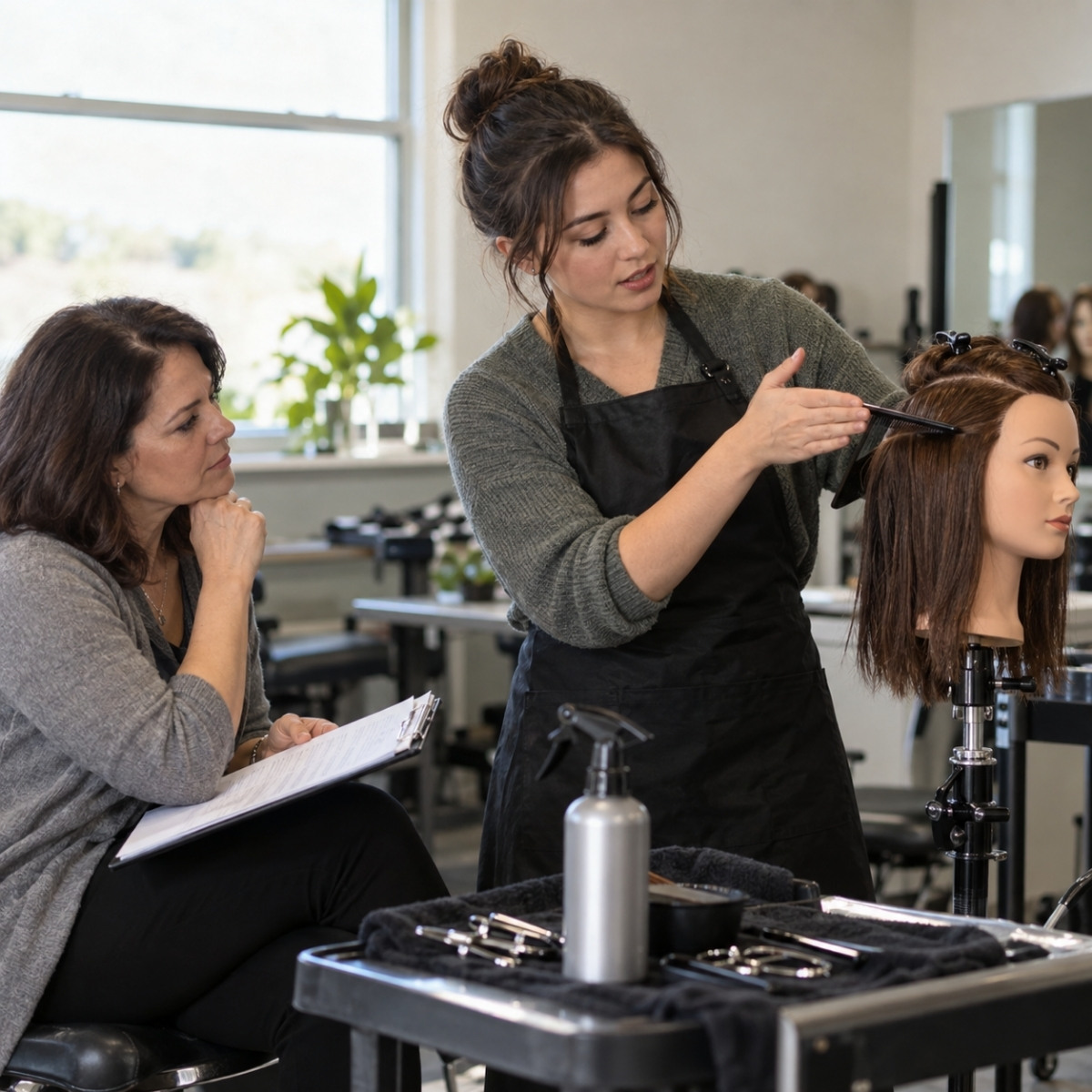
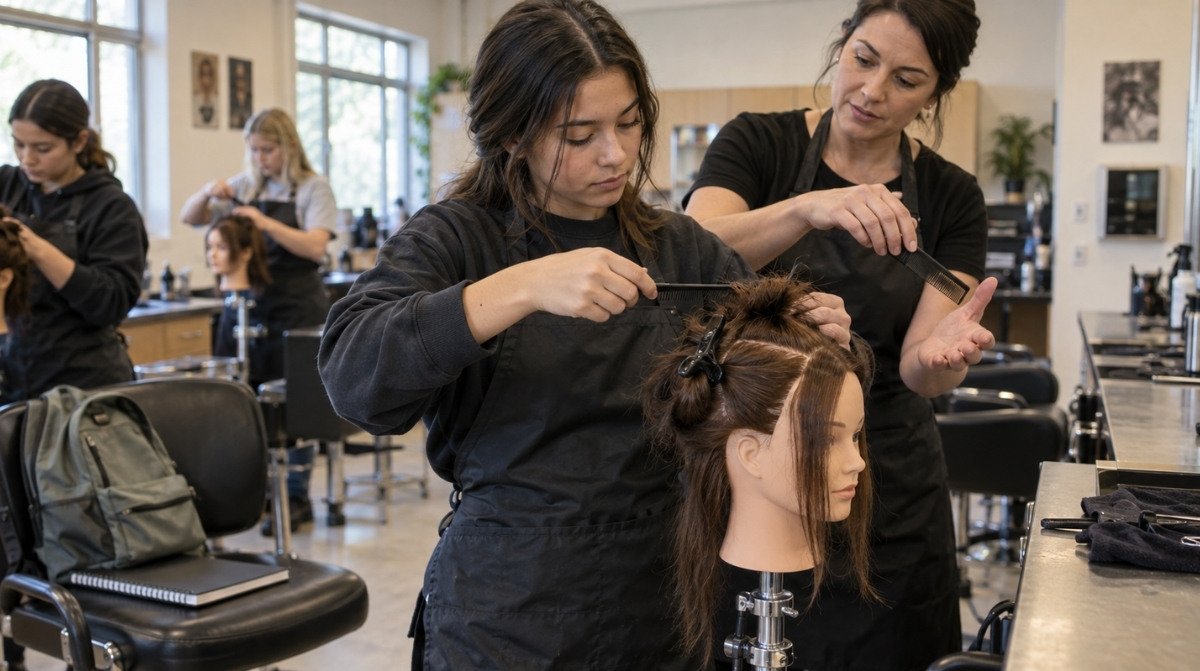
 Yes, going to cosmetology school under 18 is possible in some states, but the process depends on both state law and school policy. Because minors generally cannot enter every enrollment or financial agreement independently, schools commonly require a parent or legal guardian to sign enrollment contracts, payment agreements, consent forms, or liability documents. The exact paperwork varies by school and location.
Students may also need to provide proof of age and an official transcript showing that they have completed the required grade level. In other cases, a school may require a high school diploma or recognized equivalent even when the state allows training to begin earlier.
It is equally important to distinguish between attending classes and qualifying for a license. A state may permit you to start accumulating approved training hours while under 18 but require additional education, program completion, or a higher minimum age before licensing. Depending on the state, applicants may need to pass a written examination, a practical examination, or both. California, for example, stopped requiring a practical examination for its license types on January 1, 2022, according to the
Yes, going to cosmetology school under 18 is possible in some states, but the process depends on both state law and school policy. Because minors generally cannot enter every enrollment or financial agreement independently, schools commonly require a parent or legal guardian to sign enrollment contracts, payment agreements, consent forms, or liability documents. The exact paperwork varies by school and location.
Students may also need to provide proof of age and an official transcript showing that they have completed the required grade level. In other cases, a school may require a high school diploma or recognized equivalent even when the state allows training to begin earlier.
It is equally important to distinguish between attending classes and qualifying for a license. A state may permit you to start accumulating approved training hours while under 18 but require additional education, program completion, or a higher minimum age before licensing. Depending on the state, applicants may need to pass a written examination, a practical examination, or both. California, for example, stopped requiring a practical examination for its license types on January 1, 2022, according to the 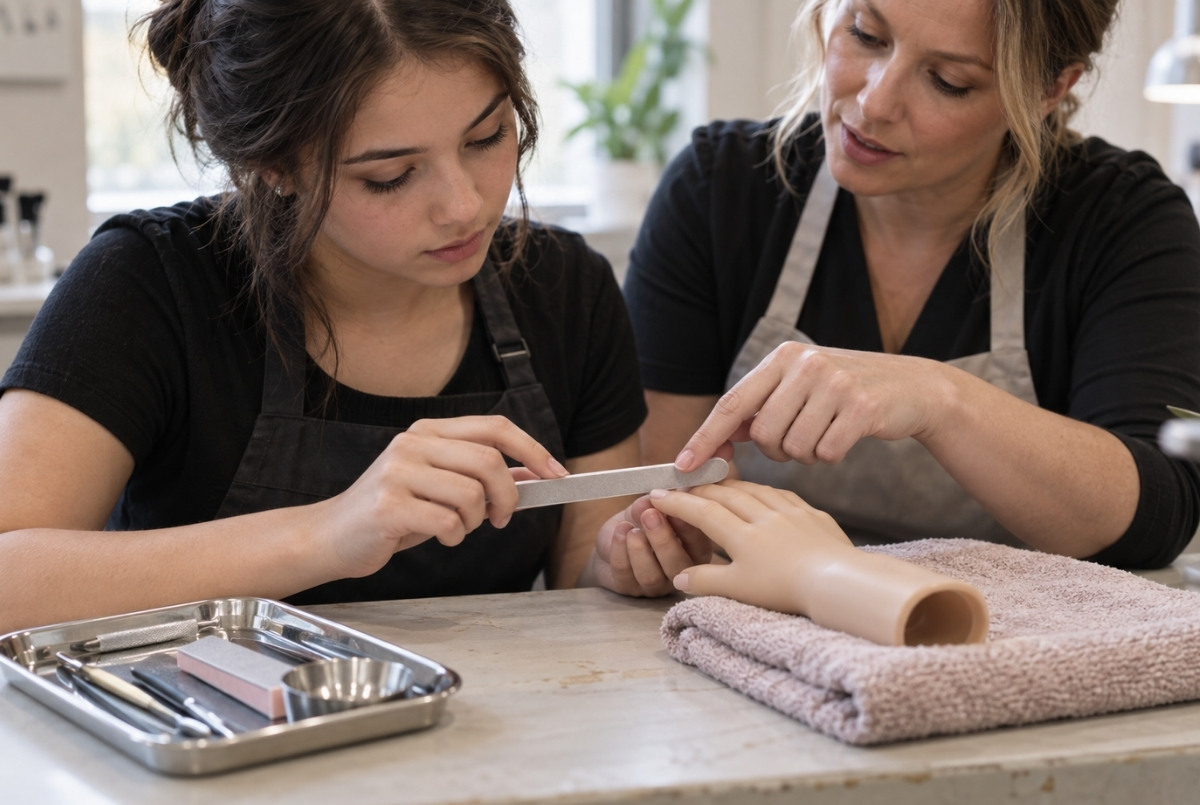 The beauty industry extends well beyond basic haircutting and single-process color. Cosmetology students generally learn hair cutting, styling, chemical services, sanitation, client safety, and salon practices while receiving introductory instruction in skin and nail services. The exact amount of time devoted to each subject is determined by the student's state and program.
Georgia's required cosmetology curriculum offers a helpful example. Under the
The beauty industry extends well beyond basic haircutting and single-process color. Cosmetology students generally learn hair cutting, styling, chemical services, sanitation, client safety, and salon practices while receiving introductory instruction in skin and nail services. The exact amount of time devoted to each subject is determined by the student's state and program.
Georgia's required cosmetology curriculum offers a helpful example. Under the  If you want to move forward, following a clear sequence can keep your application on track without disrupting your high school requirements.
Begin with the official website of your state cosmetology board. Confirm the minimum age and education requirements for beginning training, registering as an apprentice, taking examinations, and receiving a license. Do not assume that one minimum age applies to every stage.
If you may eventually work or move across state lines, review
If you want to move forward, following a clear sequence can keep your application on track without disrupting your high school requirements.
Begin with the official website of your state cosmetology board. Confirm the minimum age and education requirements for beginning training, registering as an apprentice, taking examinations, and receiving a license. Do not assume that one minimum age applies to every stage.
If you may eventually work or move across state lines, review 
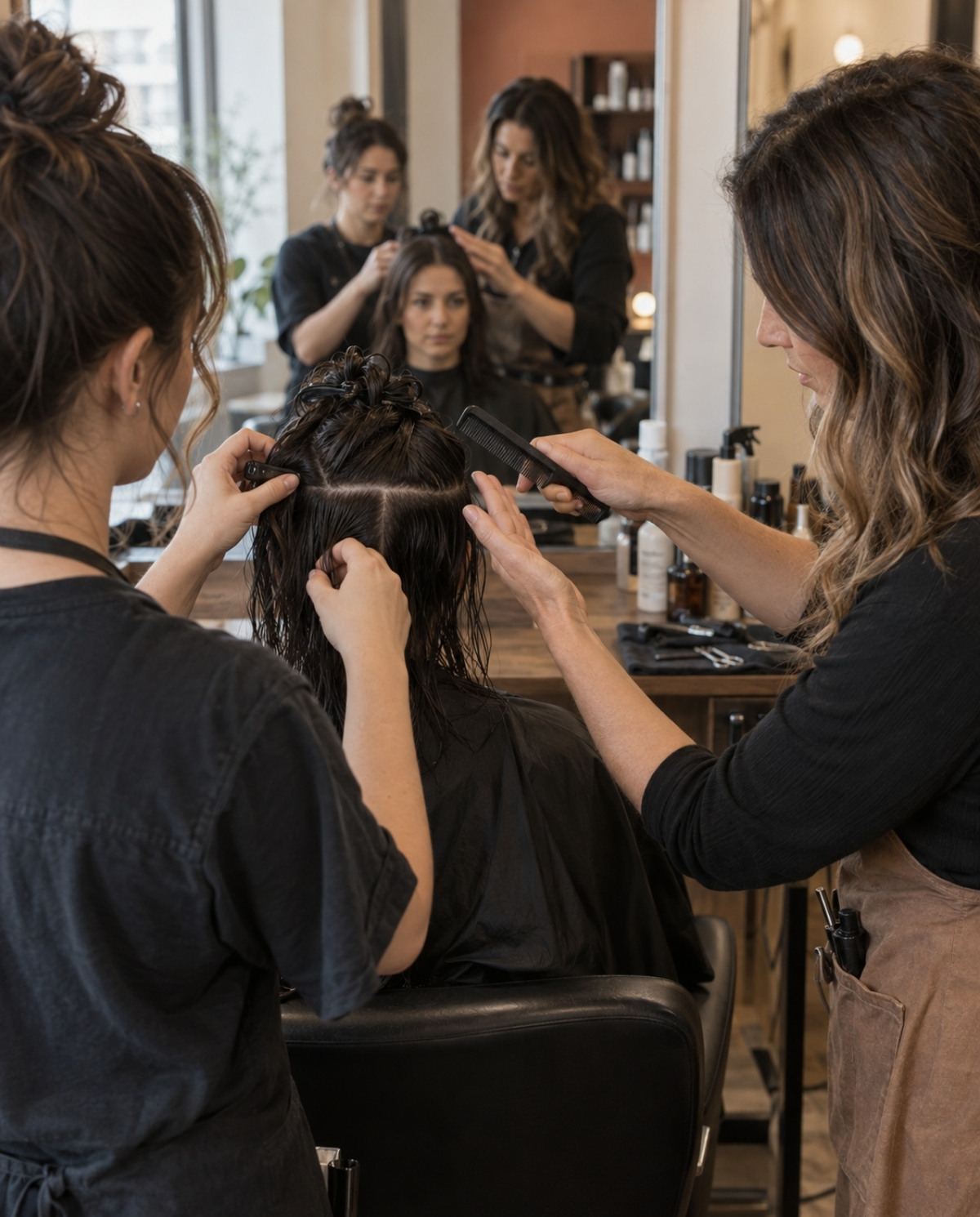

 Choosing between school and an apprenticeship is an important career decision. Neither route is automatically right for everyone.
A state-approved beauty school may be a better fit if you want a structured curriculum, scheduled theory instruction, regular access to instructors, dedicated examination preparation, and a potentially shorter full-time path to licensing.
A registered apprenticeship may be worth considering if your state permits it, you have found a reputable sponsor, you need to earn income while training, and you learn well in a working salon environment. However, you should understand the longer hour requirement, reporting responsibilities, related classroom instruction, and possible complications if you change salons or move to another state.
Whichever route you choose, verify the program directly with the state board before paying fees or beginning training. A promise from a school, salon, mentor, or online provider does not override licensing law.
Choosing between school and an apprenticeship is an important career decision. Neither route is automatically right for everyone.
A state-approved beauty school may be a better fit if you want a structured curriculum, scheduled theory instruction, regular access to instructors, dedicated examination preparation, and a potentially shorter full-time path to licensing.
A registered apprenticeship may be worth considering if your state permits it, you have found a reputable sponsor, you need to earn income while training, and you learn well in a working salon environment. However, you should understand the longer hour requirement, reporting responsibilities, related classroom instruction, and possible complications if you change salons or move to another state.
Whichever route you choose, verify the program directly with the state board before paying fees or beginning training. A promise from a school, salon, mentor, or online provider does not override licensing law.


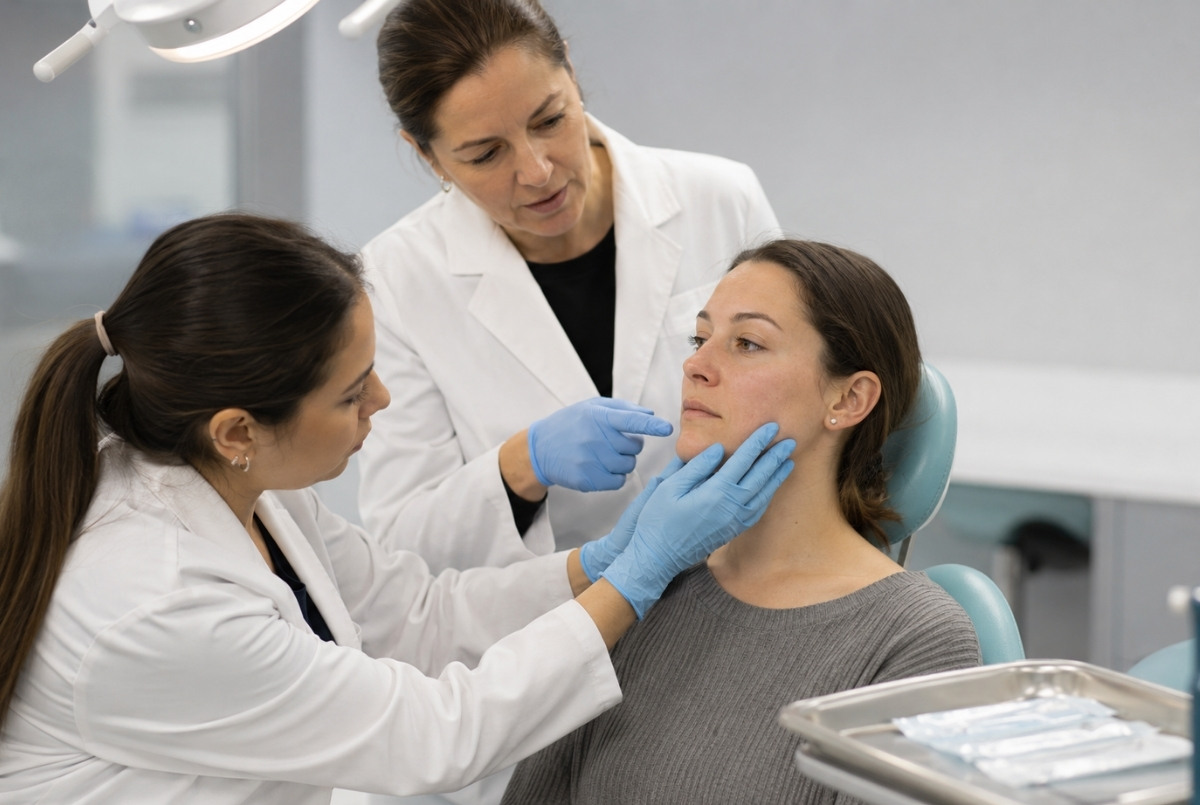 Navigating postgraduate education can feel overwhelming. Short workshops, online modules, multi-level certificate programs, and privately branded fellowships may all use different terminology. Unlike a state dental license or a CODA-accredited dental specialty, titles such as certificate, diploma, and fellowship are not standardized across the facial-aesthetics training industry.
An introductory course may last one or several days and cover facial anatomy, patient assessment, basic neurotoxin or filler techniques, and initial complication recognition. More comprehensive programs may extend over several months and include multiple treatment areas, supervised clinical participation, case reviews, skin procedures, and ongoing mentorship. The duration alone does not establish quality or legal acceptance.
Before enrolling, verify:
Navigating postgraduate education can feel overwhelming. Short workshops, online modules, multi-level certificate programs, and privately branded fellowships may all use different terminology. Unlike a state dental license or a CODA-accredited dental specialty, titles such as certificate, diploma, and fellowship are not standardized across the facial-aesthetics training industry.
An introductory course may last one or several days and cover facial anatomy, patient assessment, basic neurotoxin or filler techniques, and initial complication recognition. More comprehensive programs may extend over several months and include multiple treatment areas, supervised clinical participation, case reviews, skin procedures, and ongoing mentorship. The duration alone does not establish quality or legal acceptance.
Before enrolling, verify:
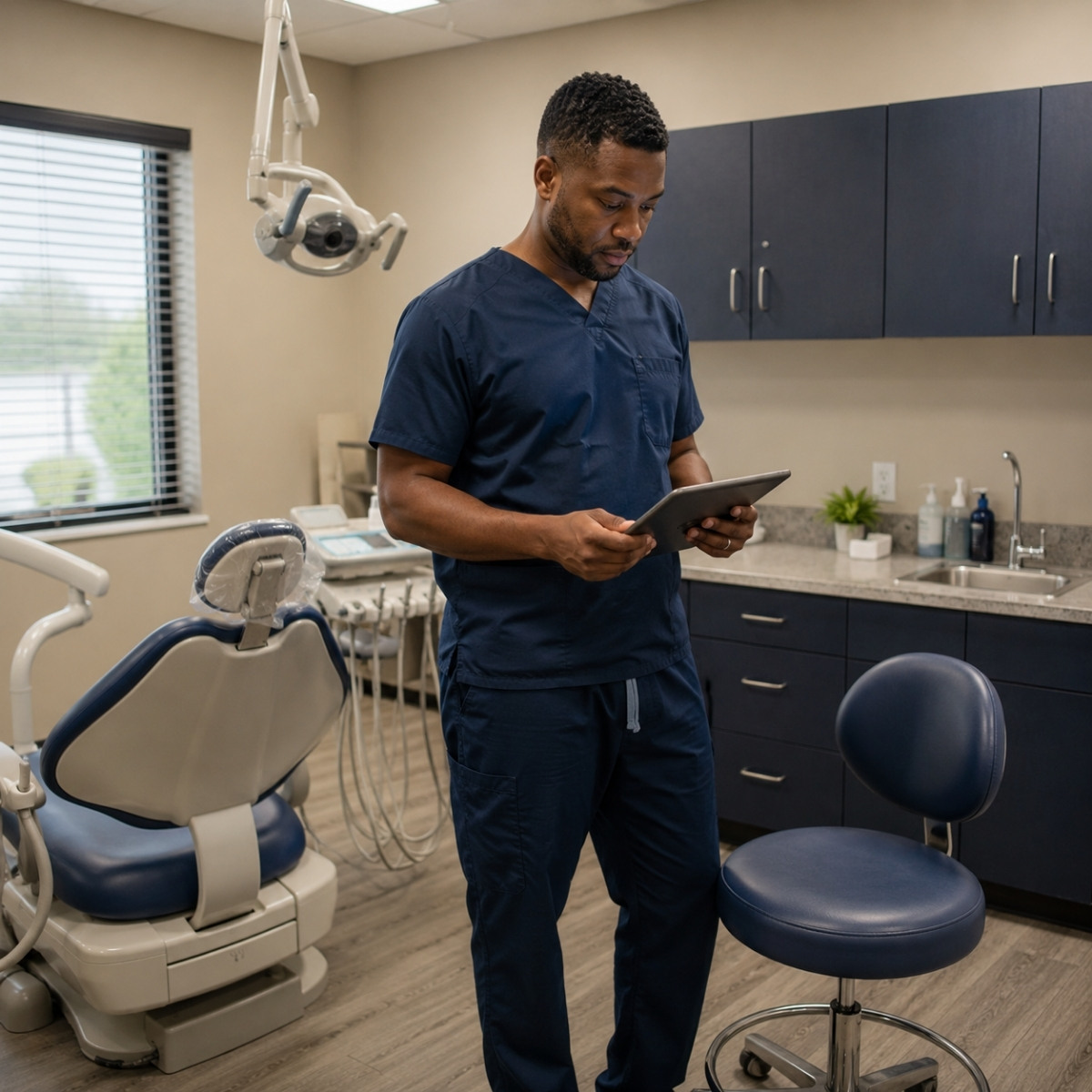 One of the most frustrating parts of general dentistry can be dealing with third-party insurance payers, delayed reimbursements, and laboratory expenses. Cosmetic facial-aesthetic services are commonly self-pay, which can reduce insurance billing and eliminate dental laboratory fees for those particular treatments.
That does not automatically make every aesthetic service highly profitable. Product acquisition, storage, expiration, discarded product, clinical supplies, staff training, appointment time, liability premiums, marketing, follow-up visits, refunds, and complication care all affect the final result.
A more realistic calculation is:
One of the most frustrating parts of general dentistry can be dealing with third-party insurance payers, delayed reimbursements, and laboratory expenses. Cosmetic facial-aesthetic services are commonly self-pay, which can reduce insurance billing and eliminate dental laboratory fees for those particular treatments.
That does not automatically make every aesthetic service highly profitable. Product acquisition, storage, expiration, discarded product, clinical supplies, staff training, appointment time, liability premiums, marketing, follow-up visits, refunds, and complication care all affect the final result.
A more realistic calculation is:
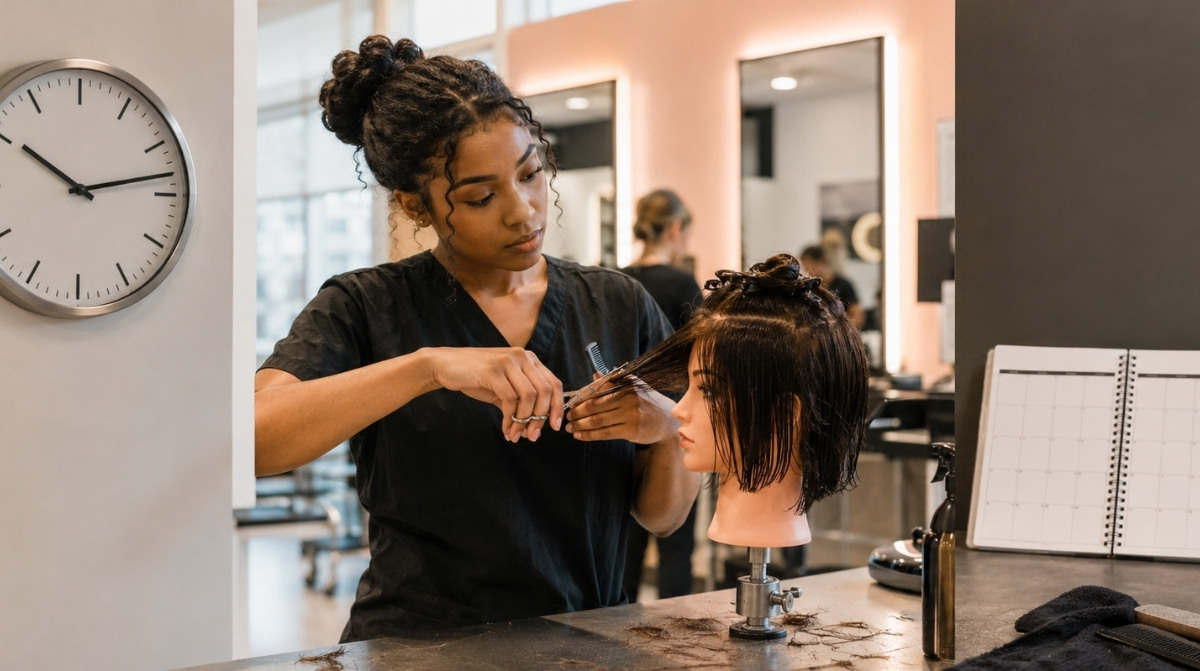
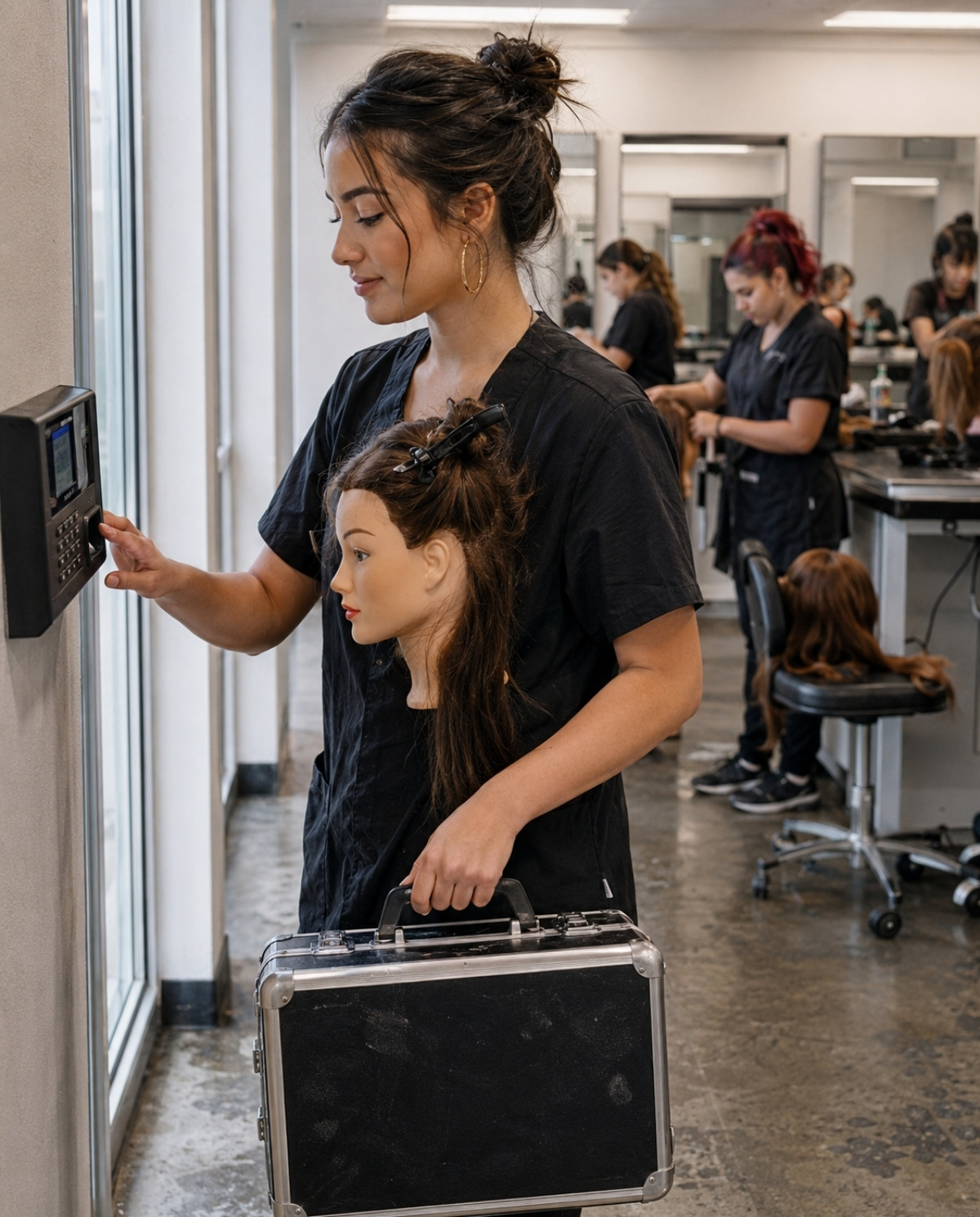 Traditional colleges commonly measure progress through credit hours, which account for classroom instruction and expected work outside class. Cosmetology schools commonly operate through a different system. State licensing boards usually measure your progress through clock hours completed in an approved training program.
A clock hour does not always mean exactly 60 uninterrupted minutes of classroom instruction. Under the federal definition, it generally includes at least 50 minutes of supervised instruction or monitored academic activity within a 60-minute period. Schools must document attendance according to the requirements of the state board, accrediting agency, and federal financial-aid rules that apply to the program.
To qualify for a state licensing examination or license, students generally must complete all required hours and other curriculum requirements. Some hours may involve classroom theory, while others involve demonstrations, practical exercises, and supervised services in a student salon. Depending on state and school rules, approved distance education or externship activities may also count toward limited parts of the program.
Many state cosmetology programs require approximately 1,000 to 1,600 hours, although the exact requirement and the services included under a cosmetology license vary. California requires 1,000 hours, Georgia requires 1,500 hours, and Washington requires 1,600 hours for a school-based cosmetology pathway. These figures apply to cosmetology programs rather than apprenticeships, which may carry different requirements.
For example, the official
Traditional colleges commonly measure progress through credit hours, which account for classroom instruction and expected work outside class. Cosmetology schools commonly operate through a different system. State licensing boards usually measure your progress through clock hours completed in an approved training program.
A clock hour does not always mean exactly 60 uninterrupted minutes of classroom instruction. Under the federal definition, it generally includes at least 50 minutes of supervised instruction or monitored academic activity within a 60-minute period. Schools must document attendance according to the requirements of the state board, accrediting agency, and federal financial-aid rules that apply to the program.
To qualify for a state licensing examination or license, students generally must complete all required hours and other curriculum requirements. Some hours may involve classroom theory, while others involve demonstrations, practical exercises, and supervised services in a student salon. Depending on state and school rules, approved distance education or externship activities may also count toward limited parts of the program.
Many state cosmetology programs require approximately 1,000 to 1,600 hours, although the exact requirement and the services included under a cosmetology license vary. California requires 1,000 hours, Georgia requires 1,500 hours, and Washington requires 1,600 hours for a school-based cosmetology pathway. These figures apply to cosmetology programs rather than apprenticeships, which may carry different requirements.
For example, the official 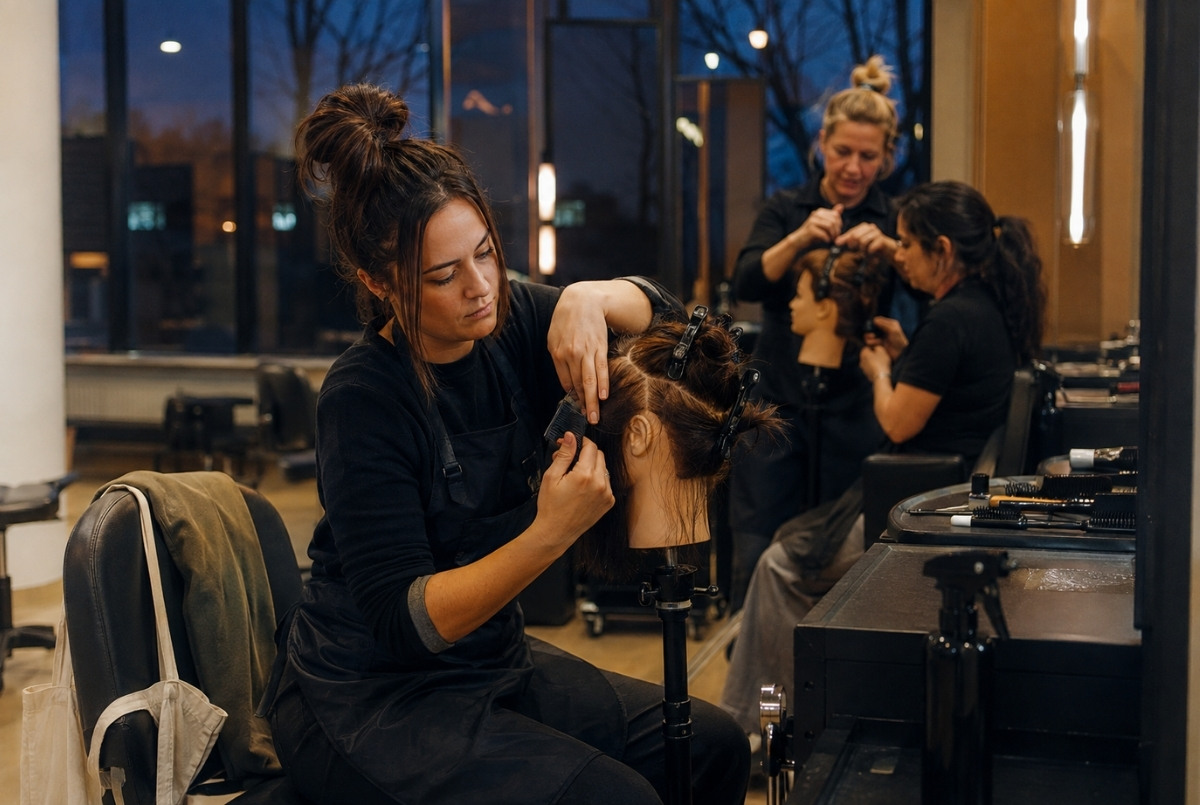
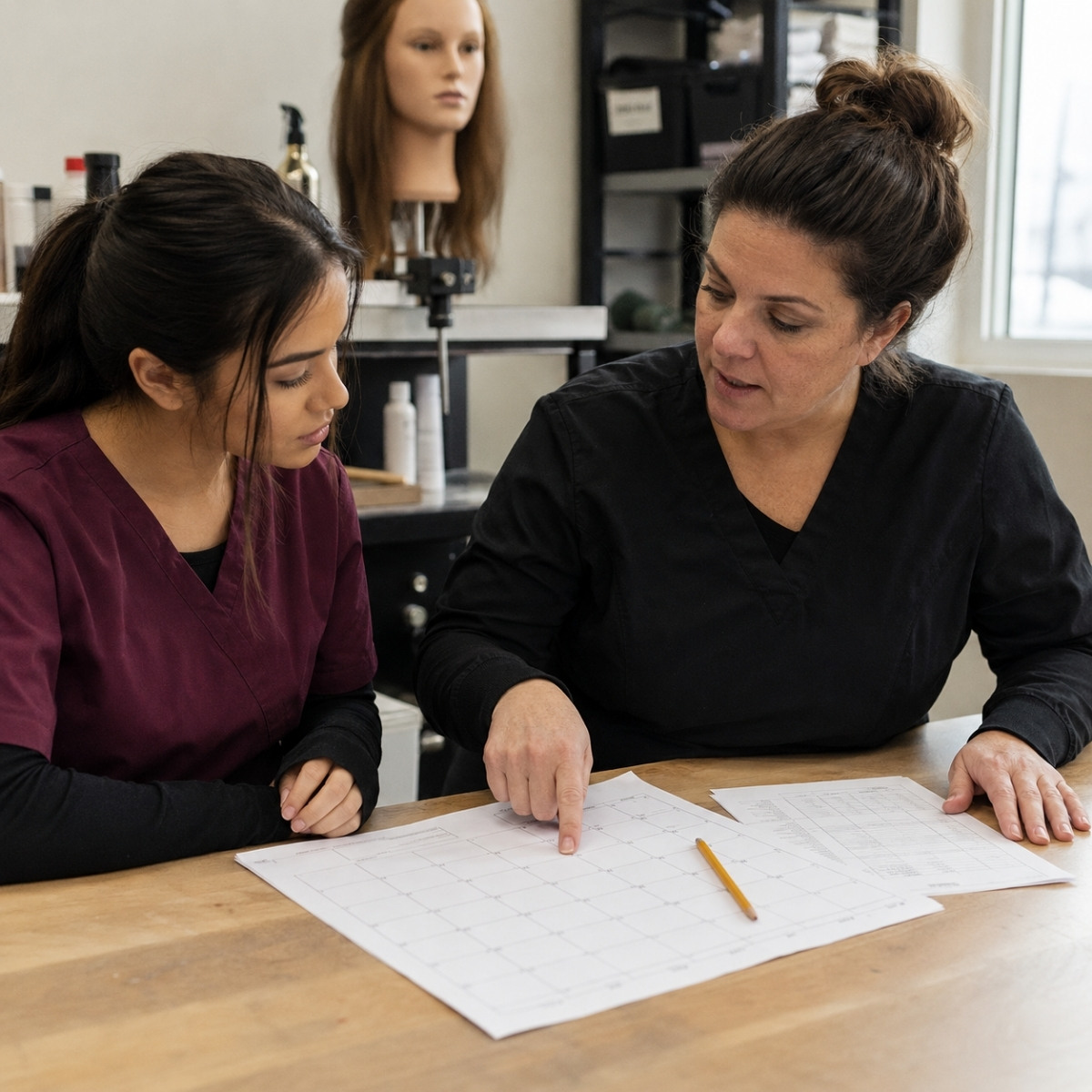 Compared with a traditional four-year degree, cosmetology school can provide a shorter pathway into a licensed profession. However, the financial return is not automatic and varies by tuition, local demand, employment arrangement, specialty, experience, and ability to build a clientele.
Comprehensive training does more than prepare you for an examination. It gives you supervised opportunities to develop technical consistency, client communication, infection-control habits, time management, and service confidence.
Career possibilities may include working in a salon, specializing in particular hair services, becoming a product or brand educator, working in media productions, renting a booth, or eventually operating a business. Some paths require experience, additional training, business registration, or separate licensing.
Before enrolling, compare the full cost of the program with the school's published outcomes and disclosures. Ask whether the quoted price includes:
Compared with a traditional four-year degree, cosmetology school can provide a shorter pathway into a licensed profession. However, the financial return is not automatic and varies by tuition, local demand, employment arrangement, specialty, experience, and ability to build a clientele.
Comprehensive training does more than prepare you for an examination. It gives you supervised opportunities to develop technical consistency, client communication, infection-control habits, time management, and service confidence.
Career possibilities may include working in a salon, specializing in particular hair services, becoming a product or brand educator, working in media productions, renting a booth, or eventually operating a business. Some paths require experience, additional training, business registration, or separate licensing.
Before enrolling, compare the full cost of the program with the school's published outcomes and disclosures. Ask whether the quoted price includes:

 When researching how to handle a cosmetology license transfer from state to state, you will frequently encounter two terms: reciprocity and endorsement. Although these terms are sometimes presented as completely separate processes, state boards do not use them consistently.
Reciprocity may refer to a state recognizing a license issued by another jurisdiction. In some professions, it involves a formal agreement between two states. In cosmetology, however, a board may use the word “reciprocity” for its general out-of-state licensing pathway even when no two-way agreement exists.
Endorsement usually means that the destination board issues you a new license based partly on the credential you already hold. Depending on the state, the board may evaluate your license status, original training, examination history, work experience, disciplinary record, or a combination of these factors.
The differences can be seen in official board terminology. The
When researching how to handle a cosmetology license transfer from state to state, you will frequently encounter two terms: reciprocity and endorsement. Although these terms are sometimes presented as completely separate processes, state boards do not use them consistently.
Reciprocity may refer to a state recognizing a license issued by another jurisdiction. In some professions, it involves a formal agreement between two states. In cosmetology, however, a board may use the word “reciprocity” for its general out-of-state licensing pathway even when no two-way agreement exists.
Endorsement usually means that the destination board issues you a new license based partly on the credential you already hold. Depending on the state, the board may evaluate your license status, original training, examination history, work experience, disciplinary record, or a combination of these factors.
The differences can be seen in official board terminology. The 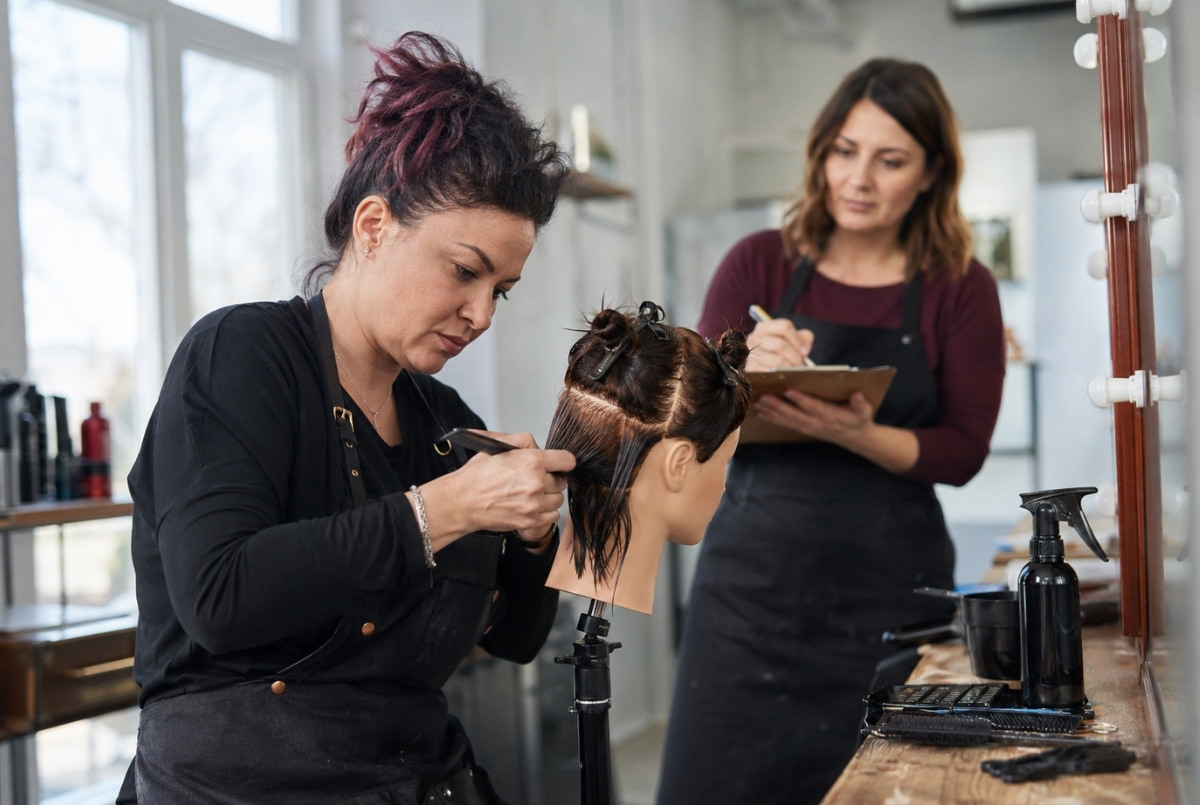 A difference in school hours may influence a transfer application, but it does not automatically create an hour-for-hour deficit that must be completed in another school.
For example, New York requires 1,000 hours for its cosmetology school pathway, while Georgia requires 1,500 hours for applicants completing a Georgia cosmetology program. However, the difference does not mean that every New York licensee moving to Georgia must return to school for another 500 hours.
According to the
A difference in school hours may influence a transfer application, but it does not automatically create an hour-for-hour deficit that must be completed in another school.
For example, New York requires 1,000 hours for its cosmetology school pathway, while Georgia requires 1,500 hours for applicants completing a Georgia cosmetology program. However, the difference does not mean that every New York licensee moving to Georgia must return to school for another 500 hours.
According to the  To keep your relocation organized and reduce the risk of an unexpected employment gap, follow a logical preparation timeline:

 If you are wondering exactly what you learn from cosmetology school, the reality goes far beyond simple haircuts. A cosmetology program combines theory with practical training so you understand not only how to perform a service, but also why the technique works and how to perform it safely. At Atlanta Beauty Academy, our published
 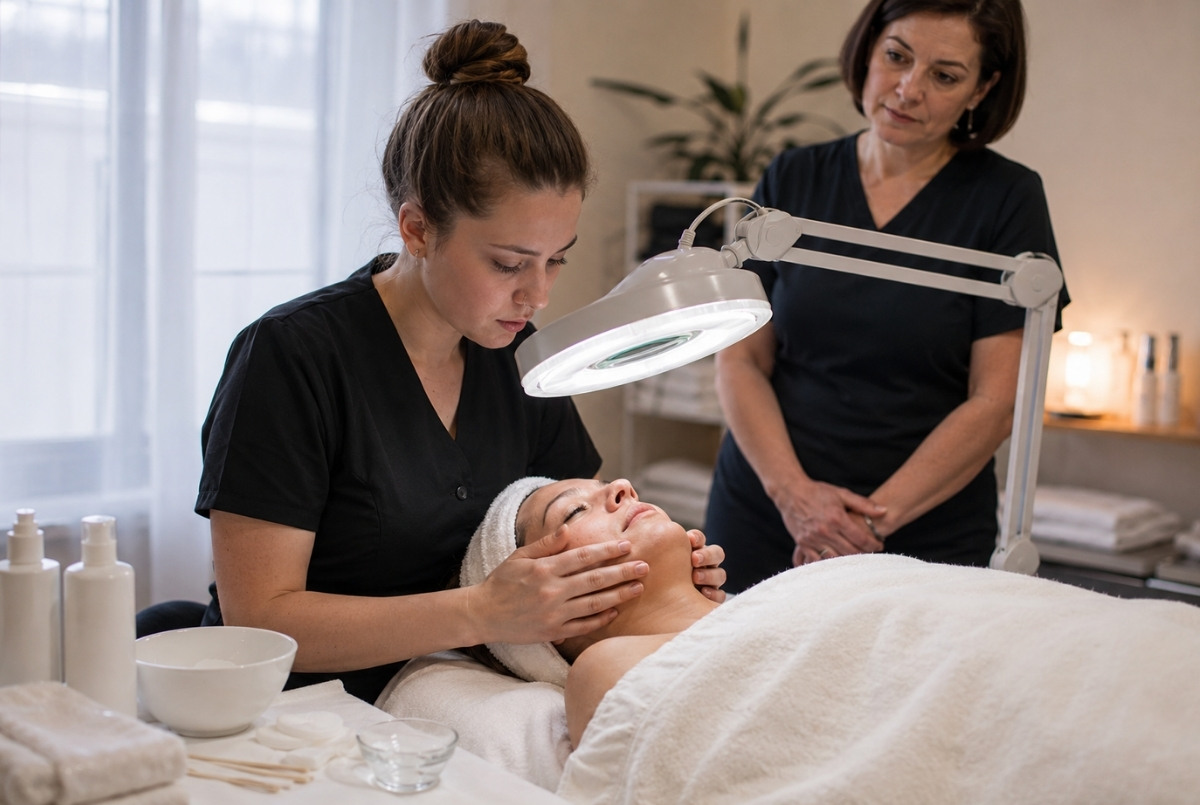 Highly creative students often fear getting stuck behind a styling chair when their true passion lies in other aesthetic fields. A common question we hear is whether you learn makeup in cosmetology school. Aspiring artists also want to know whether cosmetology students learn waxing and other hair-removal techniques.
The answer is that cosmetology education commonly reaches beyond hair, although the exact curriculum and legal scope of practice depend on the state and school. Atlanta Beauty Academy's program outline includes 80 hours of Basic Facial & Skin Techniques and 120 hours of Nail Care Techniques, while its practical applications include facials, makeup, and hair removal.
That gives students exposure to multiple sides of the beauty industry before deciding where they eventually want to concentrate their careers. You may practice makeup application, foundational skin services, hair removal, manicures, pedicures, and other techniques included in your program. Depending on the curriculum, hair-removal training can also introduce different waxing products and methods and the importance of choosing techniques appropriate for the treatment area and client.
This broad education is important because a cosmetology license has a defined scope of practice, meaning the range of services the law allows that license holder to perform. The exact scope is not identical nationwide, so graduates should always follow the rules of the state where they intend to work.
Highly creative students often fear getting stuck behind a styling chair when their true passion lies in other aesthetic fields. A common question we hear is whether you learn makeup in cosmetology school. Aspiring artists also want to know whether cosmetology students learn waxing and other hair-removal techniques.
The answer is that cosmetology education commonly reaches beyond hair, although the exact curriculum and legal scope of practice depend on the state and school. Atlanta Beauty Academy's program outline includes 80 hours of Basic Facial & Skin Techniques and 120 hours of Nail Care Techniques, while its practical applications include facials, makeup, and hair removal.
That gives students exposure to multiple sides of the beauty industry before deciding where they eventually want to concentrate their careers. You may practice makeup application, foundational skin services, hair removal, manicures, pedicures, and other techniques included in your program. Depending on the curriculum, hair-removal training can also introduce different waxing products and methods and the importance of choosing techniques appropriate for the treatment area and client.
This broad education is important because a cosmetology license has a defined scope of practice, meaning the range of services the law allows that license holder to perform. The exact scope is not identical nationwide, so graduates should always follow the rules of the state where they intend to work.
 One of the most vital things to know about cosmetology school is that technical skill is only one part of building a sustainable career. You also need to understand the professional side of working with clients, products, appointments, and eventually your own business.
Atlanta Beauty Academy's published curriculum includes professionalism, retailing, salon management, and a 50-hour State Board Prep and Business Skills course. Those foundations become especially important once you begin developing a clientele or considering independent work. Building a professional reputation, retaining clients, keeping accurate records, understanding inventory, communicating your value, and marketing your services all become part of the job.
The
One of the most vital things to know about cosmetology school is that technical skill is only one part of building a sustainable career. You also need to understand the professional side of working with clients, products, appointments, and eventually your own business.
Atlanta Beauty Academy's published curriculum includes professionalism, retailing, salon management, and a 50-hour State Board Prep and Business Skills course. Those foundations become especially important once you begin developing a clientele or considering independent work. Building a professional reputation, retaining clients, keeping accurate records, understanding inventory, communicating your value, and marketing your services all become part of the job.
The 

 The short answer is yes. You can usually own a beauty business without a cosmetology license. State boards often separate the business entity from the hands-on professional. If your primary goal is to act as a financial investor, manage marketing, handle payroll, sign the lease, and build the brand, you generally do not need to attend beauty school just to own the salon business.
However, there is a massive legal boundary here known as your scope of practice, which is the legally defined limit of what your professional credentials allow you to do. While you can handle the business, you cannot practice cosmetology yourself without a valid individual license. You cannot step in to wash a client's hair, trim a bang, apply color, perform nail services, or offer skin care treatments during a busy weekend rush. If you want to explore what tasks are actually permitted for uncredentialed staff members, you can read our detailed breakdown on the
The short answer is yes. You can usually own a beauty business without a cosmetology license. State boards often separate the business entity from the hands-on professional. If your primary goal is to act as a financial investor, manage marketing, handle payroll, sign the lease, and build the brand, you generally do not need to attend beauty school just to own the salon business.
However, there is a massive legal boundary here known as your scope of practice, which is the legally defined limit of what your professional credentials allow you to do. While you can handle the business, you cannot practice cosmetology yourself without a valid individual license. You cannot step in to wash a client's hair, trim a bang, apply color, perform nail services, or offer skin care treatments during a busy weekend rush. If you want to explore what tasks are actually permitted for uncredentialed staff members, you can read our detailed breakdown on the