The day you walk out of your final school clinic floor is a whirlwind of emotions. On one hand, you are running on the high of finishing your required clock hours and packing up your student kit. On the other hand, a sudden wave of reality hits as you look at a blank resume. It is completely normal to feel a bit of imposter panic right now. You might wonder if you are truly ready for real-world clients or if it is hard to find your footing in a competitive market.
Every single top stylist, salon owner, and beauty educator started exactly where you are standing right now. The secret to overcoming that initial anxiety is shifting your mindset. Your state board training is not just a certificate showing you completed school, it is the foundation for a flexible beauty career. Let us demystify the next steps together and turn that nervous energy into an organized, realistic career plan.
Key Takeaways
- Your cosmetology license can act as an umbrella credential for hair, nails, makeup, waxing, and some skincare services, but exact permission always depends on your state scope-of-practice rules.
- Real-world beauty income is not captured by one simple wage number. Tips, retail commission, booth rental, self-employment, and client retention can all change what a stylist actually takes home.
- Federal cosmetic rules under MoCRA matter if you manufacture, repackage, or market beauty products, but requirements depend on your business role, product type, and whether an exemption applies.
- The Interstate Cosmetology Licensure Compact is being implemented across participating states, but it is not fully active for multistate license applications yet.
Where a Cosmetology License Can Take You

One of the greatest benefits of the modern beauty industry is its incredible versatility. Your training establishes a wide scope of practice, which is simply the legal definition of the specific treatments and services you are safely permitted to perform under your state rules. Unlike highly specialized programs that focus on only one track, a comprehensive cosmetology license often gives graduates a foundation across several beauty disciplines.
When people talk about finding fifty distinct careers with a license, they are pointing to how easily you can stack your skills. Reviewing the vast array of
careers you can pursue with a cosmetology license shows that you do not have to limit yourself to a single station in a local neighborhood shop. You can pivot between hands-on service, retail management, brand education, salon leadership, and corporate artistry.
The Core Services Behind Most Beauty Careers
To understand your career opportunities, you need to look closely at what your foundational training allows you to perform on a daily basis. In many states, cosmetology training includes hair cutting, styling, coloring, chemical texturizing, basic nail care, makeup, waxing, and some esthetics-related services. The exact line is always set by your state board, so a service that is allowed under one state’s cosmetology license may require a separate license or additional training in another.
Your primary training covers hair cutting, chemical texturizing, and complex coloring. You learn how to work with the structure of hair, which allows you to offer everything from everyday maintenance cuts to premium color corrections. In many states, cosmetologists can also perform manicures, pedicures, and standard nail services without returning to school for a separate restricted nail certificate, as long as those services fall within the cosmetology scope.
The beauty market has also grown around brow, lash, makeup, and hair removal services. Depending on state rules, a cosmetology license may allow you to offer brow shaping, basic lash or brow services, makeup application, and waxing. However, advanced lash services, medical aesthetics, lasers, microneedling, and deeper skin procedures can fall outside a basic cosmetology scope. That is why graduates should always verify the service with their state board before advertising it.
According to the
U.S. Bureau of Labor Statistics (BLS), employment for barbers, hairstylists, and cosmetologists is projected to grow by 5% from 2024 to 2034, with about 84,200 openings each year. BLS also reports that the top 10% of hairdressers, hairstylists, and cosmetologists earned more than $33.76 per hour in May 2024. That figure includes tips where reported, but BLS wage data does not include self-employed workers, which matters in a field where booth rental and independent work are common.
How to Specialize Without Starting Over
As you build your professional credibility, you might find yourself drawn to a specific niche. If you prefer skincare over hair design, you might wonder exactly what tasks your state board permits you to handle across different beauty fields. To avoid fines or disciplinary issues, it helps to understand if
you can work as an esthetician, barber, lash tech, or nail tech with a cosmetology license, as the legal dividing lines often tighten around advanced skin services, straight-razor shaving, medical aesthetics, or device-based treatments.
In many states, cosmetologists can perform some basic facials, waxing, makeup, and nail services. However, if your long-term goal shifts toward advanced spa work, medical spa services, or device-based skin treatments, you may eventually look into targeted esthetician training or additional state-approved credentials. This is especially important because state laws can clearly separate beauty services from medical or clinical procedures.
Similarly, if you prefer short hair cutting, clipper work, beard shaping, and traditional shaving services, you might explore a cosmetology-to-barber crossover path. Many states offer a streamlined barber license process for licensed cosmetologists. These crossover programs may grant credit for school hours you have already earned, allowing you to focus on the barber-specific training your state requires instead of starting completely from scratch.
If you crave adventure, travel opportunities can also exist. Cruise ship salons and spas recruit hairdressers, nail technicians, beauty therapists, and spa professionals, but entry requirements vary by employer. Some positions may prefer prior salon experience, specific technical training, or onboard service preparation. It is a strong option to research once you have your license, confidence, and a portfolio that shows you can serve a wide range of clients.
State lines also present unique structural updates. In Georgia, for example, licensees now have continuing education reporting requirements through CE Broker, and the state outlines specific continuing education expectations through the
Georgia State Board of Cosmetology and Barbers. Georgia lawmakers have also considered trichology-related curriculum updates through proposed legislation, but that kind of change should not be described as active school policy unless it has been fully enacted. Meanwhile, Arkansas passed
Act 964, which focuses on warning-label requirements for certain hair relaxer products sold in the state when they contain carcinogens or reproductive toxicants. These regional updates show why beauty professionals need to stay aware of both licensing rules and product safety rules.
What Cosmetology Income Really Looks Like

Let us address the biggest fear that keeps graduates up at night: the worry that they will not make enough money to cover their bills or pay off school loans. If you look at shallow online salary calculators, you might see low figures that make the industry look discouraging. But those numbers rarely tell the whole story.
Your total cosmetology yearly salary depends heavily on your compensation model. Salons generally operate through hourly pay, commission, team-based pay, hybrid structures, or booth rental where you act more like your own mini-business. When you are assessing your potential income after cosmetology school, you have to look at base pay, tip policy, retail commission, rebooking rate, product costs, taxes, and client loyalty.
The
American Association of Cosmetology Schools (AACS) 2026 earnings survey, prepared with Azurite Consulting, highlights a major gap between standard wage tracking and what some beauty professionals report earning. The survey suggests that cosmetology and esthetics earnings may be about 1.3 to 1.4 times higher than IRS-reported income data alone indicates. It also reports a 40-hour-normalized annual income estimate of $54,220 for respondents licensed in 2014 or earlier.
That number should be used carefully. It is an industry survey, not a government wage table, and it includes cosmetologists and estheticians. Still, it supports an important point: beauty income is often more complex than a single hourly wage. A stylist may earn through services, tips, retail recommendations, bridal work, extensions, premium color, and repeat-client packages. The professionals who track their numbers, report income properly, and build strong client retention usually have a clearer path to long-term earning power.
To maximize how much you make from your services, you must focus on building your client retention rate. A stylist who books three high-value color clients a day and guides them toward professional home-care products can out-earn a frantic stylist trying to squeeze in fifteen cheap cuts without any strategic planning. High income in cosmetology is not just about talent. It is about consultation quality, pricing confidence, rebooking discipline, sanitation trust, and the ability to turn one good appointment into a long-term client relationship.
How to Land Your First Salon Role After Graduation

The process of finding your first salon home can feel intimidating when you have no formal commercial experience. The trick is understanding that salon owners are looking for attitude, reliability, safe technical foundations, and coachability, not a decade of history. When constructing a cosmetology resume with no experience, your time spent on the school clinic floor is your biggest asset. Treat your school hours like a real job. List your student clinic work under your practical experience, highlighting the volume of clients you served, the types of services you performed, and the sanitation standards you followed.
Make sure your resume is easy for a busy salon manager to read at a glance. Place your credential status clearly at the top of the page. If your license is active, use a clean line like: Licensed Cosmetologist, State Board of your state, License number 123456, Active. If you are still waiting for final board approval, state that accurately instead of implying you are already licensed. Group your technical skills like balayage, chemical relaxing, haircutting, blowouts, or acrylic overlays in one clear section. Right next to it, highlight your customer service and business skills, such as front-desk booking software experience, consultation skills, product knowledge, retail sales, and rebooking habits.
When detailing your school history on your application paperwork, use active language. Instead of writing "did hair cuts," explain that you performed comprehensive hair consultations, executed precision cutting designs, and maintained strict sanitation standards for guest services under instructor supervision. If you want an extra layer of support as a fresher, consider entering a formal cosmetology apprenticeship or assistant program where your state allows it. An assistant or apprentice-style role can allow you to work directly under experienced stylists, help with shampoos, product prep, blowouts, bookings, and salon flow while receiving advanced hands-on training. It is an excellent way to bridge the gap between graduation and a busy, self-sufficient career.
Licensing Steps That Keep You Ready to Work
You cannot legally perform paid licensed services until your state gives you the right authorization. Knowing how to apply for your cosmetology license correctly prevents frustrating delays that keep you from taking clients. After graduation, your main priority is to complete the state application process, confirm your school hours or transcripts are submitted, pay the required fees, and pass any written or practical exams your state requires. To build confidence before testing, you can use our
cosmetology state board exam guide for written and practical tests to master critical health, chemical safety, and infection control protocols.
In some states, your school submits your official graduation records directly to the state board. In others, you may need to request documents, upload proof, or complete part of the application yourself. If you ever need copies of these records for moving, license transfer, or continuing education, you can request them directly from your school’s administrative office while the school is operating.
Processing times vary by state, so avoid relying on a universal timeline. Some boards update online license lookups quickly, while others take longer to process applications, exam results, background checks, or physical certificates. The safest rule is simple: do not perform licensed services until your license, temporary permit, apprentice registration, or other legal authorization is active according to your state board.
Furthermore, administrative policies change quickly. If you plan on moving to a different state in the future, checking our overview of
cosmetology license requirements by state will keep you informed on total required training hours, local renewal periods, continuing education rules, and transfer options. The
Interstate Cosmetology Licensure Compact is also being implemented across participating states, but it is not fully active for multistate license applications yet. Once operational, it may create a simpler path for eligible licensees in member states, but graduates should check the official compact site before promising clients or employers that they can work across state lines.
Working Independently Without Skipping the Rules
A massive percentage of beauty enthusiasts search for terms like cosmetology jobs remote or wonder if they can work from home. They crave freedom from traditional corporate environments. While you cannot cut hair remotely, you can use your credentials for digital roles like brand education, online product consulting, beauty copywriting, social media content, customer support for professional hair care lines, or virtual consultation services where allowed.
If you want to operate a hands-on business from a residential space, you must check your state board rules, city zoning laws, business licensing requirements, insurance needs, and local inspection standards. Many states or cities require a separated work area, proper plumbing, sanitation setup, ventilation, signage rules, and a formal inspection before a home salon can operate legally. A home-based service business may feel casual, but the legal requirements are usually not casual at all.
You might also wonder if you can open a salon without a cosmetology license. In many places, the answer is yes from an ownership standpoint. A person may own or invest in a salon business without personally holding a cosmetology license. However, they cannot perform licensed services on clients unless they are properly licensed, and the salon itself usually needs an establishment license or facility permit from the state board. This certificate proves the physical facility meets the sanitation, plumbing, ventilation, and safety standards required by law.
Many fresh beauty school graduates also dream of launching custom hair products, mixing home hair dyes, selling private-label lash products, or repackaging bulk beauty items from a home workspace. This is where the rules shift. A service provider is not the same thing as a cosmetic manufacturer, processor, or responsible person under federal law. The
FDA’s MoCRA overview explains that modern cosmetic oversight now includes requirements such as safety substantiation, adverse-event reporting, facility registration, product listing, records access, and recall authority, depending on the business role and product type. Legal analyses of
MoCRA compliance also point out that product businesses need to pay close attention to registration, labeling, safety, and manufacturing obligations.
That does not mean every small beauty creator has the exact same burden. Some small-business exemptions exist, and requirements depend on what you make, how you sell it, and whether the product falls into an excluded category. The key takeaway is simple: before selling homemade, repackaged, or private-label cosmetic products, treat it like a regulated product business, not just a side hustle.
Teaching as a Long-Term Beauty Career
As you project your career path forward, think about your long-term plan. Standing on your feet for eight hours a day can take a toll over a decade. That is why many experienced professionals eventually transition into education. Becoming a cosmetology instructor allows you to step away from daily guest services and step into an expert mentor role.
To qualify, most states require active licensure, salon experience, and a specific instructor training program where you study lesson planning, classroom management, practical demonstration, student assessment, and state board preparation. Requirements vary widely, so you should always verify instructor licensing rules in the state where you want to teach.
A teaching career can offer a more structured schedule than full-time client work, but it should not be described as guaranteed stability. According to the
BLS profile for career and technical education teachers, the May 2024 median annual wage for CTE teachers was $62,910. Postsecondary CTE teachers had a median wage of $61,490, while private technical and trade school teachers had a median wage of $58,860. Benefits, hours, and job stability depend on the employer, state, and school type. Still, for professionals who love mentoring, instructor work can be a rewarding way to build an enduring legacy and pass hard-earned knowledge to the next generation of beauty professionals.
Start Building Your Beauty Career at Atlanta Beauty Academy
Your license is your passport, but your education determines your destination. At Atlanta Beauty & Barber Academy, we do not just prepare you to pass an exam, we prepare you to build real salon confidence. Through career-focused training, weekly state board preparation, and hands-on clinic experience, students can build the technical, sanitation, and client-service habits needed for the beauty industry.
Led by educators with 80+ years of combined experience, Atlanta Beauty & Barber Academy trains students in master cosmetology, barbering, esthetics, nail technology, and instructor licensure. Do not let administrative confusion or career anxiety hold you back. Your future starts with one clear step. Fill out our contact form below to tour our campus and learn how to begin your beauty career with the right foundation.
Frequently Asked Questions
Can you work in a salon or get a job without a license if you already graduated? Yes, but your role may be limited until your state authorization is active. You may be able to work as a salon coordinator, receptionist, retail assistant, inventory helper, or support team member. Some states also allow limited non-licensed tasks. For example, Georgia law allows certain activities such as shampooing, blow-dry styling, and applying cosmetics without board registration when no other licensed practice is performed. However, you cannot perform licensed services like cutting, coloring, chemical texturizing, waxing, esthetics, or nail services unless your state rules allow it through an active license, permit, apprentice registration, or approved student setting. Working outside your legal scope can create fines or disciplinary problems for both you and the salon.
What is the fastest way to get copies of my beauty school transcripts if my school closed down? If your alma mater shuts its doors, don't panic, but do not assume every record is stored in one central archive. Start by contacting the state licensing agency or closed-school records office in the state where the school operated. The
U.S. Department of Education advises students looking for closed-school records to contact the appropriate state licensing agency. For Georgia cosmetology schools, transcript and clock-hour questions are typically directed through the State Board of Cosmetology and Barbers or the agency responsible for those school records.
How do modern booking trends change how fresh stylists build their client lists today? Building a career today looks very different than it did a decade ago. Data from the
SalonIQ Industry Benchmark Report highlights that modern salon growth depends on client frequency, online booking, retention, and retail conversion rather than simply waiting around for walk-in traffic. Because SalonIQ is a salon software company, its data should be treated as business benchmark insight rather than national labor data. Still, the broader lesson is useful for new stylists: salons want team members who can rebook, retain clients, recommend the right home-care products, and use digital systems professionally.
This is why choosing a beauty school that looks beyond the basic state board exam is so critical to your career. A school that integrates technical training, sanitation discipline, business awareness, salon software exposure, and career coaching can change your entire financial trajectory. You do not just want to pass a test. You want to build a sustainable, professional beauty career from the first day you step into the industry.



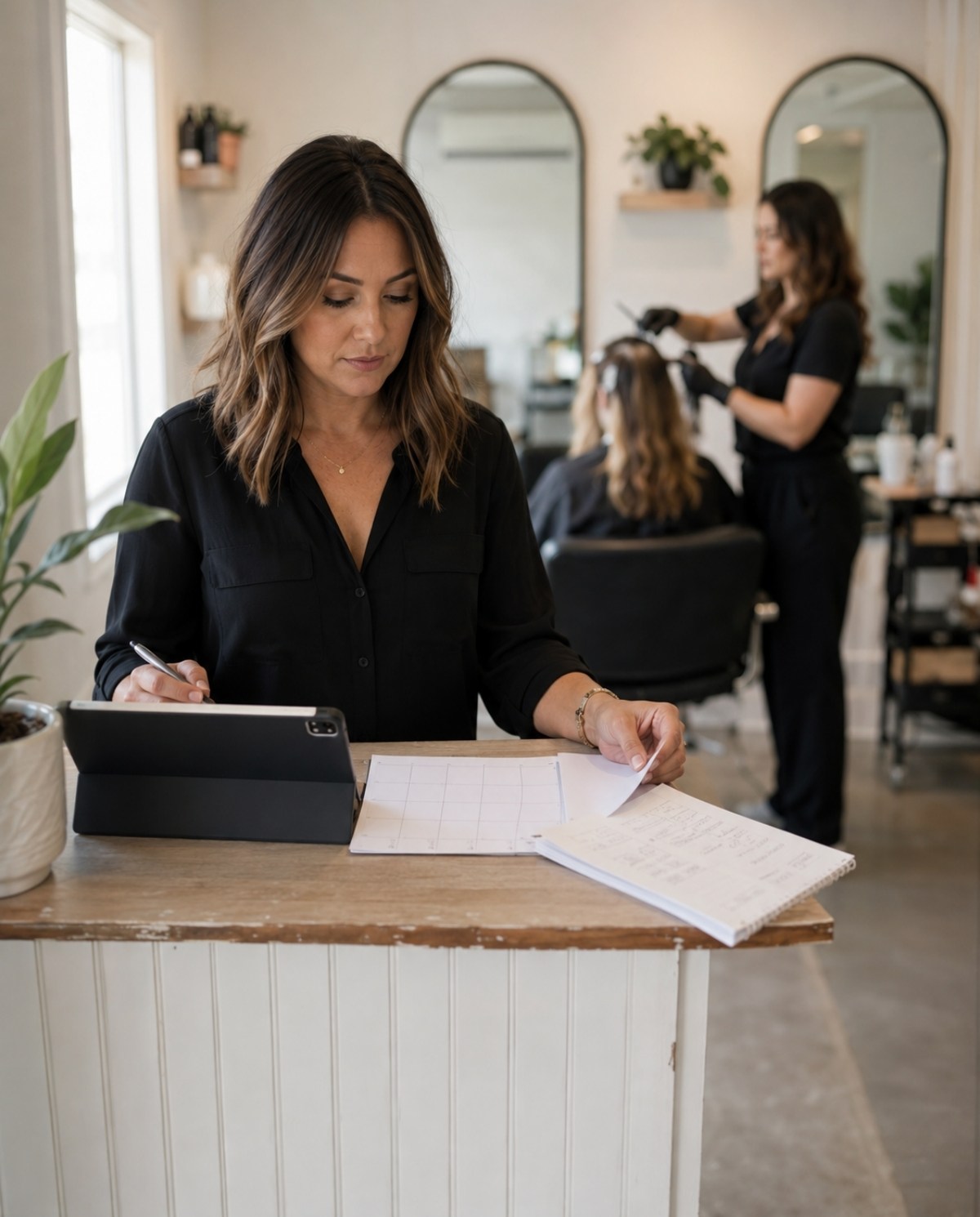 The short answer is yes. You can usually own a beauty business without a cosmetology license. State boards often separate the business entity from the hands-on professional. If your primary goal is to act as a financial investor, manage marketing, handle payroll, sign the lease, and build the brand, you generally do not need to attend beauty school just to own the salon business.
However, there is a massive legal boundary here known as your scope of practice, which is the legally defined limit of what your professional credentials allow you to do. While you can handle the business, you cannot practice cosmetology yourself without a valid individual license. You cannot step in to wash a client's hair, trim a bang, apply color, perform nail services, or offer skin care treatments during a busy weekend rush. If you want to explore what tasks are actually permitted for uncredentialed staff members, you can read our detailed breakdown on the jobs you can do in cosmetology without a license.
According to the official California Board of Barbering and Cosmetology Act and Regulations, working as an unlicensed individual can carry a $1,000 administrative fine, and an establishment license holder can also face a $1,000 fine for employing unlicensed persons. The legal risk is not ordinary business ownership. The risk begins when an unlicensed owner crosses into hands-on services, regulated sanitation duties, or service-area work that the state expects a licensed professional to control.
This means that if you choose the unlicensed investor path, you are heavily reliant on your licensed staff. If a stylist calls out sick, you cannot legally step behind the chair to save the appointment. That can lead to lost revenue, unhappy clients, and scheduling problems that a licensed owner may be better equipped to handle.
The short answer is yes. You can usually own a beauty business without a cosmetology license. State boards often separate the business entity from the hands-on professional. If your primary goal is to act as a financial investor, manage marketing, handle payroll, sign the lease, and build the brand, you generally do not need to attend beauty school just to own the salon business.
However, there is a massive legal boundary here known as your scope of practice, which is the legally defined limit of what your professional credentials allow you to do. While you can handle the business, you cannot practice cosmetology yourself without a valid individual license. You cannot step in to wash a client's hair, trim a bang, apply color, perform nail services, or offer skin care treatments during a busy weekend rush. If you want to explore what tasks are actually permitted for uncredentialed staff members, you can read our detailed breakdown on the jobs you can do in cosmetology without a license.
According to the official California Board of Barbering and Cosmetology Act and Regulations, working as an unlicensed individual can carry a $1,000 administrative fine, and an establishment license holder can also face a $1,000 fine for employing unlicensed persons. The legal risk is not ordinary business ownership. The risk begins when an unlicensed owner crosses into hands-on services, regulated sanitation duties, or service-area work that the state expects a licensed professional to control.
This means that if you choose the unlicensed investor path, you are heavily reliant on your licensed staff. If a stylist calls out sick, you cannot legally step behind the chair to save the appointment. That can lead to lost revenue, unhappy clients, and scheduling problems that a licensed owner may be better equipped to handle.

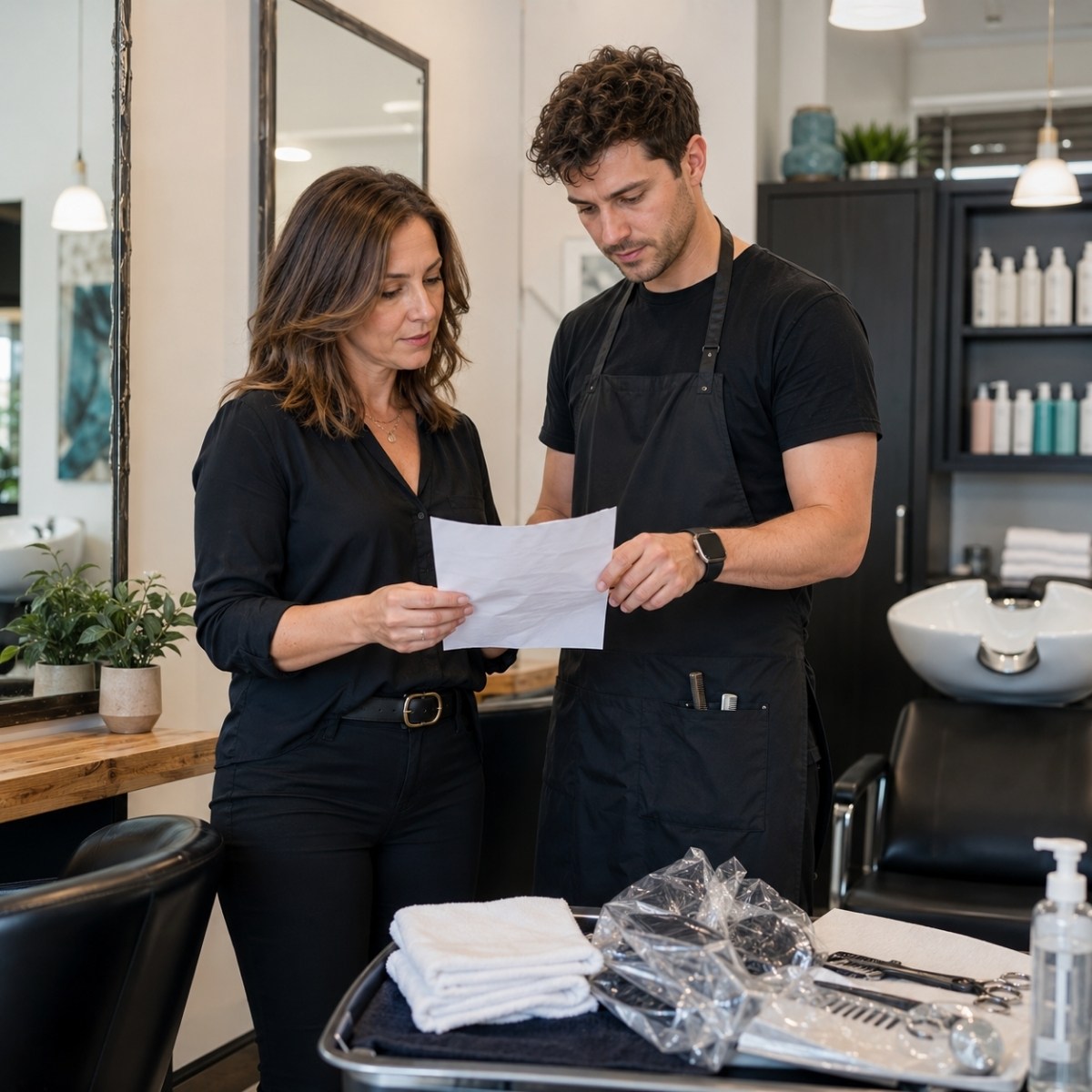


 Before you can show off your technical skills, you have to successfully navigate the state administrative process. Understanding how to apply for your cosmetology state board exam is the very first step to reducing your test-day stress.
Every state has a specific regulatory body, often working alongside a national testing service like PSI Services, to oversee licensing. In many states, the scheduling process begins after you graduate and your beauty school reports your completed training hours to the state board or testing system. Once those hours are verified, you may receive an eligibility notice explaining how to schedule your cosmetology exam through an online portal, by phone, or through the specific process your state uses.
During this registration process, you also need to look up how much it costs to take the cosmetology exam in your specific region. Fees vary across the country, and many states charge separately for the theory and practical portions. For example, the official
Before you can show off your technical skills, you have to successfully navigate the state administrative process. Understanding how to apply for your cosmetology state board exam is the very first step to reducing your test-day stress.
Every state has a specific regulatory body, often working alongside a national testing service like PSI Services, to oversee licensing. In many states, the scheduling process begins after you graduate and your beauty school reports your completed training hours to the state board or testing system. Once those hours are verified, you may receive an eligibility notice explaining how to schedule your cosmetology exam through an online portal, by phone, or through the specific process your state uses.
During this registration process, you also need to look up how much it costs to take the cosmetology exam in your specific region. Fees vary across the country, and many states charge separately for the theory and practical portions. For example, the official  Because the theory test requires so much memorization and careful reading, your approach to studying cosmetology will make or break your success. Sitting down with a massive textbook and highlighting random paragraphs is rarely effective for visual or hands-on learners. Instead, you need active recall strategies that force your brain to retrieve information before test day.
Incorporating a digital cosmetology practice test into your daily routine is one of the best ways to prepare. When you use high-quality study materials, you get used to the specific phrasing used by test writers. Your goal should be to find a comprehensive cosmetology written exam study guide that breaks down complex chapters into bite-sized quizzes covering infection control, hair care, chemical services, skin care, nail care, and state law.
Fortunately, you do not have to spend a fortune on extra prep materials. Utilizing a free practice test for the cosmetology state board allows you to assess your current knowledge without adding to your beauty school expenses. When you take a cosmetology free practice test online, look closely at the explanations provided for each answer. Do not just memorize the correct choice. Learn why the other three choices are incorrect.
As you go through various cosmetology exam questions and answers, keep a running list of your personal weak spots. If you notice that you consistently miss cosmetology questions for the state board regarding chemical relaxing, infection control, anatomy, skin conditions, or state law, you know exactly where to focus your study time during your final week of preparation.
Because the theory test requires so much memorization and careful reading, your approach to studying cosmetology will make or break your success. Sitting down with a massive textbook and highlighting random paragraphs is rarely effective for visual or hands-on learners. Instead, you need active recall strategies that force your brain to retrieve information before test day.
Incorporating a digital cosmetology practice test into your daily routine is one of the best ways to prepare. When you use high-quality study materials, you get used to the specific phrasing used by test writers. Your goal should be to find a comprehensive cosmetology written exam study guide that breaks down complex chapters into bite-sized quizzes covering infection control, hair care, chemical services, skin care, nail care, and state law.
Fortunately, you do not have to spend a fortune on extra prep materials. Utilizing a free practice test for the cosmetology state board allows you to assess your current knowledge without adding to your beauty school expenses. When you take a cosmetology free practice test online, look closely at the explanations provided for each answer. Do not just memorize the correct choice. Learn why the other three choices are incorrect.
As you go through various cosmetology exam questions and answers, keep a running list of your personal weak spots. If you notice that you consistently miss cosmetology questions for the state board regarding chemical relaxing, infection control, anatomy, skin conditions, or state law, you know exactly where to focus your study time during your final week of preparation.
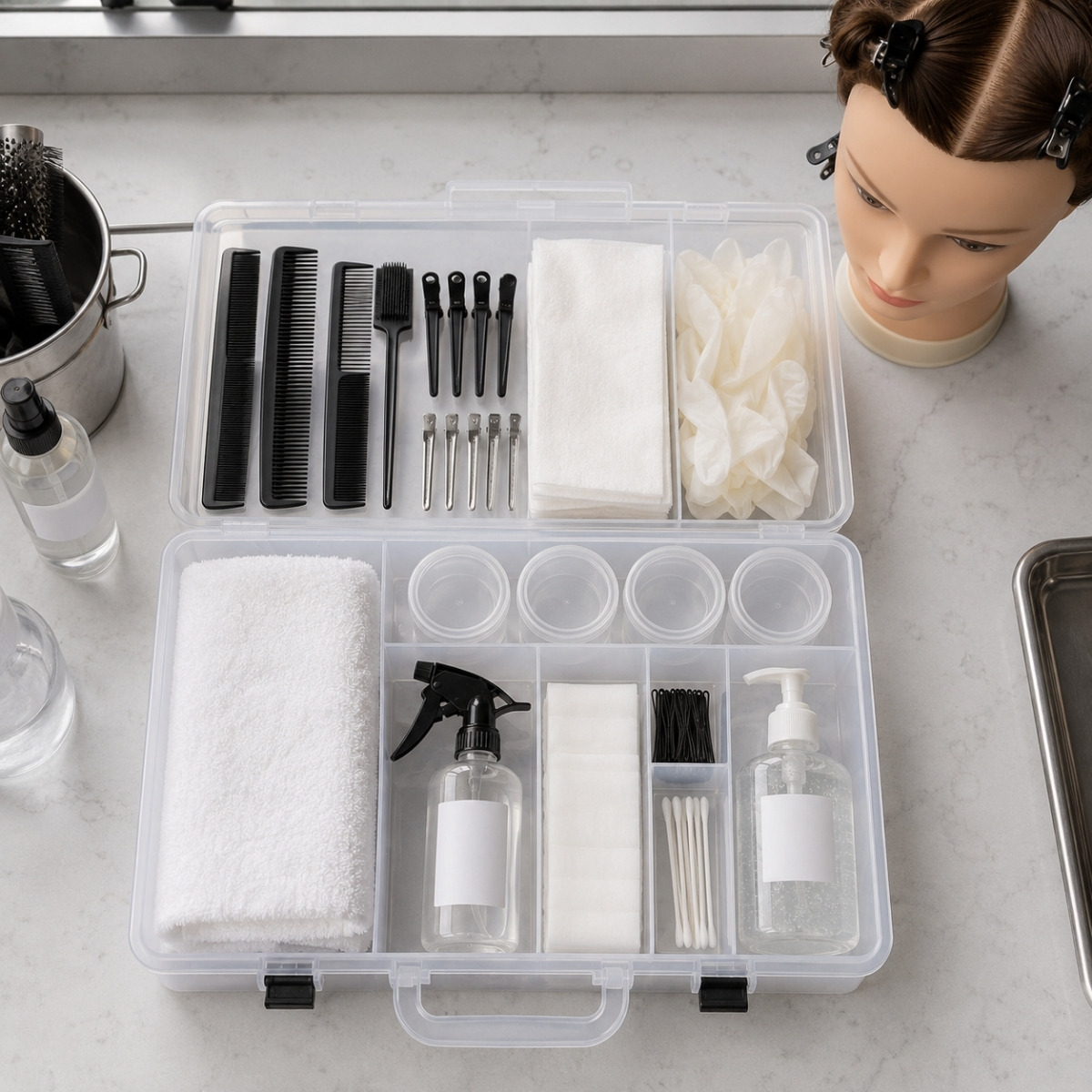 The cosmetology practical exam is where your hands-on training finally takes center stage. The secret to passing this portion is realizing that evaluators are not looking for a runway-ready haircut or a dramatic final look. They are looking for safe habits, proper infection control, clean transitions, organized setup, and the ability to follow exam instructions under pressure.
Your preparation centers around your cosmetology kit for the state board, but there is no single universal kit list that applies everywhere. You must build and pack your supplies according to the strict guidelines in your region’s official cosmetology kit list, Candidate Information Bulletin, or Test Taker Guide. For example, the
The cosmetology practical exam is where your hands-on training finally takes center stage. The secret to passing this portion is realizing that evaluators are not looking for a runway-ready haircut or a dramatic final look. They are looking for safe habits, proper infection control, clean transitions, organized setup, and the ability to follow exam instructions under pressure.
Your preparation centers around your cosmetology kit for the state board, but there is no single universal kit list that applies everywhere. You must build and pack your supplies according to the strict guidelines in your region’s official cosmetology kit list, Candidate Information Bulletin, or Test Taker Guide. For example, the 


 Before evaluating financial aid options, you need to understand how beauty schools structure their fees. A common error is looking exclusively at base tuition and assuming that is the final price tag. Trade school billing is uniquely fragmented compared to traditional colleges, so the smarter question is not only “How much is tuition?” but “What is the full cost of attendance?”
When researching your options, the overall cosmetology school cost varies based on geographic location, program length, curriculum depth, school type, and what the tuition actually includes. According to
Before evaluating financial aid options, you need to understand how beauty schools structure their fees. A common error is looking exclusively at base tuition and assuming that is the final price tag. Trade school billing is uniquely fragmented compared to traditional colleges, so the smarter question is not only “How much is tuition?” but “What is the full cost of attendance?”
When researching your options, the overall cosmetology school cost varies based on geographic location, program length, curriculum depth, school type, and what the tuition actually includes. According to  The most frequent question prospective applicants ask is whether they can use the FAFSA for cosmetology school. Federal student aid may be available for trade programs, provided you choose a school and program that are eligible to participate in Title IV federal student aid programs. Accreditation is an important signal of quality and legitimacy, but it is not the only requirement. The U.S. Department of Education maintains
  To graduate with minimal debt, your primary strategy should focus on securing financial aid for cosmetology school that does not require repayment. The largest federal source of non-repayable assistance is the Federal Pell Grant, which is based on financial need and other eligibility factors calculated through your FAFSA submission. For the 2026–27 award year, the
 In a salon, if you do not have a client in your chair, you may not be making money. In a classroom or student training-floor setting, instructors are usually paid for scheduled teaching, supervision, preparation, grading, and administrative work. This predictable structure can reduce the anxiety of unpaid gaps between appointments. Furthermore, completing your professional training pathway through an accredited program equips you with the curriculum management, lesson planning, and student supervision skills that private and public academies value.
According to the
In a salon, if you do not have a client in your chair, you may not be making money. In a classroom or student training-floor setting, instructors are usually paid for scheduled teaching, supervision, preparation, grading, and administrative work. This predictable structure can reduce the anxiety of unpaid gaps between appointments. Furthermore, completing your professional training pathway through an accredited program equips you with the curriculum management, lesson planning, and student supervision skills that private and public academies value.
According to the  The expansion of specialized niches within the beauty industry has created dedicated training tracks that can shape compensation differently from general cosmetology instruction. Navigating these pathways depends heavily on your professional focus. General cosmetology instruction provides a broad student base and a wide range of institutional openings. Advanced esthetics can strengthen your earning potential when schools or training centers need instructors who understand skin science, safety protocols, and medical-spa boundaries. Nail technology can open school-based teaching roles as well as brand education opportunities, especially for educators with strong product knowledge and safety training.
 Finding true online cosmetology instructor jobs where you can work entirely from home is still limited, because practical skills training, clinic-floor supervision, sanitation checks, and student service assessments usually require in-person oversight. However, hybrid beauty education is becoming more realistic for theory-heavy parts of instruction.
Instructors may be able to lead or support lectures on anatomy, chemistry, infection control, business marketing, state board preparation, and professional development from a digital classroom. Remote or hybrid responsibilities may also include grading digital assignments, reviewing student portfolios, tracking attendance, updating lesson modules, and managing compliance documentation.
According to the
Finding true online cosmetology instructor jobs where you can work entirely from home is still limited, because practical skills training, clinic-floor supervision, sanitation checks, and student service assessments usually require in-person oversight. However, hybrid beauty education is becoming more realistic for theory-heavy parts of instruction.
Instructors may be able to lead or support lectures on anatomy, chemistry, infection control, business marketing, state board preparation, and professional development from a digital classroom. Remote or hybrid responsibilities may also include grading digital assignments, reviewing student portfolios, tracking attendance, updating lesson modules, and managing compliance documentation.
According to the 
 Most states require a clear baseline of hands-on experience, active licensure, and formal schooling before you can apply for an instructional credential. However, the rules are not identical nationwide. Some states still issue separate instructor licenses, while others place more responsibility on the school to verify teacher qualifications. You cannot assume that raw talent alone is enough; you must prove your technical competence, maintain the correct practitioner license, and understand your legal scope of practice - the legally defined boundaries of what a professional can and cannot do safely for a client.
 The biggest hurdle for many veteran beauty professionals is testing anxiety. If you have been out of a school environment for years, facing a multi-part exam can trigger intense imposter syndrome. Understanding the exact layout of the test is the best way to quiet that inner anxiety.
In states that still require a formal instructor exam, the licensing process may culminate in one or more state board cosmetology instructor exams. The exact format depends on your state and testing vendor, but it often includes the following areas:
The biggest hurdle for many veteran beauty professionals is testing anxiety. If you have been out of a school environment for years, facing a multi-part exam can trigger intense imposter syndrome. Understanding the exact layout of the test is the best way to quiet that inner anxiety.
In states that still require a formal instructor exam, the licensing process may culminate in one or more state board cosmetology instructor exams. The exact format depends on your state and testing vendor, but it often includes the following areas:
 Earning your certificate is a major milestone, but maintaining it requires ongoing effort. To keep your classroom doors open, you must track your renewal cycle closely. Many states require beauty educators, practitioners, or both to complete continuing education units, often abbreviated as CEUs, before renewal. However, CE rules are not universal. Some states require instructor-specific continuing education, some require CE for the underlying practitioner license, and some do not require CE for certain beauty credentials at all.
This is why you should treat renewal as a state-specific compliance habit rather than a generic national checklist. When your renewal window opens, check your board’s official website for the current renewal fee, CE hour requirement, license expiration date, late-renewal penalty, and whether your CE provider must be state-approved. Knowing the exact fee to renew a cosmetology instructor license ahead of time allows you to keep your business records organized without any lapses in your legal right to teach.
Our curriculum guidance mirrors a broader trend toward more scientific, wellness-aware, and client-education-focused training. According to
Earning your certificate is a major milestone, but maintaining it requires ongoing effort. To keep your classroom doors open, you must track your renewal cycle closely. Many states require beauty educators, practitioners, or both to complete continuing education units, often abbreviated as CEUs, before renewal. However, CE rules are not universal. Some states require instructor-specific continuing education, some require CE for the underlying practitioner license, and some do not require CE for certain beauty credentials at all.
This is why you should treat renewal as a state-specific compliance habit rather than a generic national checklist. When your renewal window opens, check your board’s official website for the current renewal fee, CE hour requirement, license expiration date, late-renewal penalty, and whether your CE provider must be state-approved. Knowing the exact fee to renew a cosmetology instructor license ahead of time allows you to keep your business records organized without any lapses in your legal right to teach.
Our curriculum guidance mirrors a broader trend toward more scientific, wellness-aware, and client-education-focused training. According to