



How Long Is Cosmetology School? Hours, Months, Full-Time vs. Part-Time, and What Can Delay Graduation
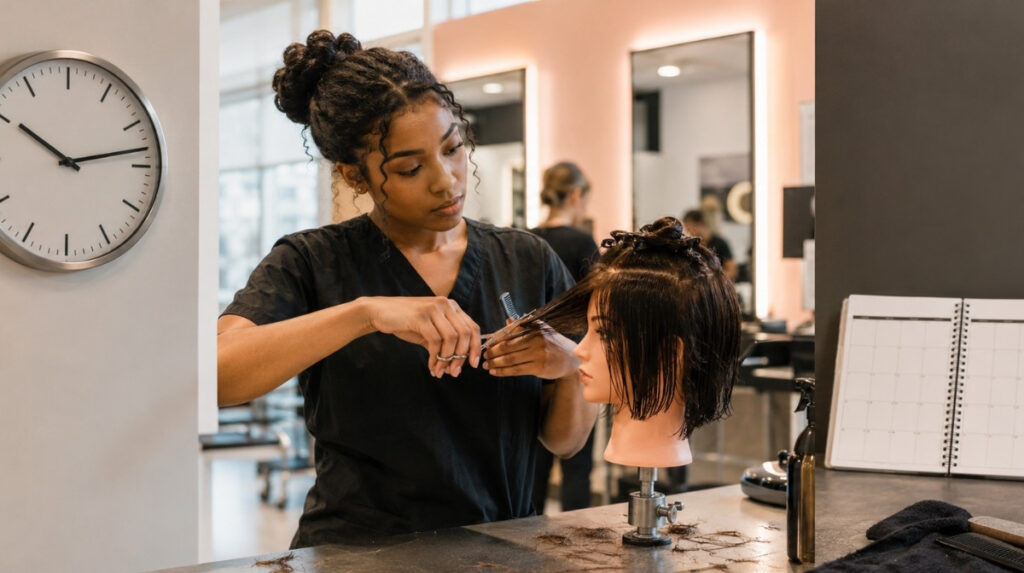
If you feel stuck in a routine that lacks creativity or spend hours looking at standard college degree plans wondering if there is a faster path to a rewarding career, you are not alone. Starting a new path can feel intimidating, but if you are wondering who beauty schools are really for and if anyone can enroll, beauty programs can accommodate career-changers, parents, and creatives with different backgrounds. Entering the beauty industry does not require a four-year degree, but you must complete the training and licensing requirements established by your state. This guide explains clock hours, common schedule options, state differences, and the factors that may affect your actual completion date.
Key Takeaways
- Completion Time: Many full-time cosmetology programs take approximately 7 to 14 months, while part-time programs may take roughly 14 to 24 months or longer.
- Clock Hours: State boards generally require students to complete and document a specific number of training hours through a state-approved program.
- State Differences: California requires 1,000 hours, while Georgia and Arkansas require 1,500 hours for a school-based cosmetology license pathway.
- Common Delays: Absences, school closures, schedule changes, leaves of absence, transfer evaluations, and incomplete academic or practical requirements may extend the graduation date.
- Flexible Options: Some schools offer evening, part-time, or hybrid theory options, but availability depends on state rules, school approval, and the institution's current schedule.
How Clock Hours Determine Cosmetology School Length
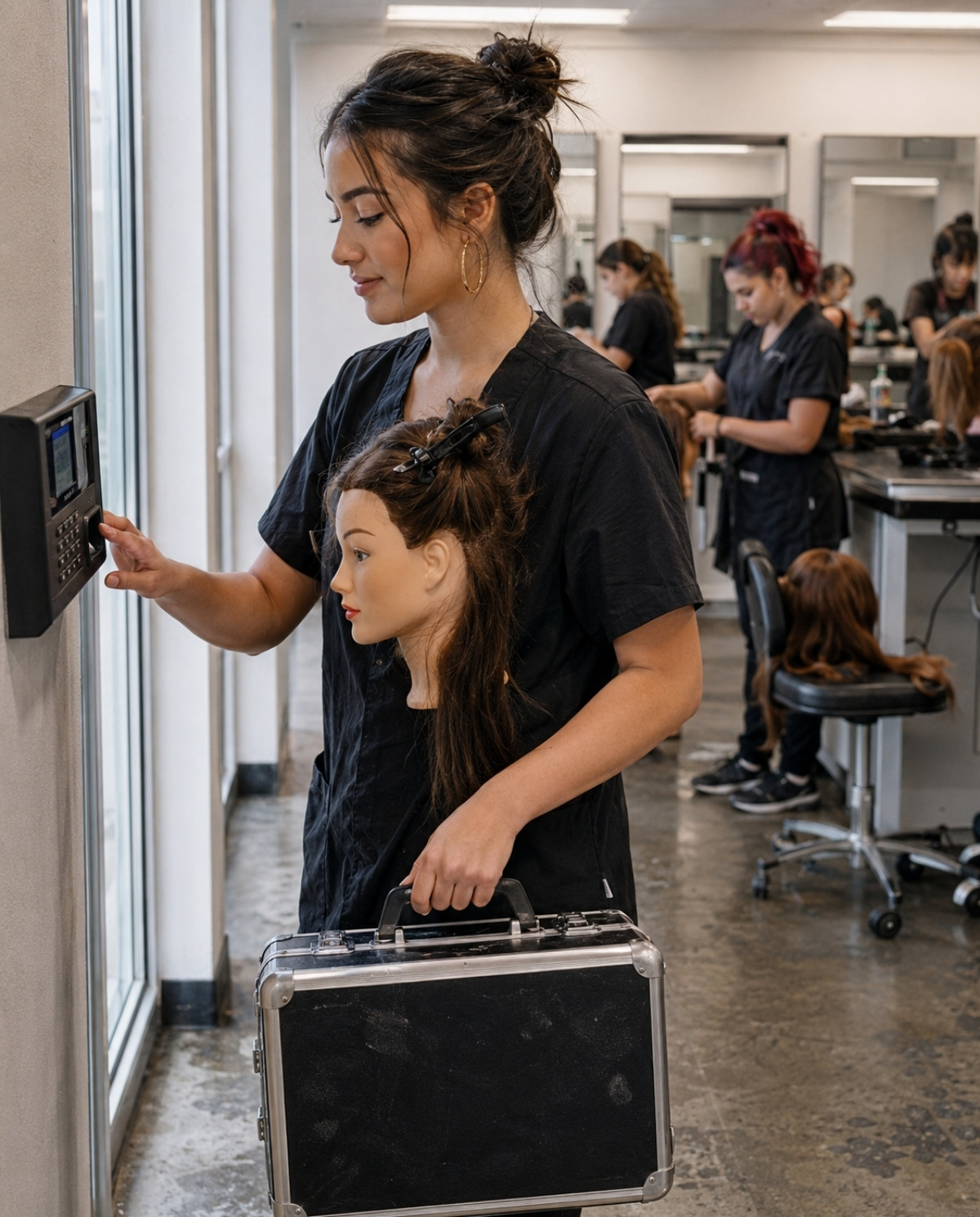
Traditional colleges commonly measure progress through credit hours, which account for classroom instruction and expected work outside class. Cosmetology schools commonly operate through a different system. State licensing boards usually measure your progress through clock hours completed in an approved training program.
A clock hour does not always mean exactly 60 uninterrupted minutes of classroom instruction. Under the federal definition, it generally includes at least 50 minutes of supervised instruction or monitored academic activity within a 60-minute period. Schools must document attendance according to the requirements of the state board, accrediting agency, and federal financial-aid rules that apply to the program.
To qualify for a state licensing examination or license, students generally must complete all required hours and other curriculum requirements. Some hours may involve classroom theory, while others involve demonstrations, practical exercises, and supervised services in a student salon. Depending on state and school rules, approved distance education or externship activities may also count toward limited parts of the program.
Many state cosmetology programs require approximately 1,000 to 1,600 hours, although the exact requirement and the services included under a cosmetology license vary. California requires 1,000 hours, Georgia requires 1,500 hours, and Washington requires 1,600 hours for a school-based cosmetology pathway. These figures apply to cosmetology programs rather than apprenticeships, which may carry different requirements.
For example, the official Georgia cosmetology curriculum rules establish a 1,500-hour school program. Arkansas also maintains a 1,500-hour cosmetology curriculum through the state's cosmetology licensing system. At 30 scheduled hours per week, 1,500 hours equals approximately 50 instructional weeks before holidays, closures, absences, or other interruptions are added.
If you plan to move during or after your training, checking state-by-state cosmetology license requirements, transfer rules, and exam standards can help you understand whether your completed hours may be recognized elsewhere. Another state is not required to accept every hour simply because it appears on a transcript.
When researching how many hours of cosmetology school your state requires, begin with the licensing board's official website. School approval, curriculum subjects, attendance records, and practical requirements can matter in addition to the total number of hours.
State licensing standards can also change. California's SB 803 reduced the state's cosmetology education requirement from 1,600 to 1,000 hours effective January 1, 2022. According to materials from the California Board of Barbering and Cosmetology, the law reduced the required hours and removed the state practical examination. Schools may still offer programs longer than the state's 1,000-hour minimum, so students should compare the approved program length before enrolling.
How Long Full-Time and Part-Time Programs Take
Your actual timeline depends heavily on whether you choose a full-time or part-time schedule. Selecting the right option involves balancing your preferred graduation date with work, transportation, childcare, and living expenses.
A useful starting estimate is to divide the required program hours by your scheduled hours per week. For example, 1,500 hours divided by 30 hours per week equals 50 instructional weeks. This calculation does not include holidays, scheduled breaks, school closures, absences, or makeup policies.
| Required Hours | 40 Hours per Week | 30 Hours per Week | 20 Hours per Week | 15 Hours per Week |
|---|---|---|---|---|
| 1,000 hours | 25 weeks | About 34 weeks | 50 weeks | About 67 weeks |
| 1,500 hours | About 38 weeks | 50 weeks | 75 weeks | 100 weeks |
| 1,600 hours | 40 weeks | About 54 weeks | 80 weeks | About 107 weeks |
These figures are mathematical estimates rather than guaranteed graduation timelines. Your school's academic calendar and attendance policy determine the date you can realistically finish.
Full-Time Training for Faster Completion
A full-time track is generally built for students who want to complete their training as quickly as possible and transition into the licensing process.
Full-time schedules commonly involve approximately 30 to 40 hours per week and may resemble a standard weekday work schedule. However, actual start times, end times, and days of attendance vary by school.
In a state with a 1,000-hour requirement, a student attending 30 to 40 hours per week may complete the required hours in approximately 25 to 34 instructional weeks. After holidays, closures, and other calendar factors are included, a published program length of roughly 7 to 10 months may be realistic.
For a 1,500-hour program in Georgia or Arkansas, the mathematical minimum is approximately 38 weeks at 40 hours per week or 50 weeks at 30 hours per week. That commonly places a full-time program near 9 to 14 calendar months, depending on the school's schedule.
Daily attendance remains one of the most important factors. Missing hours does not normally disappear from your attendance record because you passed an exam or reviewed the material independently. The missing time generally must be completed according to school and state rules.
Part-Time Training for a More Flexible Schedule
A part-time schedule may help students continue working, care for family members, or manage other commitments while pursuing a license.
Part-time programs may schedule approximately 15 to 20 hours per week through evening classes, shorter weekday sessions, or other approved arrangements. At 20 hours per week, a 1,500-hour program requires at least 75 instructional weeks. At 15 hours per week, it requires 100 weeks, or nearly two years, before additional breaks or absences are considered.
For that reason, part-time cosmetology programs commonly take around 14 to 24 months, and some may take longer. Students should ask for the school's published program calendar instead of relying only on the total number of hours.
Some institutions offer online or hybrid theory instruction for subjects suited to remote learning. However, online availability is not universal. It depends on state-board rules, the school's approved program, accreditor requirements, and the method used to monitor attendance. Hands-on services and practical training still require an approved supervised environment.
Before enrolling, ask the school exactly which subjects may be completed online, how online attendance is documented, and whether the hybrid format changes the published completion date.
What Can Delay Cosmetology School Graduation?
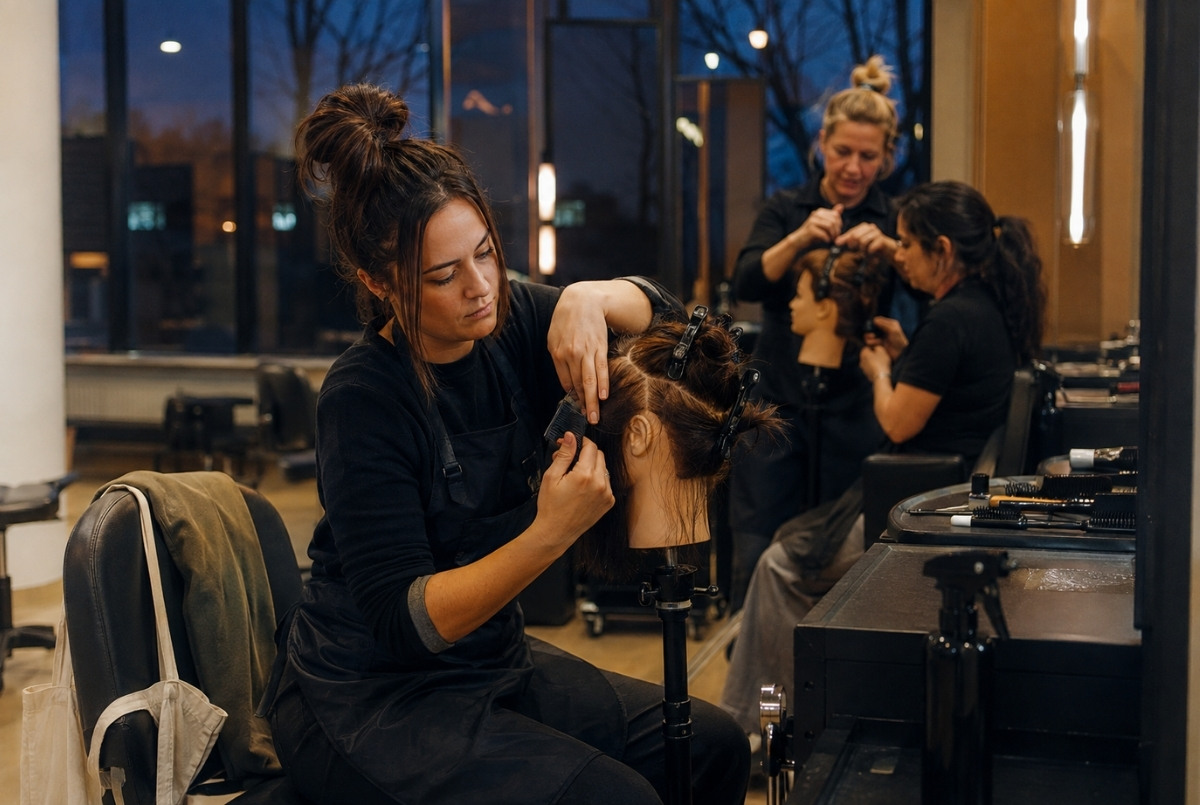
Many students calculate their graduation date using a simple calendar estimate, but several real-world factors can alter that timeline. Because cosmetology programs track attendance and curriculum completion, finishing the required number of months is not necessarily the same as completing the program.
Missed Hours and Makeup Policies
Missing cosmetology school is different from missing a traditional college lecture. Reviewing another student's notes may help you understand the subject, but it generally does not replace required clock hours.
If you miss eight scheduled hours, you will usually need to complete those hours later through an approved makeup schedule. How quickly you can recover them depends on when makeup sessions are available, how many hours the school permits each day or week, and whether additional instructor supervision is available.
Missing one week normally adds at least the missed hours to your remaining training. The calendar delay may be longer when makeup opportunities are limited or offered only on specific days.
Students should review the school's attendance policy for:
- Maximum allowable absences;
- Approved makeup schedules;
- Fees for overtime or additional attendance;
- Leave-of-absence procedures;
- Rules for switching between day and evening schedules;
- The maximum time allowed to finish the program.
Practical Skills and Academic Progress
Many schools require students to demonstrate basic sanitation and technical skills before advancing to work with clients in the student salon. These evaluations may cover procedures such as chemical application, haircutting, styling, infection control, and safe workstation preparation.
If you want a clear preview of what you actually learn in cosmetology school during classroom and floor training, review the curriculum before beginning the program.
Benchmark requirements are not identical nationwide. A school may require students to repeat an assessment, complete additional practice, or satisfy specific practical-service requirements before progressing. The consequences depend on the school's catalog and the applicable state curriculum rules, so ask how unsuccessful assessments affect the expected graduation date.
Students receiving federal financial aid must also meet their school's satisfactory academic progress policy. Falling below the required attendance or academic standard may affect aid eligibility and, in serious cases, a student's ability to remain in the program.
Safety and Sanitation Requirements
Client health and safety are central parts of cosmetology education. Students learn infection control, proper disinfection, safe product handling, basic skin and scalp awareness, and precautions for chemical services such as hair coloring, lightening, relaxing, and permanent waving.
State cosmetology boards generally establish the sanitation and curriculum requirements that directly apply to schools and licensees. Federal agencies provide additional workplace and product-safety guidance, but their roles are different.
For example, the FDA's Modernization of Cosmetics Regulation Act of 2022 primarily establishes obligations for cosmetic manufacturers, processors, and the responsible persons associated with cosmetic products. It does not replace state cosmetology-board rules or make individual students responsible for the law's facility-registration and serious adverse-event reporting requirements.
Because a cosmetology license does not authorize every advanced skincare or medical procedure, students should also understand their state's scope of practice. Advanced chemical peels, lasers, injectable treatments, and other medical-aesthetic procedures may require a separate license, additional authorization, or medical supervision.
Physical Demands and Ergonomics
Cosmetology training can be physically demanding. Students may spend extended periods standing, bending, holding their arms in raised positions, and repeating small hand and wrist movements.
The National Institute for Occupational Safety and Health explains that awkward postures and repetitive motions can contribute to musculoskeletal problems in salon work. Adjustable seating, supportive footwear, properly positioned tools, good posture, and regular breaks can help reduce strain.
Physical discomfort does not automatically delay graduation, but unmanaged strain may make consistent attendance more difficult. Developing safe body mechanics during school can help protect your health throughout a salon career.
Transfers and Schedule Changes
Changing schools can affect your timeline even when you have an official transcript. The receiving institution may review the subjects completed, the approval status of the previous school, the age of the training, and whether your practical work aligns with its curriculum.
A school or board may accept all, some, or none of the previous hours. Students should request a written transfer evaluation before withdrawing from one program or paying tuition to another.
Switching from a full-time schedule to a part-time schedule can also move the projected graduation date significantly. Ask the school to calculate a revised completion date based on your remaining hours and the new weekly schedule.
What Happens After You Complete School?
Completing your required school hours is an important milestone, but graduation and licensure are not always the same date.
Depending on your state, you may still need to:
- Submit a license or examination application;
- Provide proof of completed training;
- Pass a written examination;
- Pass a practical examination where one is required;
- Pay examination and licensing fees;
- Wait for the board to process and issue your license.
This means your legal ready-to-work date may arrive several weeks after your last day of school. Application processing times, examination availability, incomplete paperwork, and failed examination attempts can extend the total journey.
When planning your career transition, calculate both your estimated school graduation date and your estimated licensing date.
Understanding the Career Return on Your Training
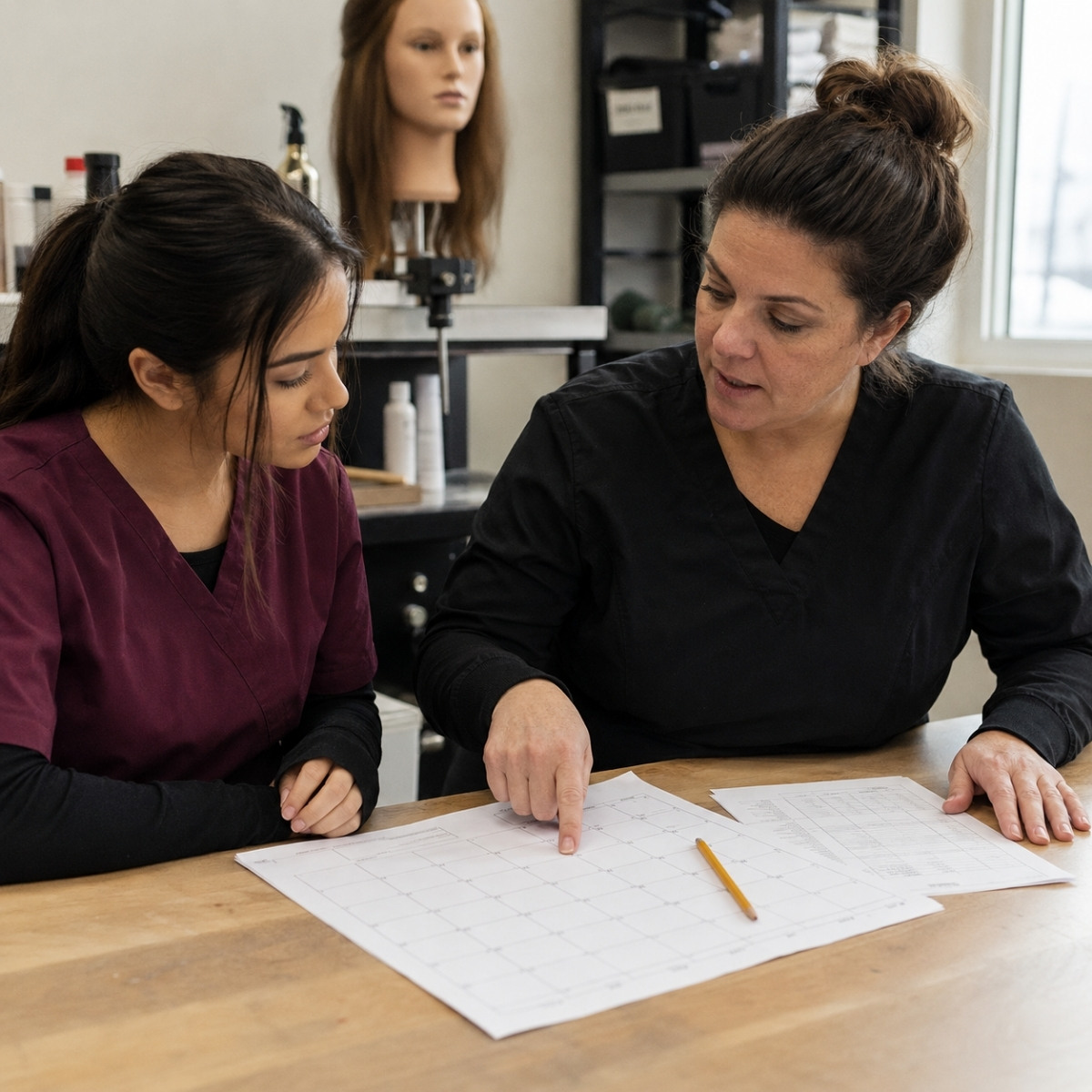
Compared with a traditional four-year degree, cosmetology school can provide a shorter pathway into a licensed profession. However, the financial return is not automatic and varies by tuition, local demand, employment arrangement, specialty, experience, and ability to build a clientele.
Comprehensive training does more than prepare you for an examination. It gives you supervised opportunities to develop technical consistency, client communication, infection-control habits, time management, and service confidence.
Career possibilities may include working in a salon, specializing in particular hair services, becoming a product or brand educator, working in media productions, renting a booth, or eventually operating a business. Some paths require experience, additional training, business registration, or separate licensing.
Before enrolling, compare the full cost of the program with the school's published outcomes and disclosures. Ask whether the quoted price includes:
- Tuition and registration fees;
- Books and online learning materials;
- Student kits and tools;
- Uniforms;
- State examination fees;
- Initial license application fees;
- Charges for overtime or makeup hours.
You should also review the school's completion rate, licensure-examination pass rate, and job-placement disclosures where available. A school that is licensed or approved by the state is important for the licensing pathway. If you plan to use federal aid, confirm that the institution and program are eligible to participate in federal student-aid programs.
The U.S. Bureau of Labor Statistics Occupational Outlook Handbook projects that overall employment of barbers, hairstylists, and cosmetologists will grow 7% from 2025 to 2035. Approximately 80,300 openings are projected each year, on average, over the decade. Many of these openings are expected to result from workers transferring to other occupations or leaving the labor force rather than from newly created positions alone.
These projections indicate continued demand across the occupation, but individual opportunities vary by location, specialty, experience, licensing status, and clientele.
Frequently Asked Questions
Can I Transfer Cosmetology School Hours to Another State?
Possibly, but transfer approval depends on the receiving state board and school. National accreditation alone does not guarantee that another state will accept your hours.
The receiving authority may consider whether your previous school was properly licensed or approved, whether your transcript can be verified, and whether the subjects you completed match the new state's curriculum. A student moving from a 1,000-hour state to a 1,500-hour state may need approximately 500 additional hours, but the board or receiving school must first determine how many previous hours it will accept.
Transferring unfinished school hours is also different from transferring an active professional license. Licensed professionals may qualify through endorsement, reciprocity, examination, or documented work experience, depending on the destination state's rules.
How Long Are Cosmetology and Esthetics Programs?
Cosmetology generally covers hair cutting and styling, chemical hair services, and varying amounts of nail and skincare training. Because the license covers a broader selection of services, many cosmetology programs require approximately 1,000 to 1,600 hours.
Esthetics focuses more specifically on skincare, facials, hair removal, makeup, and related services allowed by the state. Program requirements vary considerably. Georgia requires a 1,000-hour esthetician school curriculum, while Arkansas requires 600 hours for its aesthetician pathway.
The number of hours does not tell you everything about the services a license permits. Compare the state's statutory scope of practice as well as the program length.
Can Part-Time Cosmetology Students Receive Financial Aid?
Eligible students may be able to receive federal financial aid while attending part time if the institution and program participate in federal student-aid programs.
Pell Grant eligibility and award amounts can depend on the student's circumstances and enrollment intensity. Federal Direct Loans generally require at least half-time enrollment. For clock-hour programs, the school's academic year, payment periods, attendance records, and satisfactory academic progress policy can also affect when aid is disbursed.
The Federal Student Aid Handbook explains how enrollment intensity affects Pell Grant calculations. Because every student's situation is different, consult the school's financial-aid office before assuming that a particular evening or part-time schedule will qualify.
Does Online Theory Reduce the Number of Required Hours?
Usually, no. Approved online theory may allow you to complete certain educational activities away from campus, but it generally counts toward the same required program total rather than reducing it.
The school must be authorized to offer the distance-education component and must document student participation properly. Practical salon services and hands-on skill development still require an approved supervised setting.
How Can I Estimate My Personal Graduation Date?
Begin with your state's required hours and subtract any hours formally accepted for transfer. Divide the remaining hours by the number of hours you are scheduled to attend each week. Then add school holidays, scheduled breaks, planned absences, and a reasonable allowance for unexpected missed time.
For the most accurate answer, request a written enrollment schedule showing your expected start date, weekly hours, published program length, makeup policy, and estimated completion date.
Ready to Build Your Legacy in Beauty?
At Atlanta Beauty Academy, we do not just focus on completing hours—we help students build the technical skills, safety habits, and professional confidence needed for a lasting beauty career. For over 20 years, our Salon-Ready approach has emphasized practical training and real-world preparation.
Available schedules and learning formats can change, so speak with admissions about current full-time, part-time, evening, or hybrid options and how each schedule may affect your expected completion date.
Take the first step toward a creative professional future today. Fill out the form below to tour our campus, explore the training environment, and receive a personalized estimate of how long your program may take.