Barbering vs. Cosmetology: Which License Unlocks Your Highest Earning Potential in 2026?

You’re standing at a crossroads that feels more like a legal labyrinth. It’s a common anxiety: the fear that choosing one "side" of the industry - barbering or cosmetology - will permanently lock you out of the other. You aren't just choosing a school; you’re choosing a daily lifestyle and a legal scope of practice. In 2026, the traditional boundaries between a barbershop and salon are dissolving. Modern clients don't categorize themselves by the sign on the door; they categorize themselves by the expertise of the professional. Whether you want to master the chemistry of hair color or the architectural precision of a straight-razor shave, your first step is understanding which license provides the most leverage for your specific five-year plan.

Key Takeaways for Future Pros

  • The Hybrid Advantage: In 2026, the highest earners are "Hybrid Specialists" who bridge the gap between clinical skincare and precision barbering.
  • License Mobility: The new Cosmetology Compact now allows professionals in participating states to practice across state lines without re-testing.
  • Market Growth: Male-focused grooming enrollments have surged by 21%, transforming "barbering" into a high-ticket wellness category.
  • The "Crossover" Shortcut: If you are already licensed in one field, you can typically earn your second license in just 200–400 hours.
A young professional hairstylist standing at a floor crossroads between a rustic modern barbershop and a bright high-end salon, holding hair clippers and a color mixing bowl.

The Legal & Technical Landscape (The "Safe" Choice)

The most common point of confusion is whether barbering falls under cosmetology in a legal sense. While they are "cousins," they are governed by distinct sets of regulations. In the U.S., your state board dictates exactly which tools you can touch. Because this license covers everything from hair to nails, the range of careers you can pursue with a cosmetology license is surprisingly vast, allowing you to work in high-end spas, film sets, or even medical aesthetics offices. Longevity in this field also requires a strategy for barbering and cosmetology license renewal. In 2026, staying "legal" means more than just paying a fee; it involves specialized continuing education. If you hold a dual license, you’ll double your compliance requirements, but you also triple your marketability. You become the professional who never has to say "no" to a client’s request.

💡 Expert Insight: The 2026 Multistate Compact

The era of being "trapped" in one state is over. According to the Alabama Board of Cosmetology & Multi-State Regulatory Update, the Cosmetology Compact has officially gone live. This landmark agreement allows professionals in participating states like AZ, CO, TN, and KY to maintain a multistate license. This gives you the freedom to move your career across state lines without the bureaucratic nightmare of re-testing. Your education is now a mobile, national asset.

Training & Skill Sets (The "Expert" Choice)

A high-detail side-by-side comparison of professional cosmetology and barbering; the left side shows a stylist applying foil highlights to hair, while the right side shows a barber performing a traditional straight razor shave with lather. Inside a barbering and cosmetology school, the curricula diverge quickly. A cosmetology program is essentially a "Head-to-Toe" doctorate in aesthetics. You’ll study the lipid barrier of the skin and the complex chemistry of pH-balanced color. You aren't just "doing hair"; you’re performing clinical-grade exfoliation during facials and managing the structural integrity of the hair fiber. Conversely, the barbering vs haircut distinction is about the tool, not just the length of the hair. Barbering is the art of the blade. It focuses on the architecture of the face and male-pattern hair growth. We are seeing a massive shift in the classroom demographic. According to Global Growth Insights, there has been a 21% surge in male-focused enrollments recently. This isn't just about "buzz cuts"; it's about a new generation of students realizing that "Male Grooming" is now a high-ticket skincare category. If this artistic precision speaks to you, it’s helpful to look at a step-by-step guide on how to become a barber to see how these skills translate into a professional roadmap.

The "Hybrid" Career Strategy (The "Power" Move)

The most lucrative professionals in 2026 are "Hybrid Specialists." While you can do a lot with a cosmetology license, many find themselves asking: can you be a barber with a cosmetology license? The answer is yes for cutting, but usually "no" for the straight razor. This legal gap is why we see so many pros seeking a barber license after cosmetology. If you're already licensed in one, don't panic about "sunk costs." Getting a barber license after cosmetology (or vice versa) is often streamlined through "Crossover" programs. These allow you to apply your existing hours toward a second credential, typically requiring only 200–400 additional hours. This "bridge" strategy is the fastest way to ensure you can legally provide every service from a balayage to a hot-towel shave. However, even with crossover credits, you'll want to review the details on barber school cost and length to ensure the program requirements align with your current schedule.

💡 Expert Insight: The Medicalization of the Scalp

The 2026 market has shifted from "beauty" to "wellness." Reports from America’s Beauty Show highlight that "Trichology-light" services - like biotech scalp treatments and peptide-infused serums - are the fastest-growing revenue streams in the industry. Clients are now willing to pay a premium for scalp health that goes beyond a standard shampoo. Mastering this "clinical" side of the chair is what separates a $50 stylist from a $150 specialist.

Salon vs. Barbershop (The "Lifestyle" Choice)

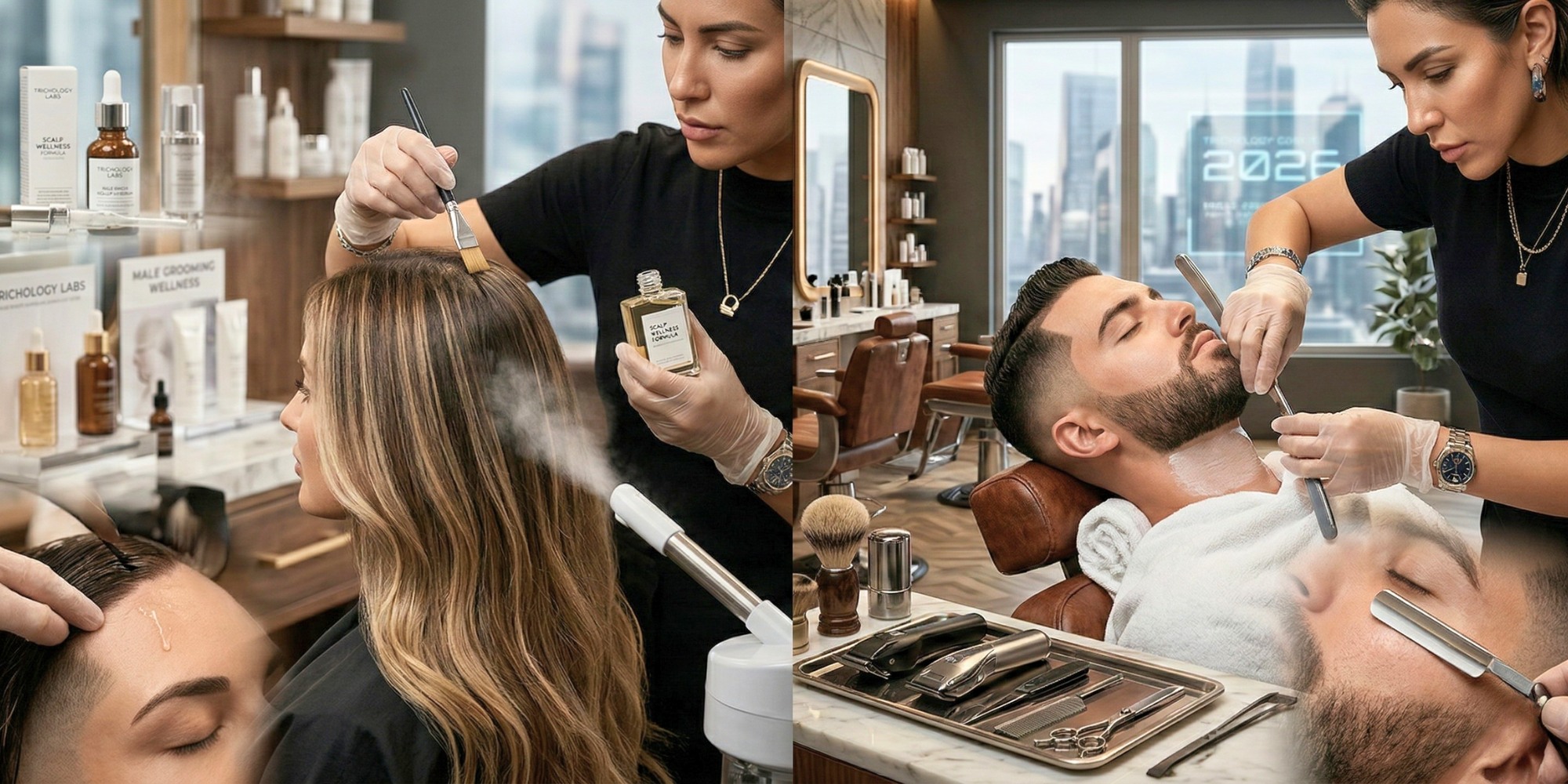
A professional stylist performing a scalp analysis using a lighted diagnostic tool on a male client in a luxury grooming studio, featuring a tray of clippers and shears in the foreground. The barbershop and salon difference is ultimately about your preferred "flow." Barbershops often thrive on high-volume, social environments and "walk-in" culture. Salons are typically appointment-based, focusing on long-form transformations that can take hours. The numbers back up the specialized approach. The Bureau of Labor Statistics (BLS) 2025 Update indicates that while barbers have a higher median hourly wage ($18.73) than general cosmetologists ($16.95), the real growth is in specialized Skincare Specialists, which are projected to grow by 7% - outpacing generalists. By combining the precision of barbering with the skincare depth of cosmetology, you position yourself in the highest-earning bracket of the industry.

Ready to Master Your Craft and Build a Legacy?

Choosing a career in the beauty industry is about more than just learning to cut hair - it’s about claiming your place in a thriving, multi-billion dollar economy. At Atlanta Beauty Academy, we don’t just teach you how to pass a state board exam; we prepare you for the day you walk into a high-end salon or elite barbershop. Our "Salon Ready" approach is designed to bridge the gap between a student and a professional. With over 20 years of experience as a cornerstone of the Georgia beauty community, we have refined a curriculum that balances technical precision with the business savvy you need to thrive. Whether you are aiming for the high-ticket transformations of a salon or the precision-driven culture of a modern grooming lounge, our legacy is built on your success.

Your Specialized Training Pathways

To help you navigate the 2026 landscape of barbering and cosmetology, we offer focused programs designed to turn your ambition into a career:
  • Cosmetology Program: Our most versatile license. You’ll master everything from advanced color chemistry and hair design to skincare and nail artistry, giving you the broadest legal scope of practice in the industry.
  • Barbering Program: Designed for the architect of the face. This program focuses on the art of the straight razor, clipper-over-comb techniques, and the modern "Luxury Grooming" trends that are currently dominating the market.
  • Crossover & Specialty Courses: Already licensed? We offer streamlined "bridge" paths for professionals looking to add a second credential without starting over.
We also offer comprehensive programs in Esthetics for those focused on clinical skincare, as well as Nail Technology and Instructor Training for the next generation of beauty leaders.

Join the Next Generation of Beauty Leaders

Your future shouldn't be left to chance. It should be guided by a school that has spent two decades launching the careers of thousands of successful stylists and barbers. Are you ready to see our "Salon Ready" philosophy in action? Don't just take our word for it - come experience the energy of our campus for yourself. Whether you want to Schedule a Personal Tour or simply Chat with our Admissions Team about your 2026 career goals, we are here to help you map out your journey. Fill out the form below this article to take the first step. Let’s build your legacy together.

FAQ: Deep-Dive Professional Questions

Q: Can I use a straight razor with a cosmetology license? A: Usually no. Most states reserve "open-blade" facial shaving for licensed barbers. Cosmetologists are generally restricted to safety razors or shears. Q: How long does a "Crossover" program take? A: If you are already a licensed cosmetologist, a barbering of cosmetology bridge program usually takes 8–12 weeks (200-400 hours), depending on your state's requirements. Q: Is the beauty industry actually "recession-proof"? A: While no industry is 100% immune, "Personal Care" is consistently ranked as one of the most resilient sectors. People prioritize grooming even when they cut back on other luxuries. Q: What is the benefit of the new 2026 Multistate Compact? A: It eliminates the need to pay for multiple state licenses or retake exams if you move to another participating "Compact" state, saving you thousands in fees and months of downtime.

From Student to Pro: Everything You Need to Know About Barbering Licenses and Acing Your State Board

I’ve spent years talking to guys who can pull off a flawless skin fade in their sleep but feel paralyzed when they look at a government website. If you’ve been "underground" for a while, the transition to being a professional can feel like you’re trading your artistry for a stack of paperwork. But here is the reality of the 2026 industry: talent is the engine, but legitimacy is the fuel. Let’s look at why crossing the threshold from "the guy who cuts hair" to a licensed professional is actually a massive business upgrade. If you want the exact roadmap - hours, application, exams, and what happens after - read our How To Become A Barber: A Step-By-Step Career Guide before you do anything else.

The "Barrier to Entry" is Your Best Friend
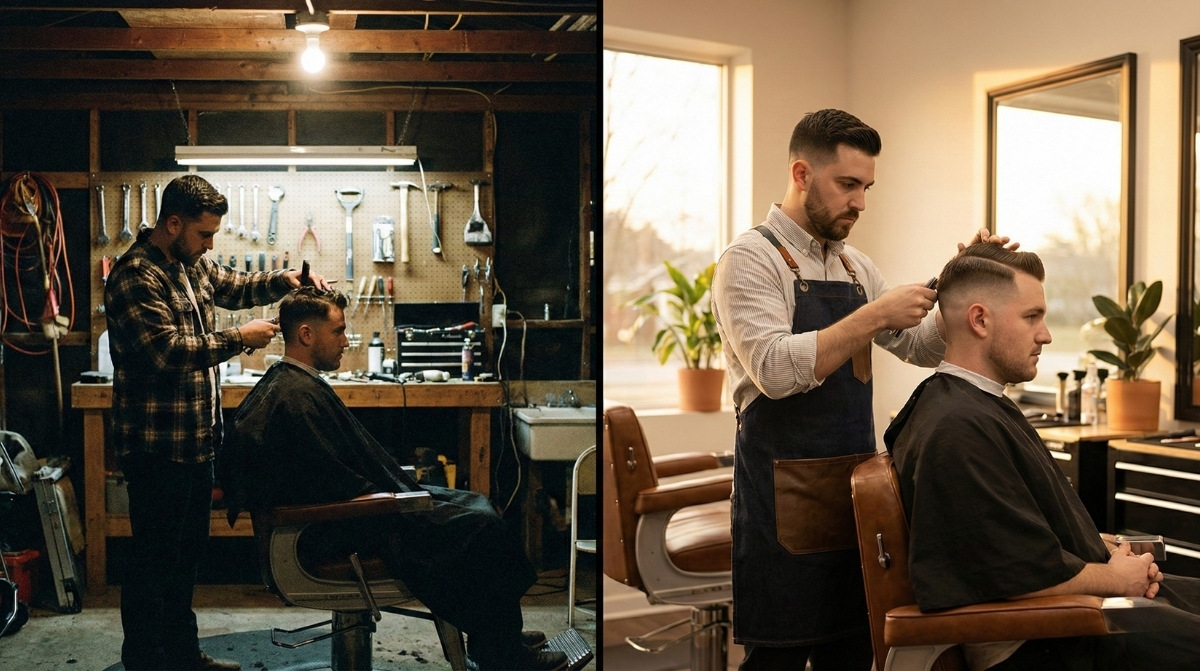
A split-screen cinematic photo showing a barber's transition from a rustic garage workspace with hanging tools to a modern, high-end barbershop with professional lighting and equipment. Most people view barber license requirements as a hurdle to clear. I want you to look at them as a moat that protects your income. According to the 2026 updates from the IDFPR, the barbering license requirements have shifted to include mandatory training in texture equality and skin growth detection. When you meet these standards set by the board of barbering and cosmetology, you aren’t just getting a permit; you’re gaining a legal shield. In a world of DIY influencers, your status with the barbering and cosmetology board tells the public - and your insurance provider - that you are a high-skill professional trained to spot medical issues like abnormal skin growths before they become a crisis.

What Licensing Requirements Usually Include (The Parts Nobody Spells Out)

This is the “deep” part most articles skip. While every state has its own rules, most licensing pathways boil down to a predictable checklist:
  • Eligibility basics: age minimum, ID, and sometimes a health form or background questions.
  • Training hours: through a board-approved barber school or an approved alternate pathway (apprenticeship/experience) where allowed.
  • State-required safety coursework: many states require specific sanitation or health-related courses separate from your core training.
  • Application package: proof of training/hours, forms, fees, and sometimes school verification signatures.
  • Exam(s): written theory nearly everywhere, and a practical exam in some states.
  • License issuance + display/renewal: once issued, you maintain it and comply with posting rules (and if you own a shop, you may need a separate shop license too).
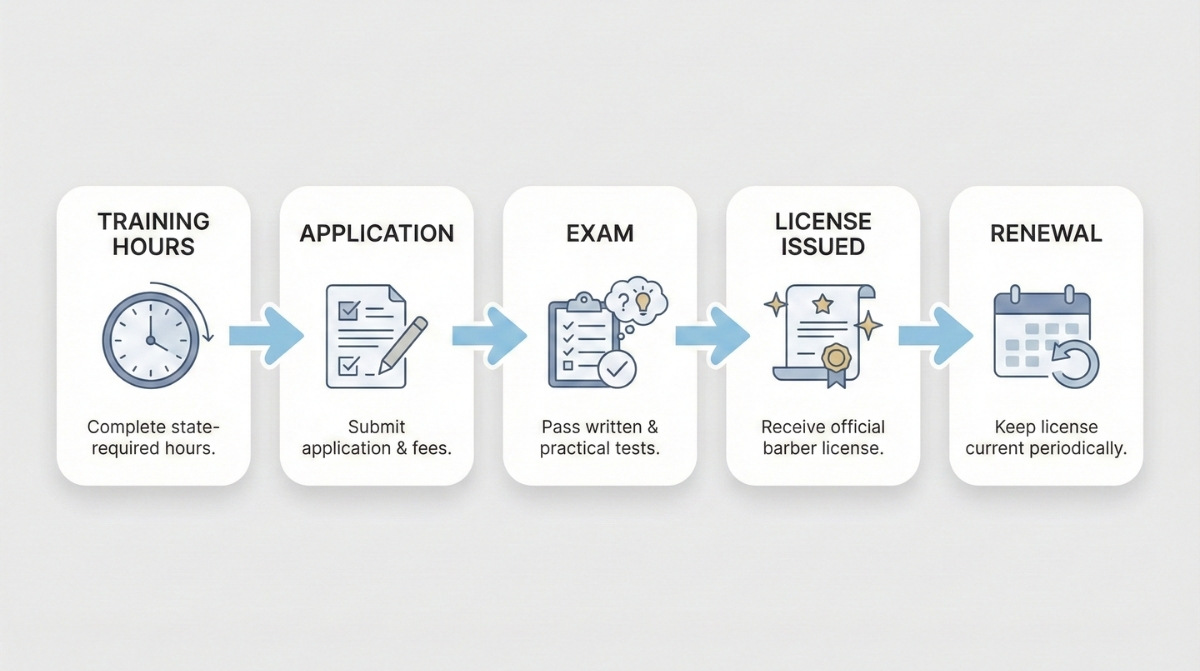
A clean, modern infographic showing the 5-step barber licensing process: training hours, application submission, written and practical exams, receiving the license, and periodic renewal. To make this concrete: Florida’s own DBPR checklist for barber applicants describes routes tied to school hours and competency, and points applicants to the barber written exam candidate booklet after the application is submitted/approved. New York’s “Become a Barber” page explicitly calls out age 17+ (this may differ depending on each state) and requires a Health Certification completed by a physician/PA/NP with timing rules on submission. And California is currently written-only for licensure (no practical exam required), which shows how much states can differ.

Conquering "Performance Anxiety" on Exam Day

The most common fear I hear is about the state board exam for barbering. People worry that a written test can’t measure their skill. But the barbering exam in 2026 is designed to ensure you can protect both your client and your career. If you’re stressed about how many questions are on the barber exam, the structure is actually very manageable. According to the latest Board of Barbering and Cosmetology applicant guidelines, the written theory exam typically consists of 85 scored questions (with 10 additional non-scored "pre-test" questions to help the board calibrate future tests). You generally have about 120 minutes to complete it. But don’t miss the bigger point: not every state matches California. California removed the practical exam requirement (written-only), while other states still require a practical component for many applicants - so the first step is always to confirm your own board’s exam type before you buy prep materials or start stressing about the wrong thing. While 95 questions might sound like a lot, the exam isn't trying to see if you're a "good" artist - it's testing if you're a "safe" professional. The barbering state board weighs these questions heavily toward chemical safety and sanitation. As highlighted in the 2026 Sunset Review Report, the Board’s primary mission is preventing "consumer harm," such as scalp burns from improper chemical applications or the spread of infections. Passing this test proves you have the exact knowledge that prevents career-ending lawsuits.

The ROI of "Going Legit"

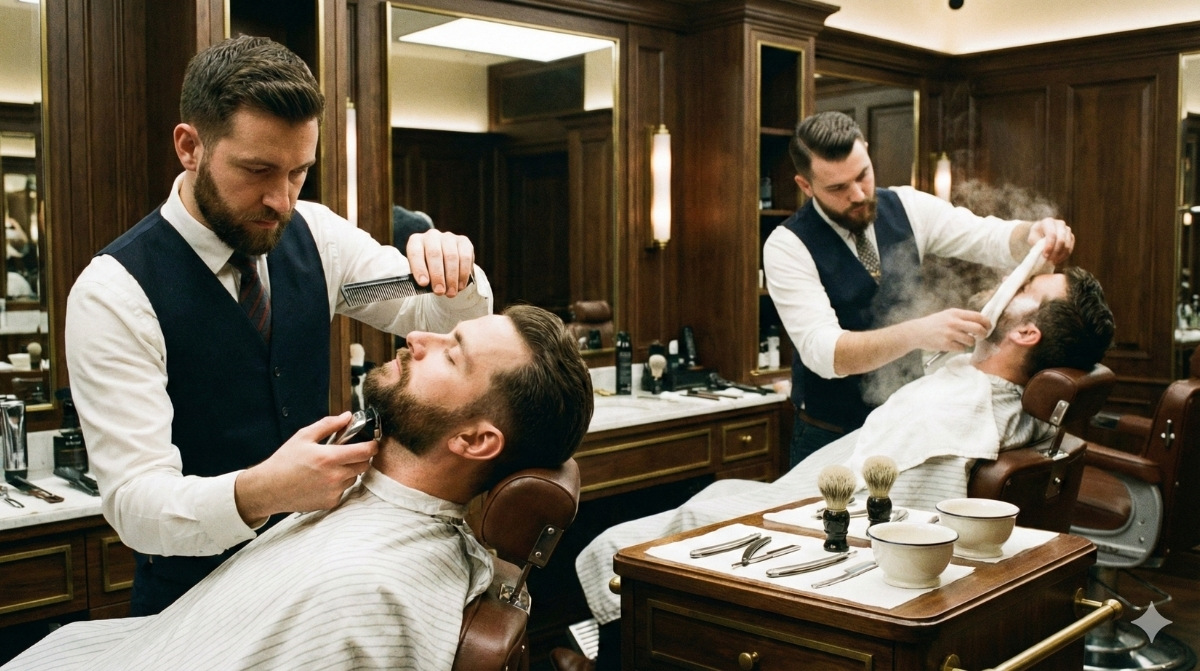
Let’s get real about the barbering license cost. It’s easy to see the tuition and get sticker shock. However, I want you to calculate the "cost of missed opportunity." While you might wonder how long it takes to get a barber license, consider that a 12-month program is the only thing standing between you and high-profit services. Data from BusinessDojo’s 2026 Industry Report reveals that while standard cuts have a 55% margin, specialized services like beard sculpting and hot shaves - which require a license to perform legally - boast margins of over 80%. In 2026, the average licensed professional earns significantly more because they can offer the full service menu. A professional barber performing precise beard sculpting on a relaxed client alongside a traditional hot towel straight-razor shave preparation in a luxury barbershop setting. The hidden ROI isn’t just “charge more.” It’s that being licensed unlocks:
  • Commercial leases and suites
  • Insurance eligibility
  • Higher-end platforms and payment processors
  • Vendor relationships and pro pricing
  • Hiring legally (and not risking your whole shop because one person isn’t legit)
One more angle you can add here: the license doesn’t just let you sell more services - it lets you scale without living in fear of inspections, fines, and getting shut down.

Is it Illegal to Work as a Barber Without a License?

You’ll always find someone asking if they can "get by" without a license by cutting hair in their garage or basement. While it might seem like an easy way to start, the reality is that you are building a career on sand. In 2026, the legal and financial stakes for unlicensed activity are higher than ever.

1. You Face Criminal Charges and Heavy Fines

In the eyes of the law, barbering without a license isn't just a "shop rule" - it is a criminal offense. State boards use heavy fines to deter "garage" operations because they bypass the strict health and safety inspections required of legitimate shops. In Florida, unlicensed barbering is treated as a second-degree misdemeanor, and DBPR notes it must report criminal violations to prosecutors. Separate from criminal prosecution, DBPR may also issue administrative citations/fines for certain first violations (often up to $500). In New York, unlicensed barbering is a misdemeanor and, upon conviction, may be punishable by up to 6 months’ imprisonment and/or a fine up to $500 (each violation can be treated as a separate offense).

2. The "Permanent Ban" Risk

This is the part most "garage barbers" don't realize: if you get caught working illegally now, the Board may permanently deny your application for a license later. Regulatory bodies like the Texas Department of Licensing and Regulation have the legal authority to deny licenses to anyone who lacks "good moral character" - and they often define working illegally as "obtaining a license by fraud or false representation." You could be banned from the professional industry for years just for trying to skip a few months of school.

3. Total Financial Liability

As a professional, you need liability insurance. No insurance company on earth will cover an unlicensed barber. This means if a client has a bad reaction to a product or gets a minor infection from an unsterilized tool, you are personally liable for their medical bills. Without a license, you have no legal defense, and a single lawsuit can result in a court-ordered judgment that garnishes your future wages for the rest of your life.

4. Locked Out of the Modern Industry

In 2026, the industry has gone digital. According to Boulevard’s 2025 Trend Benchmarks, nearly 50% of all professional bookings now happen through digital platforms after-hours. If you aren't licensed, you are locked out of these professional systems, you can’t get business insurance, and you can’t sign a commercial lease for a shop or a suite. You aren't "beating the system" - you're just capping your income at a fraction of what a professional makes.

Before You Can Get Licensed, You Have To Put In The Hours

Before you ever touch a “real” barber license, most states require you to earn training hours first - and this is where a lot of talented underground barbers get stuck. It’s not enough to be good. The board wants proof you’ve put in structured time learning the fundamentals that protect the public: sanitation, infection control, straight-razor safety, skin/scalp basics, and the rules that keep a shop compliant. That’s why the smartest move isn’t just “studying for the exam.” It’s choosing a program that gets you through the required hours and makes those hours feel like real barbershop training - not busywork.

The Atlanta Beauty & Barber Academy Difference: “Salon Ready” Barber Training

At Atlanta Beauty & Barber Academy, our approach is simple: you don’t just log hours - you become Salon Ready. You train in a real-world environment where you build the habits that employers and clients actually care about: professional service standards, consistency, speed, client communication, and the safety routines that separate a hobbyist from a working professional. And you’re not figuring it out alone - our student services emphasize job readiness skills like resume writing and job-seeking preparation, so you’re preparing for your first paid chair from day one.

Your Main Path: Barbering

If barbering is your lane, start here:
  • Master Barber Program – built around the training you need to move from “underground” to licensed and employable, with core focus areas like sanitation, straight-razor shaving, haircutting, and barbershop professionalism.

Optional Add-Ons Later: Other Programs You Can Stack On Top

Once you’re established, some barbers branch out to increase their income or open more doors. The Academy also offers:
  • Master Cosmetology
  • Esthetician
  • Nail Technician
  • Instructor Training
  • Select certificate programs (like waxing/threading, depending on availability)

Want To See What “Salon Ready” Looks Like In Person?

If you’re serious about getting licensed the right way - and you want a school that turns your required hours into real career momentum - use the contact form below to leave your information (one of our members will contact you as soon as possible). Come see our training floor and how we’ve been helping students build careers for 20+ years - this isn’t just a program, it’s a legacy you can step into.

Barber School Cost, Length, and Entry Requirements Explained

I’ve been around the beauty and grooming industry long enough to know that the spark usually starts with a single video or a great conversation in a local shop. You see the craft, the community, and the freedom, and you think: "I want in." But then, the "adult" side of your brain takes over. You start worrying about the tuition, the time commitment, and whether you even meet the requirements to enroll. If you’re feeling a bit overwhelmed by the logistics, take a breath. While these details are vital, they are just one part of a larger journey. If you want to see how these pieces fit into the bigger picture, you can explore our step-by-step career guide on how to become a barber. Otherwise, let’s strip away the confusion and dive into the specifics of starting your journey in 2026. A professional barber in a brown apron performs a precise fade haircut on a client in a sunlit, modern barbershop with diverse customers and clean, minimalist stations.

Understanding the Financial Investment

Let’s get the "money talk" out of the way first. When you’re looking at a barbering academy or a local barber college, the price tag can vary wildly. According to recent data, you’re looking at anywhere from $10,000 to $25,000 for the full program. Why such a big gap? It usually comes down to location and the prestige of the school. A high-end academy in a major city might cost more, but they often provide high-traffic clinic floors where you get more "chair time." At Atlanta Beauty & Barber Academy, we believe in being transparent about your investment. We know that high-end city academies often reach the top of that national range, which is why we offer competitive rates tailored to get you into the workforce without unnecessary debt. For our Master Barber program, we provide a professional education for a total course cost of $8,400, which includes your tuition, books, kit, and fees. For those who can pay up-front, we even offer a pay-in-full discount price of $7,250. You can always check our current, detailed tuition breakdown in our official student catalog.

Beyond Tuition: The Hidden Costs

One thing I always tell my students to budget for is their gear. Most barbering courses require you to purchase a professional kit. Expect to spend between $1,000 and $3,000 on quality clippers, shears, and razors. It feels like a lot upfront, but these are the tools that will earn you your living for years to come.

Can You Get Financial Help?

Hands holding a tablet displaying a financial aid interface next to barber scissors, a comb, coins, and an icon-labeled envelope on a grey background. I often hear people ask, "Do you get paid for barber school?" Unfortunately, no—you’re the one paying for the education. However, you don't always have to pay out of pocket.
  • Federal Aid: Most accredited schools allow you to apply for financial aid for barbering school via FAFSA.
  • Grants: For the 2025-2026 academic year, the maximum Pell Grant is $7,395. Since these are grants, they generally don't need to be repaid.

The Time Commitment: How Long Will You Be in School?

The most common question I get is: "How long does it take to learn barbering?" In this industry, we don't measure time in months; we measure it in hours. Every state has its own "magic number" of hours you must complete before you can sit for your license exam.
  • The Sprints: In states like Oregon, you might only need around 750 hours.
  • The Standard: Most states, including California and Texas, land at the 1,000-hour mark.
  • The Marathons: A few states, like Michigan, still require 1,800 hours.

Fitting School Into Your Life

I know many of you are balancing jobs or families. At our school, we offer flexible schedules to make it work:
  • Day Classes: Typically 26 hours per week, allowing you to complete the program in about 40 weeks.
  • Evening Classes: Often 18 hours per week, designed for those working day jobs, taking about 58 weeks to finish.

Entry Requirements: Is the Door Open for You?

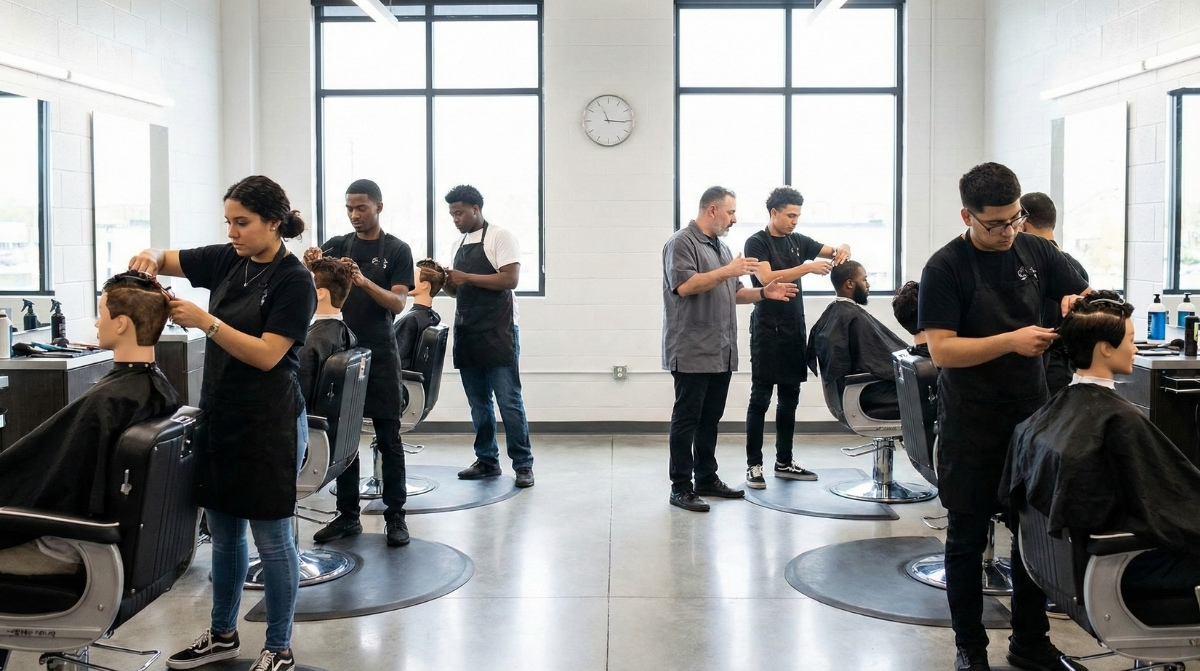
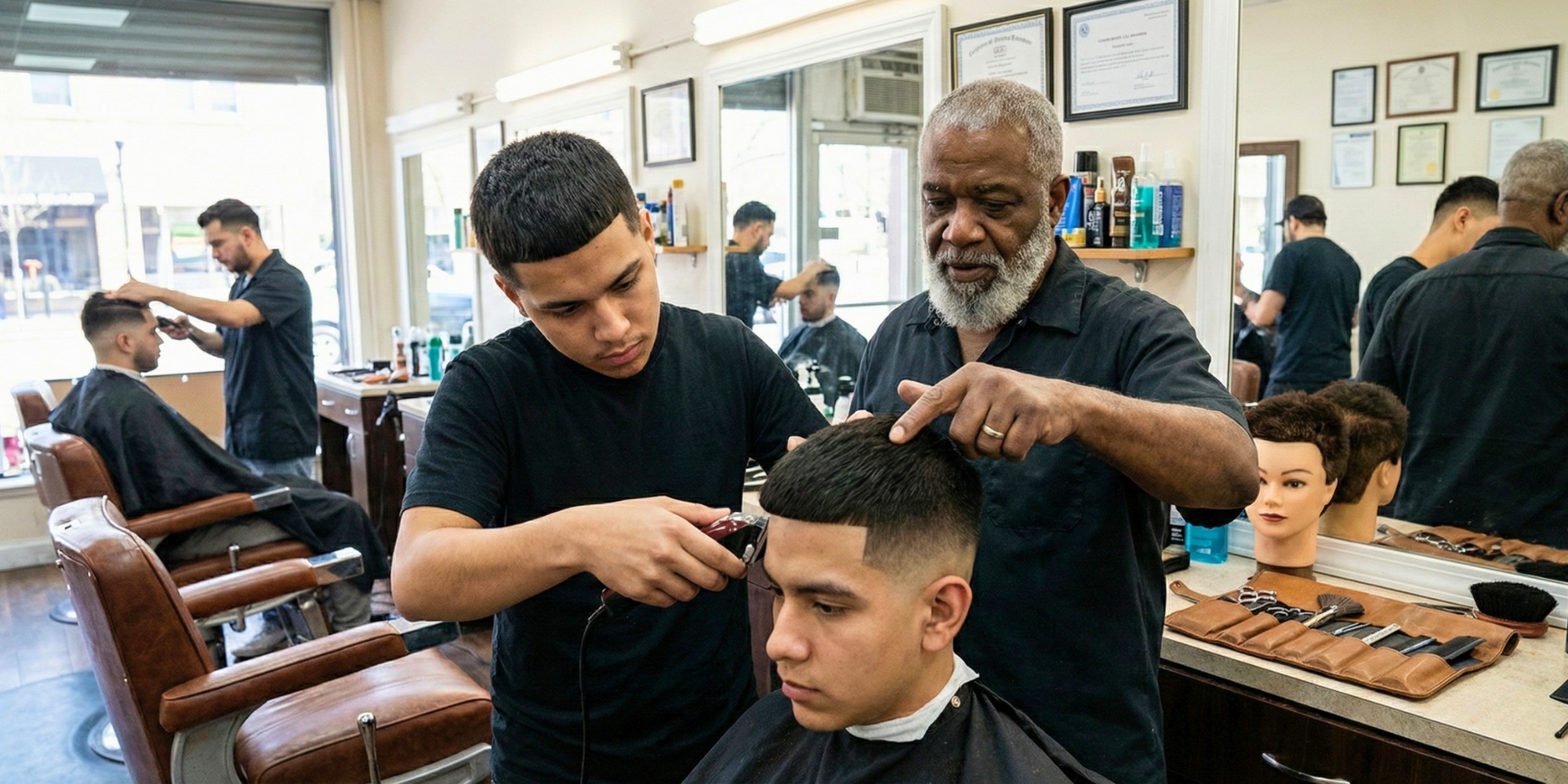
Barber students practicing hair cutting techniques on mannequins and real clients under the supervision of an instructor in a bright, modern clinic. I’ve met incredibly talented people who were afraid to apply because they didn't finish high school. I want to clear that up right now: your past doesn't have to dictate your future in this trade.
The Diploma Hurdle

Can you go to barber school without a high school diploma or GED? In many cases, yes. Many schools use what’s called an "Ability to Benefit" (ATB) test. If you can pass this basic exam, you’re in. Some programs even let you work on your GED and your barber course at the same time.

Starting Young

If you’re looking into barber school under 18, you’re actually ahead of the curve. States like Texas allow you to start as early as 17. Starting early means you could be a fully licensed professional by the time your peers are just starting college.

Your Future at Atlanta Beauty & Barber Academy

We aren't just a school; we’re a launchpad for your creative-entrepreneurial career. Led by experts with over 80 years of combined experience, we provide a transformative learning environment rooted in real-world success. Our Master Barber program isn't just about passing a test; it's about becoming a professional. When you join our family, you gain access to:
  • State Board Prep: Weekly training specifically designed to help you ace your Georgia licensure exam.
  • Diverse Career Paths: Our graduates go on to become shop owners, film stylists, sales representatives, and even instructors.
  • Comprehensive Skillset: You will master haircutting, coloring, shaving, and even business management skills to ensure you are "salon ready" from day one.
Are you ready to turn your passion into a career? Fill out the contact form right below this article, and one of our advisors will reach out to help you find the best schedule and financial plan for your future.

How To Become A Barber: A Step-By-Step Career Guide

If you’re thinking about becoming a barber, you’re usually juggling two things at once: the practical steps and the emotional risk. You want a clear path, but you also want to know you won’t waste time, money, or confidence. I’ll walk you through what barbering is really like, how licensing typically works in the U.S., how to choose a training path, and what the learning curve (and income reality) usually looks like.

Introduction To Barbering: What This Career Really Looks Like

Barbering is a skilled service profession. You’re not only “cutting hair.” You’re delivering a result that has to look good in the mirror and feel good to the client - every time. In real life, the job includes:
  • Technical craft: fades, tapers, scissor work, clipper control, lineups, finishing
  • Hygiene and safety: sanitation rules, disinfection, clean setups (this is taken seriously and tested)
  • Client experience: consultation, managing expectations, building loyalty
  • Stamina: standing, repeating precise movements, staying focused all day
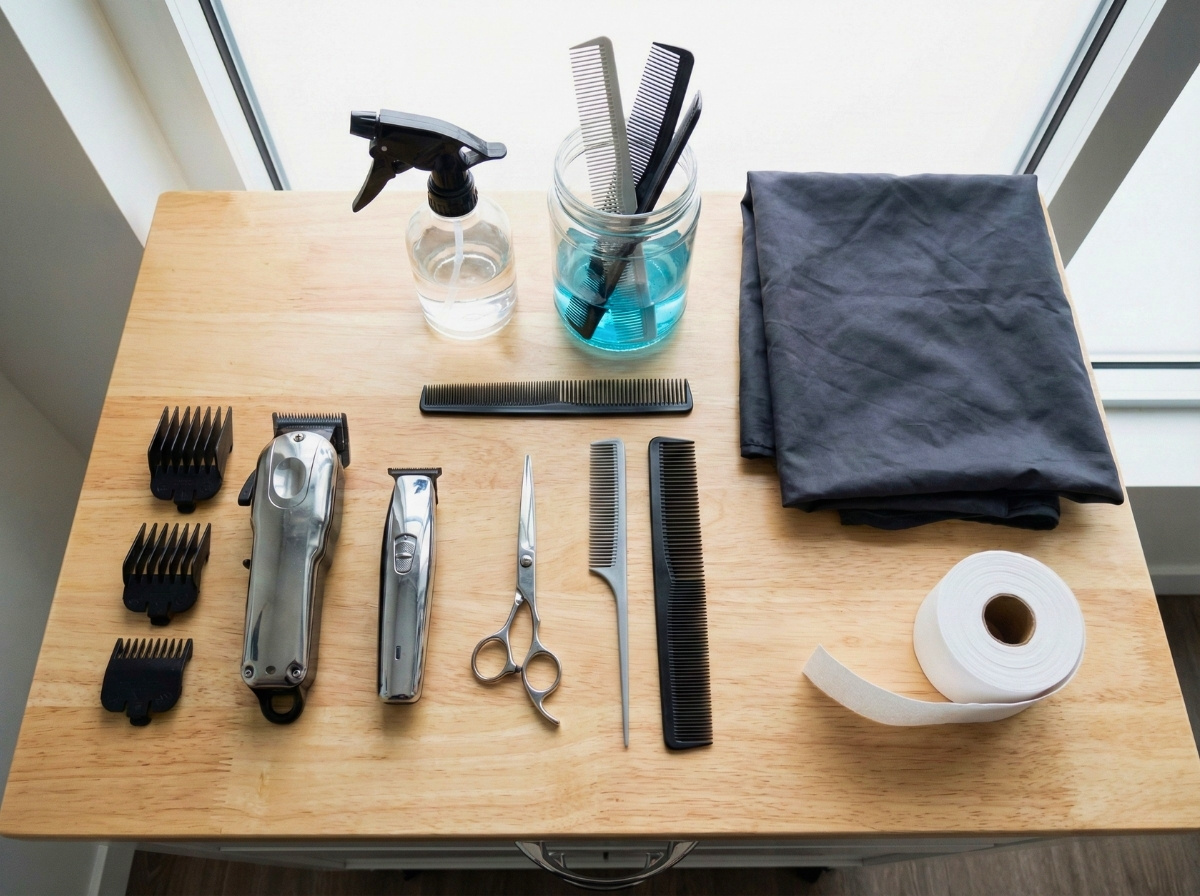
On the career side, the U.S. Bureau of Labor Statistics (BLS) includes barbers in its Occupational Outlook Handbook and gives a reliable national snapshot of pay and demand. It’s not a promise of what you will earn, but it’s a trustworthy baseline. A high-quality flat lay of professional barber tools including chrome clippers, trimmers, shears, and styling combs neatly arranged on a clean wooden table with bright natural lighting.

Should You Get Into Barbering? A Realistic Fit Check

Barbering is a trade in the best sense: you learn a hands-on skill, you improve through practice, and you’re usually required to meet licensing standards. I’d seriously consider barbering if you relate to these:
  • You like getting better through repetition (same skills, cleaner every time)
  • You’re okay being a beginner for a while
  • You can handle people time (even if you’re naturally quiet)
  • You want a career where effort turns into visible improvement
You may want to rethink it (or at least plan carefully) if:
  • You need quick “expert” results
  • You strongly dislike customer-facing work
  • You get frustrated when improvement is slow and uneven
Small example that shows the real job: A client says, “Give me a low fade.” A newer barber may jump in. A professional pauses and asks two quick questions:
  1. “Do you want skin at the bottom or keep it darker?”
  2. “How high should the fading go around the temples?”That short conversation prevents most beginner mistakes - and builds trust fast.
A bearded barber in a denim apron smiles while showing a haircut reference photo on a tablet to a happy Black client in a patterned shirt during a consultation in a bright, modern barbershop with wooden stations and white subway tiles.

Is Barbering Worth It? Pay, Demand, And The Ramp-Up Reality

Let’s talk numbers, because this is where people feel anxious.

What The BLS Pay & Outlook Data Actually Say

According to BLS, the median hourly wage for barbers was $18.73 in May 2024. If you translate that into a simple full-time estimate (40 hours/week), that’s roughly $38,958 per year - but that math is just a conversion and doesn’t capture tips, pricing, commission/booth rental models, or self-employment swings. BLS projects overall employment for barbers, hairstylists, and cosmetologists to grow 5% from 2024 to 2034, and it estimates about 84,200 openings per year on average across the combined group.

The Part Statistics Can’t Tell You

Your personal “worth it” depends on:
  • Your location and local pricing
  • Your speed and consistency
  • Your ability to retain clients (rebooking is everything)
  • Your work model (employee vs commission vs booth rent vs self-employed)
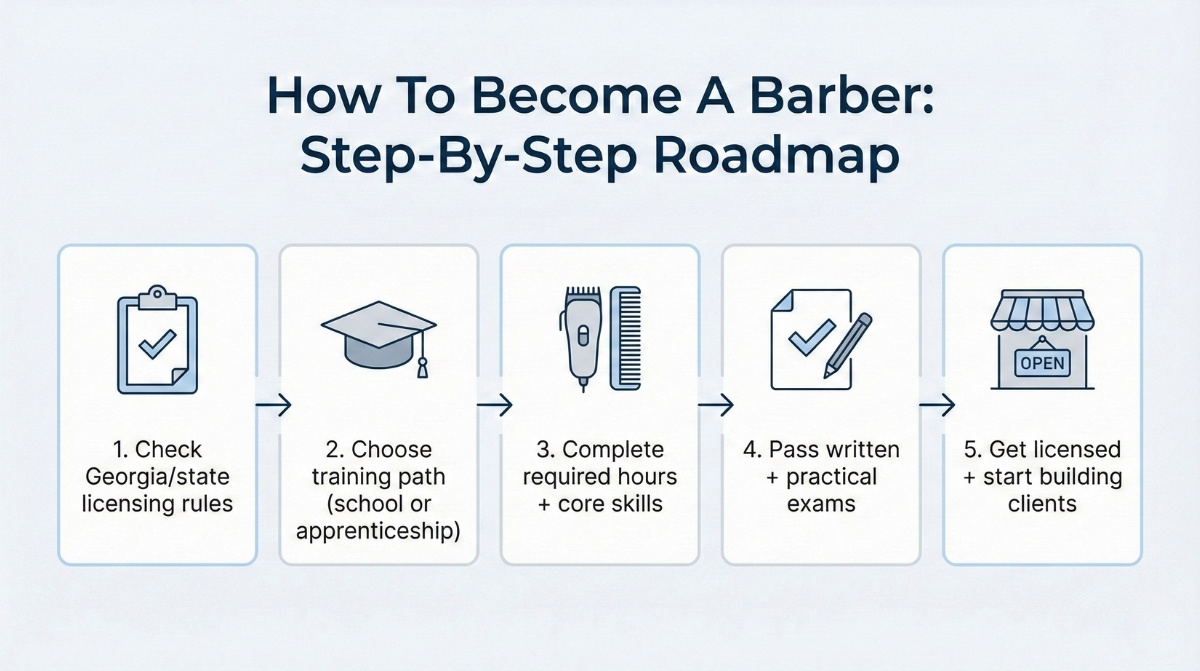
So yes - barbering can be worth it, but it’s usually not instant. Most people build momentum in stages. A clean, minimalist 5-step infographic titled "How To Become A Barber: Step-By-Step Roadmap" featuring icons for licensing rules, training paths, core skills, exams, and client building on a white background.

Steps To Becoming A Barber: The Simple Roadmap That Works In Any State

Here’s the clean truth: the exact requirements vary by state. But the structure is similar almost everywhere.

Step 1: Check Your State Licensing Rules First (This Prevents Expensive Mistakes)

Before you choose a school or shop, go straight to your state’s barber/cosmetology board site and confirm:
  • Approved training options (school and/or apprenticeship)
  • Required hours (if listed)
  • Exam requirements (theory, practical, or both)
  • Application steps
  • Rules if you move states later
Why I’m firm about this: licensing is not a vibe - it’s regulated. If you plan to move later, it’s smart to learn how reciprocity/endorsement works. Pennsylvania, for example, explains that if you’re licensed in a state without a reciprocity agreement, you may need an endorsement examination (theory-only) and a certification letter from your current state board; otherwise, you may need to complete both theory and practical exams.

Step 2: Choose Your Training Route (School Vs Apprenticeship)

Most people enter one of two ways: Barber School
  • Structured curriculum and tracked progress
  • Usually strong on sanitation/theory and exam prep
  • Often a smoother path if you want a clear routine
Apprenticeship (Where Allowed)
  • Real shop repetition (you learn with real pace and real clients)
  • Mentorship can be powerful if the trainer is excellent
  • Some states explicitly allow earning while training under an approved program
For example, California’s Board of Barbering and Cosmetology describes an apprenticeship program that allows an apprentice to earn a wage while studying under the guidance and supervision of a board-licensed trainer in a licensed establishment. A practical way to decide:
  • If you learn best with structure → school often fits better.
  • If you learn best by doing all day, and you can get into a legitimate approved program → apprenticeship can be a strong option.

Step 3: Build The Core Skill Stack (This Is How You Become “Qualified” In Real Life)

Being a qualified barber isn’t only “I finished training.” It’s “I can consistently deliver.” Focus on:
  • Sanitation and safe habits (this is where many beginners get sloppy)
  • Clipper fundamentals (angles, guard control, blending)
  • Basic scissor control (shape, balance, clean finish)
  • Lineups/detailing (precision without pushing too hard)
  • Consultation skills (so you cut what they mean, not what they said)

Step 4: Pass Your Exams (And Treat Sanitation As A Major Topic)

Exams vary by state, but most include theory and/or practical testing. Your state board (or its approved testing provider) will outline what’s required and how to register.

Step 5: Get Licensed And Start Working (The Real Learning Starts Here)

Once you’re licensed, your early goal is simple:
  • Be consistent
  • Get faster without getting sloppy
  • Build repeat clients

Is Barbering Easy To Learn Or Hard To Learn?

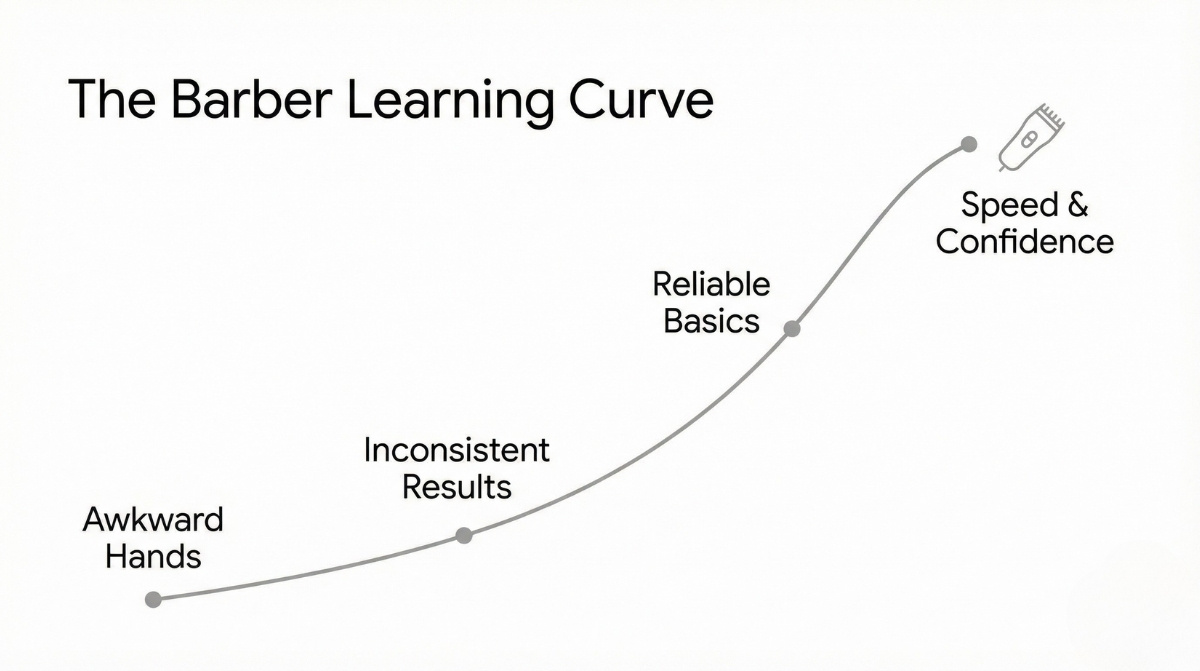
Both statements can be true. It’s easy to start, because the basic tools and concepts are learnable. It’s hard to master, because every head is different, and clients bring pressure. A realistic learning curve often looks like:
  1. Tools feel awkward
  2. Results are inconsistent
  3. You get reliably “clean”
  4. You get clean and fast
If you’re worried you’re “not talented,” here’s the good news: barbering rewards discipline more than talent. A minimal line chart titled "The Barber Learning Curve" illustrating the four stages of professional barbering skill development: Awkward Hands, Inconsistent Results, Reliable Basics, and Speed and Confidence.

How To Learn Barbering Faster Without Cutting Corners

When people want to learn fast, what they usually want is a plan that feels controlled. What actually speeds you up:
  • Repeating fundamentals (same patterns until your hands don’t panic)
  • Getting feedback (mentor, instructor, senior barber)
  • Practicing consultation (because mistakes often start before the first clipper touch)
Simple weekly structure (example):
  • 2 practice sessions: blending drills
  • 1 session: scissor basics (shape + balance)
  • 1 session: lineups and finishing work
  • 1 session: consultation practice using photos and clear questions
Consistency beats intensity.

Learning At Home Or Online: What Helps, And What To Watch Out For

Home and online learning can be a strong head start - especially for tool comfort and fundamentals. Great at-home focus areas:
  • Mannequin drills for blending and control
  • Tool handling and guard transitions
  • Studying sanitation theory and your state rules
  • Practicing consultations with haircut reference photos
The important caution: licensing rules still apply, and most states require approved training and exams. So think of home/online learning as “prep + support,” not the whole path.

Your Next Step: Train With Us At Atlanta Beauty & Barber Academy

If you’re reading this and thinking, “Okay… I’m serious. I just need a clear path,” that’s exactly what we help with at Atlanta Beauty & Barber Academy.

Our Master Barber Program Is Built For Georgia Licensure

In Georgia, barbering requires 1,500 hours for licensure - and our Master Barber program is designed around that requirement. Inside the program, we don’t only teach you “how to cut.” We train you like a working professional, combining theory and hands-on practice across the skills that matter most for the license exam and real shop life - cutting, styling, shaving, chemical services, sanitation, professionalism, and salon management. What that means for you (in real outcomes):
  • You build a strong foundation in core barbering services (not random trends)
  • You learn sanitation and safety the right way (this is a major part of testing and professional standards)
  • You practice the client experience side of barbering - consultations, communication, and consistency - so you’re not shocked when you start taking real clients

You’re Not Locked Into One Career Path After Barber School

One thing many future barbers don’t realize: barbering can open multiple doors over time. With the right training and license, you can build toward paths like:
  • Shop barber (employee, commission, or booth rental - depending on the shop model)
  • High-retention, appointment-based barber with a loyal clientele
  • Specialty services (like straight-razor shaving where allowed, or hair enhancement work as you advance)
  • Long-term growth into instructor training when you’re ready to teach (we offer Instructor Training as well)
And if you love the wider beauty industry, we also train students in Master Cosmetology, Esthetics, Nail Technology, and Instructor training, which can support a more flexible career strategy over time.

What We Can Help You Do After You Enroll

When people feel stuck, it’s usually because they don’t know how to turn “interest” into action. Our admissions team guides you through the enrollment process and required documents, so you can focus on your goal instead of guessing your next move. If you have questions - about start dates, schedule fit, program details, or what barbering looks like in Georgia - reach out. If you’re interested, just leave your info in the contact form right below this article and we will get you in touch. After that, you can tell us:
  • Whether you’re starting from scratch or switching careers
  • Your weekly availability
  • Your goal (barber shop job, building clientele, long-term shop ownership, etc.)
We’ll help you map out a plan that feels realistic - and gets you moving!