If you’re here, you probably have the same mix of excitement and stress I see all the time in beauty: you know you’re meant to work with hair/skin/nails… but licensing feels like a maze.
Getting your cosmetology license is totally doable, but the steps can feel scattered online. I’m going to put everything in order, explain what changes by state, and help you avoid the common mistakes that slow people down.
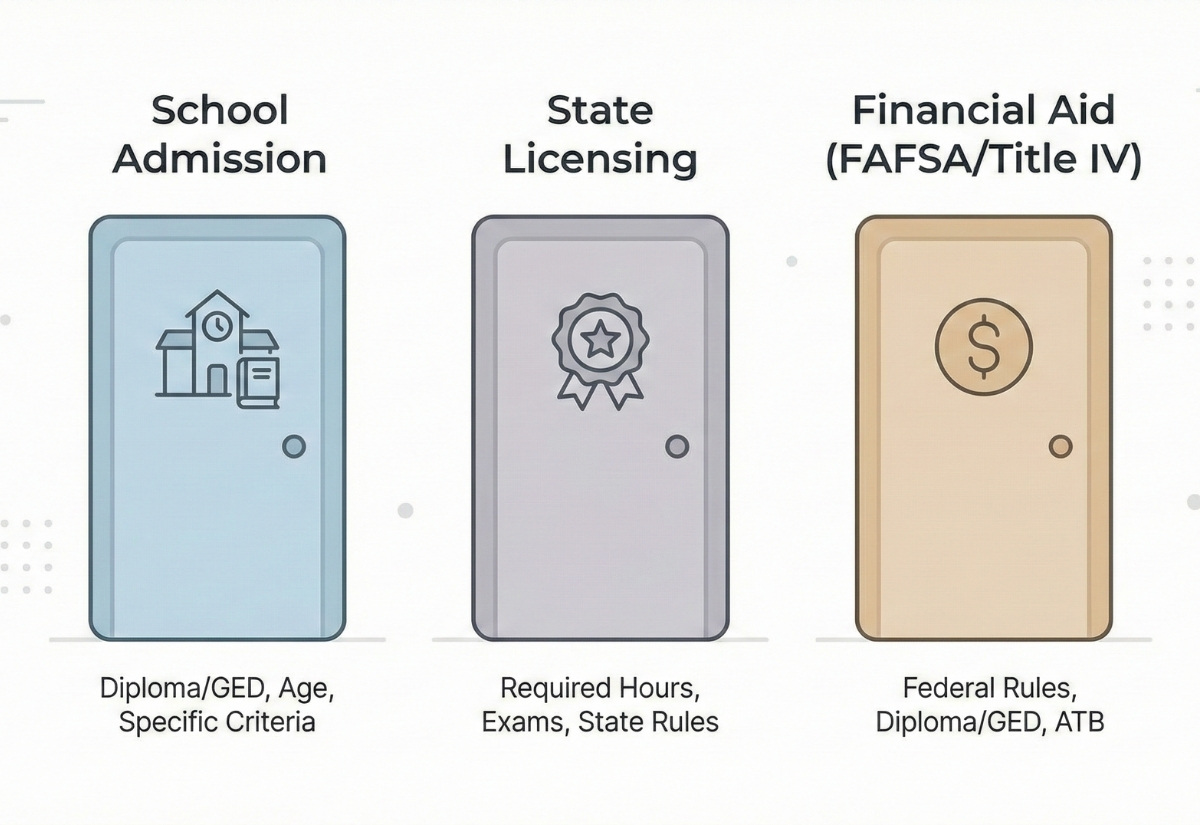
One quick truth before we start: cosmetology is regulated state-by-state. So the steps are similar everywhere, but the exact details (hour requirements, fees, exams) depend on your state board.
Confirm What Your State Actually Requires (Don’t Guess)
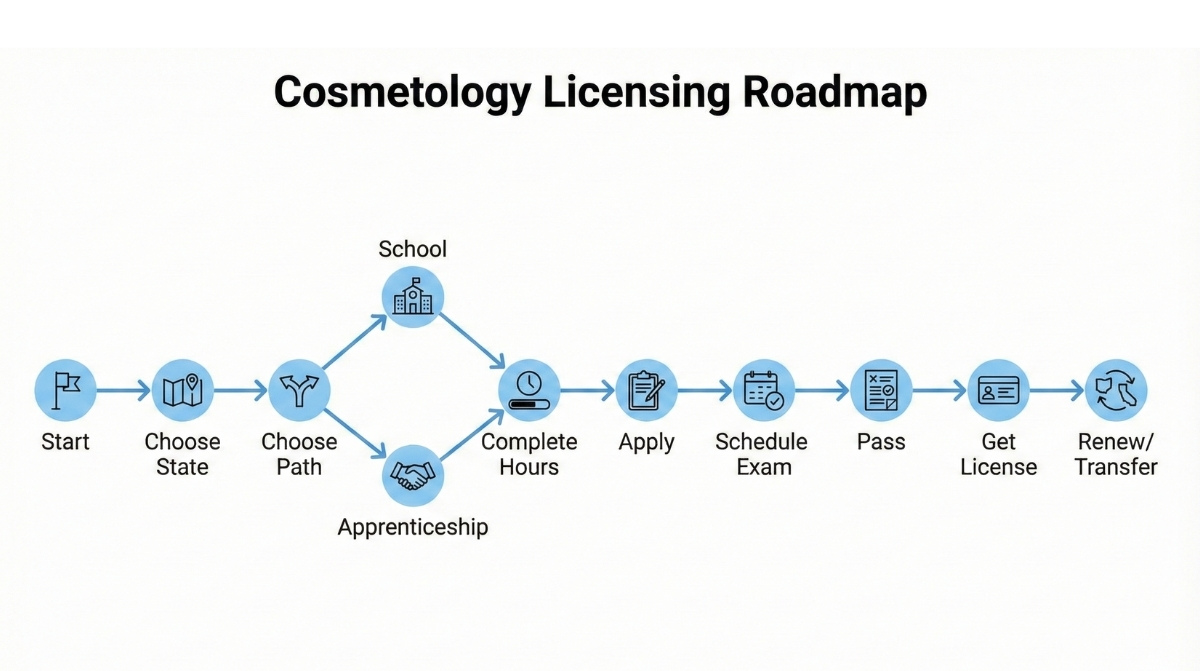
When people search “cosmetology license requirements” or “cosmetology requirements by state,” what they really want is certainty:
“What do I need to do so I don’t waste time or money?”
Start here:
- Find your state board’s website (the Board of Cosmetology / Barbering & Cosmetology / Dept. of Professional Regulation).
- Look for: training hours, exam type (written/practical), application steps, fees, renewal rules.
California requires at least
1,000 hours of instruction for a cosmetology program approved by the Board.
Virginia implemented a
1,000-hour cosmetology curriculum requirement (effective Dec 1, 2025).
If you’re asking how many hours you need for cosmetology, this is the only safe approach: verify your state’s rule directly, because hours change.
Choose Your Path (School Route vs. Apprenticeship Route)
This is the big fork in the road.
Path A: Traditional Cosmetology School
This is the most common route: enroll in a state-approved school, complete the required hours, then test and apply.
How to enroll in cosmetology school (practically speaking): Pick only schools that are approved by your state board (and ideally accredited if you want federal aid). Boards often publish student/school guidance and minimum curriculum requirements (like California does above).
Path B: Apprenticeship (How “Without School” Usually Works)
When people search “get cosmetology license without school,” they often imagine skipping training entirely. In reality, “without school” usually means
apprenticeship training + required related instruction, and only some states offer this path.
At the federal level, a
Registered Apprenticeship is a formal model that includes paid work experience, mentoring, and classroom instruction, leading to a portable credential.
For example,
California has had an apprenticeship route in the beauty space; it’s been highlighted as a lower-cost alternative for some trainees.
If you want this route, your first move is not Google - it’s your state board and your state apprenticeship agency (or
Apprenticeship.gov’s search resources).
Plan Your Timeline (How Long It Takes)
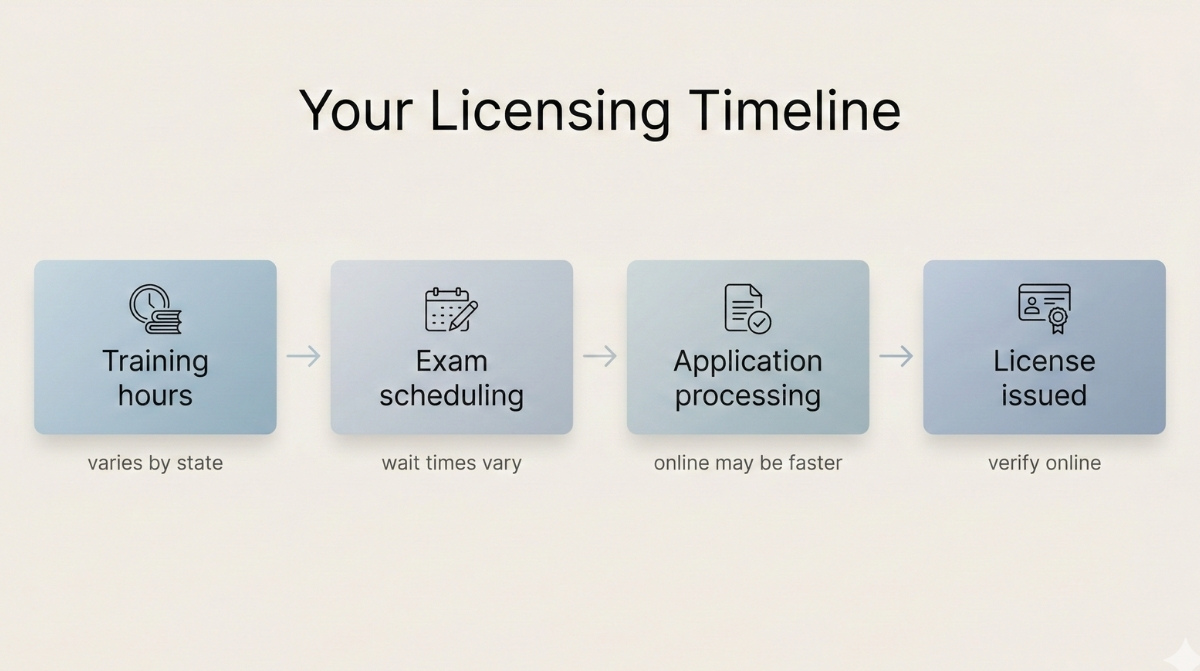
When someone asks, “how long does it take to get a cosmetology license,” they’re usually trying to plan life around it: rent, childcare, a job switch, immigration status, etc.
Your timeline usually looks like this:
Training time (hours required)
- School schedule (full-time vs part-time) or apprenticeship schedule
- Exam scheduling wait time
- Application processing time
For example, California notes that online applications are processed faster, and mailed applications can take
up to 8 weeks to process.
So if you’re worried about how long it takes to get your cosmetology license in the mail, the honest answer is: it depends on state processing speed and whether you apply online.
Understand Cost (And How People Actually Pay)
If cost is stressing you out, you’re not being dramatic. Beauty training can be expensive up front, and it’s frustrating because you’re investing before you’re allowed to earn.
Costs usually include:
Tuition + kit/supplies + exam fees + application/licensing fees + (sometimes) background check fees.
You’ll see a wide range by state and school. Some summaries of cosmetology school costs are published by large consumer finance sites, but treat them as “ballpark,” not law.
Paying For School With FAFSA (Only If The School Is Eligible)
A cosmetology program may qualify for federal student aid if the school participates in Title IV aid programs. The cleanest way to check is to search the school in the
Federal Student Aid school code search tool.
If you can’t find a school code,
Federal Student Aid explains it may mean the school doesn’t participate in federal aid programs.
Taxes: Can You Claim Cosmetology School On Taxes?
The
IRS says qualified education expenses must be for attendance at an
eligible educational institution, and it defines that broadly to include trade schools eligible to participate in a U.S. Department of Education student aid program.
(Translation: it depends on whether your school is considered “eligible,” and your personal tax situation.)
Apply For Permission To Test (Or Apply For The License)
A lot of people don’t fear the training - they fear the paperwork. One wrong form, one missing document, and suddenly you’re waiting weeks.
Here’s the pattern most states follow: Complete training → submit exam application / license application → get approval → schedule exam → pass → receive license.
For example,
California provides exam application instructions and checklists through the Board’s published forms.
California also uses
BreEZe (an online portal) for applications, renewals, address changes, and license verification.
Schedule The Cosmetology Exam (And Know What You’re Walking Into)
People usually aren’t scared of the knowledge - they’re scared of the pressure. “How hard is the cosmetology state board?” is basically: “What if I freeze and blow it after all this time?”
Many states use NIC-developed exams (written and/or practical). NIC publishes
Candidate Information Bulletins that outline what’s covered and how testing works.
Prometric (one of the exam vendors used in some places) also publishes practical exam bulletins with administration details.
What Actually Helps People Pass (Beauty-Pro Reality)
This is what I tell my own students and newer stylists: You don’t “study harder.” You practice like it’s a performance.
That means: You rehearse your setup, your sanitation steps, your timing, and your script.
Because in a practical exam, the easiest points to lose are usually procedural: infection control, labeling, disposal, and sequence.
A small but
real forum snapshot: people asking “how do I pass cosmetology state board exam?” often get unhelpful replies (“just study”), which tells me the real need is structured, step-by-step practice - not vague motivation.
Verify Your License (And Save Your License Number Like It’s Gold)
Once you’re licensed, you’ll need your license number more often than you think - job applications, salon onboarding, renting a booth, insurance, moving states.
Most states let the public verify a license online. Example:
BreEZe explains it enables consumers to verify a professional license and allows licensees to manage renewals and address changes.
Even after you pass, you’ll still need to verify your status now and then - especially when you apply for jobs, rent a booth, or move.
Renew On Time (And Know What “Expired” Really Means)
Renewal anxiety is real. People don’t renew because they’re lazy - they renew late because life gets loud, and then they panic.
New York explains that a cosmetology license is valid for four years and can be renewed online (starting 90 days before expiration).
Texas provides an online flow for renewing licenses and includes guidance for changes like name/contact info updates and disclosures (including criminal convictions).
Pennsylvania notes that if a license is expired for more than 5 years, state law requires retaking the examination to reactivate.
Florida “Null And Void” Reinstatement (The Scary One)
Florida explicitly addresses reinstatement of a null and void license and ties it to hardship/illness documentation.
If you’re reading this because your license lapsed, don’t spiral. Go straight to your state’s exact category: active, delinquent, expired, null/void, revoked. The fix depends on the label.
Transfer Your Cosmetology License To Another State (Reciprocity / Endorsement)
This is where people get blindsided.
When you move, you’re not “transferring” like a phone number. You’re usually applying for a new license in the new state based on:
- Your training hours
- Your exam history
- Your work experience
- Sometimes an extra state law exam or paperwork
Some boards will send official verification letters directly to another state board (
California describes what’s included in those letters and that they’re sent directly).
Some states are joining a licensure compact to reduce barriers for eligible cosmetologists.
Virginia notes it’s among states that enacted compact legislation and that the commission hopes to activate the compact for licensees in early 2026.
(That’s promising, but until it’s fully active everywhere, you still need to follow current board rules.)
Handle Special Situations (GED, Age, SSN/ITIN, Background History)
These are sensitive searches because people are worried they’ll be automatically rejected. Most of the time, it’s more nuanced than that.
Age And Education (GED/Diploma)
Many schools require a high school diploma or GED, but this varies by state and school policy. You’ll want the school’s admissions page and your board’s rules.
SSN Issues
California’s Board states it is authorized to accept applications with an ITIN in lieu of an SSN.
If you’re looking for a cosmetology license without an SSN, this is the kind of state-specific rule that can change your whole plan.
Felony Or Misdemeanor
Policies vary widely. Some states require disclosures and review on a case-by-case basis.
Texas’ licensing guidance includes a “Criminal Convictions” section in its renewal flow, which is a clue that they expect disclosure and evaluation rather than pretending it never happened.
If this is your situation, I strongly recommend contacting your board early so you don’t invest in training and get surprised later.
A Simple “Do This Next” Checklist (So You Don’t Get Overwhelmed)
- Pick your state → find the board website
- Confirm: hour requirements, exam type, fees, renewal rules
- Choose: approved school path or apprenticeship path (if available)
- Plan: timeline + budget + payment plan/aid
- Finish training hours
- Submit application (online if possible)
- Schedule exam
- Use the official exam bulletin as your study blueprint (NIC CIBs)
- Pass → verify your license online → store your license number securely
- Set a renewal reminder the day you get licensed
What You Can Do After You’re Licensed (And How We Help You Get There)
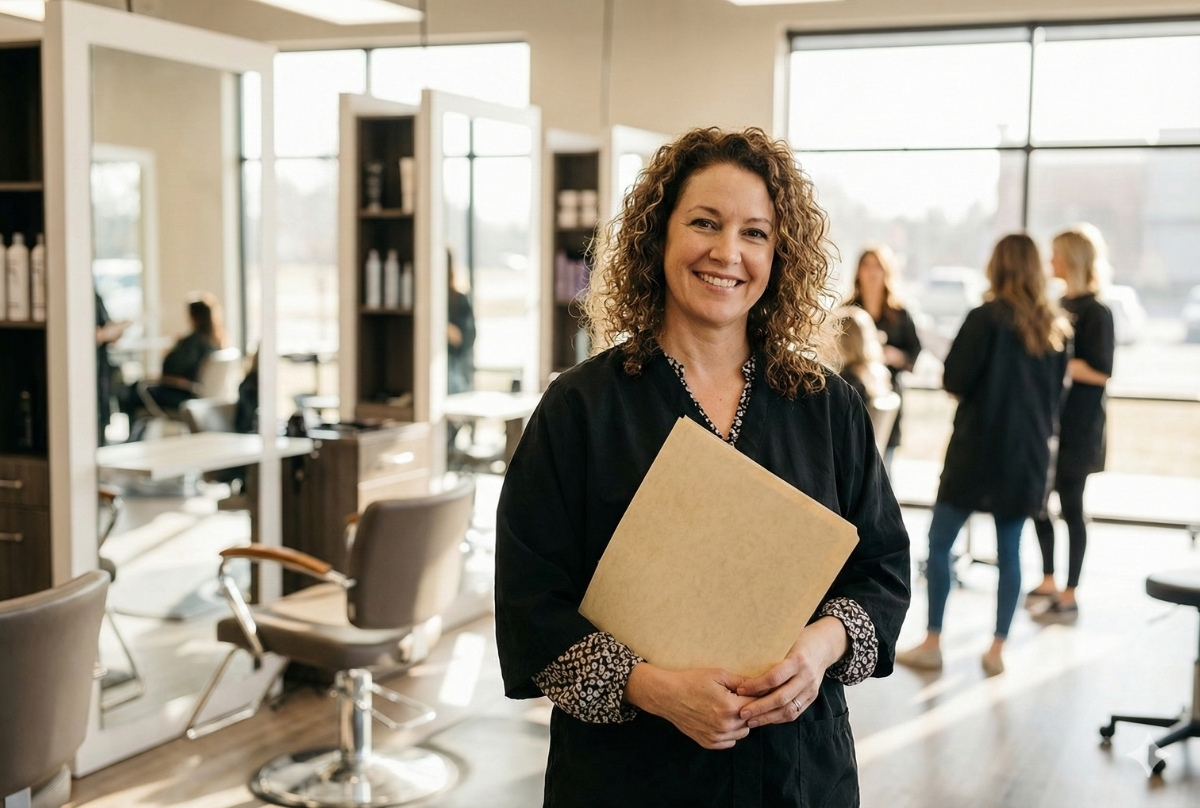
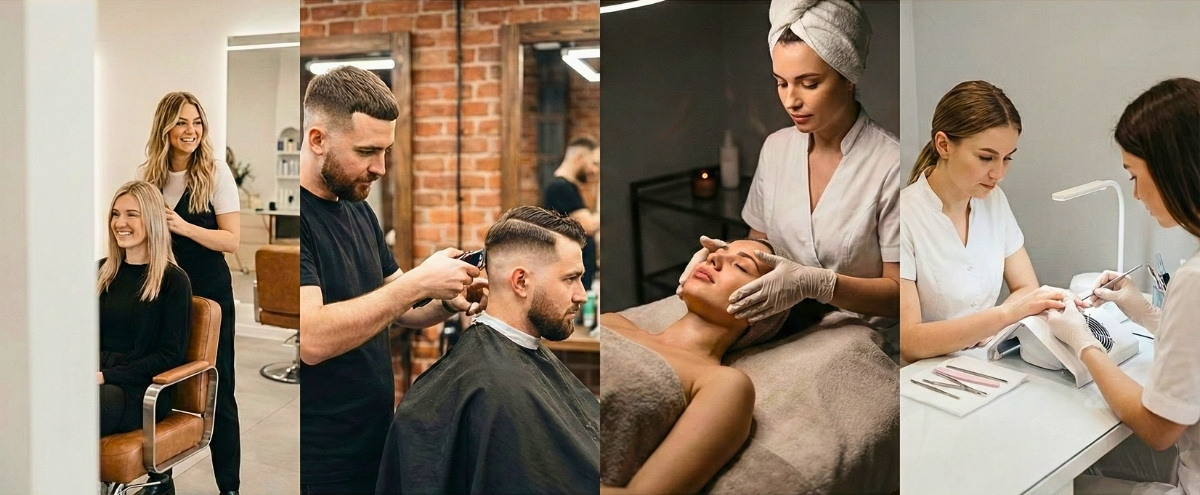
Once you earn your cosmetology license, you’re not limited to “just working in a salon.” Licensure can open doors in hair, color, makeup, retail, fashion/film styling, and more - depending on the direction you want to take.
At
Atlanta Beauty & Barber Academy, our goal is to help you go from “I want this career” to “I’m trained, licensed, and ready to get hired.”
We Train You For Georgia Licensure With A Clear, Structured Path
If your goal is to become a
Master Cosmetologist in Georgia, our program is built around the state-required
1,500 hours.
And we don’t just focus on technical skills. We also emphasize the professional side that helps graduates actually succeed - things like
salon business, client retention, resume writing, and job-seeking skills.
We Offer Related Programs If You Want To Specialize (Or Stack Licenses Later)
Some students want the full cosmetology foundation first. Others already know they want a focused lane. That’s why we also offer:
- Esthetician program (required for licensure in Georgia: 1,000 hours)
- Nail Technician program (600 hours)
- Master Barber program (1,500 hours)
- Instructor training (Cosmetology Instructor program: 750 hours)
We also list additional options like
waxing & threading, eyelash extensions, permanent make-up, make-up programs, and online continuing education offerings.
If You’re Interested, We Make Enrollment Simple
If you’re thinking, “I’m ready, I just need someone to walk me through it,” that’s exactly what our enrollment steps are built for:
reach out, schedule a tour, and we’ll guide you through the application.
And if you’re ready to talk with admissions now, our contact page lists our location in
Doraville (6088 Buford Hwy NE) and the best way to reach us by phone/text.
Ready To Take The Next Step?
If this article helped you feel clear about the licensing path, the next move is easy: fill out the
contact form right below. Tell us which program you’re interested in (Cosmetology, Esthetics, Nails, Barbering, or Instructor Training), and we’ll reach out to help you map out your best path forward.




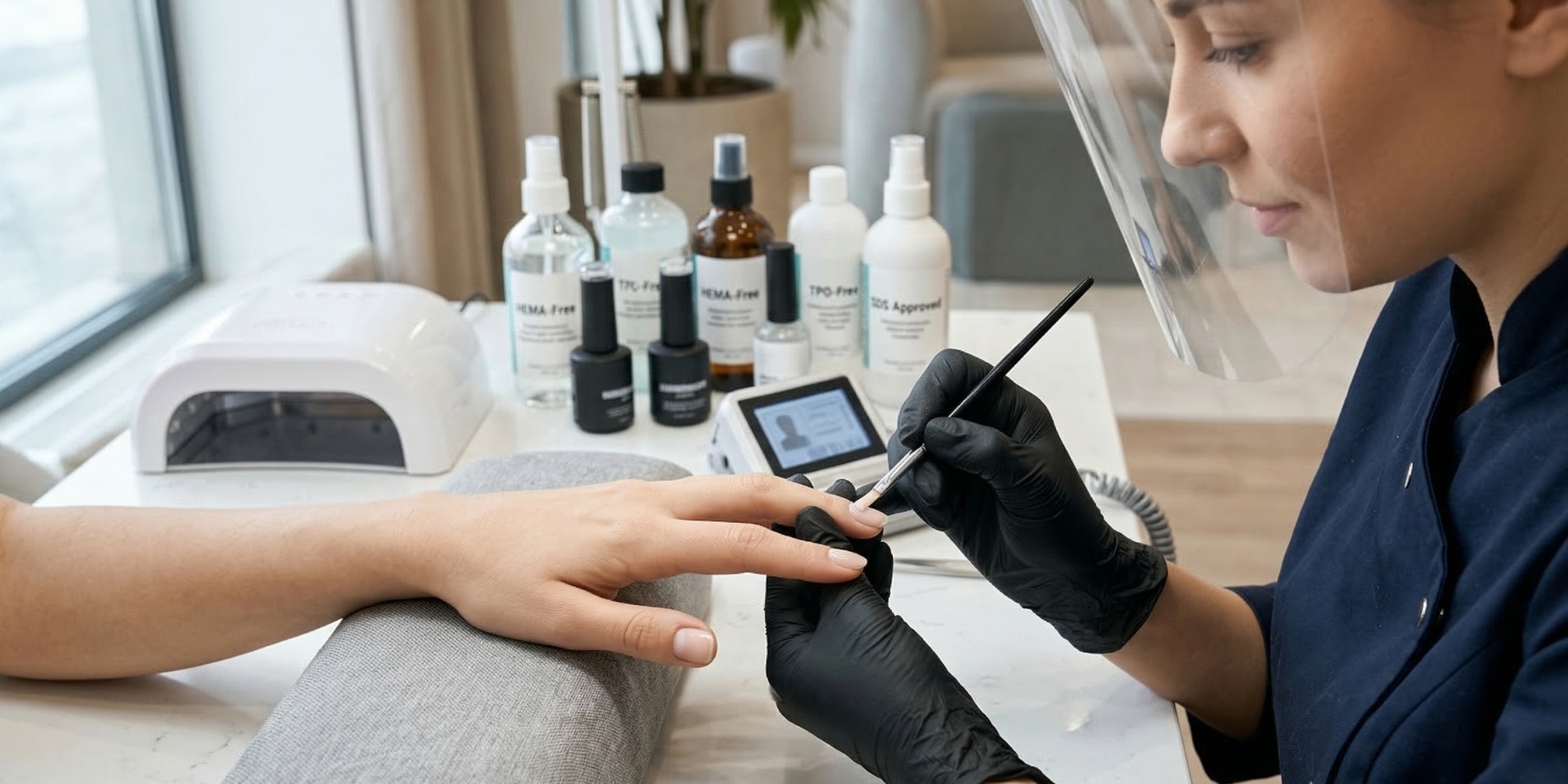
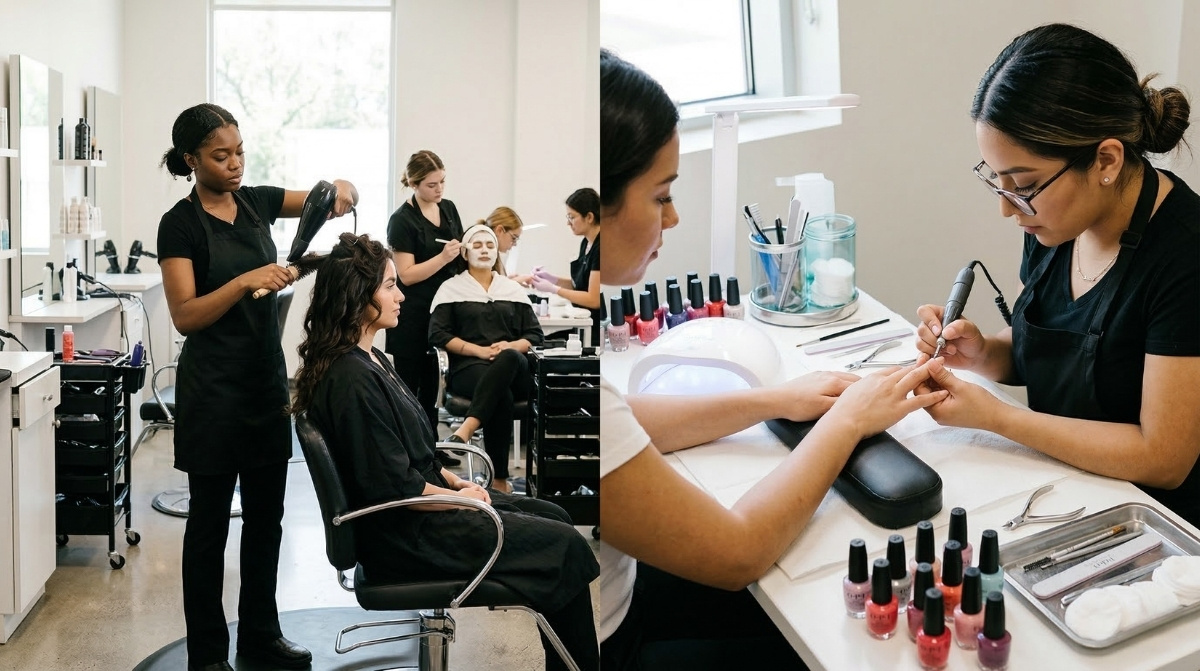 When evaluating the difference between cosmetology and nail technology, the conversation usually starts with "what you can do," but it should start with "how you want to work."
“Cosmetology is the broader licensure pathway. In Georgia, it requires 1,500 hours and prepares students in hair, skin, and nail services, creating a wider service menu than a nail-only license. You are trained in the chemical mechanics of hair, the physiology of the skin, and the structural integrity of the nails. This path is for the professional who wants "Chair Sovereignty" - the ability to pivot their menu based on whatever trend is currently dominating the market.
Conversely, a nail technology program is an intensive deep-dive into a single extremity. By focusing on 300 to 600 hours (depending on your state) of specialized training, you move quickly into nail-focused training such as chemistry, product safety, nail structure, disorders and diseases, infection control, and client services. To help you visualize the curriculum and the specific skills you'll master in the classroom, we’ve put together a beginner's guide to launching your nail technology career, which breaks down the foundational steps of the craft.
When evaluating the difference between cosmetology and nail technology, the conversation usually starts with "what you can do," but it should start with "how you want to work."
“Cosmetology is the broader licensure pathway. In Georgia, it requires 1,500 hours and prepares students in hair, skin, and nail services, creating a wider service menu than a nail-only license. You are trained in the chemical mechanics of hair, the physiology of the skin, and the structural integrity of the nails. This path is for the professional who wants "Chair Sovereignty" - the ability to pivot their menu based on whatever trend is currently dominating the market.
Conversely, a nail technology program is an intensive deep-dive into a single extremity. By focusing on 300 to 600 hours (depending on your state) of specialized training, you move quickly into nail-focused training such as chemistry, product safety, nail structure, disorders and diseases, infection control, and client services. To help you visualize the curriculum and the specific skills you'll master in the classroom, we’ve put together a beginner's guide to launching your nail technology career, which breaks down the foundational steps of the craft.
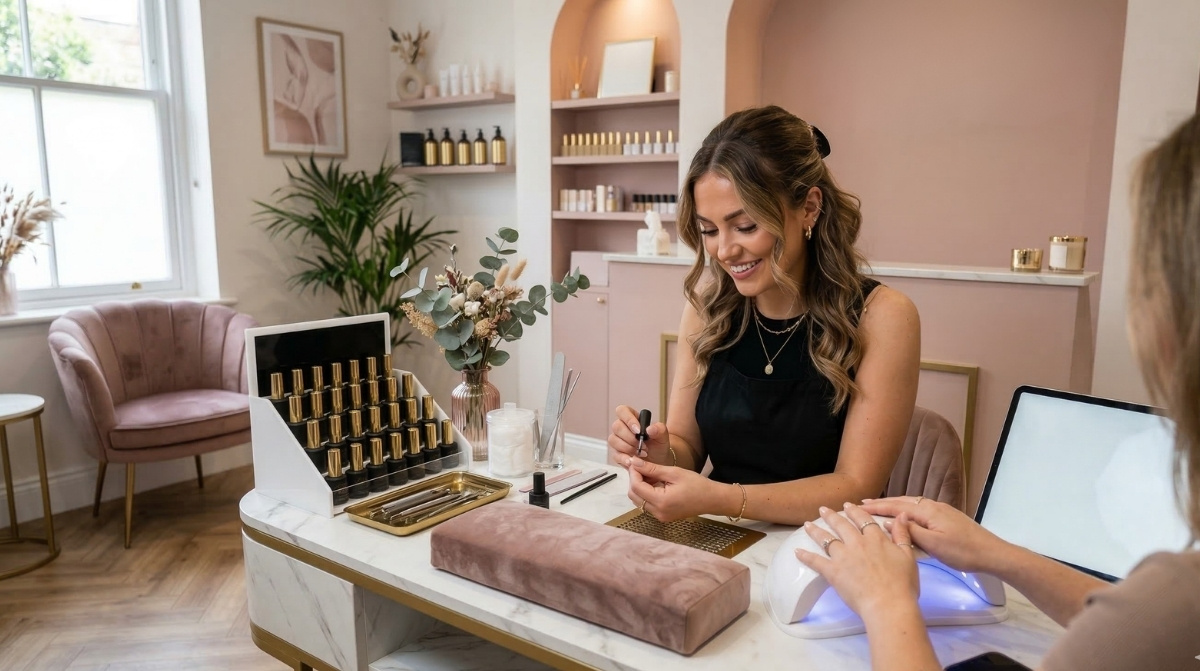 If you are looking for the most efficient "Time-to-Income" ratio, the nail technology program wins on speed. You can often complete your boards and be behind a desk in under six months. This lower "Opportunity Cost" is ideal for the entrepreneur who wants to start their own brand or salon suite without the debt of a year-long program.
However, the "Career Safety Net" of cosmetology shouldn't be ignored. While it takes longer to finish, you are rarely affected by niche-specific downturns. If you love the variety of the beauty world but find yourself specifically interested in the technical differences between grooming styles, you might also want to look at how barbering vs. cosmetology licenses compare in terms of earning potential and daily scope.
If you are looking for the most efficient "Time-to-Income" ratio, the nail technology program wins on speed. You can often complete your boards and be behind a desk in under six months. This lower "Opportunity Cost" is ideal for the entrepreneur who wants to start their own brand or salon suite without the debt of a year-long program.
However, the "Career Safety Net" of cosmetology shouldn't be ignored. While it takes longer to finish, you are rarely affected by niche-specific downturns. If you love the variety of the beauty world but find yourself specifically interested in the technical differences between grooming styles, you might also want to look at how barbering vs. cosmetology licenses compare in terms of earning potential and daily scope.
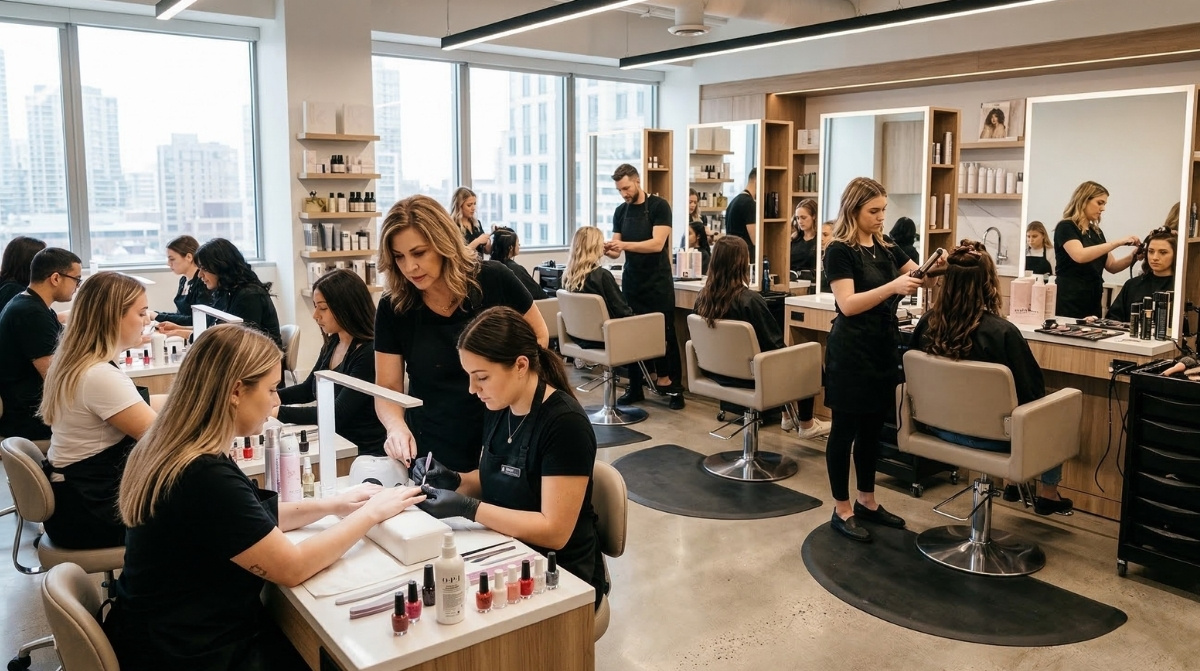
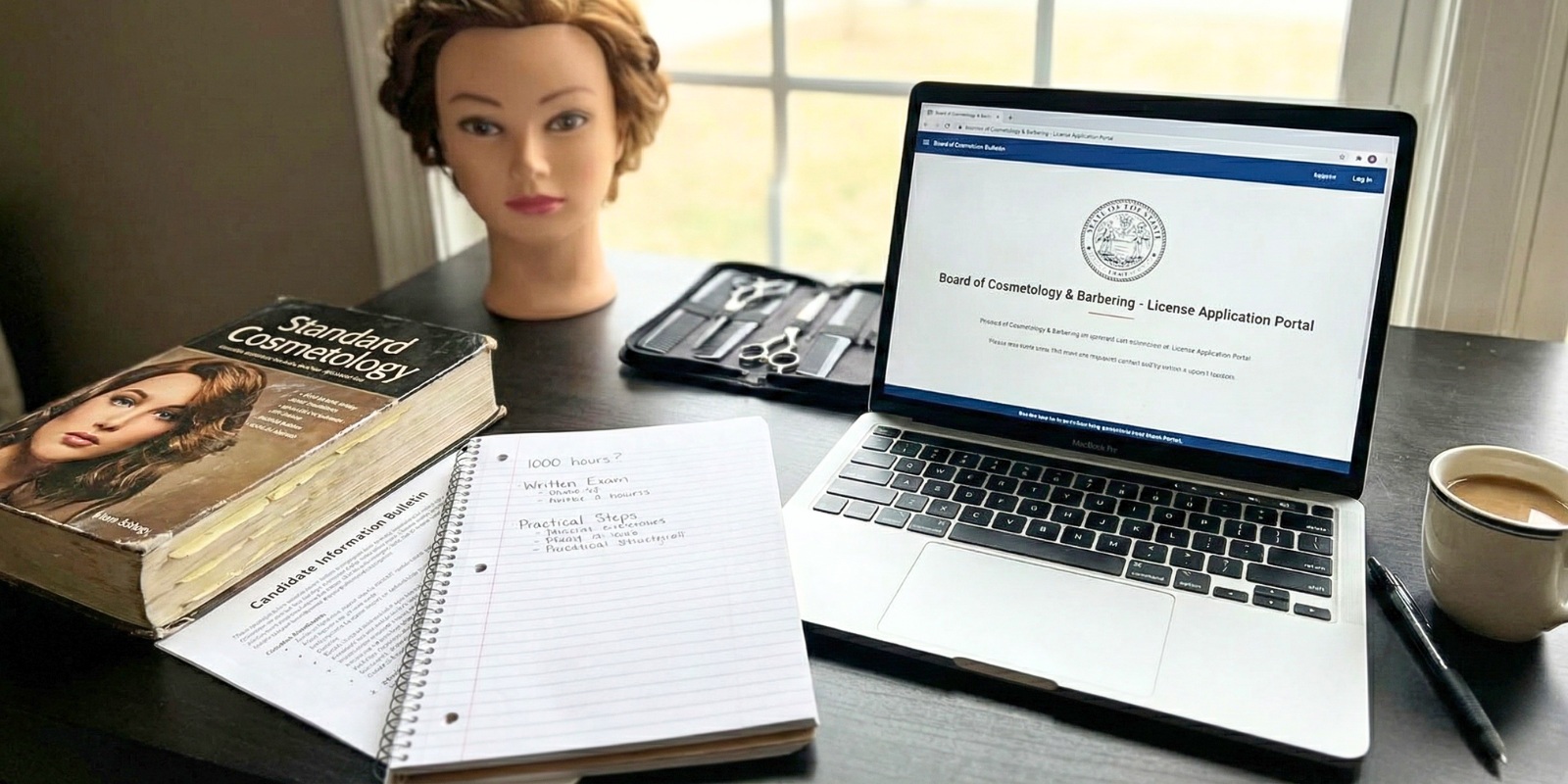

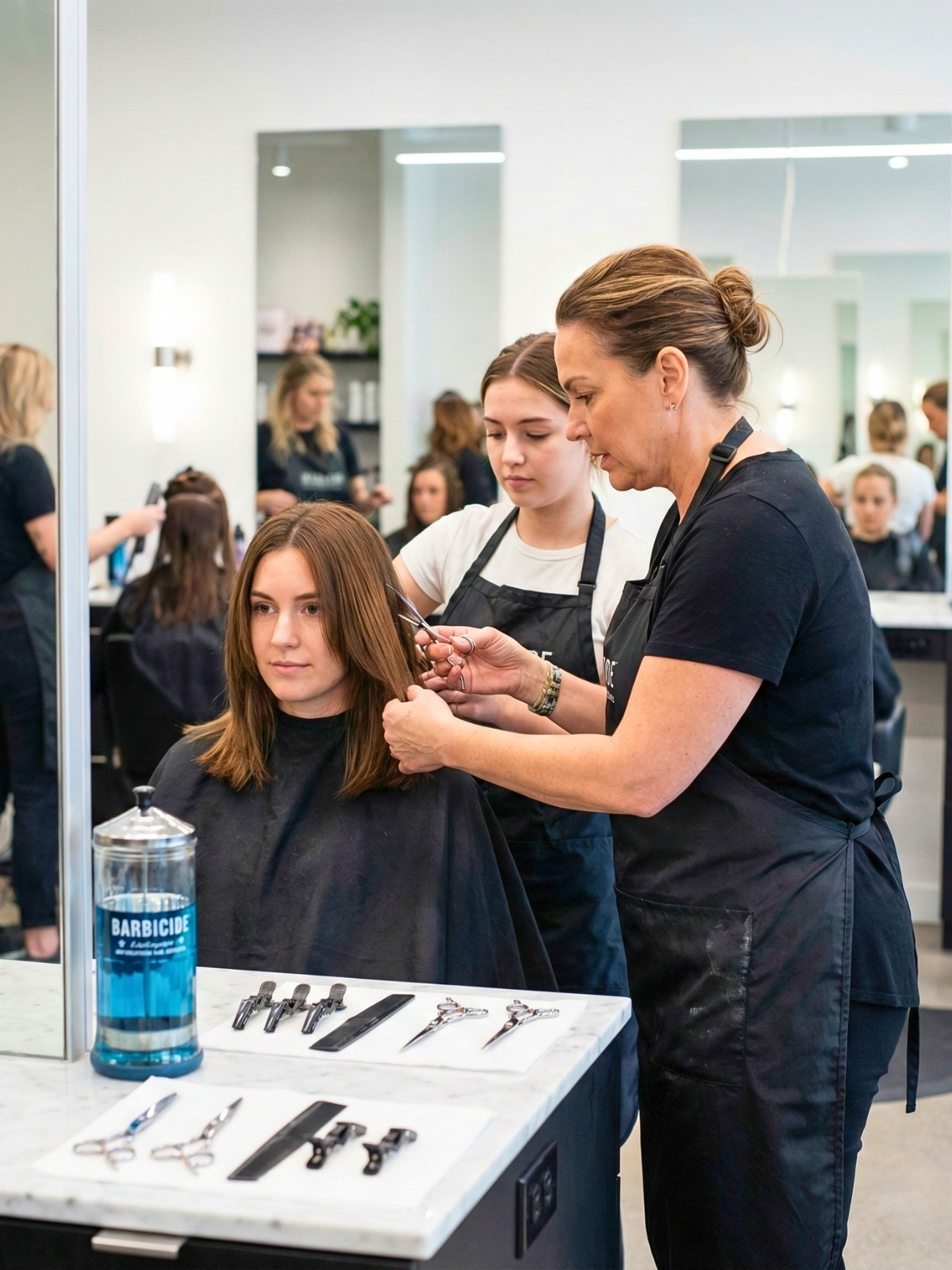 Beauty school isn’t for “born-talented” people. It’s for people who want training, structure, and a real license.
In my experience, students do best when they’re ready for a few realities:
Beauty school isn’t for “born-talented” people. It’s for people who want training, structure, and a real license.
In my experience, students do best when they’re ready for a few realities:
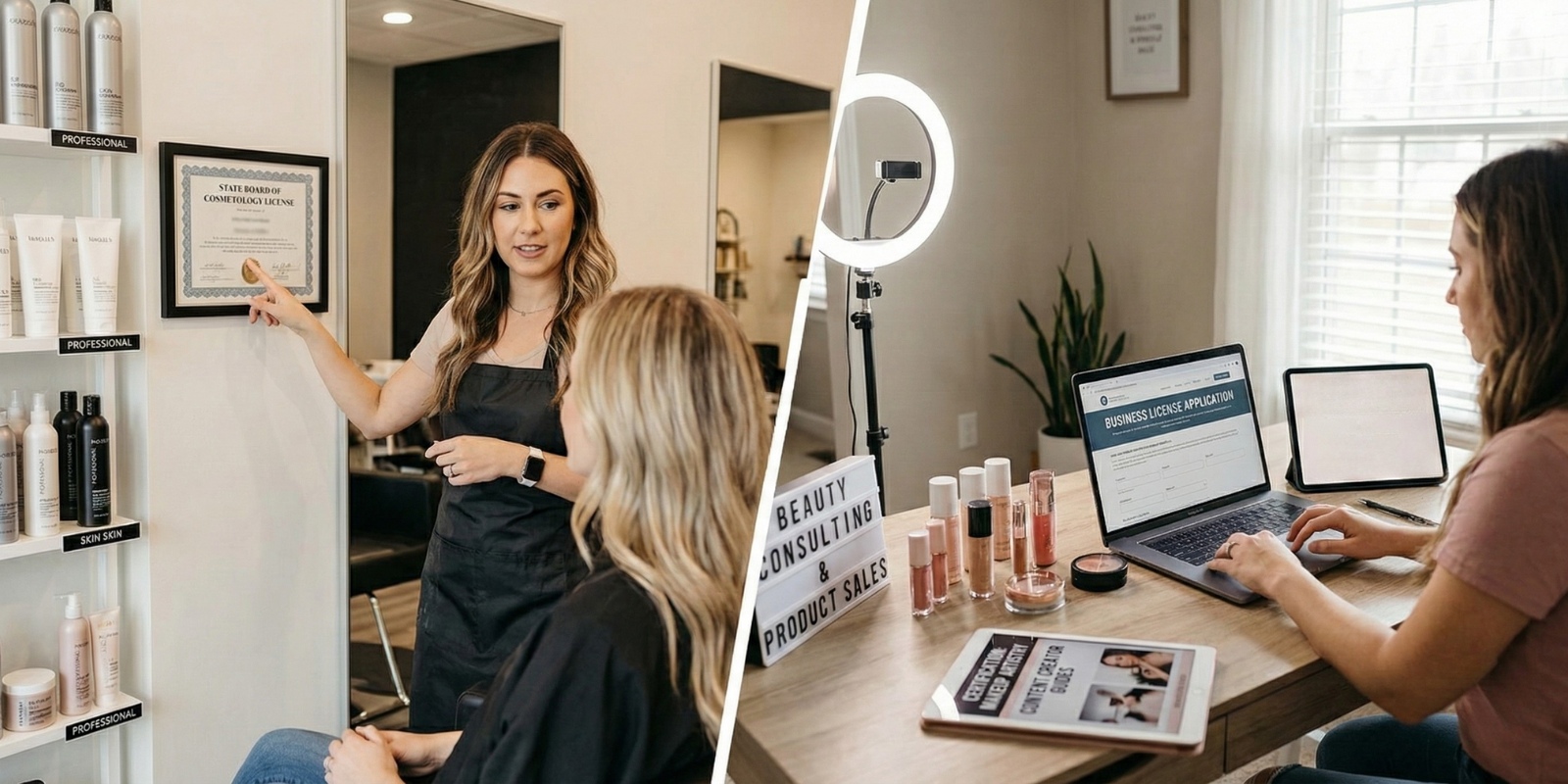
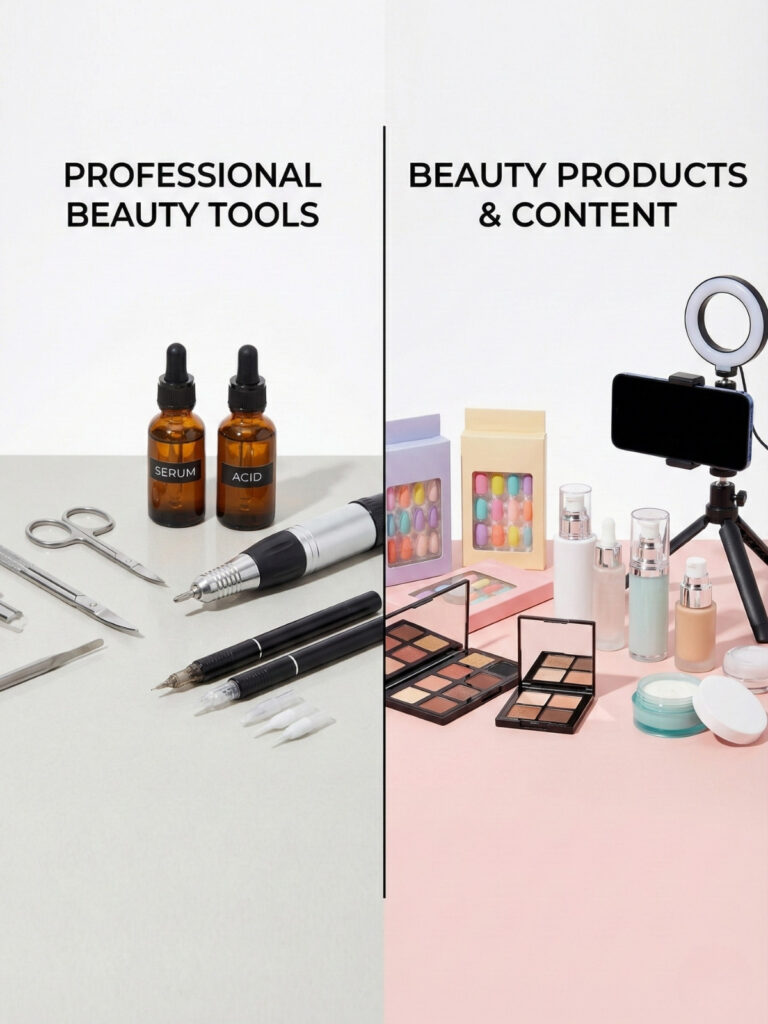 Services that stay “surface-level” are often less restricted – but rules can still vary by location, and some services sit in a gray area.
That’s why online advice is messy. Two people can swear opposite things and still both be correct – just in different states.
Services that stay “surface-level” are often less restricted – but rules can still vary by location, and some services sit in a gray area.
That’s why online advice is messy. Two people can swear opposite things and still both be correct – just in different states.

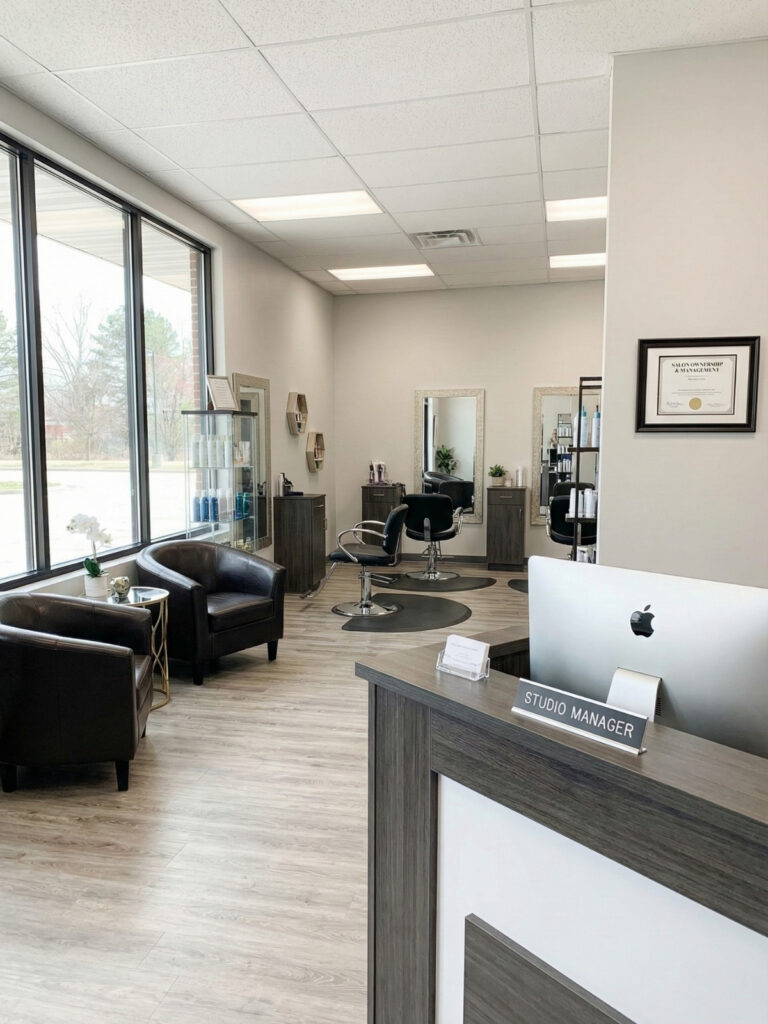 The key is how you structure it: