


What Can You Do With an Esthetician License? Jobs, Salary, and Career Options

Sitting across from a prospective student, the first question is rarely about the curriculum - it’s about the "ROI." You are likely at a crossroads, wondering if a career in skincare offers a stable paycheck or if you are chasing a fleeting trend. In 2026, skincare sits closer to wellness, prevention, and long-term skin health than it used to. It is still a beauty career, but the best opportunities increasingly reward professionals who understand client safety, product science, sanitation, and the legal limits of their license. Whether your dream is to work in a high-end medical office, a luxury spa, or eventually launch a solo brand, reviewing a complete guide to becoming an esthetician can help you map out the education and investment needed to turn that ambition into a concrete plan.
Key Takeaways
- Healthy Career Growth: The U.S. Bureau of Labor Statistics projects employment for skincare specialists to grow 7% from 2024 to 2034, much faster than the average for all occupations.
- Diverse Workplaces: Careers span personal care services, self-employment, physician offices, retailers, traveler accommodations, destination resorts, and cruise-ship spa environments.
- Income Potential: BLS reports a 2024 median wage of $19.98/hr, with physician-office roles reporting a higher median of $23.40/hr. High performers, specialists, and business owners may earn more, but $70,000–$100,000 should be treated as a possible upper-tier outcome - not a guaranteed salary.
- The Entrepreneurial Leap: Self-employment is common in the field, but home-based or mobile work must meet state board, local business license, zoning, sanitation, insurance, and scope-of-practice requirements.
- Career Bridges: Opportunities are expanding for RNs, cosmetologists, and estheticians who want to add aesthetics-focused training, but each path is controlled by state license rules and medical delegation requirements.
Understanding Your Scope: What Does an Esthetician Actually Do?
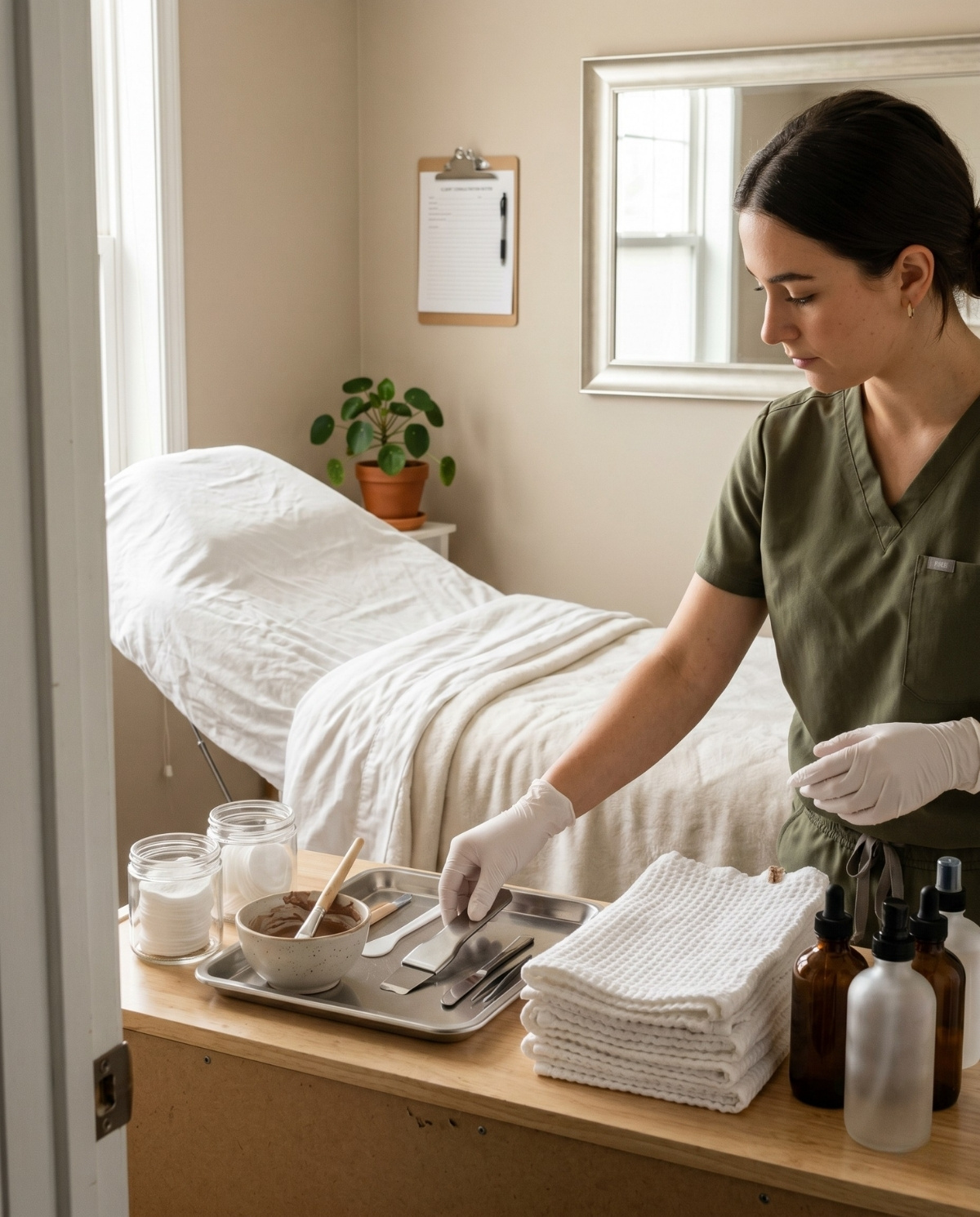
To understand your professional value, you must first understand your scope of practice. This legal term defines the boundaries of what your license allows. In 2026, a strong esthetician is not just a "beautician" but a trained skincare professional who understands sanitation, client analysis, product selection, barrier support, and when to refer a client to a dermatologist or medical provider.
The BLS describes skincare specialists as professionals who provide cleansing and other face and body treatments to enhance appearance. Typical duties include disinfecting equipment, evaluating a client’s skin condition and appearance, recommending products, giving facials and other skin treatments, removing unwanted hair using approved methods, and referring serious skin concerns to another specialist such as a dermatologist.
For Georgia students, scope matters even more. Georgia law defines esthetics to include services such as facial massage, brow shaping, lash services, waxing, threading, cleansing, beautifying, and cosmetic skin care; however, it also states that esthetics does not include the diagnosis, treatment, or therapy of dermatological conditions, medical aesthetics, or the use of lasers. That means your training can make you confident and career-ready, but your license still has clear legal boundaries.
Your daily duties may involve supporting the skin’s lipid barrier, performing professional exfoliation within your state’s scope, recommending post-care routines, and helping clients stay consistent between appointments. If you are curious about the specific techniques and hands-on training involved, we’ve detailed exactly what you can expect to learn in esthetician school so you can visualize the day-to-day experience of a student.
The 2026 "Bio-Aesthetic" Objective
The primary objective of a modern treatment plan is not just a 60-minute massage; it is a more complete approach to long-term skin health. You can think of this as "Bio-Aesthetics": a practical blend of barrier support, product education, age-prevention conversations, safe exfoliation, consistent routines, and realistic treatment planning. It is not a separate legal license category, but it is a useful way to describe the direction of the market.
Within the broader industry, estheticians often bridge the gap between retail skincare and medically directed skin environments. The safest professionals know both sides: how to make a client feel cared for and how to stay within their legal scope when a concern belongs with a dermatologist, physician, nurse practitioner, physician assistant, or other licensed medical provider.
Expert Insight: The Longevity Pivot
McKinsey’s wellness research reports that up to 60% of consumers across markets consider healthy aging a "top" or "very important" priority. That does not mean consumers have abandoned anti-aging language entirely. It means the conversation is shifting toward prevention, healthy aging, long-term skin quality, and routines that help clients feel good over time.
For you, this means the most durable careers are not built on one-off facials alone. They are built on trust, safe treatment planning, product knowledge, rebooking strategy, and the ability to guide a client through a realistic skin journey.
Where Do Estheticians Work? Exploring Your Options
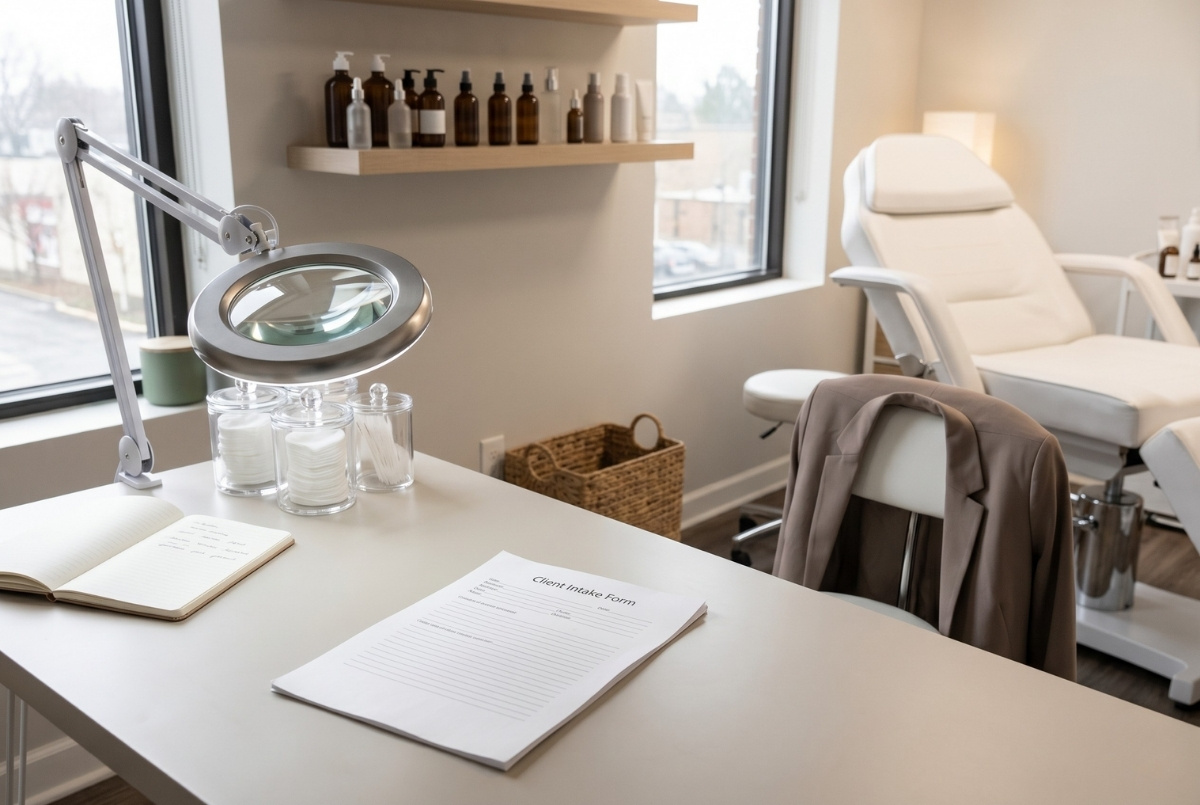
The beauty of this license is that it does not tether you to one type of room. In 2026, your places to work are as diverse as the clients you’ll serve.
According to the BLS work-environment data, skincare specialists are employed across several settings, with the largest shares in personal care services, self-employment, offices of physicians, health and personal care retailers, and traveler accommodations. That means your first job might be in a spa, retail setting, medical-adjacent office, resort, or even your own small business once you meet the legal requirements.
1. Retail Leaders
Major retailers like Sephora and Ulta offer roles where beauty knowledge, customer education, and product fluency matter. Depending on the role and location, licensed professionals may be especially valuable for skin-focused consultations, brow services, salon services, and product education. Ulta’s beauty services career page highlights salon and beauty-service opportunities, while Sephora’s careers page includes store roles where beauty advisors guide clients through products and routines.
These can be exceptional jobs for beginners because they offer steady client interaction, product training, and a fast education in how real customers shop, ask questions, and make skincare decisions. You are not just selling; you are learning how to translate skin knowledge into practical recommendations.
2. The Medical Tier: Dermatology & Plastic Surgery
Working with a dermatologist, plastic surgeon, or medical spa can expose you to the more clinical side of skin care. This is often called medical esthetics, but the title can be confusing: in many states, "medical esthetician" is a workplace or specialty label, not a separate legal license. Your actual services still depend on your state license, employer protocols, and medical supervision rules.
Here, the work often focuses on "sequential treatment planning." Instead of a random menu of services, clients may move through a structured skin journey that includes consultation, treatment timing, home care, post-care, and follow-up. A 2026 Allergan Aesthetics survey found that 78% of beauty-involved consumers said they would feel more satisfied with their aesthetic journey if they worked with a practitioner toward an agreed long-term plan. That supports the same direction: clients increasingly want thoughtful planning, not isolated treatments.
3. Luxury & Travel: Cruise Ships & Destination Resorts
If you want to travel, jobs on a cruise ship can offer a unique opportunity. Cruise lines and cruise-spa operators recruit beauty, wellness, and spa professionals for shipboard roles, and companies such as OneSpaWorld specifically advertise spa and wellness careers at sea.
These roles can help you gain fast-paced experience with a global clientele, but it is important to read the contract closely. Housing, meals, commissions, sales expectations, travel arrangements, and time off can vary by employer and role. Similarly, five-star resorts look for estheticians who can provide polished, high-end, holistic experiences for guests who expect strong service and professionalism.
4. Specialized Studios: Waxing & Lash Bars
Many professionals find their niche in "high-volume" specialized studios. Whether the focus is Brazilian waxing, brow shaping, lash artistry, or maintenance facials, these roles offer fast-paced environments and the ability to build a loyal client base quickly. They can also teach speed, sanitation discipline, client communication, and rebooking habits - skills that transfer well if you later move into a spa, medical-adjacent setting, or your own studio.
Career Evolution: Transitioners & Specialization
Your career should not plateau at graduation. In 2026, the ladder has many rungs - but each rung depends on your license type, your state, and the services you want to perform.
From RN to Esthetics Nurse
One of the fastest-growing areas of interest is the "Medical Crossover." Registered Nurses (RNs) are increasingly interested in aesthetics-focused work, including roles in med spas, dermatology practices, plastic surgery offices, and cosmetic-treatment settings. This path can allow a higher level of clinical involvement than a standard esthetician license, especially when procedures are properly ordered and supervised by an authorized medical provider.
The legal details matter. In Georgia, for example, the Georgia Board of Nursing position statement on cosmetic/aesthetic procedures says an RN - not an LPN - may perform cosmetic/aesthetic procedures such as neuromodulator and dermal filler injections only when authorized by a valid individualized order from a physician, nurse practitioner, or physician assistant with prescriptive authority. It also says a history and physical examination must be performed by the physician, NP, or PA, and standing orders are not an appropriate substitute. In other words, the RN path can be lucrative, but it is not an independent shortcut around medical rules.
The Master Esthetician & Instructor Path
Some states offer a Master Esthetician, advanced esthetician, or similar higher-tier license. These credentials are state-specific. For example, Washington law includes master esthetics and allows certain expanded services, including medium-depth peels and specified medical devices for skin care and permanent hair reduction. That does not mean every state allows the same services, and it does not mean a standard esthetician license allows lasers or medical procedures.
If you find you enjoy science more than the service, you can also become an instructor. Teaching at an academy allows you to shape the next generation while maintaining a stable, professional schedule and deepening your own technical knowledge.
Esthetician Salary and Earning Potential
Let’s talk numbers. The average salary for an esthetician is often cited as a flat rate, but that figure rarely reflects the reality of a high-performer, a commission-based role, a tipped role, or a self-employed business owner.
The most reliable national baseline is the BLS skincare specialist profile. BLS reports that the median hourly wage for skincare specialists was $19.98 in May 2024, which is about $41,560 per year for a full-time schedule. BLS also reports that the highest 10% earned more than $37.18/hr, or roughly $77,330 per year on a full-time equivalent basis. Those figures do not capture every self-employed income model, retail commission, tip structure, or business-owner profit scenario, but they are the best official wage baseline.
Your yearly salary depends heavily on your state, city, employer type, schedule, service menu, client retention, and whether you earn tips, retail commission, or service commission. Rather than assuming that a large state like California or Texas automatically pays more, use BLS state and metro wage tools to compare specific markets. A high-income metro, luxury resort, physician office, or strong solo practice can look very different from an entry-level spa role.
When you look at how much estheticians make, remember that a pay rate is often just the starting point. A well-run career may combine hourly pay, tips, retail commission, service commission, rebooking bonuses, continuing education, and eventually business ownership. By specializing carefully - especially in physician-office support, advanced skincare, lashes, waxing, corrective facials, or an RN-led aesthetics path - you may elevate your hourly pay and long-term earning power.
Expert Insight: The Medical Wage Gap
The U.S. Bureau of Labor Statistics reports that skincare specialists working in "offices of physicians" earned a median of $23.40/hr in May 2024, compared with $18.55/hr in "personal care services." That supports the idea that medical-adjacent workplaces can pay more at the median level.
Industry salary guides sometimes describe experienced medical estheticians or advanced specialists as reaching the $70,000–$100,000 range, but that should be presented as an upper-tier possibility rather than a guaranteed 2026 salary. The more accurate message is this: official BLS data shows a solid national baseline and a higher physician-office median, while specialization, location, tips, commission, and ownership can expand the ceiling for strong performers.
Entrepreneurship: Can You Work from Home?
Many students harbor a "secret ambition" to run a business from home. In 2026, self-employment is a real path in esthetics, but it comes with a "Mogul" responsibility. The BLS reports that 26% of skincare specialists are self-employed, and it also notes demand for services such as mini-sessions and mobile facials. That said, a home-based business is not automatically legal just because you have an esthetician license.
- Legality: You must ensure your suite or service location meets your state board rules, facility-license requirements, local zoning rules, and business-license requirements. In Georgia, the Secretary of State explains that a salon/shop license is not the same as a local business license, and businesses should contact the city or county for the appropriate business license or occupational tax certificate.
- Safety: Your services must stay within your scope of practice. For microneedling, the FDA’s guidance on microneedling products explains when a microneedling product is considered a medical device and provides information on the regulatory pathway. FDA regulations also classify microneedling devices for aesthetic use as Class II devices. Before offering microneedling, verify your state scope rules, supervision requirements, device status, sanitation protocols, and insurance coverage.
- The Benefit: Going solo gives you more control over pricing, client experience, scheduling, and service design. However, you do not keep "100% of profits" in the literal sense. You are also responsible for taxes, supplies, insurance, booking software, marketing, licensing, sanitation, rent or home-business costs, and payment-processing fees.

Landing the Job: From Resume to Interview
Getting hired requires a portfolio, not just a certificate. When building an esthetician resume with no experience, focus on your clinic hours, sanitation habits, client consultation skills, retail knowledge, before-and-after documentation when permitted, and any internship or apprenticeship you completed during school.
The Interview Practical
During the interview, be ready for a "practical exam." A hiring manager may want to see how you set up a clean station, analyze a client’s skin, explain contraindications, recommend a basic routine, or respond when a client’s skin reacts poorly to a product. They are looking for calm judgment, sanitation discipline, professionalism, and the ability to stay inside your scope under pressure.
Be prepared to answer questions like:
- "How do you handle a client who refuses to follow a post-care regimen?"
- "Can you explain the difference between a chemical and physical exfoliant to a first-time client?"
- "When would you stop a service and refer a client to a dermatologist or medical provider?"
- "How do you document a client consultation and protect client safety?"
Ready to Start Your Professional Legacy?
Choosing where to begin your career is the most important decision you’ll make this year. You’ve seen the data: employment for skincare specialists is projected to grow, physician-office settings show a higher median hourly wage than personal care services, self-employment is common, and consumer interest in healthy aging and long-term aesthetic planning is real. But a license is only as strong as the training behind it. At Atlanta Beauty Academy, we do not just prepare you to pass an exam; we prepare you to pursue the industry with confidence, professionalism, and respect for client safety.
Our "Salon Ready" approach is designed to bridge the gap between a classroom and a real service environment. This means you’ll gain hands-on experience, practice client communication, learn sanitation standards, and build the professional habits employers look for in spas, salons, retail environments, and medical-adjacent settings. We focus on practical skincare skills, safety protocols, and the client-care mindset discussed throughout this guide, helping you graduate with the confidence to support each client’s skin journey responsibly.
Why Atlanta Beauty Academy is the Right Choice for Your Future:
- 20+ Years of Experience: You are joining a school with a documented legacy. Our school has more than 22 years of experience and 80+ years of combined expertise across its team.
- Career-First Mentorship: Our instructors help students connect classroom training with real workplace expectations, from client consultation and sanitation to professionalism, product knowledge, and interview readiness.
Fill out the form below to connect with our admissions team. Let’s discuss your goals, tour our facility, and figure out which career path is right for you. Your future in skin health starts here.
FAQ: Common Questions About the Esthetics Career
Is it hard to get a job after esthetician school? The industry outlook is positive. BLS projects employment for skincare specialists to grow 7% from 2024 to 2034, much faster than the average for all occupations. Entry-level roles are available in spas, salons, retailers, and specialty studios, while medical-adjacent roles usually require stronger portfolios, safety knowledge, professionalism, and sometimes additional training.
What career cluster does esthetics fall under? Esthetics is commonly associated with personal care services within the Human Services career area. Newer career-cluster language may group related work under Healthcare & Human Services, which reflects the overlap between personal care, wellness, and client support. However, esthetics is not automatically a healthcare license, and medical services remain controlled by state scope-of-practice rules.
Can I move to another state? Many states have reciprocity, endorsement, or license-transfer pathways, but the rules differ by state. Some states may accept your hours and exam history; others may require extra hours, testing, or documentation. We recommend checking out our guide on how state board exams and transfer rules work to see exactly what you’ll need to do.
Do I need a degree to be a medical esthetician? You generally do not need a four-year degree to become an esthetician, but you do need the license required by your state. BLS states that skincare specialists typically complete a state-approved cosmetology or esthetician program and pass a state exam for licensure. "Medical esthetician" is often a workplace or specialty term, not always a separate license. A standard esthetician license does not automatically allow medical procedures, injectables, diagnosis, treatment of disease, lasers, or services outside your state’s scope.