How to Choose a Cosmetology School: Compare Trade Schools, Community Colleges, and Private Programs

Key Takeaways

  • Same License, Different School Paths: Within a state, students pursuing the same cosmetology license must meet the same state licensing requirements, whether they train at a community college, technical school, or private beauty academy.
  • Training Hours Matter: Cosmetology programs generally lead to a postsecondary certificate or similar nondegree credential. Georgia requires 1,500 hours of training for its master cosmetologist license; a four-year degree is not required.
  • Compare the Whole Program: Tuition, kit fees, schedules, start dates, and time to completion vary by school. Compare written program details instead of assuming one type of school is always cheaper or faster.
  • Verify Approval and Aid Eligibility: Check state school approval, the campus’s accreditation status, and whether its program participates in federal student aid before enrolling.
Choosing where to launch your beauty career gets complicated fast when everyone around you has a different opinion. Your family might push for a traditional four-year university, while you already know you belong behind a salon chair rather than inside a lecture hall. At the same time, committing thousands of dollars to a career program brings real hesitation. You want a fast, creative career, yet you also want proof that your training will help you develop the skills salon owners and clients expect. Here is the core reality that cuts through the confusion: a four-year degree is not the standard route to a cosmetology license. Whether you train at a public college, a technical school, or a private beauty academy, you must complete the requirements for the license you want in your state. What varies from campus to campus is the total cost, your weekly schedule, the experience you gain with clients, and the support you receive as you prepare for the licensing exam and your first job.

Does Cosmetology School Count as College, and Can You Get Financial Aid?

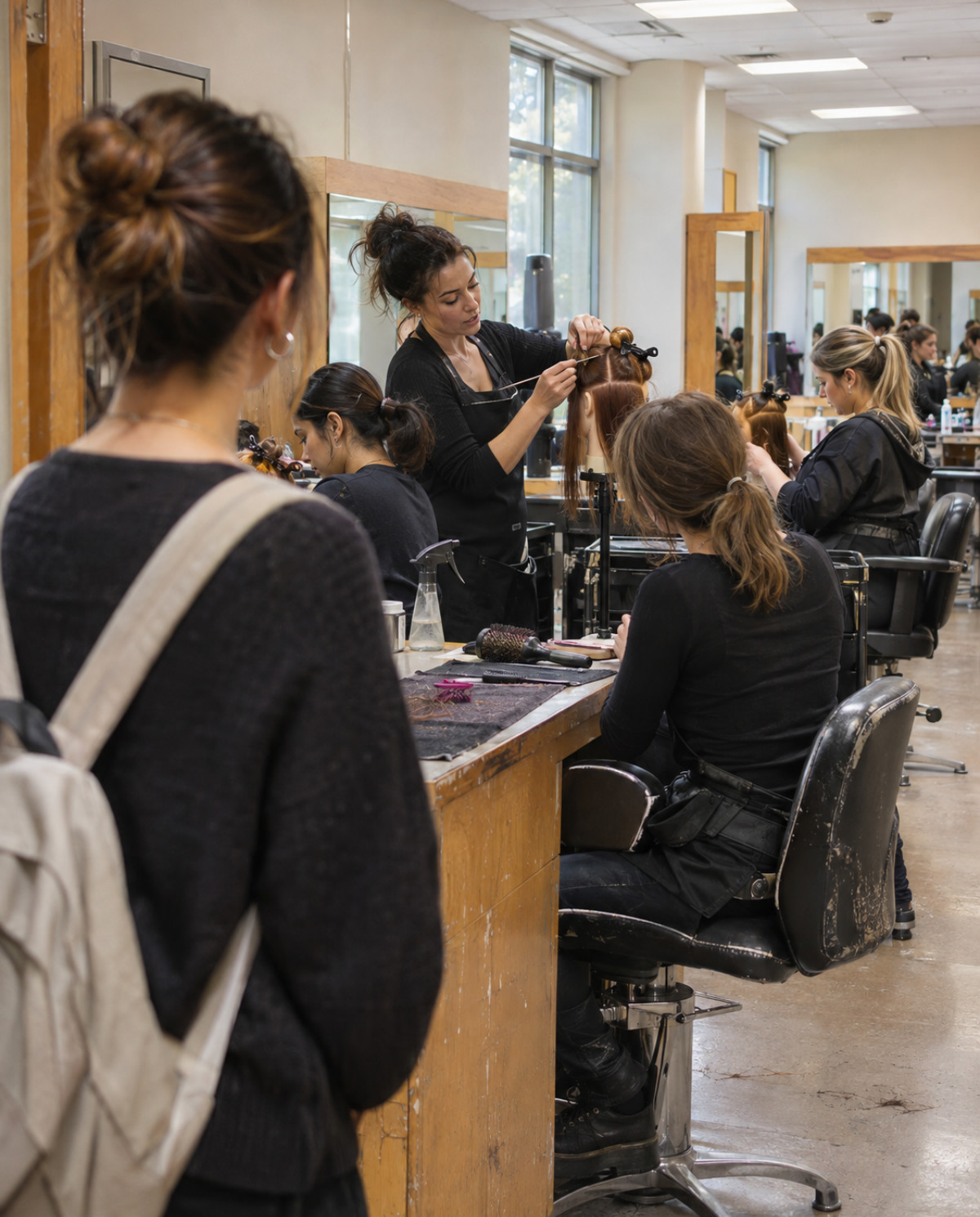
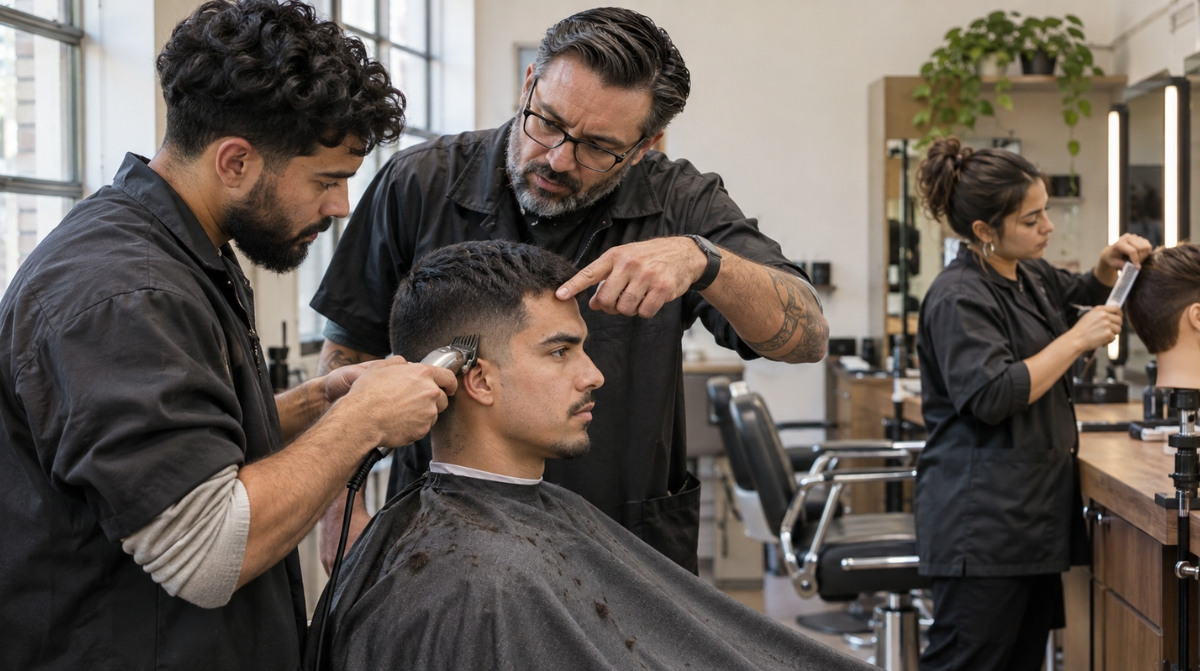
A visitor observes an instructor demonstrating hair sectioning on a mannequin as cosmetology students practice nearby. A common question among aspiring stylists is whether beauty training counts as postsecondary education. Cosmetology programs typically lead to a certificate or another postsecondary nondegree credential rather than a four-year degree. Some community colleges also offer associate degree options. In either case, the program must prepare you to meet your state’s licensing requirements. Many beauty programs track training in clock hours, meaning supervised time spent in theory classes, practical lessons, and student clinics. Requirements vary by state and license type. For example, Georgia’s cosmetology curriculum rules specify 1,500 credit/clock hours for master cosmetology training. Students complete an initial 250 hours of instruction and meet the required passing standard before moving on to clinical services with patrons. Those state-defined training hours should not be confused with transferable academic credits toward a college degree. Financial aid depends on the particular school, program, and student. An eligible student enrolled in an eligible program at a participating college or career school can complete the Free Application for Federal Student Aid (FAFSA) to be considered for federal aid, which may include Pell Grants or federal loans. Submitting the FAFSA does not guarantee a particular award. If you are mapping out your budget, exploring your full range of financial aid and payment options, including scholarships and potentially eligible 529 plan funds, can help you understand what you would need to pay yourself. The career outlook also deserves a careful reading. According to the U.S. Bureau of Labor Statistics, employment for the combined group of barbers, hairstylists, and cosmetologists is projected to grow 7 percent from 2025 to 2035, with about 80,300 openings per year on average. Many of those openings are expected to replace people who leave the occupation, rather than represent newly created positions. BLS lists a 2025 median annual wage of $35,880 for that combined occupational group. Its wage figures include reported tips but exclude self-employed workers. BLS also estimates that 48 percent of hairdressers, hairstylists, and cosmetologists were self-employed in 2025. That share includes different kinds of independent work; it does not tell you what a new booth renter or salon suite owner will earn. If working independently is your goal, compare expected service revenue with rent, supplies, insurance, taxes, and the time it takes to build a clientele.

How Do Community Colleges, Trade Schools, and Private Beauty Academies Compare?

Once you know a four-year degree is unnecessary, your next decision is finding a program that fits your budget and timeline. School labels can offer a starting point, but they do not tell you the full cost or how quickly you can finish. Compare the specific cosmetology programs available where you plan to study.

Public Community Colleges

Community colleges are often worth exploring first if keeping tuition low is a priority. Public funding can make in-district tuition more affordable, and some colleges let students work toward an associate degree alongside career training. An associate degree may appeal to you if you want broader coursework in subjects such as business or communication, but you should check which classes are required for the cosmetology credential and which belong only to the degree. Do not assume that a community college cosmetology program takes two years. A certificate may have a different schedule from an associate degree, and start dates vary. Ask for the program’s published hours, weekly timetable, next available start date, and expected completion date.

Career and Technical Trade Schools

A technical center or trade school may offer a focused cosmetology curriculum without the general education classes required for an associate degree. These schools can be public, nonprofit, or private, so neither their tuition nor their schedules fit one reliable national range. Look at what the school actually offers: the number of training hours each week, how often new classes start, whether evening attendance is available, and how much supervised practice students get before graduation. A focused curriculum is useful only if its schedule and instruction help you finish the state-required training.

Private Beauty Academies

Private academies may offer start dates and schedules that fit students who do not want to wait for a college term. Some also emphasize salon consultations, retail, client rebooking, and portfolio building alongside licensing fundamentals. These are features to verify at the campus you are considering, not benefits guaranteed by the word “academy.” Ask to observe a class and the student clinic. Find out how instructors give feedback, how often students work with guests, and whether supplies and equipment are available when students need them. A polished salon floor is appealing, but the day-to-day training matters more. For context, Trade-Schools.net’s analysis of NCES data cites average 2023–24 annual tuition and required fees of about $4,074 for in-district students at public two-year institutions and $16,524 at private for-profit two-year institutions. Those are averages across many programs, not the complete price of a cosmetology course or a quote for any particular school. Make your own comparison using each school’s written figures. Include tuition, required fees, books, supplies, uniforms, exam costs, transportation, and any borrowing costs. Then compare the schedules. Finishing sooner could let you seek paid work sooner, but only if the school’s actual start date, weekly hours, and graduation timeline support that advantage for you.

How Can You Check Accreditation and School Approval Before Enrolling?

A student and admissions adviser review a program cost sheet at a desk beside a cosmetology kit and professional shears. Before falling for a stylish student salon floor, check the school’s credentials. State approval and accreditation serve different purposes. A state-approved school can provide training toward that state’s licensing requirements. Accreditation is an external review by an accrediting agency; the U.S. Department of Education recognizes agencies that meet federal standards. Accreditation is important to investigate, particularly if you plan to seek federal aid, but it does not automatically make every program eligible for grants or loans. Confirm that the school and the specific program participate in the federal aid programs you intend to use. Likewise, accreditation does not guarantee that another school will accept your hours if you transfer. The receiving school’s policies and state licensing rules matter, so request the transfer policy in writing before you enroll. Start by searching the exact institution and campus in the Department of Education’s Database of Accredited Postsecondary Institutions and Programs. Confirm the accreditor and current status, then ask the school to show you its state approval and explain which federal aid programs are available for your course. If you are considering a Georgia campus, state rules also require cosmetology schools to display their current school license and most recent inspection report. Paying attention to current accreditation status is especially sensible now. As Higher Ed Dive reported in October 2026, the Department of Education gave the National Accrediting Commission of Career Arts and Sciences (NACCAS) 12 months to address compliance concerns and directed it to suspend reviews of institutions and programs seeking new accreditation until it returns to compliance. Roughly 300 reviews were pending as of July. The determination did not automatically revoke the accreditation of schools already accredited by NACCAS. If a school says it is a candidate for accreditation, ask whether it currently holds accreditation and whether its program is presently eligible for the federal aid you need. Finally, read the enrollment agreement rather than stopping at the advertised price. Ask what happens if absences delay your graduation, whether extra training hours bring additional charges, and exactly how those charges are calculated. The school should be able to give you the relevant policy and an itemized cost estimate in writing.

What Makes a Cosmetology Program Worth Choosing?

Passing a licensing exam is an important milestone. It does not, by itself, tell you how comfortable a graduate will be consulting with a guest, managing a service appointment, or adapting a technique to different hair textures. When you compare programs, look closely at how students practice and how instructors measure their progress. If you want a closer look at what a cosmetology curriculum covers day to day, start with the state requirements, then ask what the school adds through supervised practice. In Georgia, the required master cosmetology curriculum includes haircutting, coloring and lightening, chemical services, scalp and hair treatments, facials, hair removal, and nail services. The first 250 hours prepare students for clinical work; students must meet the state’s required passing standard before progressing to services on patrons. A strong tour should let you see how that training works in practice. Ask whether students consult with guests before services, receive instructor feedback during and after appointments, and practice on a range of hair textures and skin tones. Find out how the school teaches sanitation, product use, chemical service decisions, and when a client concern calls for referral to a medical professional rather than a salon treatment. Business skills matter too. Ask whether students learn to explain a service plan, estimate the time and cost of an appointment, photograph work with client permission, recommend appropriate home care, and invite satisfied guests to rebook. These are concrete skills you can look for in a syllabus or observe on the clinic floor. There is also value in asking whether instruction keeps up with the work students will actually encounter. New America’s reporting on beauty education describes student concerns about outdated materials and insufficient instruction in areas such as textured hair and contemporary color. That does not describe every school. It does make current lesson plans, available supplies, instructor feedback, and real clinic experience useful things to examine for yourself.

What Should You Ask on a Beauty School Tour?

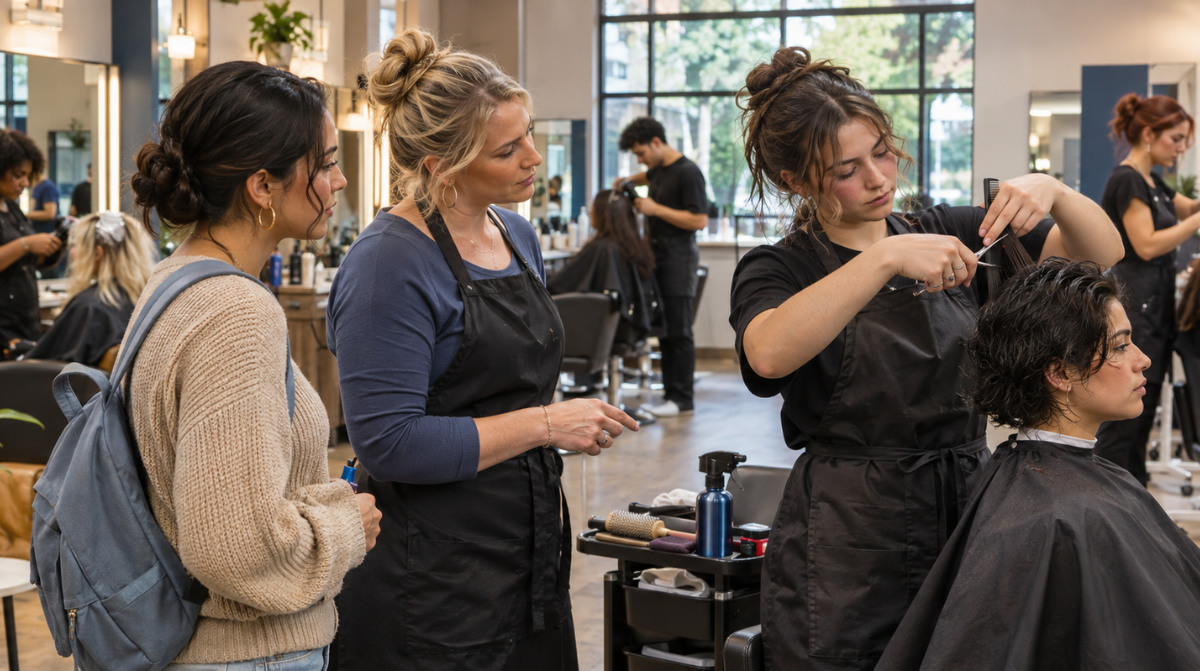
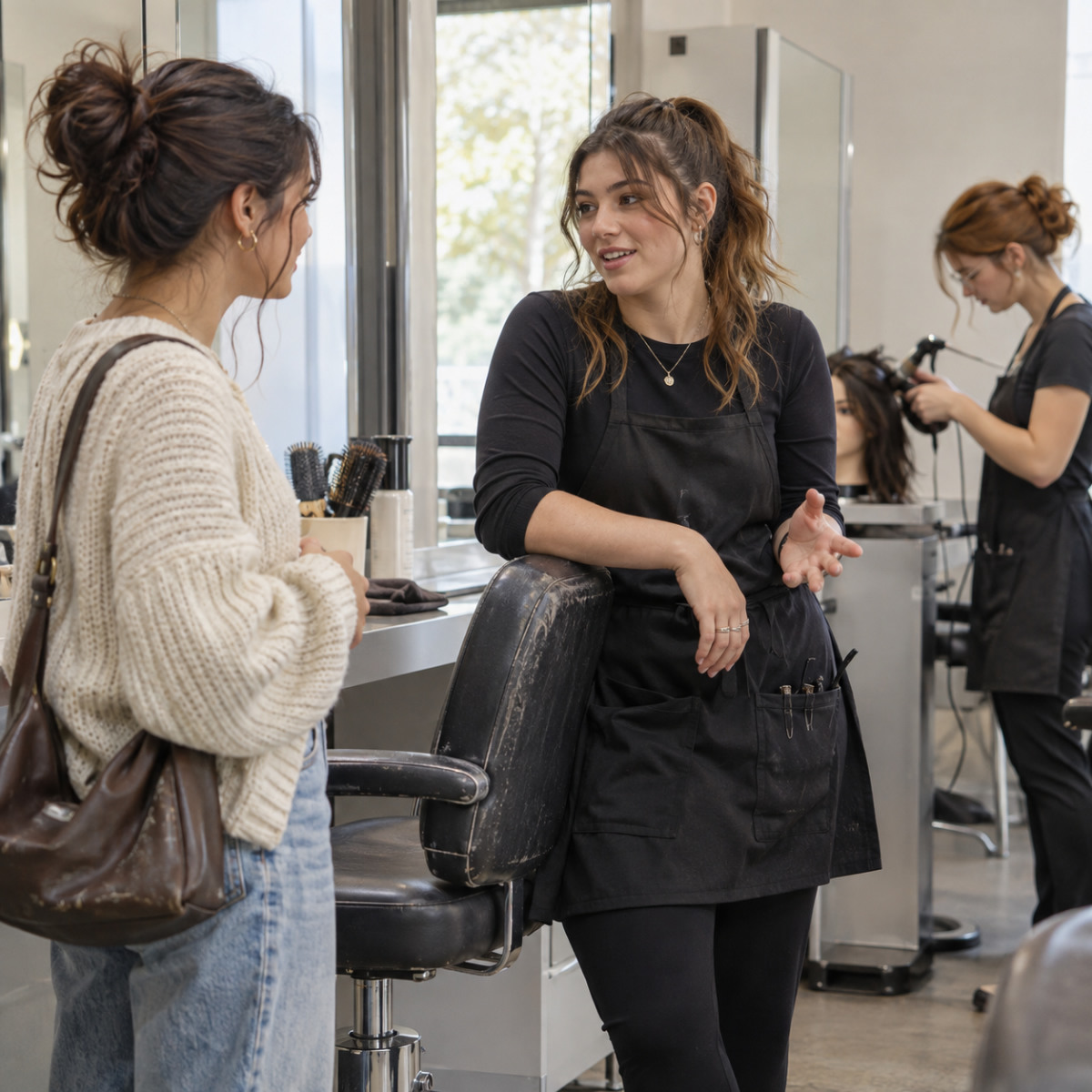
A prospective student talks with a current cosmetology student beside a salon station while another student works in the background. Walking into an admissions office feels overwhelming when you are eager to begin. Bringing a written list of questions keeps the conversation focused on details you can compare across schools.
  1. What is the complete program cost? Request an itemized list covering tuition, registration, books, your student kit, uniforms, supplies, graduation charges, and licensing exam fees.
  2. What schedule would I actually attend? Ask for weekly hours, the next start date, expected graduation date, and the policy for making up missed hours.
  3. What happens if I finish later than my contract date? Have the school show you its attendance and additional charge policies in writing.
  4. What are your recent completion and licensing exam results? Ask for the reporting period, the number of students included, and whether the exam figure measures first-time attempts.
  5. When do students begin working with guests? Ask how the school prepares beginners, supervises clinic appointments, and gives feedback after services.
  6. What will I learn beyond state board basics? Look for specific instruction and practice in textured hair, contemporary color, consultation, sanitation, service pricing, and client retention.
  7. What aid is available for this exact program? Confirm federal aid participation, ask for an individual aid estimate, and find out what you would still owe.
  8. How do you support graduates? Ask whether the school hosts salon visits, career fairs, working interview preparation, or other opportunities, and how it describes its placement results.
You can also inspect the actual tools included in the kit and ask what students must replace at their own expense. For another point of comparison, Federal Student Aid recommends reviewing school cost, debt, and outcome information through College Scorecard. Use those figures alongside the program-specific information the admissions office provides.

Frequently Asked Questions About Choosing a Cosmetology School

Can I use my cosmetology license in another state?

Licensing rules vary by the state you move to, so contact the destination state’s board before making plans. Some states offer licensure by endorsement or another pathway for people who already hold an active license elsewhere. For example, the Georgia State Board of Cosmetology and Barbers says an actively licensed out-of-state cosmetologist may apply by endorsement even if their original school program had fewer hours than Georgia requires. Moving while you are still a student is a different question: ask the receiving school and state board how they would evaluate your unfinished training hours.

Should I choose cosmetology, esthetics, or barbering?

Choose the license that matches the services you want to perform. A full cosmetology program covers a range of hair services along with specified skin and nail training, while esthetics and barbering follow their own licensing paths. If your goal is primarily facials and other services within an esthetician’s legal scope, a dedicated esthetics program may be a more direct fit. Georgia requires 1,000 hours of esthetician school training, compared with 1,500 hours for master cosmetology. Compare the actual program prices before assuming the shorter course will cost less.

What do salon owners look for when hiring graduates?

Requirements differ by salon. A working interview may give you a chance to show sanitation habits, technical skills, guest consultation, and how you respond to feedback. Ask each school how it prepares students for interviews and whether you can leave with a portfolio of work you are permitted to share.

Can I attend cosmetology school part-time while working?

Some schools offer evening or part-time schedules, but availability depends on the campus and program. Fewer training hours each week generally mean more calendar time before graduation. For a simple comparison, 1,500 hours at 20 scheduled hours a week would require at least 75 weeks of training, while 35 hours a week would require about 43 weeks, before accounting for breaks, closures, absences, or other schedule rules. Reviewing full-time and part-time timelines and what can delay graduation can help you choose a schedule you can realistically maintain.

Ready to Explore Your Path Behind the Chair?

Your future in beauty starts with training that helps you meet Georgia’s licensing requirements and develop practical salon skills. At Atlanta Beauty & Barber Academy, you can explore the master cosmetology program, see the learning environment, and ask how classroom lessons and supervised practice prepare students for work with clients. Fill out the contact form below to schedule a campus tour, review the current program details, and decide whether the school fits your goals.

How Much Do Cosmetologists Make? Pay, Tips, and Take-Home Income

Before enrolling in beauty school, compare what you’ll pay for training with what you could earn once you’re licensed. In Georgia, the Master Cosmetology school route requires 1,500 hours over at least nine months, but the total cost and time depend on the school and schedule. If you’re still weighing how to decide before committing to beauty school, start with the national employee wage benchmark. Then look at how hourly pay, service commissions, retail sales, tips, and booth rental would affect your own budget.

What to Know About Cosmetology Pay

  • National employee wages. The May 2025 median for hairdressers, hairstylists, and cosmetologists was $35,790 a year, or $17.21 an hour. The mean was $43,960, and the 90th-percentile wage was $71,190. National wage percentiles and BLS mean wages
  • Self-employment. About 48% of workers in the occupation were self-employed in 2025. Their business earnings fall outside the employee wage estimates. BLS employment data
  • Daily pay. Eight paid hours at the national median rate work out to about $138 before taxes. A commission stylist’s actual pay depends on the services completed, the split, and any tips or retail commissions.
  • Federal tip deduction. Eligible workers can deduct up to $25,000 per federal return in qualified tips for tax years 2025 through 2028, subject to income and other eligibility limits. IRS final regulations
  • Georgia training. The Master Cosmetology school route requires 1,500 hours over at least nine months. Allow additional time for the exams and license application before starting paid work. Georgia curriculum requirements and Georgia licensing guide

What Is the Average Cosmetologist Salary in the U.S.?

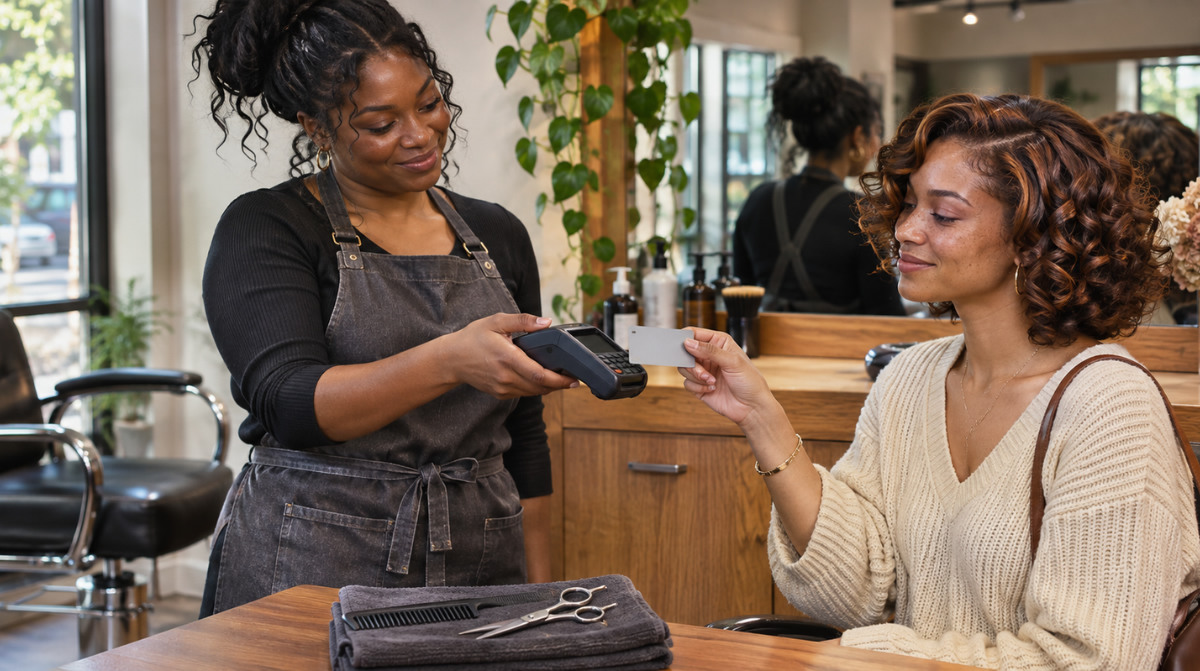
A salon stylist points to a row on her printed shift schedule with a phone calculator open beside it. The U.S. Bureau of Labor Statistics Occupational Outlook Handbook reports a median of $17.21 an hour for hairdressers, hairstylists, and cosmetologists in May 2025. That corresponds to an annual wage estimate of $35,790. The national mean was $43,960. If you’re budgeting for your first job, use the hourly figure alongside the number of hours the salon expects to schedule you. Annual wage estimates are generally based on 2,080 hours, and part-time work is common in this field. The national wage breakdown on O*NET OnLine puts the 10th percentile at $27,040, the 25th at $30,120, the 75th at $48,830, and the 90th at $71,190. These figures show how widely employee wages vary across the occupation. Use a salon’s actual offer, expected hours, and pay structure to estimate what you’ll earn in your first year. The employment outlook offers a separate measure of demand. BLS projects 7.7% employment growth from 2025 to 2035 for hairdressers, hairstylists, and cosmetologists, with about 73,400 openings per year on average. Those openings include both new jobs and opportunities to replace workers who change occupations or leave the workforce. BLS occupational projections The BLS wage survey includes tips, commissions, and production bonuses in employee gross pay. It excludes the self-employed, who accounted for 48.1% of the occupation in 2025. For a booth renter or suite owner, the figure to compare with employee pay is business profit after operating expenses and before personal taxes. A full appointment book can generate substantial sales, but those sales still have to cover the cost of running the business.

How Cosmetology Pay Works in Different Salons

An hourly salon job gives you a base rate for the hours you work, with tips and any bonuses on top under the salon’s pay policy. That can make income easier to budget while you’re building speed and repeat bookings. Ask how many hours you can expect in a typical week, how the salon handles tips, and whether training, cleaning, and other work between appointments are included in your paid schedule. At a commission salon, your service pay depends on the portion of each sale that goes to you. The split matters, but so do the terms behind it. Ask whether the salon calculates commission before or after discounts, who pays for color and other supplies, and whether there’s a guaranteed base or draw while you build your schedule. Confirm the tip policy and any tip pool. Covered employees are entitled to the applicable minimum wage, and salons that use a tip credit must follow the relevant wage rules. U.S. Department of Labor guidance on tipped employees With booth rental or a private suite, you collect the service revenue and cover the costs of operating independently. Suppose you generate $1,500 in weekly service sales. At a 50% commission, that pays $750 before tips and taxes. With the same sales as a booth renter, $450 in assumed fixed weekly costs and variable costs equal to 10% of sales would leave $900 in business profit before tips and taxes. At $1,000 in weekly sales, the same commission arrangement pays $500 and the rental model leaves $450. The swing comes from fixed costs that still come due in a slow week. Compare your actual rent, supplies, card fees, and insurance, along with any employer benefits you’d be giving up. IRS guidance on self-employment and business profit The Professional Beauty Association’s October 2026 Pro Beauty Pulse gives some context for that decision. Among salons tracked by The KIM Report, September revenue fell 2.30% year over year for one- to two-stylist salons and rose between 5.50% and 6.51% across the groups with five or more stylists. Average salon revenue was up 1.22% for the year through September. Those figures describe salon revenue. To evaluate a specific commission job or rental, look at the clients you can realistically book and ask what the salon actually offers in walk-ins, mentoring, and marketing.

How Much Does a Cosmetologist Make in a Day?

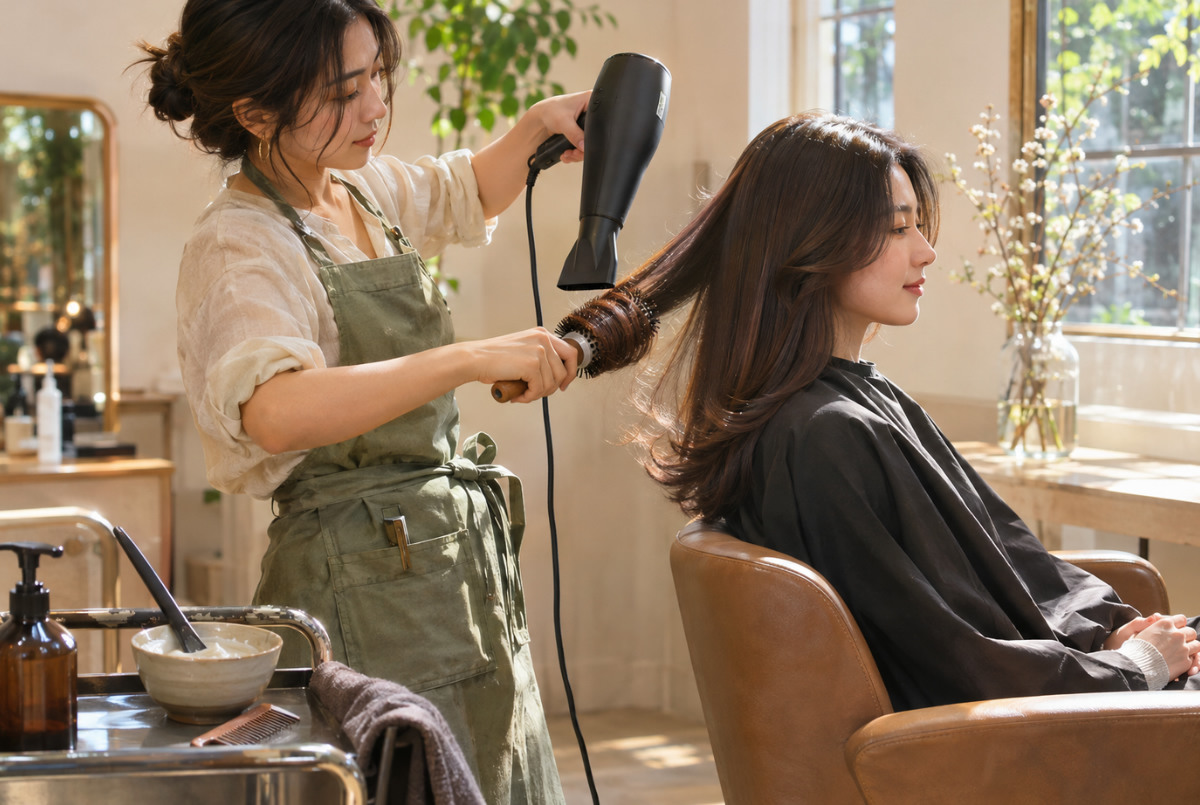
A stylist in a sage apron rolls the ends of a client’s dark hair around a round brush while using a blow dryer. Eight paid hours at the national median of $17.21 an hour work out to about $138 in gross wages. To see what a commission day might look like, start with the services you can fit into the shift and the amount you receive from each one. In one example, two $55 haircuts, a $35 haircut, and a $65 blowout with deep conditioning generate $210 in daily service sales. At a 45% commission, that’s $94.50 in service pay. Add $42 in tips, assuming clients tip 20%, and $10 in retail commission. The stylist earns $146.50 before taxes under those assumptions. A higher-ticket schedule might include two $190 balayage appointments, a $100 haircut and gloss, and a $65 blowout. That adds up to $545 in service sales. At a 50% commission, the stylist earns $272.50 in service pay. With $109 in assumed tips and $18 in retail commission, gross earnings reach $399.50. Whether that schedule fits depends on the time needed for consultations, application, processing, finishing, and cleanup. When you budget, build a slower-day example too, with fewer bookings or no retail sales. Tips can also affect your federal tax bill. The IRS final regulations in TD 10044 list cosmetologists among the occupations eligible for the qualified tip deduction. For tax years 2025 through 2028, eligible workers may deduct up to $25,000 per return in properly reported, voluntary tips, including qualifying cash and card tips. Mandatory service charges are excluded. The deduction begins to phase out above $150,000 in modified adjusted gross income, or $300,000 for joint filers. For self-employed workers, it’s also limited to net income from the business where the tips were earned. Social Security and Medicare taxes still apply under the applicable employee or self-employment rules. IRS guidance on claiming the deduction

What It Takes to Earn $70,000 as a Cosmetologist

A colorist points to a long booking block on a tablet beside a service timing sheet and a tint brush. The national 90th-percentile employee wage of $71,190 gives you a benchmark for the higher end of the pay range. To see what a $70,000 goal would require, spread it across 48 working weeks. You’d need about $1,458 in gross pay per week. At a 50% service commission, before counting tips or retail commissions, that takes roughly $2,917 in weekly service sales, or $583 a day across five days. Compare that target with the salon’s actual prices and the number of appointments you can reasonably complete. Dimensional blonding, corrective color, and extensions can raise the size of a service ticket. To judge what a service does for your earnings, also look at how long it occupies your chair and what it costs to deliver. A $210 color appointment booked for three hours generates $70 in sales per booked hour. A $60 haircut booked for 45 minutes generates $80 per booked hour. Those are example prices. Use your salon’s menu, appointment lengths, and product costs to make the same comparison. The KIM Report data published by the Professional Beauty Association show that September 2026 color revenue rose 3.75% from a year earlier, alongside a 1.64% increase in color services. Retail followed a different pattern. Average product prices rose about 7.10%, but units sold fell 7.86% and retail revenue fell 1.32%. If your salon pays retail commission, estimate it from how many products you actually sell and the commission you receive. For example, a 10% commission on a $30 product adds $3 to your gross pay. Product knowledge helps you explain how clients can maintain their results at home. The income calculation still depends on sales and the salon’s commission terms. September service and retail figures Location changes the wage benchmarks as well. May 2025 median employee wages reached $59,510 in Washington and $57,580 in Oregon. In Georgia, the median was $34,560, the 75th percentile was $48,730, and the 90th percentile was $79,170. Metro Atlanta’s median was close to the statewide figure at $34,640, while its 75th-percentile wage was $57,680. If you’re comparing job offers, put the local wage figure alongside expected hours, benefits, commuting costs, and housing expenses. If you’re interested in careers you can pursue with a cosmetology license beyond regular salon appointments, look at the work and pay structure for each role. BLS tracks theatrical and performance makeup artists as a separate occupation, with a May 2025 mean wage of $102,240 and median of $97,150. Use those figures when researching performance makeup specifically, and check the role’s requirements and how consistently it offers paid work. BLS wage table and BLS median wage data

How Long Does It Take to Earn Back Beauty School Tuition?

Training requirements vary by state. California requires 1,000 hours for its standard cosmetology school route. Under Georgia’s cosmetology school curriculum rule, Master Cosmetology students complete 1,500 hours over at least nine months, including 250 hours of Level 1 training before they perform clinical services on clients. The nine months is the minimum course duration. Your actual start date in a paid role also depends on the school schedule, exams, license issuance, and job search. The Atlanta Beauty & Barber Academy 2025 student catalog lists $6,900 in Master Cosmetology tuition and $8,400 in total course charges, including the listed books, kit, and fees. It lists approximately 11 months for the day schedule, 13 months for the two-day schedule, and 16 months for the night schedule. Ask admissions for current pricing and schedules when you build your budget. A program of that length can give you a route into paid work sooner than a four-year degree. To estimate how long it will take to recover the cost, start with what you’ll owe after grants or scholarships and include any separate exam, licensing, and commuting costs. If your cost is $8,400 and you can set aside $400 a month from take-home pay, it would take 21 months after you start earning to recover that amount. If you’d be leaving another job to enroll, factor in any earnings you give up during school and compare your new take-home pay with what you earn now. Planning what to do after cosmetology school can help you budget for the gap between finishing classes and receiving your first paycheck.

Frequently Asked Questions About Cosmetologist Pay

Do cosmetologists get health insurance, paid time off, or a 401(k)?

Employee benefits vary by salon, position, and scheduled hours. Ask whether the job offers health coverage, paid time off, or a retirement plan, when you become eligible, and how much the employer contributes. Independent booth renters and suite owners generally arrange their own coverage and time off. Eligible self-employed workers can also consider options such as a SEP IRA or a one-participant 401(k). IRS retirement plans for self-employed workers

How long does it take to build a regular clientele?

The timeline depends on how many new clients you see, how often they return, and how much of your schedule the salon helps fill. Ask how walk-ins are assigned and track how many first-time clients return or book their next appointment. That gives you a better basis for estimating future bookings before taking on fixed expenses such as booth rent.

Can you make good money working part-time as a cosmetologist?

Part-time work is common, and cosmetology schedules often include evenings and weekends. Ask the salon when appointments tend to fill and how many paid hours you can expect. To see if a schedule works for you, compare gross weekly earnings with the total hours you spend at the salon, including gaps between clients. If you rent your space, check how much of your expected weekly revenue goes toward rent and other costs. BLS work schedule information

Do cosmetologists earn more than estheticians or nail technicians?

The May 2025 national employee median was $35,790 for hairdressers, hairstylists, and cosmetologists, $35,760 for manicurists and pedicurists, and $45,330 for skincare specialists. These figures describe what people earn in each occupation. In Georgia, a Master Cosmetologist license covers specified hair, skin, and nail services within the state’s scope of practice, and the salon is subject to separate licensing requirements. That broader service menu can give you more ways to build a book of clients. Compare the work you actually want to do, local job offers, and the cost of each training path. BLS occupational wage data, Georgia’s scope of practice, and Georgia salon licensing guidance

Ready to Train for a Cosmetology Career?

At Atlanta Beauty & Barber Academy, Master Cosmetology training combines hands-on clinic floor experience with weekly state board prep and job placement assistance. Fill out the contact form below to request a campus tour, see where you’ll train, and ask admissions about current costs, schedules, and the support available as you prepare for your first salon job.

What Do You Actually Learn in Barber School? Skills, Services, and Hands-On Training

Key Takeaways

  • Start with the basics. You can enter a beginner barbering program without prior haircutting experience. Training moves from tool handling and mannequin practice to supervised work with real clients.
  • Build a service menu beyond fades. Beard shaping and straight-razor shaves give clients more ways to book with you. Georgia’s Master Barber training also covers services such as coloring, permanent waving, and relaxing.
  • Give written theory its own study time. In Texas’s fiscal year 2025 Class A Barber results, 37.25% of completed written exam attempts passed, compared with 89.80% of completed practical attempts. Georgia applicants should prepare for both parts using the materials for their own license.
  • Keep client notes you can use on the next visit. Recording guard settings, neckline preferences, and past product reactions helps you pick up where the last service ended.
Standing in front of your first styling chair with a pair of shears can bring a mix of excitement and nerves. Barbering school gives you time to learn how your tools feel, how hair responds to different techniques, and what to check before you start a service. If you’re deciding between Master Barber training and Master Cosmetology training, start by thinking about which services you want to perform most often. There’s overlap in haircutting, styling, and color, but the programs give you different kinds of practice.

What You Learn First in Barbering School

Your early training connects what you see in the chair with what you do with your tools. A crown that grows in a swirl, for instance, can affect how short you go and which direction you cut. On a mannequin, you can repeat a section and see what changes when you adjust the angle of your shears or the way you move your clippers. In Georgia’s barber school curriculum, early training brings several skills together:
  1. Hair and scalp analysis. Look at hair density, texture, growth direction, and the condition of the scalp.
  2. Tool handling and body position. Practice using shears, clippers, and trimmers while adjusting the chair height and your stance.
  3. Mannequin practice. Repeat sectioning, cutting, and blending so you can see which movements produce a consistent result.
  4. Supervised clinic work. After completing the required initial training and receiving instructor sign-off, apply those skills during consultations and services on real clients.

Getting Comfortable with Clippers, Shears, and Razors

Your early lessons give you time to work on tool control before speed matters. Pay attention to how you stand as you move around the chair. Raising or turning the chair can keep you from repeatedly reaching across a client or bending to see the neckline.
  • Clipper control. Practice how guard changes and lever adjustments affect the blend between two lengths.
  • Shear control. Keep your hand steady and use your thumb to open and close the moving blade.
  • Straight-razor handling. Practice blade positioning, light pressure, and controlled strokes under instructor guidance.

Reading Hair Texture and Growth Patterns

Before cutting, look at how the hair falls on its own. Check the crown and neckline for changes in growth direction, then see how the hair responds when you lift it and let it settle. Those observations can help you decide how much length to leave around a cowlick, where to start a fade, or how to keep a curl pattern looking even after the hair dries.

Moving from Mannequins to the Clinic Floor

Georgia’s Master Barber curriculum includes 35 hours of mannequin training in the initial haircutting and styling block. Master Barber students complete 280 hours of initial training before performing clinical services, and Barber II students complete 190 hours. A licensed instructor signs off on readiness for the clinic floor. There, you start applying the same skills while talking through a client’s preferences and adjusting to the way their hair actually grows. See the Georgia curriculum rules for both pathways.

Barbering Services You Can Offer Beyond the Fade

Fades, tapers, scissor cuts, and line-ups give you a starting menu. Beard shaping, hot-towel shaves, and, within your license scope, services such as gray blending give clients more options. As you build that menu, consider how much time each service takes, what supplies it uses, and whether clients in your shop are likely to book it regularly.

Beard Design and Hot-Towel Shaves

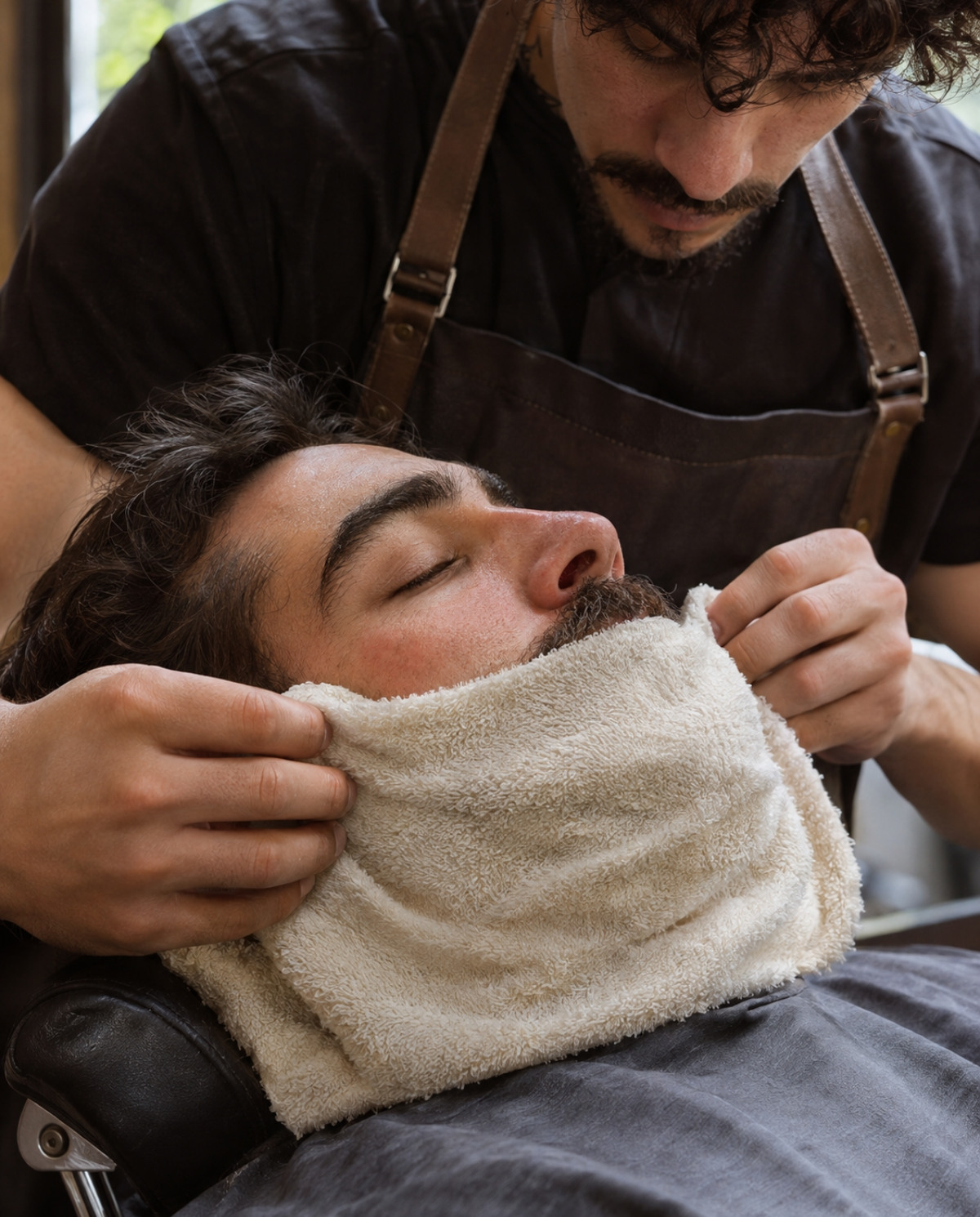
A shave starts with a quick look at the skin and beard. Ask about irritation or razor bumps, then check which way the hair grows. The grain can change under the jaw and across the neck, even on the same client. A basic hot-towel shave follows this sequence:
  1. Use a warm, damp towel to soften the beard hair.
  2. Apply shaving cream or gel to lubricate the skin and help the blade glide.
  3. Shave with the grain using short, controlled strokes. Limit repeated passes over the same area, especially for someone prone to razor bumps.
  4. Finish with a cool rinse or towel for comfort and, if suitable for the client’s skin, a gentle moisturizer.
For someone who regularly gets ingrown hairs, discuss whether a trim that leaves a little stubble would be more comfortable than a very close shave. The DermNet guide to razor bumps explains why shaving direction and closeness matter. The same consultation helps you plan beard sculpting, neckline cleanups, and mustache shaping around the client’s preferences. A barber student wraps a warm towel around a reclined client’s beard and jaw, leaving his nose uncovered.

Chemical Services and What Your Georgia License Covers

In Georgia, Barber II scope includes hair cutting and dressing, beard trimming and shaving, facial or scalp massage, and certain facial or scalp treatments. Master Barber scope also includes hair coloring, permanent waving, relaxing, and straightening. If you want to offer services such as gray blending, ask how much supervised color practice you’ll get in the Master Barber program. See Georgia Code § 43-10-1 and the state’s barber school curriculum for the full scope and training requirements.

How to Tell Whether an Add-On Pays Off

A higher-priced service can bring in more per visit while leaving less per hour in the chair. Say a $40 haircut takes 30 minutes and uses $2 in supplies. That leaves $38 before overhead, or $76 per booked hour if the time is fully booked. A $55 haircut-and-beard service that takes 45 minutes and uses $4 in supplies leaves $51 per visit, or $68 per booked hour. Those are example prices. Run the same calculation with your own service times and costs, then account for fixed expenses such as booth rent. The U.S. Small Business Administration’s break-even guide shows how to factor in both fixed and variable costs. For a national wage benchmark, the U.S. Bureau of Labor Statistics reported a median barber wage of $18.37 per hour in May 2025, including tips. That wage figure excludes self-employed workers. In a separate employment estimate, BLS classified 80% of U.S. barber jobs in 2025 as self-employed. If you plan to rent a chair or run a shop, keep track of what you collect from clients and what it costs you to provide those services.

How to Keep Barbering Services Safe and Hygienic

Safety starts with deciding whether a service is appropriate for the client in front of you. It continues through draping, tool handling, and cleanup. Practicing the same routine with every client makes it easier to follow on a busy day.

What to Check Before Starting a Service

  • Scalp and skin condition. Look for broken skin, irritation, or an unusual patch in the area you’ll work on. If you see a scaly patch with broken hairs and suspect a contagious condition, pause the service and suggest the client have it checked. The CDC’s ringworm guidance explains how scalp ringworm can spread through contact and shared items.
  • Hair condition and service history. For a cut, look at density, texture, and growth patterns. Before a chemical service, also ask about prior coloring, bleaching, or relaxing and check for signs of damage or breakage.
  • Sensitivities and past reactions. Ask about products that have caused irritation before. For hair color, follow the product directions and the FDA’s hair-dye safety guidance on patch testing and gloves.

What to Do During and Between Services

  • Wash your hands and use clean draping. Georgia requires handwashing before and between client services. Use a fresh neck strip and clean draping for each client.
  • Clean before disinfecting. Remove hair and visible debris from reusable implements, then use an appropriate EPA-registered disinfectant. Follow Georgia’s facility rules and the product label for the method and contact time. The EPA’s disinfectant guidance explains how long a surface must stay wet for a product to work.
  • Dispose of blades safely. Use a fresh disposable blade for each client when working with a replaceable-blade razor. Place the used blade in a designated sharps container.
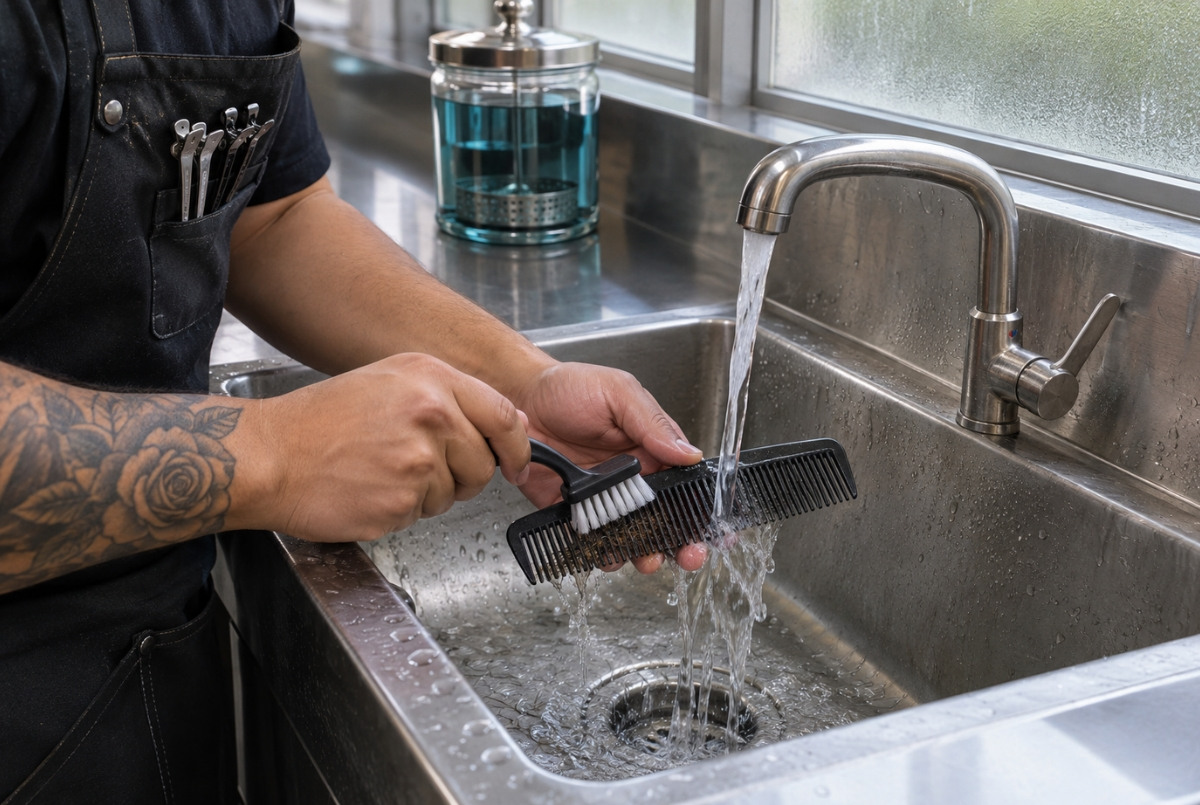
A barber student scrubs hair from a black cutting comb under running water, with a disinfection jar behind the sink.

Protecting Your Hands and Body at Work

A full day behind the chair can mean long periods on your feet and repeated movements with your wrists and shoulders. Set the chair height before you start, move around the chair as you work, and pay attention to how tightly you grip your tools. Frequent contact with water, shampoo, and hair products can also irritate the skin on your hands. A 2022 review of studies on hairdressers estimated that 38.2% had experienced hand eczema at some point in their lives. DermNet’s guidance for hairdressers and barbers covers practical steps such as wearing suitable gloves for wet or chemical work, drying your hands thoroughly, and moisturizing regularly.

How Client Records Help You Run Your Chair

A good client record answers the question you’ll hear sooner or later: “Can you do what you did last time?” A short note about where you started the fade or how you finished the neckline gives you something specific to confirm before reaching for your clippers.

What to Put on a Client Record Card

A useful record can be as simple as “low fade, #0.5 to #2, leave weight at the crown, keep the neckline natural.” For a color service, note the product, formula, date, and any patch-test result or reaction. Keep each entry short enough to scan before the appointment.
  • Service details. Record guard sizes, lever settings, where the blend starts, and any areas where you left extra length.
  • Safety notes. Save relevant sensitivities or reactions so you can review them with the client before repeating a service.
  • Client preferences. Note details such as a natural neckline, how the client styles their hair at home, and which products they want to use again.

Using Booking Records to Understand Repeat Visits

A paper card can handle service notes. A digital booking system can also help you see who returned, which services fill your schedule, and whether people keep the follow-up appointments they book. If you want to track first-time client retention, choose a window such as 60 days. Count the clients who completed a second visit and divide by the number of first-time clients who had the full 60 days to return. That gives you a baseline for your own chair and a way to see whether changes to your follow-up routine are helping.

How to Prepare for Georgia Barber Licensing Exams

If you’re applying for a Georgia Master Barber or Barber II license by examination, you must pass both the written and practical exams and apply for your license. Georgia’s rules require a minimum score of 70% on each section. If you fail one, you can retake that section by itself. Start with the Georgia board’s exam guidance and licensure-by-examination rules.

How Classroom and Clinic Hours Fit Together

Georgia’s school pathway requires 1,140 hours over at least seven months for Barber II or 1,500 hours over at least nine months for Master Barber. Classroom topics include laws and rules, disinfection, and basic chemistry. Hands-on training lets you apply those lessons while you practice cutting, shaving, and other services within your pathway. Georgia also offers a supervised apprenticeship route with separate requirements. See the school curriculum rules and the Georgia barber licensing guide. When comparing school schedules, ask how many hours you’ll attend each week and what happens if you miss clinic time. For a breakdown of tuition, books, the kit, and other charges at Atlanta Beauty & Barber Academy, check the academy’s student catalog and confirm the current schedule and charges with admissions.

How to Study for the Written and Practical Exams

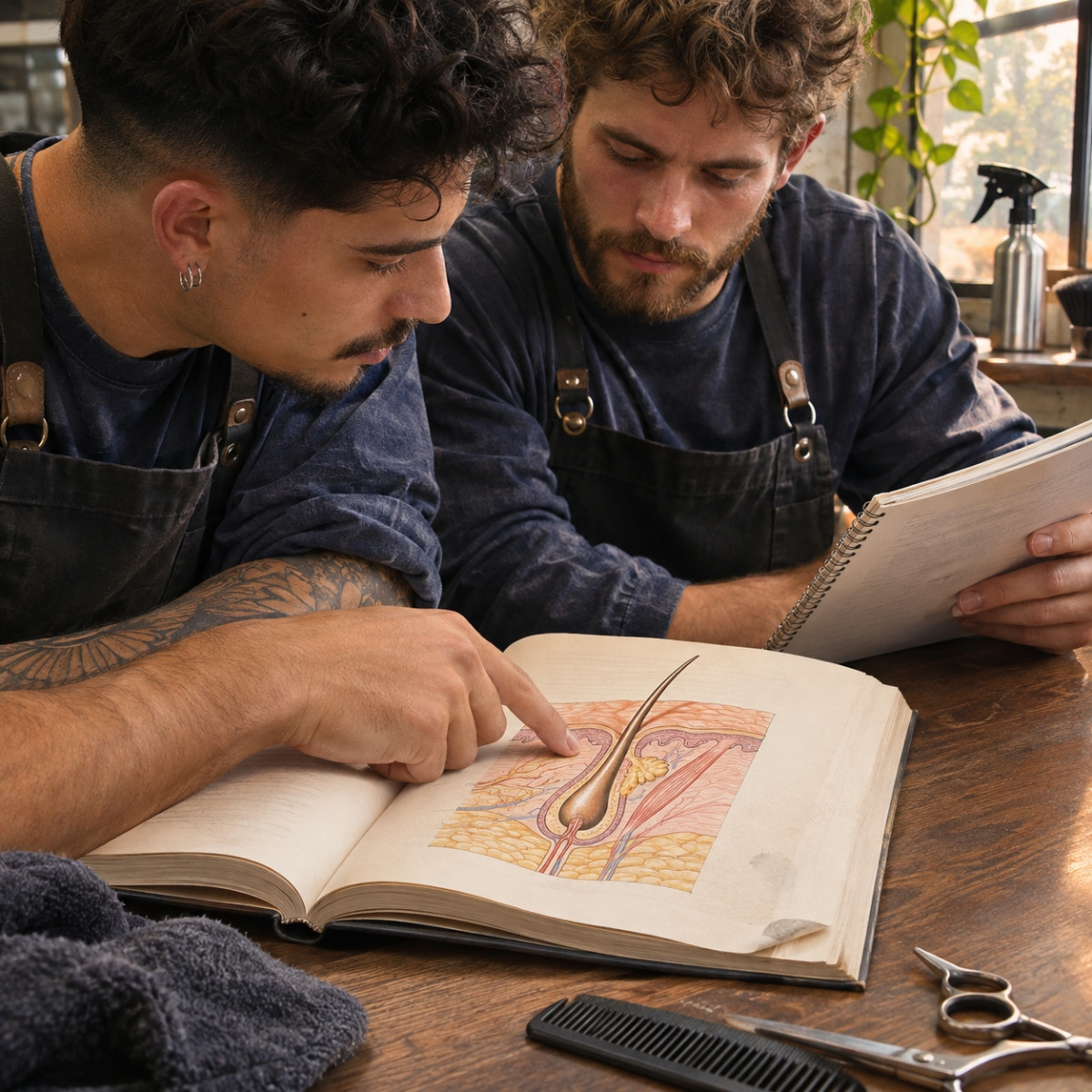
One barber student points to a hair follicle diagram in a workbook while another checks a notebook. For the practical exam, use the candidate bulletin for your license to build a checklist of tasks, supplies, and time limits. Rehearse the whole sequence, including setup, client protection, and cleanup. For written theory, practice explaining why each safety step matters. The NIC barber styling theory outline covers topics such as infection control, blood-exposure procedures, hair and scalp anatomy, and barbering services. Use the current Georgia PSI bulletin to confirm the content for your specific exam. There’s a reason to make time for written practice even if you feel comfortable on the clinic floor. The Texas Department of Licensing and Regulation reported a 37.25% written pass rate and an 89.80% practical pass rate for Class A Barber exam attempts in fiscal year 2025. Those figures describe completed attempts in Texas. If you’re comparing schools in Georgia, ask whether they can share recent results for their own graduates, broken out by exam section and first-time attempts if available. Our barber licensing and exam prep guide offers general study advice. If you’re looking for published pass rates, this video shows how to look up exam pass rates for a school or state.

Train as a Master Barber at Atlanta Beauty & Barber Academy

Founded in 2005, Atlanta Beauty & Barber Academy uses a Salon Ready approach to connect technical training with the habits you’ll need behind the chair. In our Master Barber program, you practice cutting, shaving, and coloring and learn about salon business and client retention. Those skills can support different career goals, from building your own clientele to eventually managing or opening a shop. Fill out our contact form to schedule a campus tour. Ask to see where students practice, how instructors prepare them for the clinic floor, and what the Master Barber schedule would look like for you.

Frequently Asked Questions

Do I need haircutting experience to apply for barbering school?

You can apply to Atlanta Beauty & Barber Academy’s beginner Master Barber program without prior haircutting experience. The academy’s published admissions requirements list a minimum age of 18 and a high school diploma or GED among the requirements for beginning students.

How long does barber school take in Georgia?

Georgia’s school pathway requires at least seven months and 1,140 hours for Barber II or nine months and 1,500 hours for Master Barber. Your actual completion date depends on your class schedule and attendance. See the Georgia barber school curriculum rules for both programs.

How does a barber license differ from a cosmetology license?

In Georgia, Master Barber and Master Cosmetology both cover hair cutting, styling, and chemical hair services. Barber training includes beard grooming and straight-razor shaving. Master Cosmetology also includes skin and nail services. Start with the services you want to provide, then check the license definitions in Georgia Code § 43-10-1.

Does barber school provide tools or do I need to buy a kit?

Georgia’s basic barber student kit includes clippers, guards, trimmers, shears, a straight razor, and combs. The state lists mannequins separately as school equipment. Atlanta Beauty & Barber Academy’s 2025 student catalog lists a $650 kit charge within the total Master Barber course cost. Ask admissions for the current itemized price and kit list before buying tools separately. See the Georgia barber school equipment rule for the required kit contents.

After a Barber Haircut: Aftercare, Irritation, and What to Watch For

Key Takeaways

  • Rinse Away Loose Clippings: A gentle rinse after a haircut can remove prickly hair clippings and unwanted product residue. Use lukewarm water and avoid scrubbing irritated skin.
  • Bumps Do Not Automatically Mean Dirty Tools: Ingrown hairs cause pseudofolliculitis barbae, while bacterial folliculitis involves infection. These conditions can look similar and sometimes occur together.
  • Keep Aftercare Gentle: A fragrance-free moisturizer can soothe dry, freshly shaved skin. Salicylic acid may help some people prevent ingrown hairs, but it should not be applied to broken or irritated skin.
  • Technique Matters: Shaving with the grain, avoiding skin stretching, and limiting repeated passes can reduce irritation and ingrown hairs.
  • Professional Training Includes Safety: Georgia-approved barbering curricula include cleansing and disinfection, hygiene, shaving techniques, and hair and scalp assessment.
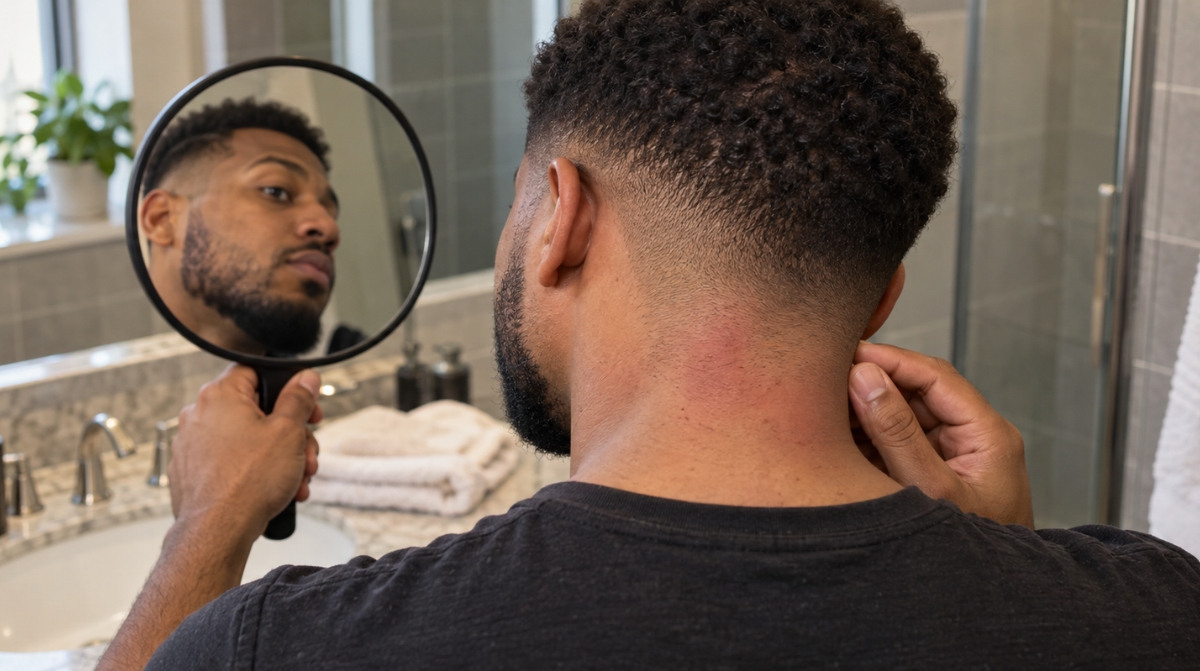
Walking out of the shop with a crisp fade feels incredible, but that fresh boost of confidence can fade when your neck starts itching, burning, or breaking out in bumps. You may wonder whether your skin is simply irritated or whether an infection could be developing. Understanding the difference helps you choose sensible aftercare, recognize symptoms that need attention, and have a more useful conversation with your barber.

Should You Shower After a Haircut?
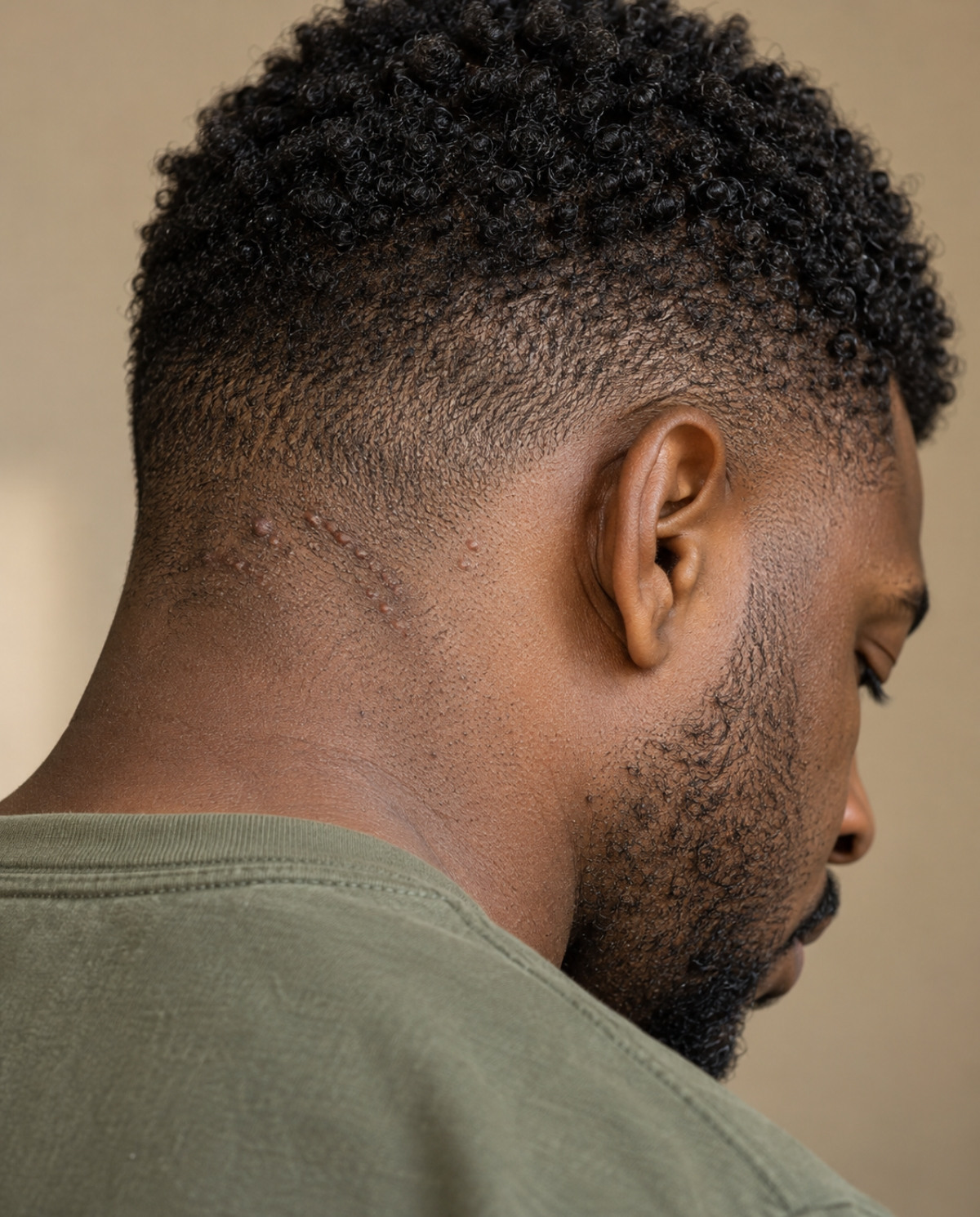
Close view of a man’s low fade showing several small raised bumps and short regrowing hairs along the lower hairline. One of the most common questions clients hesitate to ask is whether they should shower after a barber visit. You may want to preserve the styling products or avoid disturbing a freshly sculpted look. A full shower is not essential after every haircut, but gently washing away loose clippings can make your skin more comfortable. Short hair clippings can feel prickly when they collect around the neckline, behind the ears, or beneath a shirt collar. Friction from clothing can make that sensation more noticeable. A gentle rinse removes loose hairs without the need to scrub your skin. Use lukewarm water and a mild cleanser where needed. If you want to keep your hairstyle intact, you can wash your neck and hairline instead of shampooing your entire head. If styling products leave your scalp uncomfortable or coated with unwanted residue, a gentle shampoo can help remove them. The goal is to remove surface debris without creating additional irritation. There is no need to describe loose clippings as microscopic needles that routinely embed deep inside open pores, and showering immediately does not guarantee that you will avoid razor bumps or folliculitis. According to Harvard Health Publishing, gentle cleansing, reducing friction from tight clothing, and careful shaving can help prevent folliculitis. Its guidance also recommends washing gently after sweating. If a close shave leaves your skin hot or uncomfortable, try a cool, damp washcloth. The Canadian Dermatology Association recommends cool compresses to help calm freshly shaved skin and limit swelling. Cooling can soothe irritation, but it does not seal pores against bacteria or debris.

Understanding Itching, Redness, and Bumps After a Haircut

Post-cut discomfort can have several causes, including shaving irritation, ingrown hairs, reactions to products, and folliculitis. These problems can overlap, so the location or appearance of a bump does not always reveal its cause. Burning or blotchy redness that appears shortly after close shaving may be razor burn. Repeated passes, excessive pressure, dry shaving, and irritating products can disrupt the skin barrier. Cleveland Clinic explains that shaving can cause tiny cracks in the outer skin layer, moisture loss, and inflammation. This does not mean every haircut damages your skin. Guarded clipping and a close razor shave affect the skin differently, and your response depends partly on technique, products, and individual sensitivity. Product reactions are another possibility. If irritation repeatedly follows a particular shaving cream, fragrance, or finishing product, tell your barber and stop using the suspected product while you seek advice if needed. Symptoms that persist or worsen deserve assessment rather than repeated experimentation with aftercare.

Razor Bumps and Bacterial Folliculitis Are Different

Many clients associate every post-cut bump with dirty tools. Contaminated equipment is a real concern, but bumps alone do not prove that a shop used unclean clippers. Pseudofolliculitis barbae, commonly called razor bumps, develops when cut hairs penetrate the surrounding skin and trigger inflammation. A hair may grow out and curve back into the skin, or retract beneath the surface after a very close shave. Coarse, curly hair is particularly prone to this problem. Bacterial folliculitis involves infection of the hair follicle, commonly with Staphylococcus aureus. Shaving-related irritation can make follicles more vulnerable, but the presence of an infection does not, by itself, identify where the bacteria came from. As explained by DermNet, razor bumps and infectious folliculitis can coexist. PFB is not primarily caused by infection, but affected follicles can become secondarily infected. This distinction matters because the same product will not solve every problem. Changing close-shaving habits is central to managing razor bumps. Persistent or recurrent folliculitis may require a clinician to identify the cause and select treatment.

Persistent Neckline Bumps Deserve Attention

Bumps at the back of the neck are not always ordinary ingrown hairs. A condition called acne keloidalis nuchae can cause acne-like bumps, raised scars, and scarring hair loss on the back of the scalp and neck. The American Academy of Dermatology explains that close haircuts, rubbing collars, and scratching can aggravate this condition. Early assessment is useful because treatment becomes more difficult once significant scarring develops. If the same area repeatedly breaks out, develops firm raised bumps, or starts losing hair, avoid repeatedly shaving over it and arrange a dermatology appointment.

Gentle Aftercare That Supports Your Skin
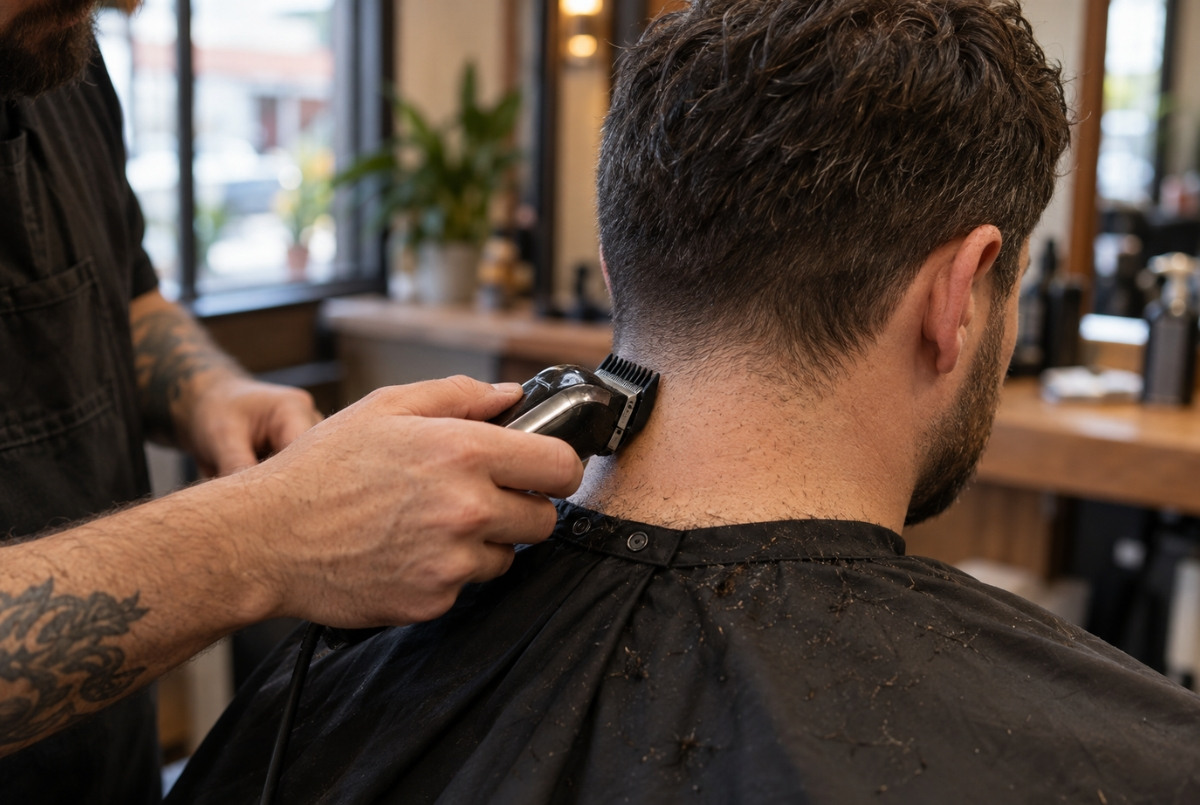
Barber using guarded electric clippers along a client’s neckline, with short hair remaining above a dark haircut cape. Effective aftercare starts with matching your routine to the problem. Skin that is burning and irritated needs a different approach from comfortable skin that is simply prone to ingrown hairs. If your skin feels tight or dry, apply a fragrance-free moisturizer suited to your skin type. Ceramide-containing products can support the skin barrier, while ingredients such as hyaluronic acid help retain moisture. There is no need to avoid every rich cream or petroleum-based product. The American Academy of Dermatology recognizes petroleum jelly as useful for dry skin and minor injuries. However, the best choice depends on the area being treated and your tendency to develop breakouts. For breakout-prone skin, look for a moisturizer labeled noncomedogenic. Traditional aftershaves can also be a problem if they contain ingredients that sting or irritate your skin. Cleveland Clinic recommends avoiding fragrances, alcohol, and other irritants when caring for razor burn. A burning sensation is not evidence that an aftershave is improving your skin. For immediate irritation, keep the routine simple with gentle cleansing, a cool compress, and a moisturizer you already tolerate. Avoid shaving the irritated area again until it has recovered.

When Salicylic Acid May Help

Exfoliating products may help some people who repeatedly develop ingrown hairs, but they are not essential after every haircut and do not replace moisturizer. The Canadian Dermatology Association suggests considering a lotion or gel containing 1–2% salicylic acid or 5% glycolic acid the day after shaving. These ingredients help keep the skin around growing hairs smooth, reducing the chance of hairs becoming trapped. However, the condition of your skin matters more than the clock. Reaching the next day does not automatically mean an exfoliant is suitable. MedlinePlus advises against applying topical salicylic acid to skin that is broken, red, swollen, irritated, or infected. Follow the product directions, and stop using it if irritation develops. If you are already using other acne treatments or exfoliating products, ask a pharmacist or dermatologist before adding another active ingredient.

Preventing Irritation During and After Your Next Cut

Prevention begins with how closely the hair is cut and how much friction the skin experiences. Aftercare can improve comfort, but it cannot fully compensate for a shaving technique that repeatedly irritates your skin. The American Academy of Dermatology recommends shaving in the direction of hair growth and preparing the hair so it is soft before shaving. Moisturizing shaving cream can help reduce friction. For people prone to razor bumps, avoiding skin stretching and repeated passes over the same area can also help. Shaving against the grain may produce a closer finish, but it can increase irritation and the likelihood of ingrown hairs. It does not inevitably cause a bump after every shave. If you repeatedly develop beard-area razor bumps, discuss leaving a little stubble rather than shaving completely smooth. DermNet recommends leaving approximately 1 mm of stubble as one preventive measure. A guarded clipper finish may be a more comfortable option than repeatedly shaving the same sensitive area to skin level. These principles also apply to home grooming. Learning how to safely cut your own hair at home includes preparing your tools, controlling pressure, and recognizing when a closer result is causing irritation. After your haircut, avoid rubbing or picking at irritated areas. Choose comfortable collars that do not repeatedly scrape your neckline, and use clean towels and pillowcases as part of your normal hygiene routine. Sweat and friction can make irritated skin uncomfortable. If exercise aggravates a freshly shaved area, adjust your activity until it settles, then gently cleanse after sweating. These habits support comfort and cleanliness, but they do not create a guaranteed barrier against infection.

Protecting Newly Exposed Skin From the Sun

A shorter haircut may leave more of your scalp visible, making sun protection an easy aftercare step to overlook. Remember the hairline, ears, neck, and any exposed scalp when preparing to spend time outdoors. The American Academy of Dermatology recommends a broad-spectrum, water-resistant sunscreen with SPF 30 or higher. Reapply every two hours outdoors and after swimming or sweating. A suitable hat can also help protect the scalp. If your neckline is irritated, choose one that does not rub the affected area.

How Barbering Schools Teach Skin and Scalp Safety
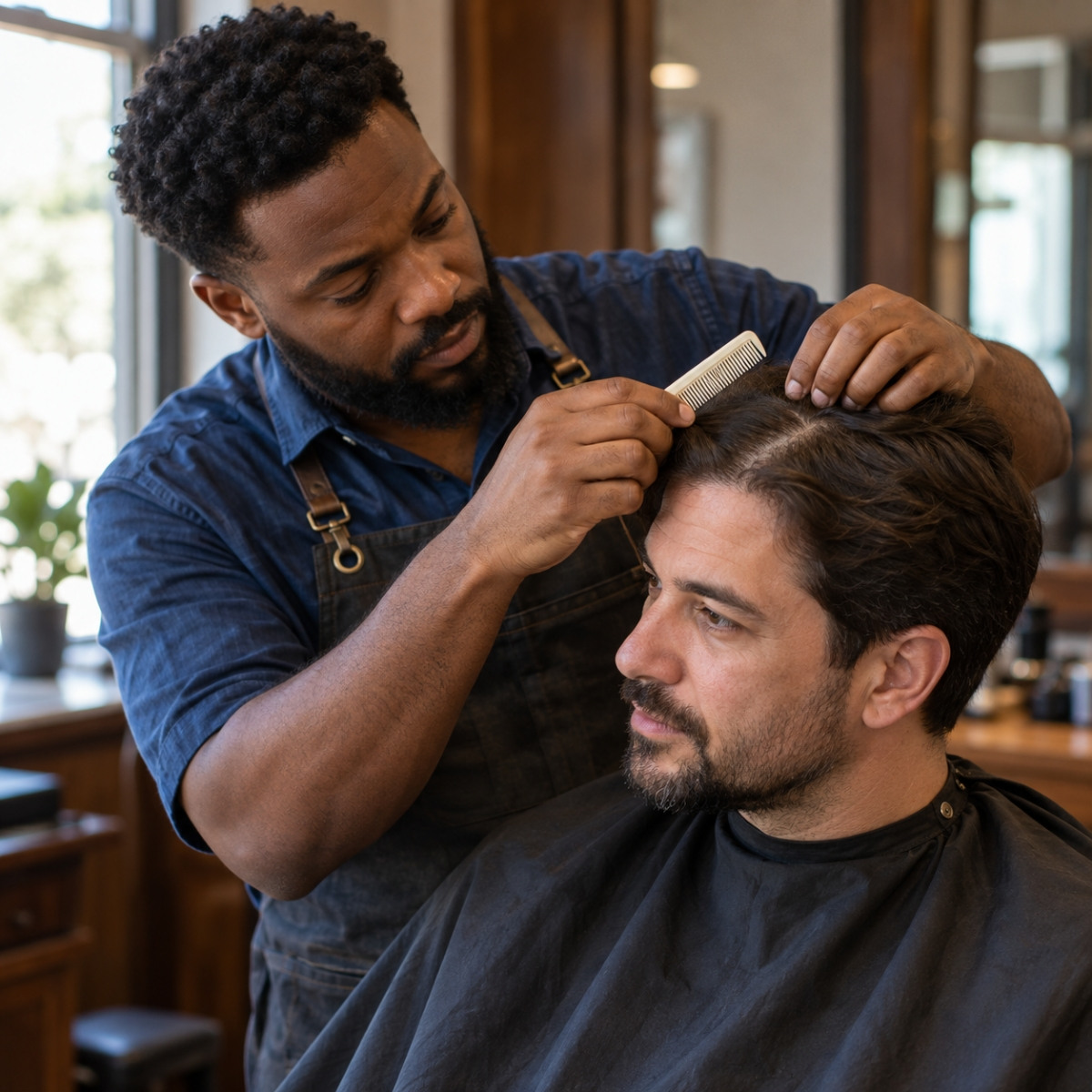
Barber gently separating a seated client’s hair with a comb to observe the scalp during a consultation. Professional barbering involves more than producing a clean outline. Students also need to learn safe tool handling, hygiene, hair and scalp assessment, and when a visible skin problem calls for caution or referral. Georgia provides a concrete example. Under Rule 240-14-.02, the Master Barber school curriculum requires 1,500 training hours over at least nine months. Students must complete 280 initial theory hours before progressing to clinical services on live subjects. That initial curriculum includes cleansing and disinfection, hygiene, scalp condition assessment, shaving, and the proper handling of cutting tools. Requirements differ by credential, so prospective students should check the rules for the specific program they plan to enter. Professional consultation is another practical safety skill. Before cutting, a barber can ask about previous irritation, products that caused reactions, and areas where bumps repeatedly develop. Knowing how to clearly explain the haircut you want helps you discuss length and finish while also mentioning that a previous skin fade or razor lineup caused discomfort. A barber can recognize a concern and recommend medical assessment without diagnosing or treating a skin disease. Georgia’s facility requirements include signage stating that cosmetology services should be performed only on intact, healthy scalp, skin, and nails.

Cleaning and Disinfection Are Essential Skills

Cleaning, disinfection, and sterilization are different processes. For routine reusable barbering equipment, the relevant Georgia rules emphasize proper cleaning and disinfection rather than describing every tool as sterile. Georgia’s published sanitary guidance also explains that UV cabinets are for storing already cleaned and disinfected implements. UV light does not replace the required cleaning and disinfection process. Understanding this difference gives students a more useful foundation than simply learning that tools should look clean.

Scalp Care Adds to the Client Conversation

Interest in scalp-focused services also gives professionals a reason to strengthen their knowledge. In its 2026 beauty trends article, America’s Beauty Show highlights scalp treatments and scalp-focused products. This is an industry trend observation, not proof that every scalp serum works or that advanced scalp treatments are required services. For a barber, the practical foundation remains careful observation, appropriate product selection, safe technique, and referral when a concern falls outside professional training. A comprehensive education can help future professionals build those habits and communicate more clearly with clients. Career results still depend on factors such as skill development, experience, location, and business practices.

Frequently Asked Questions

How long does irritation usually last after a haircut?

Mild razor burn can last from a few hours to a few days. Avoid shaving the irritated area again while it recovers. If suspected folliculitis worsens or does not resolve within three days, the Canadian Dermatology Association recommends seeing a doctor. Persistent bumps do not automatically mean bacterial infection, and treatment should depend on the cause.

Can you put moisturizer on a fresh fade right away?

Yes. If the skin feels dry or tight, gently apply a fragrance-free moisturizer you already tolerate. For breakout-prone areas, consider a noncomedogenic formula. Stop using any product that causes burning or worsening irritation.

Why does my neck break out even when my barber uses clean tools?

Very close shaving can trigger ingrown hairs, particularly when hair is coarse or curly. Friction and irritating products can also contribute to discomfort. Clean equipment remains essential, but it cannot prevent every noninfectious skin reaction. Persistent bumps at the back of the neck, especially with scarring or hair loss, deserve medical assessment.

Should everyone use salicylic acid after a haircut?

No. It may help some people prone to ingrown hairs, but it is not necessary after an ordinary haircut. Do not apply it to broken, red, swollen, irritated, or infected skin, and follow the product directions.

How do prospective barbers learn to protect clients’ skin?

State-approved barbering programs include training in hygiene, cleaning and disinfection, safe tool handling, and hair and scalp assessment. Students also practice techniques under instruction before progressing through the requirements for professional licensing.

Build Your Skills Through Professional Training

Turn your interest in barbering and hair design into practical professional skills. At Atlanta Beauty Academy, students can explore hands-on education, licensing preparation, and salon business and client-retention skills. Atlanta Beauty & Barber Academy has provided practical beauty education for more than two decades. Fill out the contact form below to arrange a campus tour, meet the team, and discuss the program that fits your goals.